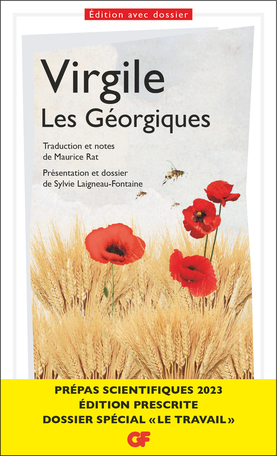
We are in 29 B.C.E.: Octave, the future emperor, has just gained control of the world thanks to his victory over Antoine and Cleopatra, and Virgile publishes his Georgics, dedicated to Mécène, a close friend of Octave. The content of the four songs, as announced in the first verses, leaves waiting for a treaty of agriculture. Virgile therefore seems to support Octavian's efforts in favour of Italian agriculture and encourage the Romans to become peasants like him. But Virgile is a poet, perhaps the greatest Latin poet, and the Georgics are much more than just a treatise. They offer, with a breath and a rarely equalized magnitude, a moral based on effort and work as conditions for the elevation of man, at the same time as a reflection on his place in nature. Like any great work, they also question the reader about their meaning and the interpretation that it is possible to bring to them.
Book
Poetry
Virgile : The Georgics
- Flammarion Publisher
- Les Belles Lettres Publisher
- Hatier Publisher
- Classiques Garnier Publisher
- Virgile Author
Details
- Type
- Book
- Genres
- Poetry
Synopsis