Synopsis
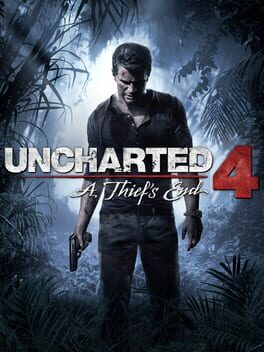
Three years after the events of Uncharted 3: Drake’s Deception, Nathan Drake has left treasure hunting behind. He now lives with Elena Fisher and is trying to build a much more ordinary life, far from lost cities, mercenaries and expeditions where every discovery seems determined to bury him alive.
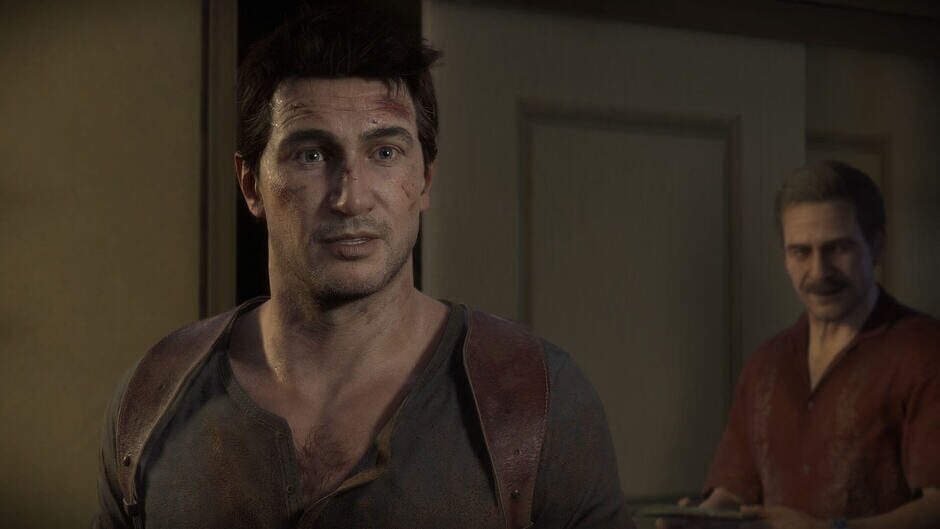
The past returns to his doorstep when Sam Drake, the brother he believed had been dead for years, suddenly reappears. Sam claims to be in danger and says he needs Nathan’s help to find the lost treasure of Captain Henry Avery, the famous seventeenth-century English pirate.
Their trail takes the two brothers across several parts of the world and eventually brings them closer to Libertalia, a legendary pirate colony hidden deep in Madagascar. Naughty Dog uses this treasure hunt as the engine of a spectacular adventure, but also as a way to confront Nathan with something he has avoided for a long time: the place adventure truly occupies in his life.
Because the real problem soon becomes more than simply finding Avery before their rivals. Nathan hides the true nature of his journey from Elena, Sam has motivations of his own, and the expedition gradually becomes a mirror of the obsession that has followed the brothers since their youth.
Uncharted 4 therefore does not simply ask whether Nathan Drake will find one last treasure. It asks what he is still willing to sacrifice to keep chasing it. Naughty Dog explicitly designed this installment as the conclusion to Nathan Drake’s main story.
Overview
One last adventure for Nathan Drake
Uncharted 4: A Thief’s End was released worldwide on May 10, 2016 for PlayStation 4. At the time, Naughty Dog described it as its most ambitious Uncharted project and as Nathan Drake’s final major chapter.
That sense of conclusion deeply influences the writing.
Previous entries often built their stories around the pleasure of heading back into the unknown. Uncharted 4 begins instead by showing what happens when an adventurer tries to live without adventure.
Nathan works, comes home, shares his life with Elena and seems to have achieved the stability his expeditions once made almost impossible.
But the desire has not completely disappeared.
Naughty Dog itself describes one of the game’s central themes as the search for balance between the passions that define a person and the relationships they do not want to sacrifice in order to pursue them. Sam therefore becomes both a long-lost brother and a representation of Nathan’s past and everything he never truly managed to leave behind.
Libertalia and the golden age of piracy
The quest revolves around the treasure of Henry Avery and the search for Libertalia.
Uncharted follows its usual method: taking historical figures, legends and events, then building a much freer adventure fiction around them.
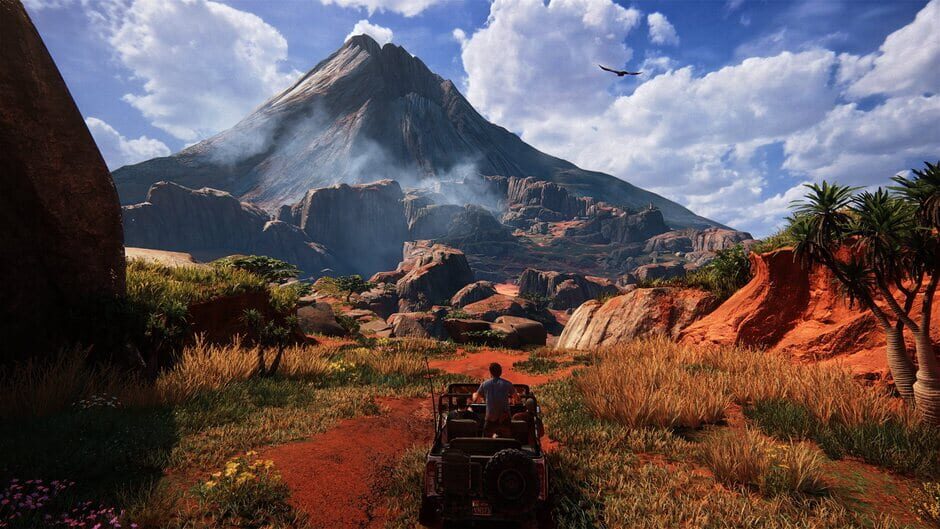
The treasure primarily becomes a thread connecting extremely varied environments. The official page describes a journey around the globe, from tropical islands to distant cities and snowy peaks, while Madagascar forms one of the adventure’s major central spaces.
Libertalia is therefore more than simply a place to discover.
The traces left behind by the pirates gradually reveal what happens when a community built around wealth, freedom and ambition begins to be consumed by those same values.
The story of Avery and his companions eventually echoes that of the Drake brothers: chasing one more treasure becomes much less romantic once you begin looking at what that pursuit leaves behind.
Much more open environments
Uncharted 4 remains a directed narrative adventure. It never becomes an open-world game.
Naughty Dog does, however, significantly expand its spaces and gives the player more opportunities to observe an environment, choose a route or bypass certain groups of enemies. Sony was already describing the game in 2016 as featuring larger and more open environments than previous entries.
This evolution is particularly visible in Madagascar, where Nathan, Sam and Sully use a 4x4 to cross large areas, search for passages and reach different points of interest.
These spaces are not designed to fill a map with icons.
Instead, they give the journey room to breathe. The player can stop, leave the vehicle, examine a ruin or simply listen to the characters talk before the adventure moves on to another sequence.
This limited freedom works particularly well with Uncharted: it expands the world without diluting the narrative progression.
The grappling hook changes movement
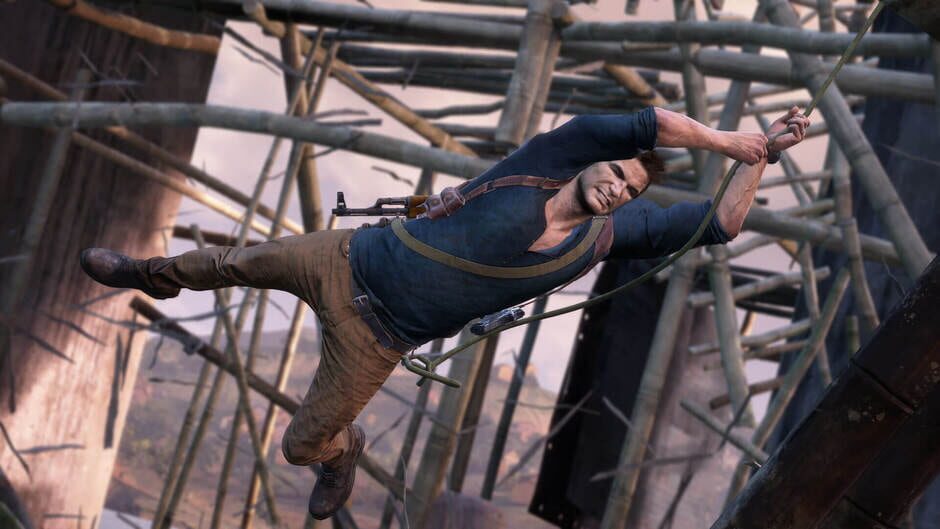
The grappling hook is one of the most visible additions to the gameplay.
It allows Nathan to swing over gaps, reach new platforms and bring more vertical movement into combat. PlayStation directly emphasizes its role in making exploration and encounters more fluid.
It can almost seem insignificant beside the game’s larger set pieces.
Yet it represents the overall evolution of Uncharted 4 very well: Naughty Dog does not overturn the foundations of the series, but tries to make movement less rigid and spaces more organic.
Climbing, sliding, jumping, ropes and improvised cover flow into one another more naturally.
The environment gradually stops feeling like a simple succession of platforms to cross. It becomes a space Nathan can move through.
Stealth becomes a genuine option
Combat is still built around third-person shooting, cover and firearms, but stealth plays a much larger role.
Tall grass can hide Nathan, enemies can be marked and the more open spaces allow for more approaches before the shooting begins. PlayStation explicitly presents stealth as an important part of the combat system.
This flexibility changes the feel of encounters.
The player can quietly eliminate a few opponents, alter their route after being spotted, disappear again and then regain the advantage from another position.
Uncharted remains spectacular, but its action becomes less tied to the idea of an arena that Nathan enters through one door and leaves only once everyone else is down.
Naughty Dog pushes its PS4 technology
Uncharted 4 is the first Naughty Dog game developed entirely for PlayStation 4. The studio explains that the project allowed it to significantly evolve its internal engine, animation systems and capture technology. It was also the first Naughty Dog game to integrate facial capture directly into its motion-capture process.
The engine, however, is not identified by a sufficiently stable official name in the sources consulted; the moteur field therefore remains intentionally blank.
The technical result primarily serves the staging.
Faces can carry more nuance, transitions between animation and player control become less visible, and environments reach a level of density that allows Naughty Dog to slow the pace without losing attention.
A silence between Nathan and Elena can therefore become as important as a collapsing building.
A solo adventure with a real multiplayer component
The PS4 version of Uncharted 4 is not limited to its campaign.
It also includes competitive team-based multiplayer, with several maps, characters and systems inspired by the series. PlayStation still confirms the presence of this optional online component in the PS4 version.
Naughty Dog later added Survival for free, a mode playable solo or cooperatively with up to three players, built around 50 waves of enemies, different objectives, difficulty levels and boss battles.
This component is important when distinguishing the different versions of the game.
The PS5 remaster and PC version included in Uncharted: Legacy of Thieves Collection do not include multiplayer. PlayStation still recommends using the PS4 editions to access those modes.
Key takeaways
- Uncharted 4: A Thief’s End was released on May 10, 2016 for PlayStation 4.
- Naughty Dog developed the game and Sony Interactive Entertainment published it.
- Nathan Drake has retired from treasure hunting at the beginning of the story, before the return of his brother Sam pulls him into a new expedition.
- The quest revolves around Captain Henry Avery’s treasure and Libertalia, a legendary pirate colony.
- The game combines exploration, platforming, climbing, puzzles, stealth and third-person combat.
- The environments are noticeably larger than in previous entries, without turning the game into an open world.
- The grappling hook enriches both exploration and certain combat situations.
- Stealth plays a larger role, particularly through tall grass, enemy marking and more open environments.
- The PS4 version includes a solo campaign and online multiplayer modes.
- Survival can be played solo or cooperatively with up to three players.
- Uncharted 4 was remastered for PS5 and PC as part of Uncharted: Legacy of Thieves Collection.
- The PS5 and PC versions in Legacy of Thieves are single-player only and do not include the original multiplayer.
PANACHES review
The spectacle works because the characters exist between explosions
Uncharted 4 obviously knows how to create spectacle. Vehicles hurtle down impossible roads, buildings collapse and Nathan continues to discover a worrying number of perfectly climbable handholds.
But the game’s greatest success may lie more in the moments when almost nothing happens.
A conversation inside a vehicle, a hesitation between Nathan and Elena or a joke between the two brothers is often enough to give weight to the spectacular scene that follows.
Naughty Dog is no longer simply trying to create a grand interactive adventure movie. The studio uses the adventure to observe what its characters have become after all these years.
Bigger spaces without map-icon sickness
Uncharted 4 could easily have followed the trend of its era and turned its more open environments into an accumulation of side objectives.
It resists that temptation surprisingly well.
The larger areas exist to create a sense of travel, allow a few detours and give the characters room to breathe. They do not ask the player to methodically clear a map before moving to the next chapter.
That restraint still works extremely well: the game expands its world without forgetting that a journey does not need to turn every detour into work.
An ending that understands its character
The title promises A Thief’s End, but the conclusion does not work because it destroys Nathan Drake or rejects who he used to be.
Instead, it looks for a compromise.
Nathan was never truly happy when he tried to completely erase adventure from his life. But he could not keep putting the people he loves in danger forever just to pursue one more legend.
Uncharted 4 understands that growing up does not necessarily mean abandoning what we love. Sometimes it simply means learning to give it a place that does not consume everything else.
It is a surprisingly quiet idea with which to end a series that spent so much time dropping trains, planes and pieces of civilization on its hero.
Good to know
Original release
- Uncharted 4: A Thief’s End was released worldwide on May 10, 2016 for PlayStation 4.
- It was developed by Naughty Dog and published by Sony Interactive Entertainment.
- Naughty Dog presents it as the chapter concluding Nathan Drake’s main adventure.
- The original version includes single-player and online multiplayer.
- The game is also enhanced for PS4 Pro.
Uncharted: Legacy of Thieves Collection on PS5
- Uncharted: Legacy of Thieves Collection was released on PS5 on January 28, 2022.
- The collection includes remastered versions of Uncharted 4: A Thief’s End and Uncharted: The Lost Legacy.
- It notably offers several graphics modes allowing players to prioritize resolution or frame rate.
- Compatible PS4 save data can be imported into the PS5 version.
- Uncharted 4’s multiplayer is not included in this collection.
PC version
- Uncharted: Legacy of Thieves Collection was released on PC on October 19, 2022.
- This release also marked Naughty Dog’s first PC launch.
- Naughty Dog worked with Iron Galaxy Studios to adapt both adventures to the characteristics of PC.
- As on PS5, this edition includes only the solo adventures and not the original multiplayer.
- The entry therefore uses
ps5andpcinplateformes, since Uncharted 4 is officially playable in a native remastered form on both platforms.
Multiplayer and Survival
- The PS4 version includes several competitive team-based multiplayer modes.
- Naughty Dog added Survival on December 14, 2016.
- Survival features 50 waves of enemies, different objectives and boss battles.
- The mode can be played solo or cooperatively with up to two other players.
- Naughty Dog continued expanding multiplayer in 2017, notably with Survival Arena and content connected to The Lost Legacy.
Technology and development
- Uncharted 4 is the first Naughty Dog game designed entirely for PlayStation 4.
- The studio developed its internal engine, animation systems and capture methods for the project.
- It is also the studio’s first game to integrate facial capture into the motion-capture process.
- Official sources consulted refer to Naughty Dog’s internal engine without providing a sufficiently established name to fill the
moteurfield cleanly; it therefore remains blank.
Reception and audience
- Sony announced more than 2.7 million copies sold through to consumers during the first week.
- The game had surpassed 8.7 million copies sold worldwide by December 21, 2016.
- In 2021, Naughty Dog stated that more than 37 million individual players had downloaded and played Uncharted 4; this figure represents audience reach and should not be confused with sales.
- PlayStation states that the game received more than 150 Game of the Year awards.
- In May 2026, Naughty Dog officially celebrated the tenth anniversary of Uncharted 4: A Thief’s End.
- The campaign and its narrative arc form a completed work; the entry therefore uses
statut_parution: completed.