Presentation
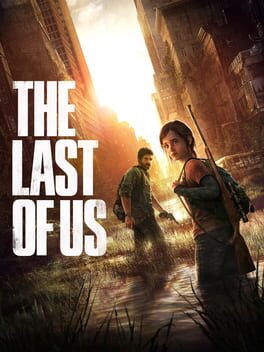
Developed by Naughty Dog and published by Sony Computer Entertainment, The Last of Us was originally released for PlayStation 3 in 2013. Bruce Straley served as Game Director and Neil Druckmann as Creative Director, while Gustavo Santaolalla composed the original score. After several Uncharted games, the studio created a new universe centered on survival, character relationships and a world profoundly transformed by biological catastrophe.
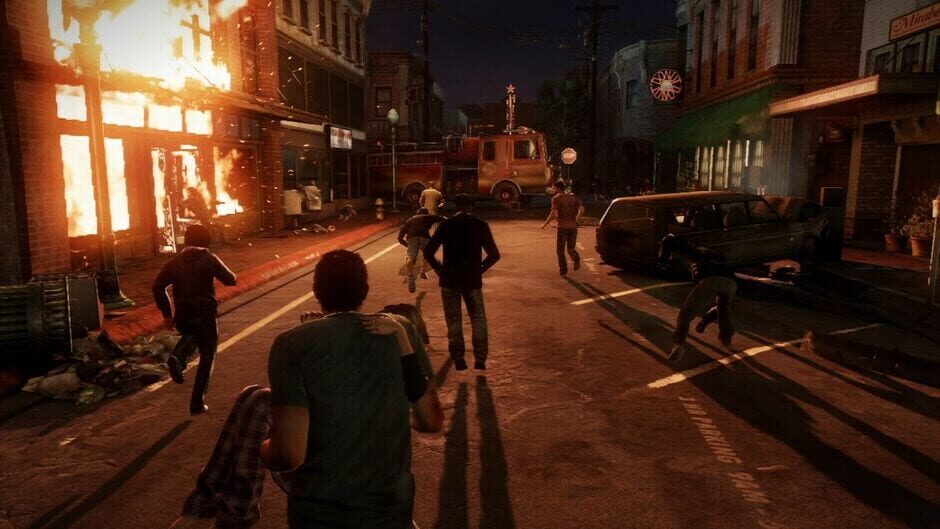
The main story takes place roughly twenty years after the beginning of a pandemic caused by a fungal infection inspired by Cordyceps. Institutions have largely collapsed, survivors gather inside military quarantine zones, independent communities or armed groups, while abandoned cities are gradually reclaimed by vegetation.
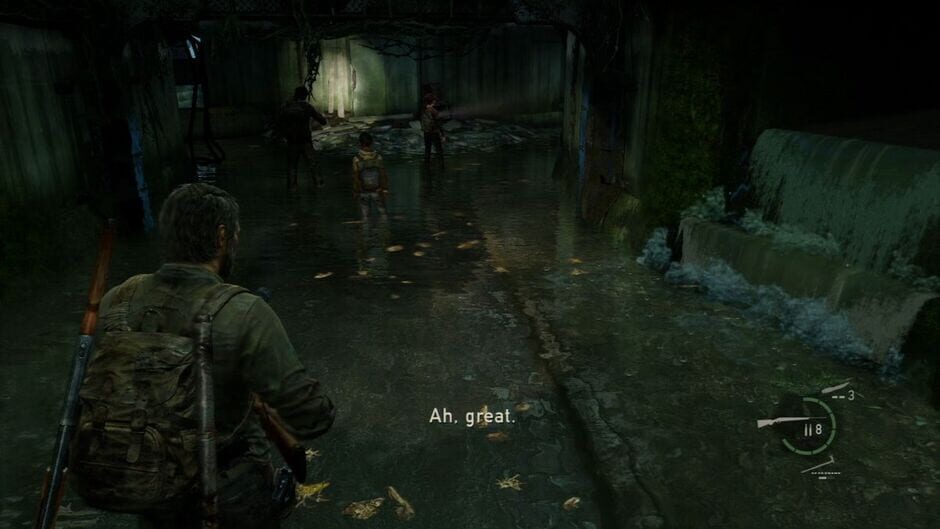
Players primarily control Joel, an experienced survivor working as a smuggler in Boston. His mission leads him to travel with Ellie, a teenager born after the catastrophe who has therefore never known the world that existed before it. Their relationship forms the center of the story and evolves through the encounters, losses and situations they experience together.
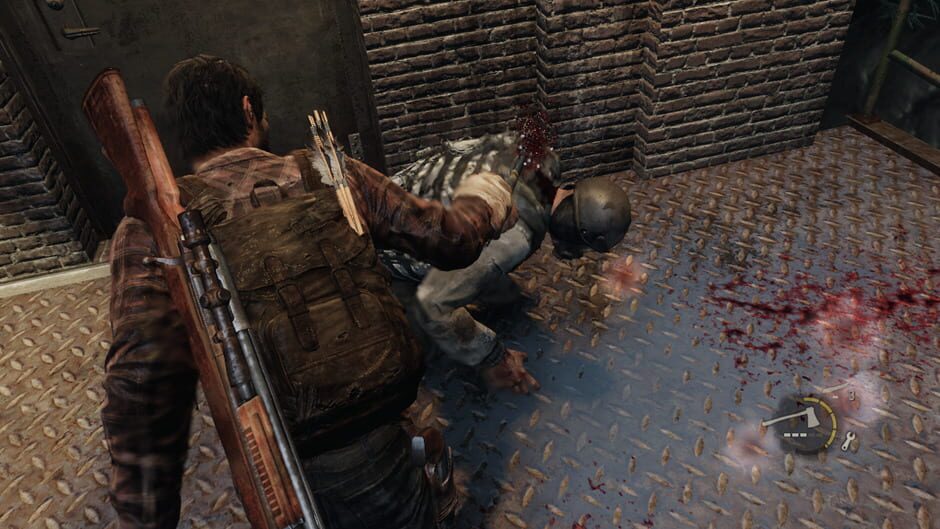
The Last of Us uses a third-person perspective and combines exploration, stealth and direct combat. Players can use firearms, melee weapons and improvised equipment, but limited resources rarely make an approach based entirely on firepower desirable. Observing an area before acting can be as important as accuracy during combat.
Stealth allows certain enemies to be bypassed or eliminated quietly. Levels provide different routes, cover positions and movement options that generally leave players room to decide how they want to proceed. Human enemies communicate with one another, search for Joel when they notice suspicious activity and can change their behavior when members of their group disappear.
The infected create different constraints. Runners remain mobile and sensitive to the player's presence, while Clickers, representing a more advanced stage of infection, rely largely on echolocation and are extremely dangerous at close range. Other forms also appear throughout the journey, forcing players to adapt their methods according to the environment and the groups they encounter.
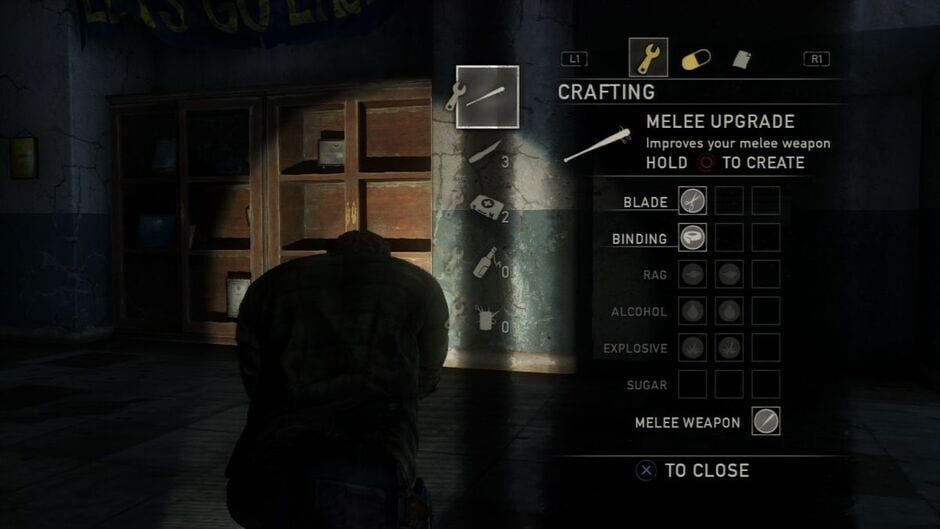
The crafting system turns materials recovered during exploration into health kits, Molotov cocktails, bombs, shivs and other equipment. Several items require the same resources, regularly forcing players to choose between healing, preparing an improvised weapon or preserving materials for a later situation.
Weapons can also be improved at workbenches using parts found throughout the environments. Joel can separately enhance certain abilities by collecting supplements. Progression remains deliberately measured: the character becomes better equipped, but ammunition and resources continue to require careful decisions throughout the adventure.
Listen Mode helps locate nearby enemies by focusing on the sounds they produce. Combined with quiet movement and observation of the terrain, it gives players additional information before committing to an encounter. Its usefulness still depends on the situation and does not remove the need to examine environments carefully.
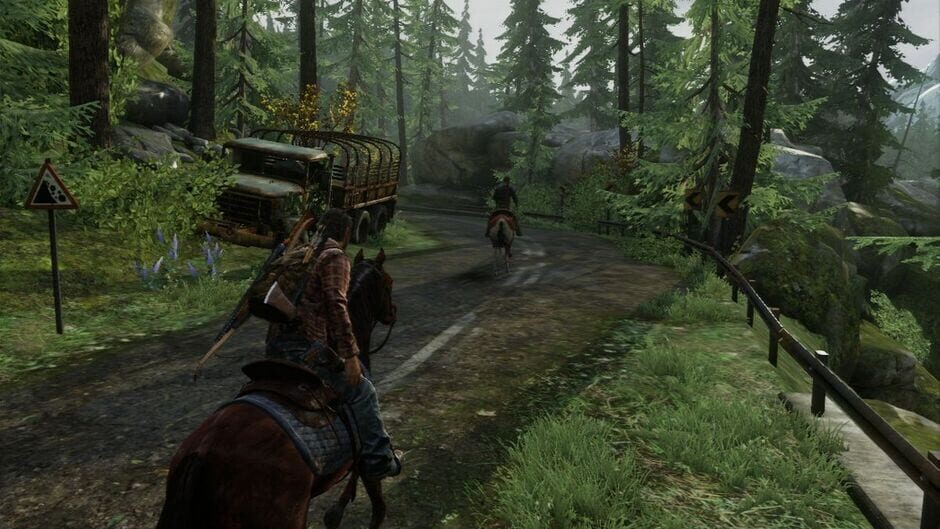
Joel and Ellie's journey crosses several regions and changes with the seasons, allowing Naughty Dog to regularly alter landscapes, traversal conditions and narrative pacing. Urban ruins, abandoned facilities and natural spaces function as more than scenery: notes, objects and traces left by former inhabitants tell numerous smaller stories without directly interrupting progression.
The characters encountered along the way are equally important to this world-building. Temporary allies, communities, military forces, Fireflies and hostile groups demonstrate different responses to societal collapse. The Last of Us therefore avoids reducing its world to a simple opposition between humans and infected and instead examines the choices people make to continue living after older social structures have disappeared.
The game also includes a multiplayer mode called Factions, separate from the campaign. It adapts the resource gathering, crafting and team-based combat principles into several competitive modes. This component translates some of the campaign's survival mechanics into player-versus-player encounters without affecting Joel and Ellie's story.
What to remember
- The journey of Joel and Ellie across a United States devastated by fungal infection, with their developing relationship at the narrative center of the adventure.
- Gameplay combining exploration, stealth and combat, with enough freedom to bypass certain threats or choose different ways of confronting them.
- Limited resources and a crafting system in which several pieces of equipment require the same materials, regularly forcing players to establish priorities.
- Several categories of infected, including Runners and Clickers, whose different behaviors require players to adapt movement and strategy.
- A post-pandemic world also told through its environments, traces left by former inhabitants and the different communities encountered during the journey.
- The Factions multiplayer mode, reusing the campaign's gathering, crafting and combat principles in competitive team-based matches.
Conclusion
The Last of Us is built around a constant balance between narrative and survival. Naughty Dog uses the journey across the United States to gradually develop Joel and Ellie without separating their relationship from the situations in which players participate. Travel, encounters and quieter periods are as important to that development as combat.
The resource system directly supports this approach. A bottle, a handful of components or several rounds of ammunition can change how an area is approached, and the ability to craft different items from the same materials forces meaningful choices instead of simply allowing the player to accumulate an increasingly powerful arsenal.
Human enemies and infected meanwhile create two different kinds of tension. The former use weapons, movement and coordination, while the latter possess behaviors linked to different stages of infection. Players therefore cannot apply exactly the same method to every encounter.
The construction of the world reinforces the same consistency. Twenty years have passed since the catastrophe, and the cities visibly reflect that history through vegetation, abandoned buildings, military fortifications and personal belongings. The communities encountered on the road also demonstrate that survival has produced very different responses among different groups.
By combining this attention to character, a survival system built around limited resources and particularly detailed environmental exploration, The Last of Us established a distinct identity within Naughty Dog's catalog in 2013. Its importance comes as much from the relationship between Joel and Ellie as from the way gameplay and world-building continually contribute to their journey.
Good to know
- The Last of Us was developed by Naughty Dog and published by Sony Computer Entertainment.
- Bruce Straley served as Game Director and Neil Druckmann as Creative Director; the original score was composed by Gustavo Santaolalla.
- The game was released worldwide for PlayStation 3 on June 14, 2013.
- The main story follows Joel and Ellie on a journey across the United States roughly twenty years after the outbreak began.
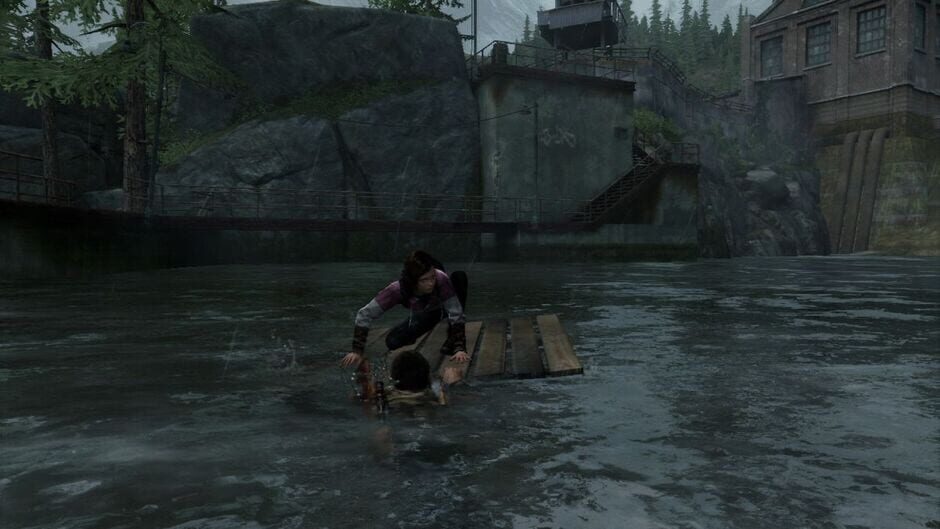
- The narrative expansion The Last of Us: Left Behind, centered on Ellie and Riley, was released in 2014 and develops events connected to the main campaign as well as Ellie's past.
- The Last of Us Remastered was released for PlayStation 4 in 2014 with improved presentation and notably includes Left Behind.
- The 2013 original should not be confused with The Last of Us Part I, a remake developed for PlayStation 5 in 2022 and later released for Windows in 2023.
```