Presentation
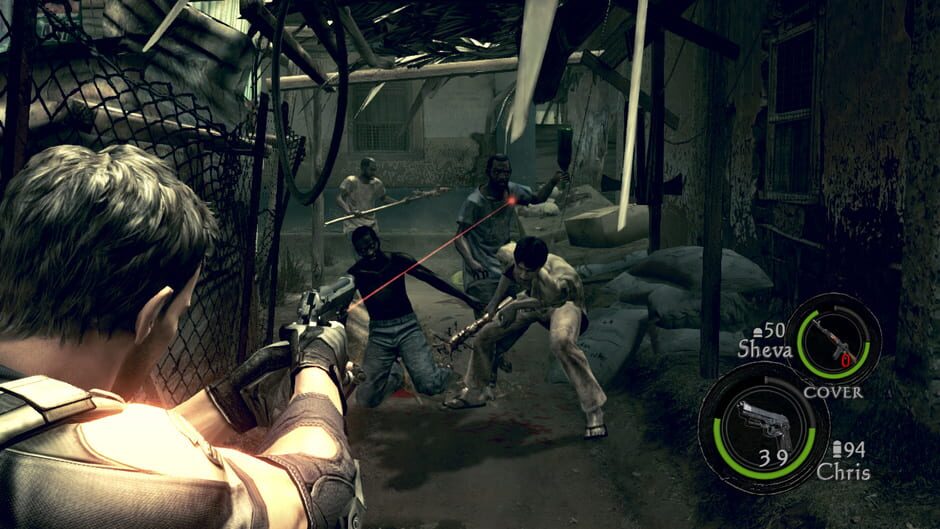
Resident Evil 5 directly continues the evolution begun by Resident Evil 4. The camera remains positioned behind the character, aiming is handled over the shoulder and combat occupies a central place. Capcom pushes this direction even further by placing far more emphasis on action.
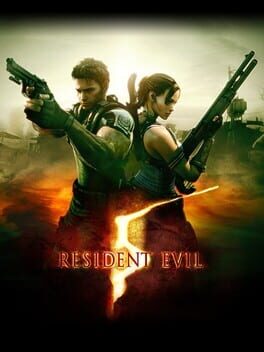
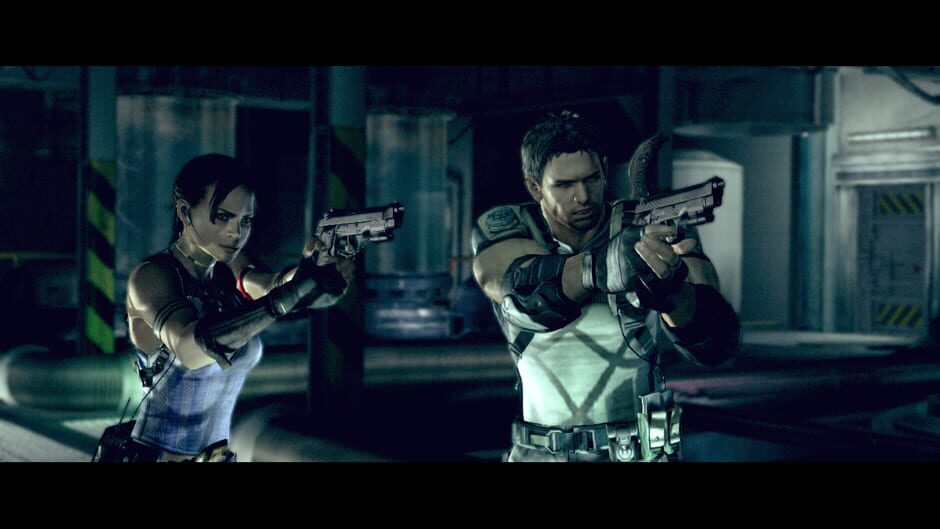
The main difference comes from the permanent presence of a partner. Chris and Sheva travel through almost the entire campaign together, and the game is designed around two characters who can cover each other, share resources and perform certain coordinated actions. The campaign can be played with a second player, while in solo play the other character is controlled by the AI.
This cooperation directly affects exploration and combat. Certain doors or mechanisms require both partners, while several situations temporarily separate Chris and Sheva. Healing items, ammunition and weapons can also be exchanged, turning resource management into a shared responsibility.
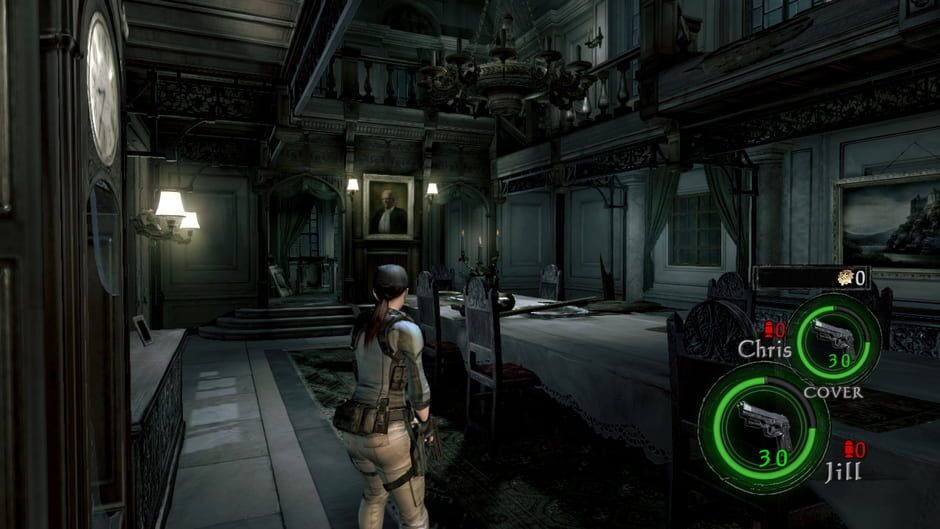
The inventory reinforces this constraint. Each character has a limited number of slots that must hold weapons, ammunition, healing items and equipment. Management takes place directly during gameplay, which makes preparation before encounters important and regularly forces decisions about what to keep, trade or discard.
Weapons play a major role in progression. Pistols, shotguns, submachine guns, sniper rifles, magnums and heavy weapons can be upgraded between chapters by improving attributes such as firepower, capacity or reload speed. Treasures collected throughout the campaign are also used to finance these upgrades.
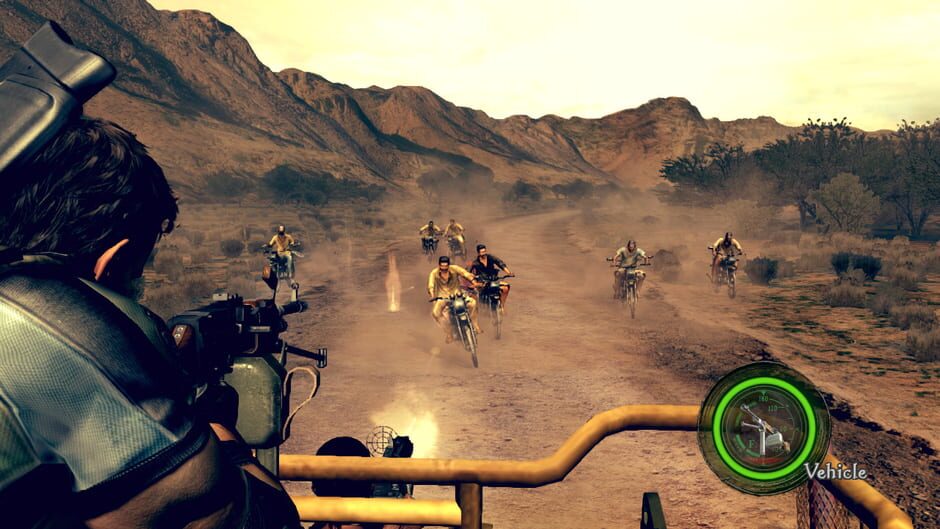
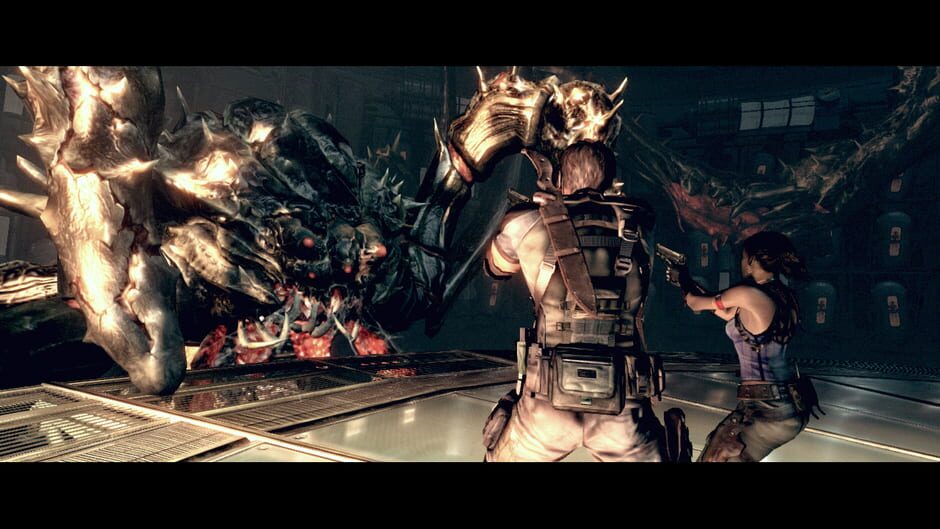
Majini replace traditional zombies as the most common enemies. Like the Ganados in Resident Evil 4, they can use weapons, coordinate certain actions and attack in groups. Different parasitic mutations and biological creatures later alter the priorities of combat encounters.
The game regularly changes environment. After the streets and markets of Kijuju, Chris and Sheva travel through wetlands, villages, industrial facilities, laboratories and several locations directly connected to biological research. This progression gives the campaign a much more international and military scale than the earliest entries.
This direction reduces the place of horror based on isolation. Chris is an experienced soldier, heavily armed and almost constantly accompanied. Tension therefore comes less from vulnerability and more from pressure created by large groups of enemies, limited resources and the need to protect a partner.
The relationship between Chris and Sheva works particularly well within this structure. Sheva is not simply there to accompany an established protagonist: she knows the region, has her own history with the consequences of bioterrorism and gradually becomes an indispensable partner.
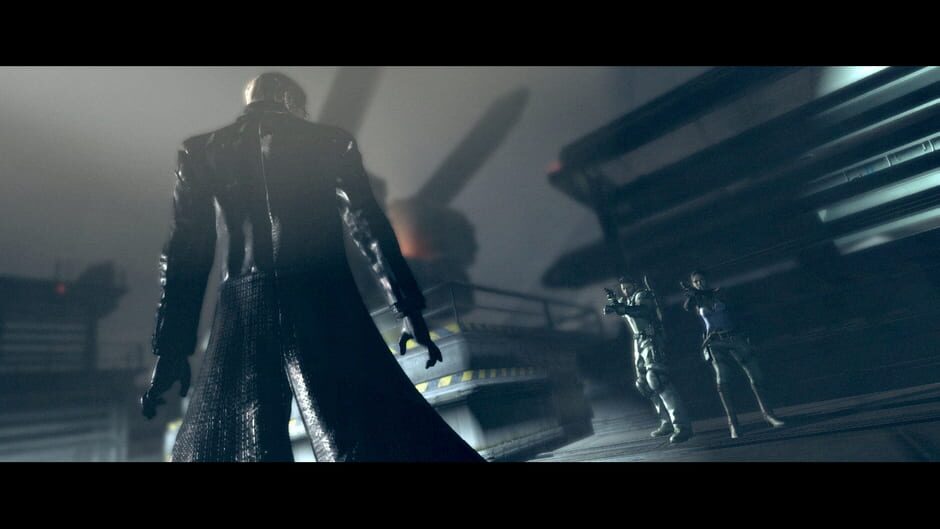
The return of Jill Valentine and Albert Wesker also connects the episode to a much older storyline. Resident Evil 5 brings back elements reaching to the earliest games and carries the conflict between Chris and Wesker to its final confrontation.
Mercenaries mode extends the combat system by removing almost all narrative elements. Players must eliminate enemies quickly, gain extra time and build kill chains to improve their score. The mode particularly highlights mastery of weapons, movement and the game’s different finishing actions.
Expanded editions later added several pieces of content. Lost in Nightmares revisits an earlier mission involving Chris, Jill, Spencer and Wesker, while Desperate Escape takes place alongside part of the main campaign. These episodes provide additional context for events that are only mentioned or briefly shown in the original story.
What to remember
- An entry centered on Chris Redfield and Sheva Alomar, BSAA agents investigating biological-weapons trafficking in Africa.
- A campaign designed around two characters, playable in co-op or with an AI-controlled partner in solo play.
- An even stronger shift toward action after Resident Evil 4, with large groups of enemies, an extensive arsenal and spectacular encounters.
- Shared management of weapons, ammunition and healing items between Chris and Sheva.
- Weapons that can be upgraded using money earned throughout the campaign and treasures collected along the way.
- Majini as the main infected human enemies, supported by different mutations and biological weapons.
- A story linking the BSAA, Tricell, Uroboros, Jill Valentine and Albert Wesker to older events in the series.
- A decisive chapter in the Chris–Wesker storyline, bringing their long-running conflict to a conclusion.
Conclusion
Resident Evil 5 almost fully embraces the series’ transformation into a cooperative action game. The camera, aiming and general structure come directly from Resident Evil 4, but the permanent presence of a second character fundamentally changes the rhythm. Resources, healing and positioning now have to be considered for a pair rather than for an isolated survivor.
This approach works especially well when combat genuinely forces Chris and Sheva to complement one another. Separating the characters, dividing weapons or rescuing a partner creates situations that previous entries could not produce in the same way. It also makes the experience much less oppressive: the fear of being alone largely gives way to managing larger and more spectacular battles.
The game also develops a satisfying sense of progression through its arsenal. Upgrading a weapon, organizing the nine available inventory slots and preparing for another attempt give continuity to both the campaign and Mercenaries mode.
Narratively, the episode has a different kind of importance. By bringing Jill and especially Wesker back to the center of the story, it closes several threads reaching back to the origins of Resident Evil. The Uroboros project and research surrounding the Progenitor virus also connect the African operation directly to the broader history of biological weapons.
That desire to close an era comes with an obvious loss of some traditional survival-horror elements. The abundance of weapons, permanent partner and scale of the encounters often place action ahead of fear. Resident Evil 5 nevertheless remains very coherent with that direction: it turns the formula of its predecessor into a true cooperative game and carries the conflict between Chris Redfield and Albert Wesker to its conclusion.
Good to know
- Resident Evil 5 was developed and published by Capcom.
- The game was released on March 5, 2009, in Japan and on March 13, 2009, in Europe and North America for PlayStation 3 and Xbox 360.
- Chris Redfield belongs to the North American branch of the BSAA, while Sheva Alomar is a member of its West African branch.
- Cooperation is one of the defining features of the episode.
- Resident Evil 5: Gold Edition includes the main campaign and additional content such as Lost in Nightmares and Desperate Escape.
- A new version was released for PlayStation 4 and Xbox One in June 2016.
- The game is also available on Nintendo Switch.