Presentation
Mass Effect 2 retains the narrative structure of the first game but significantly changes its mechanical balance. BioWare reduces part of the traditional RPG management in order to strengthen third-person combat, while giving greater importance to companions and preparation for the final mission.
Shepard’s creation remains at the center of the experience. A new character can be defined at the start, but importing a save from Mass Effect preserves many previous decisions. Characters may be dead or alive, political relationships can differ and several conversations take choices from the first game into account.
The six classes return, but their identities are much more pronounced. Soldier, Adept, Engineer, Infiltrator, Sentinel and Vanguard all receive more distinctive powers and playstyles. The Infiltrator can use Tactical Cloak, the Vanguard can launch toward enemies with Biotic Charge, while the Sentinel notably benefits from Tech Armor.
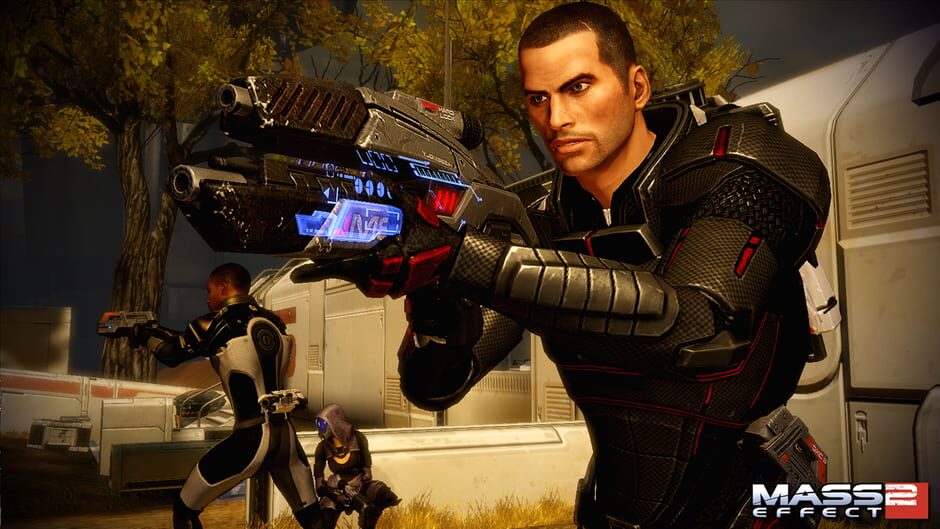
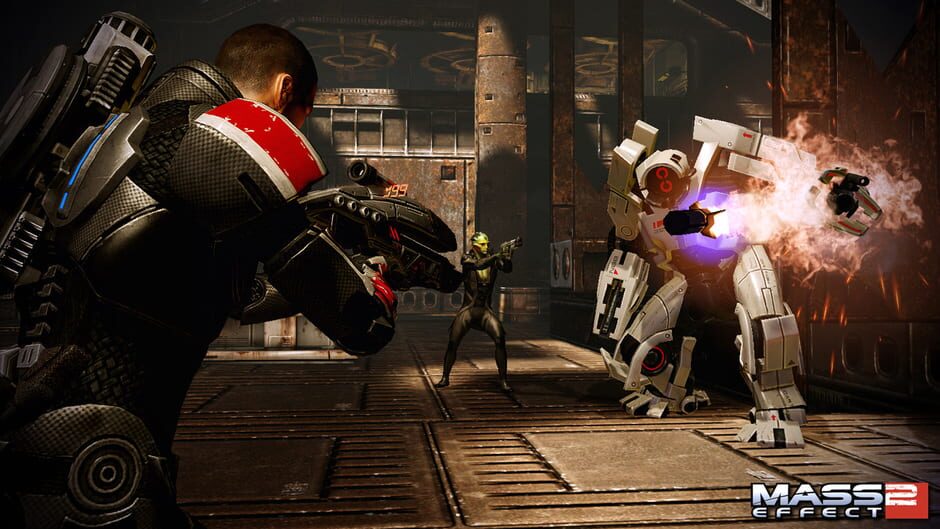
Combat abandons weapon overheating in favor of thermal clips that function like ammunition reserves. Shepard must therefore manage assault rifles, heavy pistols, shotguns, sniper rifles and submachine guns in a way closer to a traditional shooter. Heavy weapons provide exceptional power against certain groups or tougher enemies.
Enemy defenses become an important strategic component. Shields, armor and biotic barriers do not react in the same way to different powers. Overload, Incinerate, Warp and the many abilities available to companions therefore have specific uses depending on the type of opponent being faced.
Powers now largely rely on shared cooldowns. The player cannot simply chain every available ability and must choose the one best suited to the current situation. This restriction gives the classes clearer identities and brings power management closer to the overall rhythm of the firefights.
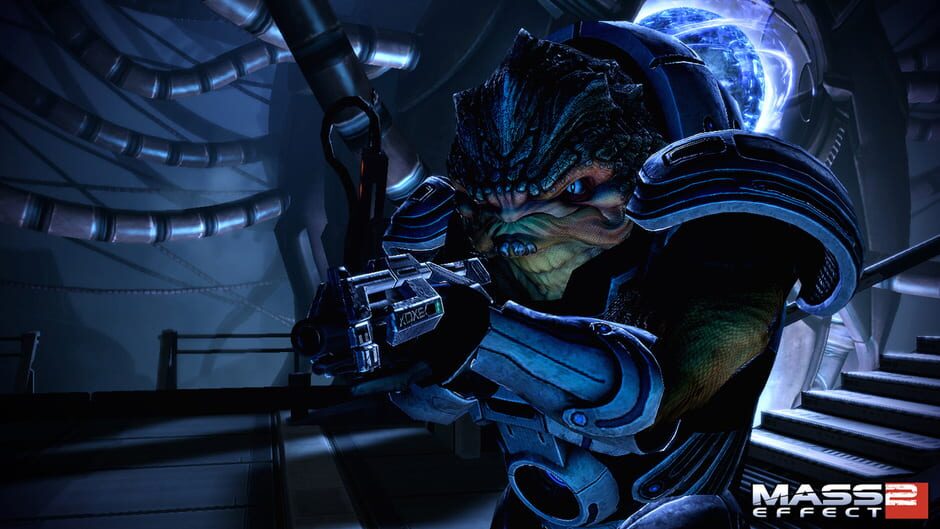
Shepard is still accompanied by two squad members during missions. The choice of pair depends as much on the dialogue the player wants to hear as on the complementarity of their abilities. Miranda can weaken several types of protection, Garrus combines tech skills with firepower, Jack specializes in biotics, while Mordin has abilities particularly useful against armor and regeneration.
Character progression is simplified compared with the first game. Skill trees contain fewer ranks, but each power becomes more significant, with final evolutions allowing the player to choose between different specializations. Equipment is also less abundant: the dozens of nearly interchangeable weapons and armor pieces from the first game give way to a smaller selection where each model has a more identifiable purpose.
The Normandy SR-2 becomes the true center of the adventure. Shepard talks to companions there, researches upgrades, uses the galaxy map and gradually watches the crew take shape. The ship is larger than its predecessor and clearly separates command, research, engineering and living spaces.
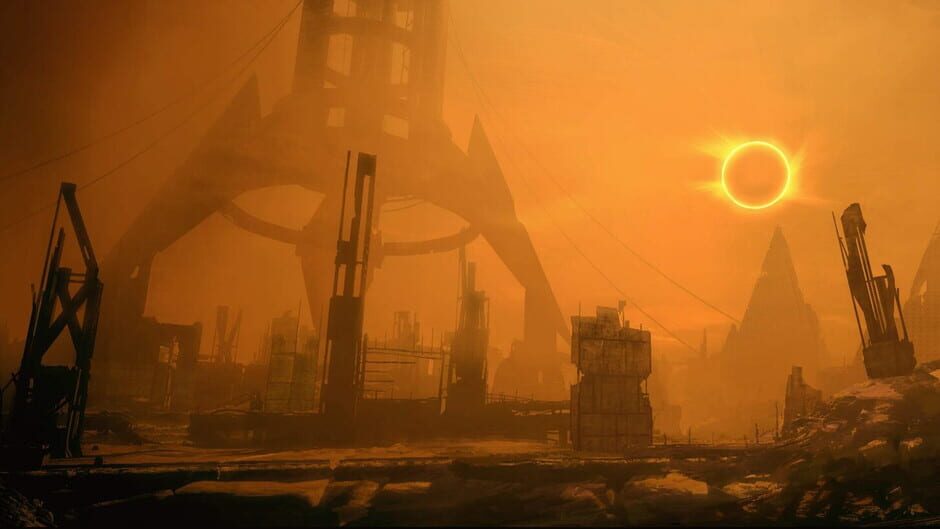
Galactic exploration also changes. Long Mako excursions almost entirely disappear in favor of missions built around more directed environments. Planets can be scanned from orbit to gather resources needed for research and upgrades to the Normandy, equipment or abilities.
Omega, the Citadel, Illium and Tuchanka notably serve as major stopping points. These locations allow Shepard to recruit characters, obtain missions and explore parts of the galaxy that received less attention in the first game. Omega presents a space largely dominated by criminal organizations, Illium combines economic power with Asari influence, while Tuchanka directly shows the historical consequences of the genophage on the Krogan.
The overall structure relies more heavily on characters than on a conventional sequence of major narrative stages. Recruiting a specialist and then earning their loyalty forms a large part of the campaign. These individual missions allow the game to explore the culture and conflicts associated with each companion while also having a concrete effect on the final mission.
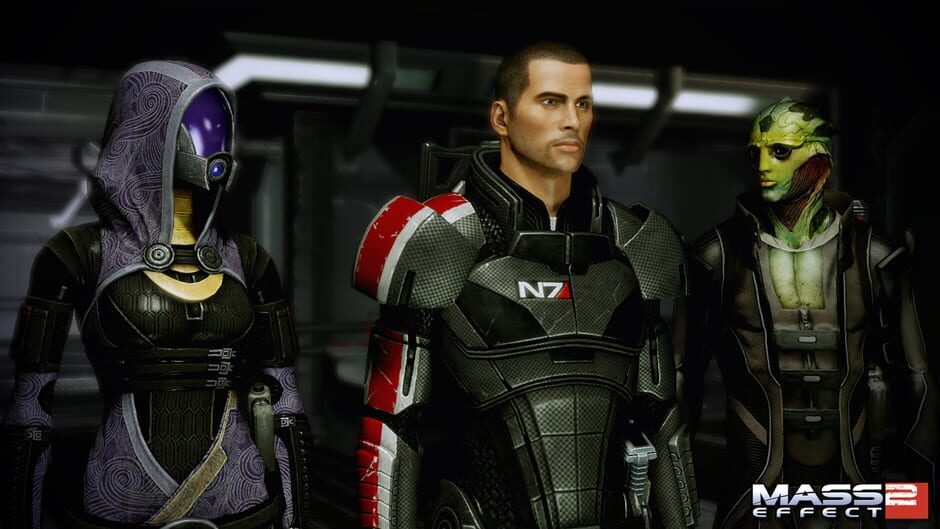
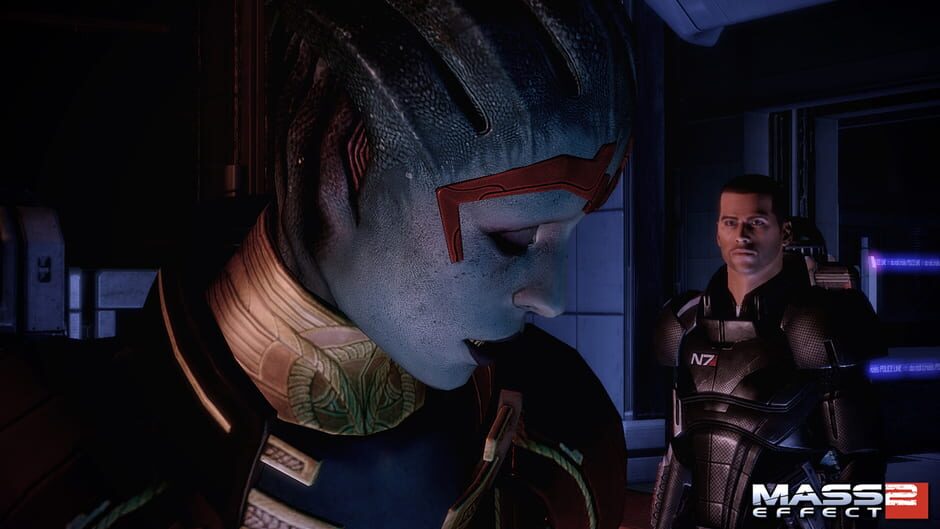
This approach gives particular importance to the relationships built aboard the Normandy. Garrus and Tali continue their bond with Shepard from the first game, while Miranda, Mordin, Thane, Jack, Grunt, Samara and Legion provide new perspectives on Cerberus, the Krogan, the Geth, biotics and the political structures of the galaxy.
Legion notably changes the understanding of the Geth established in the first Mass Effect. Its presence reveals that they are not a completely unified collective and allows the player to better understand the divisions behind their war with the Quarians. Mordin, meanwhile, provides a much more direct view of the modification of the genophage and the Salarians’ responsibility in that decision.
The dialogue system retains the Paragon and Renegade orientations but adds contextual interrupts. At certain moments, the player can immediately trigger a Paragon or Renegade action instead of selecting a simple response from the dialogue wheel. Shepard can therefore defuse a situation, intervene physically or make a decision before a conversation has finished.
The Suicide Mission ultimately brings all these systems together. Upgrades made to the Normandy affect the journey toward the Collector base, while companion loyalty and specialization determine their ability to fulfill certain roles. Choosing the wrong specialist or assigning an unprepared character can lead to their death, and even Shepard is not necessarily guaranteed to survive.
What to remember
- Shepard dies during the destruction of the Normandy and is rebuilt over two years by Cerberus through Project Lazarus.
- The Collectors abduct entire human colonies and become the central threat of the game.
- Shepard works with the Illusive Man and commands the Normandy SR-2 in order to assemble a team capable of crossing the Omega 4 Relay.
- Loyalty missions develop the companions’ personal stories and influence their chances of surviving the final mission.
- The six classes from the first game return with more distinctive powers and combat much closer to a third-person shooter.
- Equipment management is simplified, weapon overheating is replaced by thermal clips, and enemy defenses require adapting the powers being used.
- Saves from the first Mass Effect can be imported to preserve many choices, characters and consequences.
- The Suicide Mission can end with very different combinations of survivors depending on the player’s preparation and decisions.
Conclusion
Mass Effect 2 shifts the center of the series. The first game devoted much of its energy to introducing the Citadel, the galaxy’s species and the Reaper threat; its sequel turns that galaxy into a recruitment ground where each companion becomes a story to understand before the final confrontation.
This structure gives loyalty missions unusual importance. They are not merely side quests intended to provide additional experience. They explain why Garrus, Mordin, Jack, Tali or Miranda stand beside Shepard and directly determine how prepared they are when the team crosses the Omega 4 Relay.
Combat gains precision while giving up some of the complexity of inventory management. Classes have clearer identities, enemy defenses give different powers specific purposes and firefights benefit from much more controlled pacing. This evolution moves the game away from certain aspects of traditional RPG design, but allows combat to better support the cinematic presentation.
The Suicide Mission then brings both dimensions together. The game asks the player to know the companions well enough to assign the right responsibilities while also accounting for their loyalty and the upgrades made to the Normandy. Consequences are not reserved for a final cutscene: they can permanently remove certain crew members from the rest of the trilogy.
This ability to turn preparation into consequence gives Mass Effect 2 its own identity. The Collector plot provides the framework for an adventure whose real project is to build a team, understand its fractures and decide whom to trust when the plan begins to collapse. The Reaper threat remains in the background, but the people gathered around Shepard carry the essential weight of this episode.
Good to know
- Mass Effect 2 was developed by BioWare and is the second entry in the original trilogy centered on Commander Shepard.
- The game was released on January 26, 2010, in North America for Xbox 360 and PC, followed by January 29 in Europe.
- A PlayStation 3 version was released in January 2011 and includes several pieces of previously released downloadable content.
- The game remains exclusively single-player.
- Zaeed Massani and Kasumi Goto are additional companions introduced through downloadable content.
- Lair of the Shadow Broker continues Liara T’Soni’s story and her conflict with the Shadow Broker.
- Arrival directly advances the story toward the announced Reaper invasion and serves as an important transition into Mass Effect 3.
- Mass Effect Legendary Edition, released on May 14, 2021, includes the Mass Effect 2 campaign and the vast majority of its downloadable content as part of the remastered trilogy.