Overview
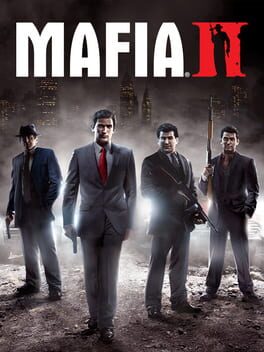
Developed notably by 2K Czech and published by 2K Games and Take-Two Interactive, Mafia II is a video game released on August 24, 2010 for PlayStation 3, PC and Xbox 360. The genres associated with this entry are action, adventure, fantasy, historical, FPS, racing, infiltration, open world and sandbox, in an exclusively single-player experience.
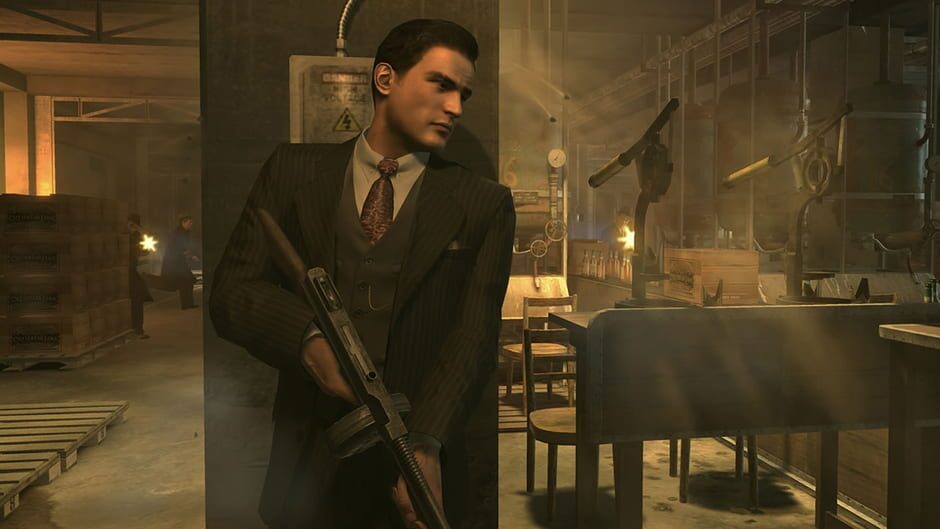
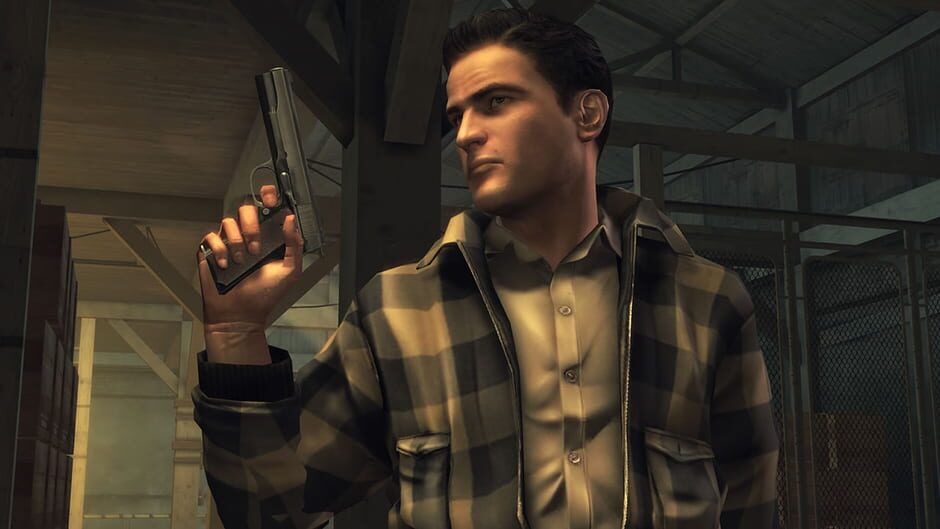
The story follows Vito Scaletta, a Sicilian immigrant living in the United States, and takes place mainly in Empire Bay. The narrative spans two important periods in his life, with his return to the city in 1945 and a new stage of his journey in 1951, in an America shaped by the postwar period and organized crime.
Vito notably reunites with Joe Barbaro, his childhood friend, who becomes one of his main connections to the criminal underworld. The debt left by his father pushes Vito to take on various jobs for the mob before his involvement gradually takes on a much greater place in his life.
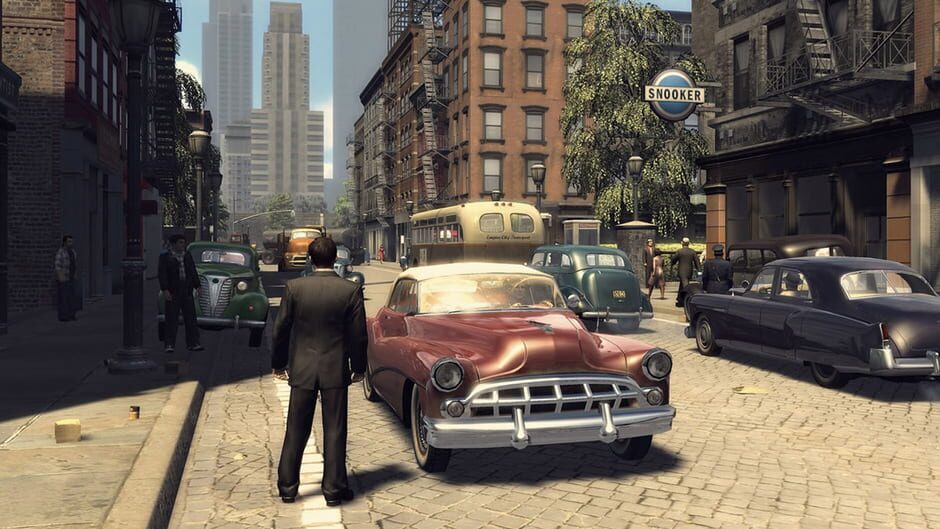
Empire Bay serves as the game’s main setting. This open city can be explored on foot or by vehicle and contains different districts, shops, garages, gas stations and locations used by missions. As in the first Mafia, however, the environment remains largely built around narrative progression rather than an accumulation of independent activities.
Gameplay mainly alternates between driving and third-person combat. Gunfights use a cover system that allows Vito to protect himself behind elements of the environment, aim from his position and move between different forms of cover during shootouts.
Combat does not rely solely on firearms. Mafia II also includes a melee combat system based notably on strikes, dodging and various contextual actions. Certain situations also allow Vito to progress more discreetly through stealth movement.
Interactions with the environment can also offer several approaches. To steal a car, for example, Vito can try to pick its lock or simply smash a window. This distinction between a normal action and a more violent one also appears in different interactive elements throughout the game.
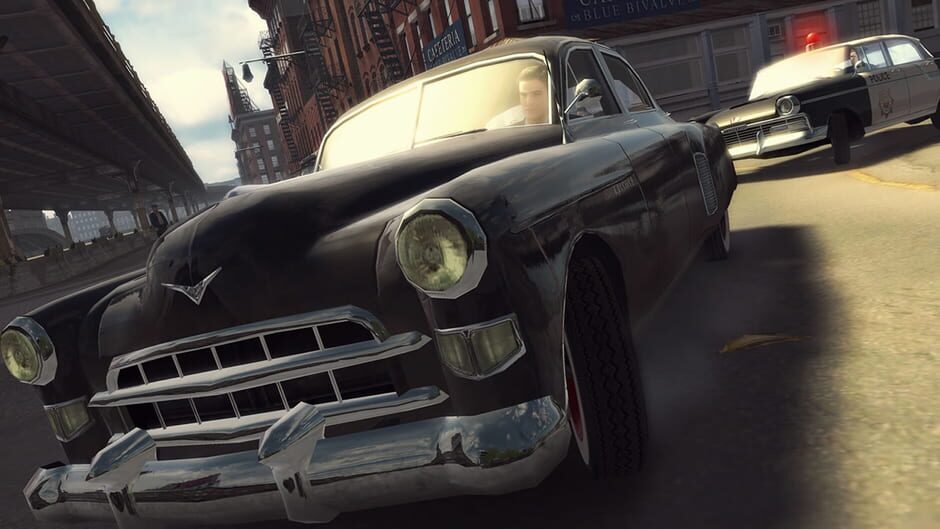
Vehicles once again play an important role. They are used to travel around Empire Bay, during chases and in certain missions, but can also be stored in garages and modified in workshops. Several parameters can be customized, including the vehicle’s appearance and certain elements related to its performance.
Traffic conditions also affect driving. Police react to criminal activity and use a wanted system whose intensity changes depending on Vito’s actions. Vehicles can also behave differently depending on the conditions encountered, particularly on the snow-covered roads of the early chapters.
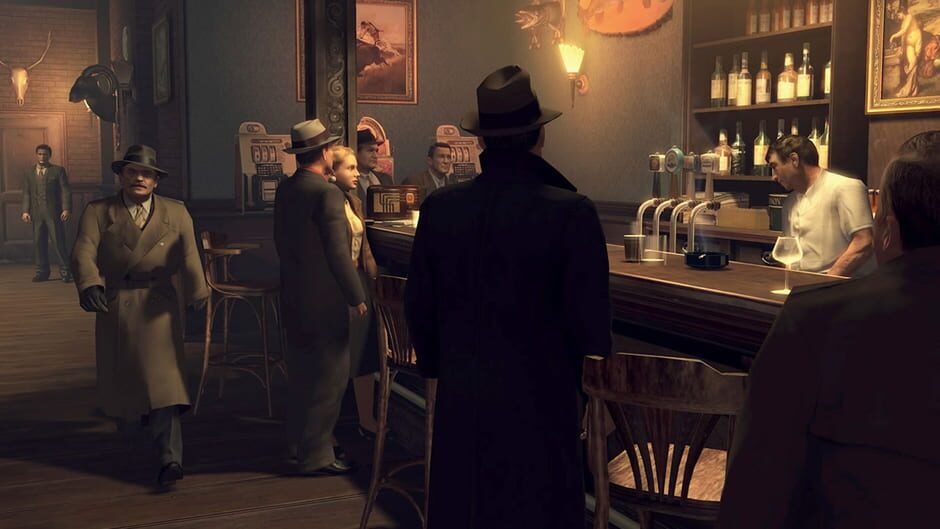
Empire Bay contains various shops that can be used by the player. Vito can notably buy clothes, weapons or food, while gas stations allow vehicle fuel to be managed. Some businesses can also be robbed, directly connecting the urban environment with the character’s criminal activities.
Progress through the campaign also transforms the city. The different periods covered by the story notably change the atmosphere, the vehicles seen in the streets, clothing and the music played on the radio stations that accompany travel across Empire Bay.
Mafia II uses The Illusion Engine. On PC, the game also offered enhancements related to NVIDIA PhysX and APEX for certain physical effects, particularly in environments and clothing.
Despite its open-world setting and numerous urban systems, Mafia II remains primarily structured as a story-driven crime narrative. Empire Bay serves as the shared territory for missions, while driving, gunfights, infiltration, shops and interactions with the police accompany Vito’s evolution within the criminal underworld.
Key takeaways
- Vito Scaletta turns to organized crime after returning to Empire Bay and discovering the debts left by his father.
- Joe Barbaro, his childhood friend, accompanies much of his entry into and subsequent rise through the criminal underworld.
- Empire Bay is an open world that can be explored on foot and by car, but remains largely structured around the narrative campaign.
- Combat combines firearms, a cover system, melee combat and stealth movement.
- Vehicles can be driven, stored and modified, while the police react to offenses and criminal activity.
- Shops, garages, gas stations, traffic and radio stations contribute to the representation of everyday life in the city.
Conclusion
Mafia II moves the series to Empire Bay and builds its story around Vito Scaletta, whose entry into organized crime begins with the need to settle the debts left by his father before developing into a genuine social and criminal rise.
The city accompanies this evolution by serving both as a historical setting and as a gameplay space. Driving, shops, police and the changes associated with the different time periods provide continuity between the missions that make up the campaign.
Combat also develops the systems of the first game through the use of cover, contextual interactions and more structured melee combat, while still giving an important place to driving and urban exploration.
Mafia II therefore combines open-world design, driving, combat and infiltration with a strongly story-driven campaign centered on Vito’s ambitions, his friendship with Joe and the power struggles between Empire Bay’s criminal organizations.
Good to know
- Mafia II was released on August 24, 2010.
- The game was notably developed by 2K Czech and published by 2K Games and Take-Two Interactive.
- It is available on PlayStation 3, PC and Xbox 360.
- The genres listed in this entry are action, adventure, fantasy, historical, FPS, racing, infiltration, open world and sandbox.
- It features a Single player mode only.
- The game uses The Illusion Engine.
- Mafia II: Definitive Edition, released later, is a remastered version of Mafia II and does not correspond to the original edition described in this entry.