Presentation
Hollow Knight: Silksong takes the fundamental idea of its predecessor — entering an unknown kingdom and gradually learning how to read it — but immediately changes the way that world is traversed.
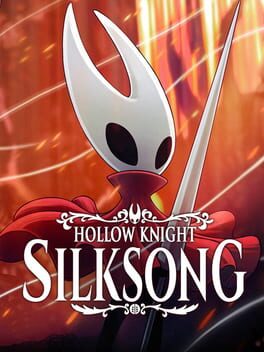
Hornet is not the Knight.
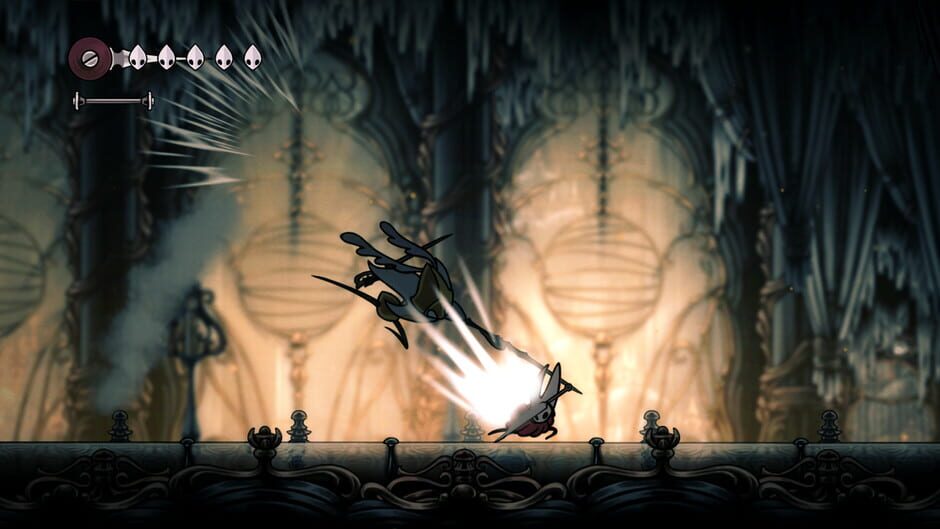
She is taller, faster and far more mobile. Her movements have an almost acrobatic energy: she leaps, attacks with her needle and moves through encounters with an agility that gives the game a noticeably different rhythm from Hollow Knight.
That mobility fits the structure of Pharloom perfectly.
Where Hallownest often felt like a journey ever deeper underground, Silksong builds its adventure around an ascent. Hornet begins in the lower regions of the kingdom and progresses toward the Citadel rising above its summit.
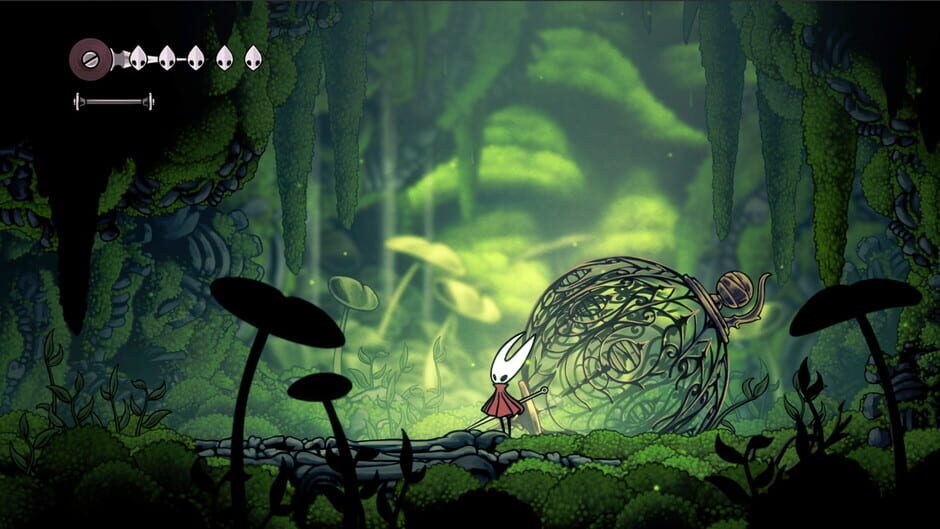
This overall direction does not make the world any less labyrinthine. Overgrown caves, industrial structures, misty lands, coral forests and more elaborate cities interconnect within a vast world where new abilities and secondary routes gradually change how movement works.
The map also retains a philosophy close to that of Hollow Knight. It is not immediately provided in a perfectly complete form. Exploration still means learning the geography of an area, identifying its connections and remembering passages that may become accessible later.
The most important change, however, comes from the character’s body itself.
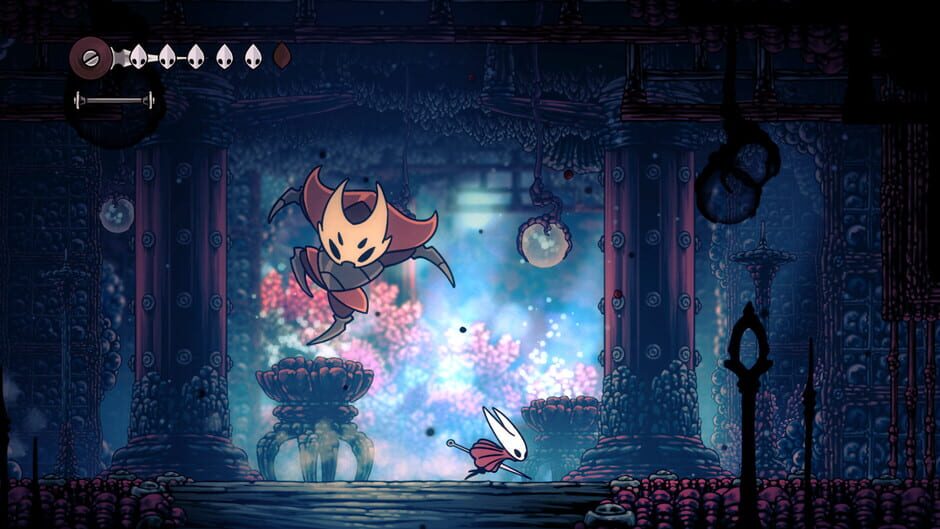
Hornet occupies space differently from the very beginning. Her needle supports fast attacks, while her movement encourages constant repositioning. Where the Knight could feel compact and methodical, Hornet seems designed to repeatedly enter and leave an enemy’s reach.
Silk lies at the center of this system.
By fighting, Hornet can accumulate this resource and use it for different abilities. It notably allows her to bind her wounds and recover health quickly. This recovery is much faster than the Knight’s Focus and can even be used while moving or in the air, but it consumes a substantial amount of silk.
Healing therefore becomes less of a long pause and more of an immediate decision: spend a valuable resource now to regain control, or preserve it for other possibilities.
Tools form the other major part of her arsenal.
Hornet can craft and use different secondary weapons, traps and mechanisms found or developed during her journey. Their functions vary enough to change how situations are approached rather than simply increasing damage.
Some tools are better suited to direct confrontation, while others help control space or prepare for an approaching enemy. This preparation gives Hornet an identity consistent with her role as a hunter: she does not rely only on her needle, but also on what she has learned and built.
Combat remains demanding.
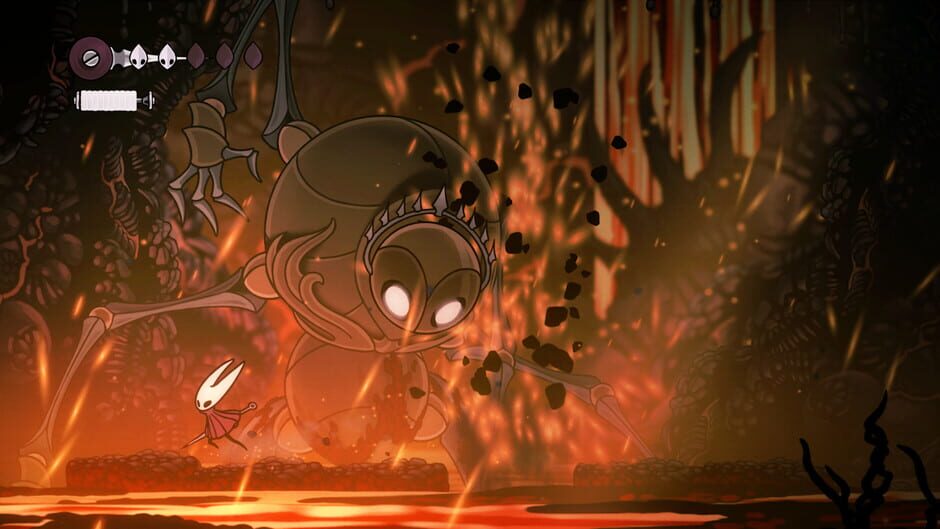
Enemies behave in very different ways, and Hornet’s greater speed does not make the game more forgiving. Her mobility provides more options, but opponents can also control space quickly, extend their attacks or punish a poorly chosen trajectory.
Bosses continue this logic by requiring players to observe their movements before finding the rhythm that allows defense to turn into offense. Precision remains fundamental, but it now takes on a more dynamic form.
Silksong also develops the activities offered by its inhabitants more extensively.
Hornet can accept different requests involving creatures to hunt, objects to recover, people to help or mysteries to solve. These objectives give Pharloom’s communities a stronger presence and reinforce the feeling of traveling through a kingdom that is still inhabited rather than a collection of almost abandoned ruins.
This change naturally accompanies Hornet’s personality.
In Hollow Knight, the Knight’s silence often left characters speaking alone in front of them. Hornet responds. She can question, provoke or simply show that she understands the situation she is facing.
The difference may sound small on paper, but it significantly changes the relationship with the world. The protagonist is no longer only the perspective through which the player discovers a kingdom: she already exists within its story.
Pharloom itself also has an identity distinct from Hallownest.
The kingdom remains unsettling and often melancholic, but it feels more animated by its inhabitants, pilgrims and traditions. Communities continue to function, characters follow their own paths and the ascent toward the Citadel gives the journey an almost religious dimension.
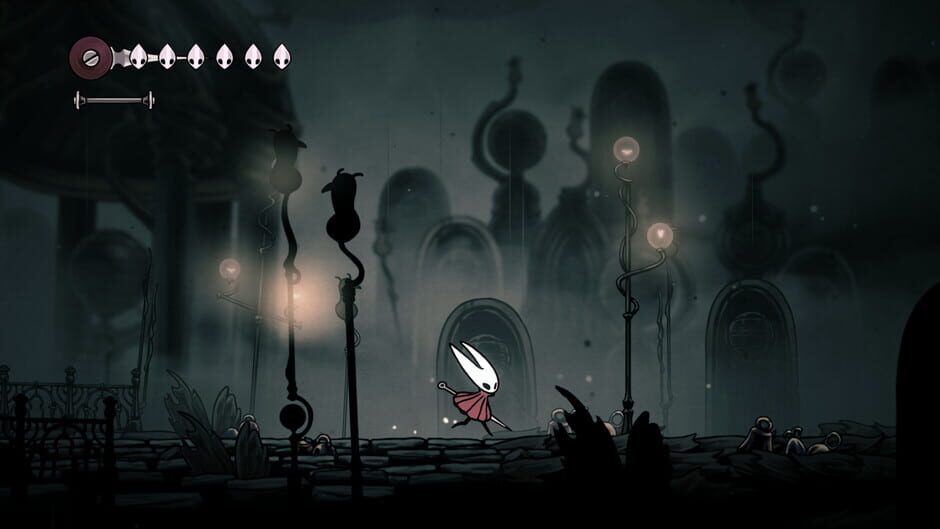
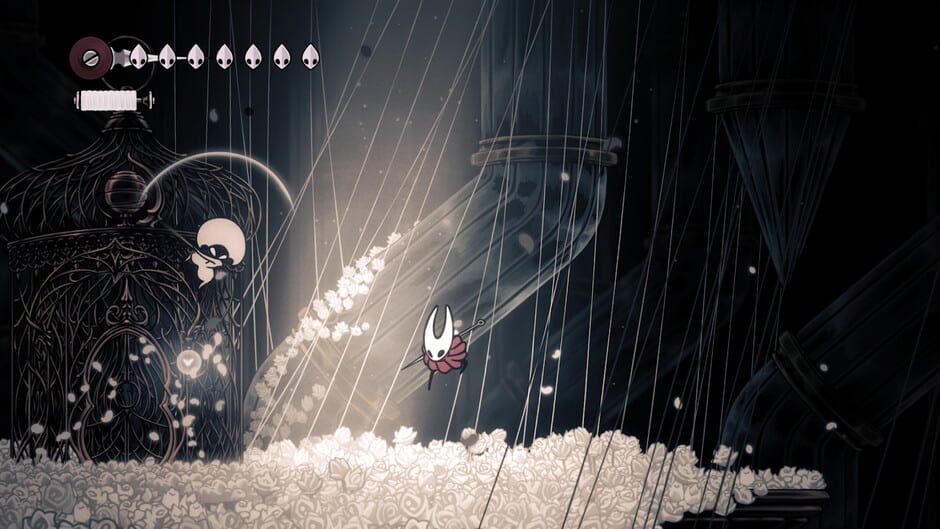
The art direction retains Team Cherry’s distinctive hand-drawn 2D style, with environments built by hand and immediately readable silhouettes. Each region nevertheless seeks its own texture: dense vegetation, golden architecture, machinery, caverns or mist-covered territories constantly create the feeling of entering a different environment.
Christopher Larkin once again accompanies this exploration with an orchestral soundtrack that preserves the melancholy of the first game while giving Pharloom a distinct musical personality.
Silksong therefore does not simply try to offer more Hollow Knight.
It takes the idea of an immense kingdom that the player must gradually understand, then changes the person moving through it.
And when the character moves differently, fights differently and speaks differently, the entire world around her ultimately feels different as well.
What to remember
- The sequel to Hollow Knight, this time centered on Hornet after her capture and arrival in the kingdom of Pharloom.
- A journey built around an ascent from the depths of the kingdom toward the Citadel at its summit.
- A protagonist who is faster and more acrobatic than the Knight, with mobility that transforms both exploration and combat.
- Silk as a central resource, used notably for Hornet’s abilities and to recover health quickly.
- A tool system allowing secondary weapons, traps and mechanisms to be crafted and used in different situations.
- A vast interconnected world made up of regions with distinct visual identities and populations.
- A more directly embodied narrative thanks to Hornet, who has her own voice, history and interactions with the inhabitants of Pharloom.
Conclusion
The obvious risk for Hollow Knight: Silksong was changing the kingdom without truly changing the adventure.
Hornet is precisely what prevents that.
She does not move like the Knight, does not fight with the same rhythm and does not silently pass through conversations. Her presence forces the entire game to move slightly faster around her.
This difference is particularly noticeable during exploration. Pharloom retains the detours, hidden passages and returns to previously inaccessible locations that made Hallownest so compelling, but Hornet’s agility gives its spaces a stronger sense of verticality.
Combat follows the same movement. Its precision remains demanding, but the use of silk, tools and a much more mobile character encourages a form of controlled aggression. An opening is no longer only a chance to strike: it can be used to leap, reposition, deploy a tool or quickly recover from a dangerous situation.
The density of the kingdom and the difficulty of some encounters can also make the adventure harsh. Like its predecessor, Silksong accepts that the player may get lost, fail and return later with greater mastery.
But Pharloom deserves that attention.
Its inhabitants, pathways and almost ritual ascent toward the Citadel give the world an identity that does not rely only on memories of Hallownest.
In Hollow Knight, a small silent being gradually descended into the depths of a kingdom to understand why it had died.
In Silksong, Hornet moves in the opposite direction.
She climbs.
And that simple reversal is enough to give her journey an entirely different energy.
Good to know
- Hollow Knight: Silksong was developed and published by Australian independent studio Team Cherry.
- The game was released on September 4, 2025, on PC and consoles.
- It is the sequel to Hollow Knight and places Hornet, a major character from the first game, in the role of protagonist.
- The adventure takes place in Pharloom, a new interconnected kingdom that Hornet must cross on her way toward the Citadel at its summit.
- Hornet uses silk for several abilities, notably to heal quickly during exploration and combat.
- Tools are a major new part of her equipment and can take the form of weapons, traps or mechanisms.
- Christopher Larkin, who also composed the music for Hollow Knight, returns for the soundtrack of Silksong.