

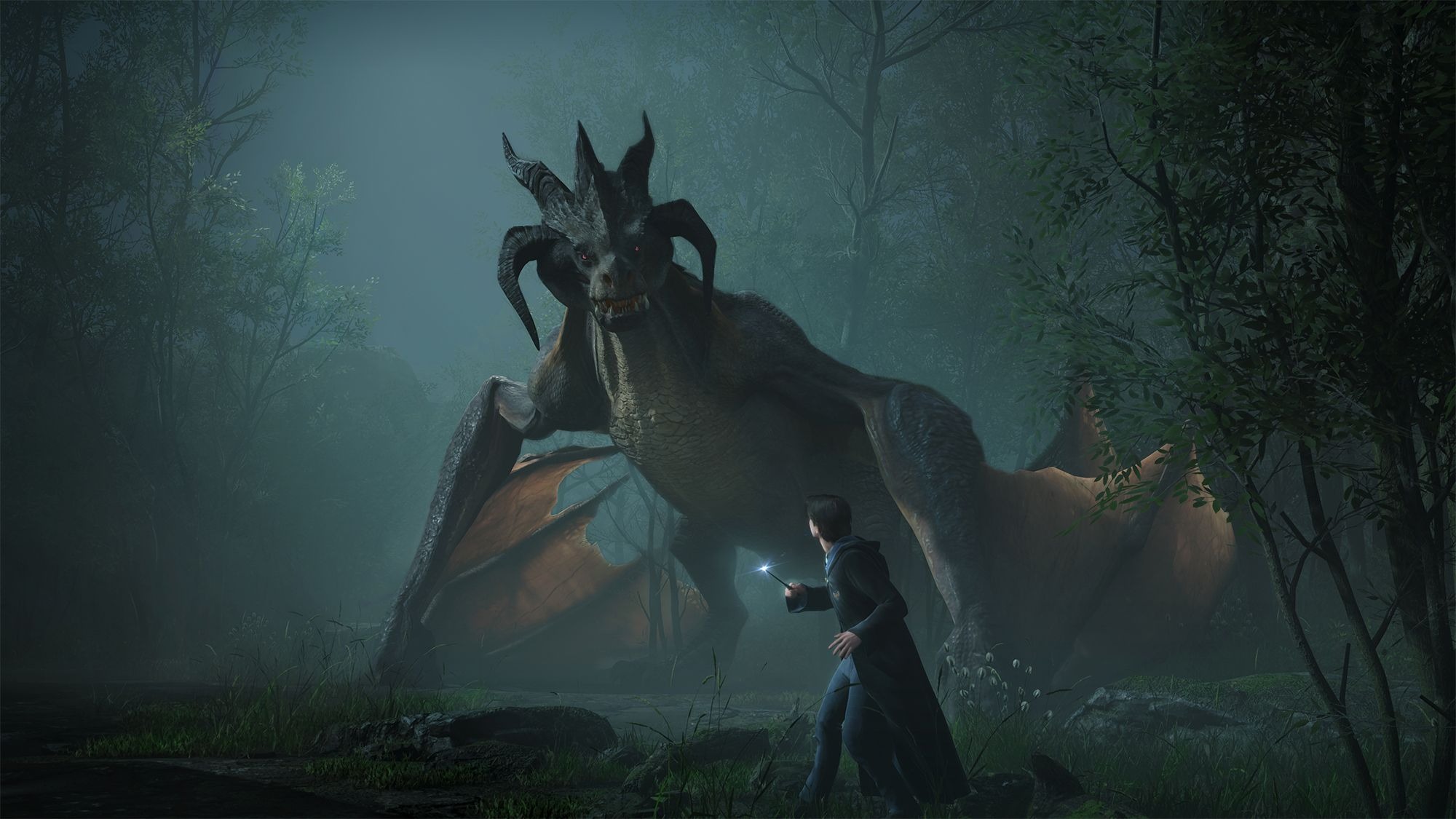
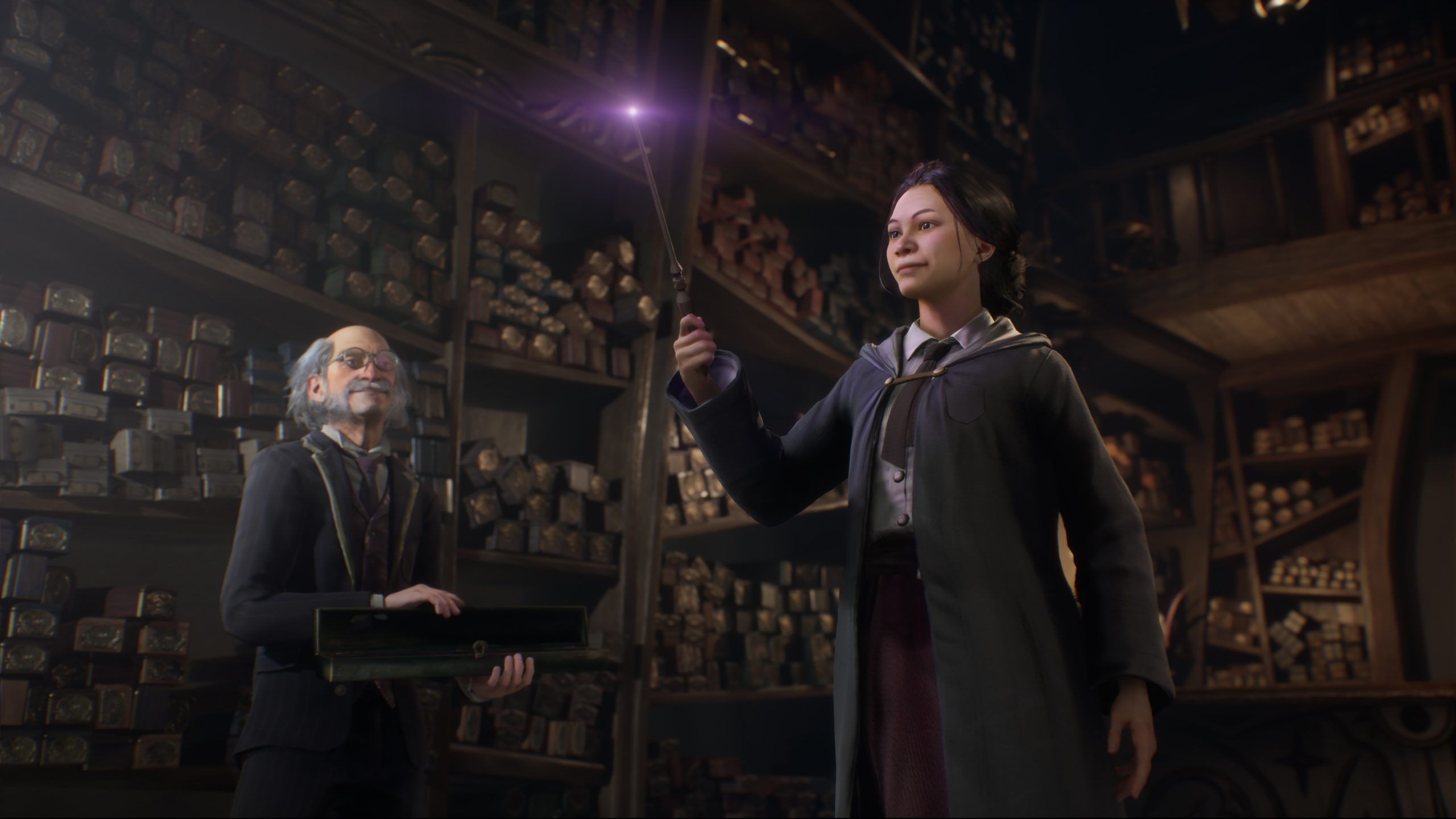
Synopsis
At the end of the 19th century, long before Harry Potter's arrival at Hogwarts, a new student exceptionally joins the school of witchcraft and wizardry directly in their fifth year. Their late arrival conceals a much more important peculiarity: they possess a strange ability to perceive and manipulate an ancient form of magic that very few witches or wizards seem capable of understanding.
Accompanied notably by Professor Eleazar Fig, the student begins investigating the traces left by this magic and the secrets it conceals. But this discovery also attracts the attention of Ranrok, a goblin determined to exploit a power capable of disrupting the balance of the wizarding world.
Between classes at Hogwarts, encounters with other students, exploration of Hogsmeade and the Scottish Highlands, the character must understand why they can access this ancient magic and decide how that power should be used.
Meanwhile, tensions between goblins, dark wizards and witches and wizards continue to grow, turning an already unusual school year into an adventure that extends far beyond the castle walls.
Overview
For years, the real promise of a Harry Potter game may not have been to play as Harry Potter. It was simply to be able to push open a door in Hogwarts and see what was behind it.
Hogwarts Legacy builds almost its entire identity around that idea.
Avalanche Software sets its adventure in the 1800s, far enough from the books and films to avoid retelling a story we already know. Harry, Hermione and Ron do not exist yet. Neither does Voldemort. The castle, the houses, the ghosts, certain families and many of the traditions are already there, but the player can discover them without constantly walking in the footsteps of the original saga's characters.
The result is particularly convincing inside Hogwarts.
Staircases, animated paintings, classrooms, secret passages, dungeons, libraries, towers and corridors make up a castle whose structure often creates the feeling that another room exists around every corner. Some doors simply open into a classroom. Others hide a puzzle, a chest or a detail the player is never actually required to discover.
That density contrasts with the rest of the open world. Hogsmeade, the Forbidden Forest and the Highlands greatly expand the available space with villages, ruins, enemy camps, caves, magical creatures and side activities. The broom quickly allows the player to gain altitude and turns travel into an aerial stroll through a landscape designed to be admired as much as crossed.
The combat system is probably one of the game's strongest surprises. Spells do not simply function as colorful weapons: some break specific protections, move enemies, pull them closer, throw them away or allow several effects to be combined.
Accio can pull a target closer. Levioso suspends it. Depulso pushes it away. Incendio rewards close range. Other spells are as useful for solving puzzles as they are for fighting. This logic allows magic to become a genuine gameplay grammar rather than a simple visual layer placed over a conventional action game.
The character also progresses through talents, new spells, equipment and various upgrades. The Room of Requirement gradually becomes a personal space where potions can be brewed, certain plants grown, equipment improved and fantastic creatures housed.
But behind that richness, a contradiction also begins to appear.
The further Hogwarts Legacy moves away from Hogwarts, the more it sometimes starts to resemble a very familiar open world. Enemy camps, chests, points of interest, collections, trials and small puzzles multiply until the player has plenty to do — without those activities always possessing the same magic as the castle itself.
Key takeaways
- The story takes place in the 1800s. Hogwarts Legacy is not a direct adaptation of the Harry Potter novels or films and tells an original adventure set long before their events.
- The player creates their own student. House, appearance and various character elements can be customized before gradually developing their talents and combat style.
- Hogwarts is fully explorable. Classes, secret passages, dungeons, common rooms, puzzles and numerous environmental details give the castle a distinctive density.
- The world extends far beyond the school. Hogsmeade, the Forbidden Forest, the Highlands and several villages or ruins can be explored on foot, by broom or with certain creatures.
- Combat is built around spell combinations. Colored shields, enemy control, ancient magic, potions and plants allow for different approaches to encounters.
- The game is exclusively single-player. It offers no cooperative campaign or multiplayer mode.
- Quidditch is not playable. The broom can be used for exploration and flying challenges, but Quidditch matches are not part of the game.
- There is no true universal morality system. Some quests offer decisions, but the world does not systematically measure the character's behavior through a morality meter.
PANACHES review
Hogwarts Legacy may be at its best when it forgets that it is supposed to be a video game.
Not when a fight begins. Not when a new activity appears on the map. Not when a chest promises a pair of gloves slightly better than the ones already equipped.
But when you get lost.
When you walk through a corridor with no particular objective and a painting suddenly begins to move. When a staircase leads to a room you did not know existed. When a suit of armor suddenly strikes the one next to it because it has apparently had enough of sharing the same hallway for several centuries.
That is where the game touches something very particular.
Hogwarts belongs to that category of fictional places whose emotional architecture part of the audience almost knows before even entering them. The Great Hall. The staircases. The common rooms. The dungeons. The library. The greenhouses.
Avalanche therefore had to build a place recognizable enough to awaken a memory, yet coherent enough to support the player suddenly deciding to turn left where no film camera had ever gone.
That is probably the project's greatest achievement.
The castle does not merely feel reproduced. It often feels as though it had continued to exist off-screen.
And that matters enormously.
Because the fantasy offered by Hogwarts Legacy is not really about becoming the most powerful wizard in the world. It is about finally being allowed to stay after the scene ends.
Explore the rooms. Go to Hogsmeade. Choose a house. Get on a broom. Enter the Forbidden Forest without a two-hour storyline immediately dragging you back toward the credits.
Combat fits surprisingly well into this whole. Spells have enough distinct roles for encounters to quickly develop their own rhythm. Pulling an enemy closer, keeping them suspended in the air, breaking a protection and then throwing them into a wall creates a sense of control that fits quite naturally with the fantasy of being an experienced wizard.
The problem is that the game knows the conventions of the modern open world so well that it sometimes ends up obeying them with far too much seriousness.
One puzzle becomes ten puzzles.
Then fifty.
An enemy camp appears. Then another. A cave contains a chest. Then a hundred other caves suddenly seem to have something to prove as well.
The Merlin Trials perfectly illustrate this contradiction. The first few feel like small magical traces scattered across the landscape. After several dozen, Merlin mostly starts to look like someone who had an enormous amount of free time.
The world then becomes less magical precisely because it is constantly trying to reward exploration.
Hogwarts itself avoids this problem more successfully because its main reward is often discovery. A room does not necessarily need a legendary item when it already contains an amusing idea, an architectural detail or a small visual story.
The main storyline faces a comparable difficulty.
The idea of ancient magic gives the character an important place in the world and justifies some of their abilities, but it sometimes remains less interesting than the smaller stories encountered along the way.
Some quests connected to other students, particularly those questioning the limits of dark magic, create more tension than the grand threat meant to save the wizarding world.
That is rather revealing.
Hogwarts Legacy sometimes wants to be a grand fantasy adventure when its real strength lies in the much simpler pleasure of being a student at Hogwarts.
One could almost wish for more ordinary classes, more relationships between houses, more social consequences for the player's decisions and more moments where school life exists for its own sake.
Because despite the promised freedom, the character very quickly becomes a kind of magical phenomenon capable of crossing the Highlands while defeating dozens of enemies between two Herbology lessons.
It is fun.
It is also slightly strange for a student who arrived five minutes ago.
But whenever the game returns to its castle, something works almost immediately.
Hogwarts Legacy's success therefore does not rely only on using an enormous license. It comes from Avalanche understanding that Hogwarts was not merely a famous setting: it was a place millions of readers and viewers had already mentally inhabited.
The game simply hands them the keys.
And even when the open world becomes repetitive, it is difficult to deny the small absurd pleasure of deciding that before saving the world, you are going to spend another twenty minutes exploring a staircase.
Good to know
- Hogwarts Legacy : L'Héritage de Poudlard is developed by Avalanche Software and published by Warner Bros. Games under the Portkey Games label.
- The game was released on February 10, 2023 for PlayStation 5, Xbox Series X|S and PC.
- The PlayStation 4 and Xbox One versions were released on May 5, 2023.
- The Nintendo Switch version arrived on November 14, 2023.
- A version specifically adapted for Nintendo Switch 2 was released on June 5, 2025. It notably improves graphics, loading times and the fluidity of navigation through the open world. This version does not appear in the
plateformesfield because the current PANACHES taxonomy does not yet include anintendo-switch-2value. - The Nintendo Switch 2 version was co-developed with Krome Studios.
- Hogwarts Legacy uses Unreal Engine. Avalanche Software previously used a proprietary engine and chose to move to Epic's technology notably for its tools, open-world technologies and rendering system.
- The game takes place in the 1800s, long before the adventures of Harry Potter, Hermione Granger and Ron Weasley.
- It is not a direct adaptation of the books or films. The game develops an original story set within the same wizarding world.
- According to the official FAQ, J.K. Rowling was not directly involved in the creation of the game. Warner Bros. Games and the developers nevertheless worked with her team to maintain consistency with the existing universe.
- The game features no multiplayer mode and its adventure is designed for a single player.
- Players can choose their house, customize their character, learn different spells, brew potions, grow plants, tame certain creatures and use a broom to explore the world.
- Despite the presence of the pitch and the sport's broader universe, Quidditch is not playable in Hogwarts Legacy.
- The game later received a Photo Mode, the ability to reset talents and various pieces of content that had previously been tied to specific editions or platforms.
- Hogwarts Legacy now officially supports mods on PC, accessible directly from within the game.