Synopsis
Kratos has left Greece, the gods of Olympus and a life built almost entirely around revenge behind him.
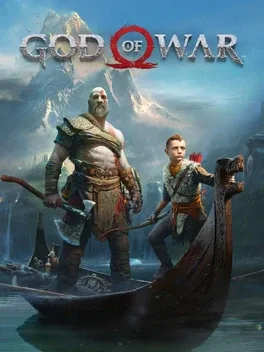
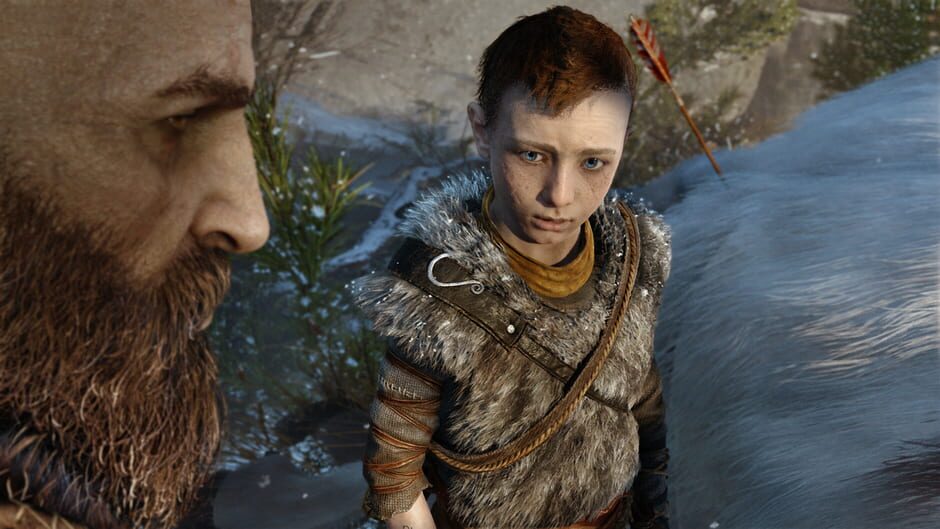
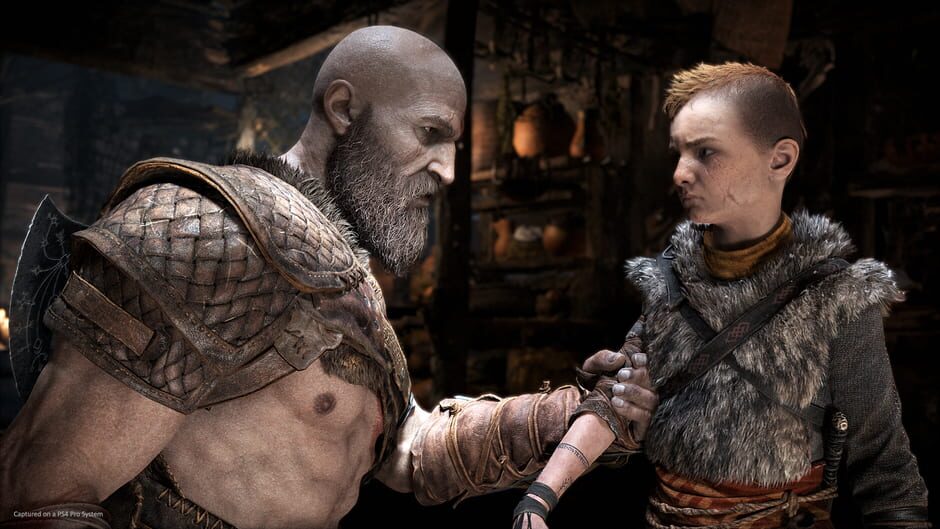
Years later, he now lives in the wild lands of Midgard, surrounded by the gods, creatures and legends of Norse mythology. He is no longer alone: beside him is Atreus, his son.
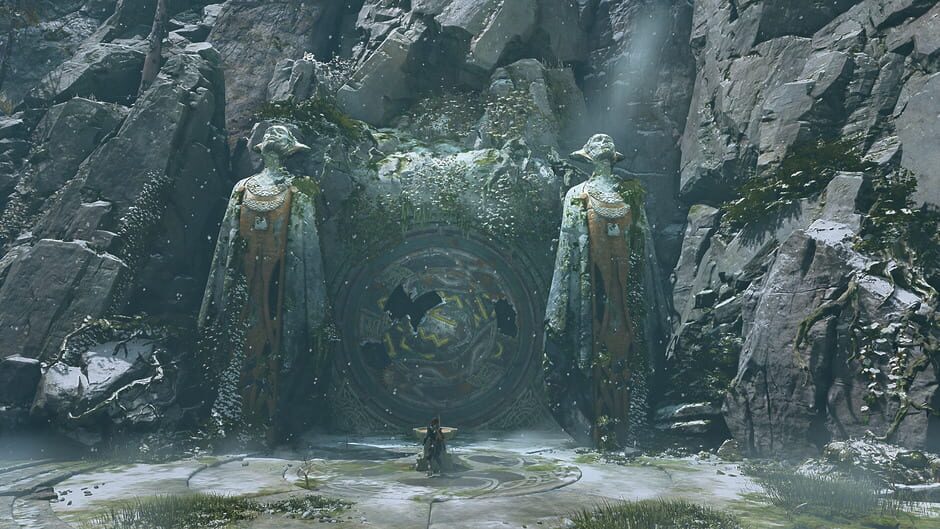
When Faye, Kratos’ wife and Atreus’ mother, dies, she leaves one final wish: for her ashes to be scattered from the highest peak in all the realms. Kratos and Atreus leave their home and begin a journey through forests, mountains, temples and worlds connected by a mythology Atreus often understands better than his father.
The real obstacle, however, is not only what waits for them on the road. Kratos knows exactly what he once was, while Atreus knows only a small part of his father’s past. Kratos therefore tries to prepare his son to survive while hiding a history whose legacy he fears.
Atreus wants to become strong enough to make Kratos proud. Kratos mostly wants to make sure his son does not become like him.
The journey begins as a mission to scatter ashes and gradually becomes the story of two people who must learn to understand each other before they can know what they are truly capable of passing on.
Overview
A Kratos seen from much closer
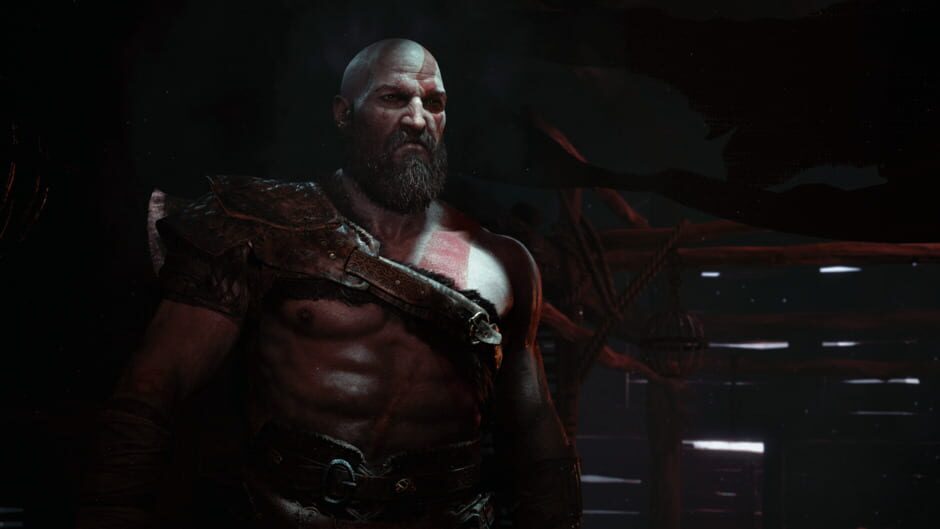
God of War changes profoundly the moment the camera moves closer to Kratos.
Earlier games often placed him at a distance, surrounded by monumental environments and battles built around spectacle. In 2018, Santa Monica Studio positions the camera directly behind his shoulder and dramatically reduces that distance.
The change affects both combat and storytelling. Kratos’ face, his silences and his hesitation become much more visible. The game does not remove his violence; it simply gives him less room to hide the person behind it.
The presentation follows the same idea through a camera designed to make the journey feel almost uninterrupted. Transitions between exploration, combat and cinematics become smoother, strengthening the sense of continuity between Kratos and Atreus.
An axe that defines the combat
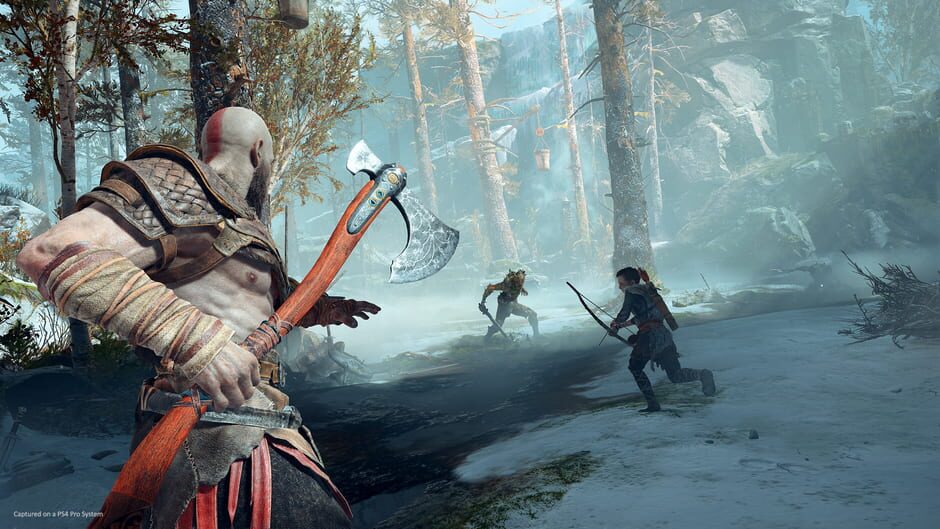
The Blades of Chaos are no longer Kratos’ starting weapon. He now uses the Leviathan Axe, which can strike in close combat, be thrown at range and then recalled directly into his hand.
This simple mechanic quickly becomes central. Throwing the axe can attack enemies, control certain threats, solve puzzles or interact with the environment, while recalling it can itself become part of a combo.
Combat feels closer, heavier and more dependent on positioning. Parries, dodges, managing enemies around Kratos and combining different uses of the axe all become more important than in previous entries.
Atreus as a companion, not an escort mission
Atreus accompanies Kratos through most of the journey and participates directly in combat. The player can use his arrows to interrupt certain enemies, create openings or support Kratos’ own attacks.
His presence also serves an important narrative purpose. Characters talk while traveling, while rowing across the lake or after certain encounters. Atreus shares what he knows about the world, Kratos answers when he chooses to, and Mimir later enriches those conversations.
Norse mythology is therefore not confined to text hidden inside menus. Much of the lore develops naturally while the player continues moving through the world.
Between directed adventure and exploration
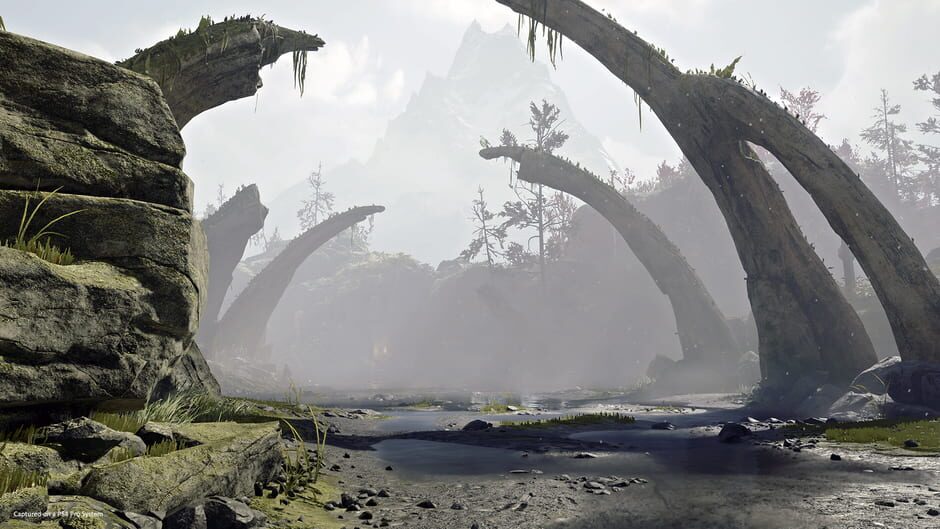
God of War is not a traditional open world. Its areas remain relatively directed, but several spaces gradually connect around larger regions, particularly the Lake of Nine.
The player can return to previous locations, unlock new routes, solve puzzles, find chests and fight optional enemies. This structure offers more freedom than earlier games without completely giving up control over pacing.
The game also introduces a much stronger RPG layer through armor, statistics, enchantments, runic attacks and skill trees. These systems expand customization, even if they are not always as elegant as the core combat mechanics themselves.
Key takeaways
- God of War moves Kratos from Greek mythology into Norse mythology. The events of earlier games still remain part of his past.
- Atreus is central to the story. The journey depends as much on the relationship between father and son as on the gods and creatures they encounter.
- The Leviathan Axe redefines combat. It can be used in melee, thrown at range and recalled into Kratos’ hand.
- Atreus participates directly in fights through his arrows and abilities.
- The camera stays much closer to Kratos, with presentation designed to make the adventure feel almost uninterrupted.
- The game is not a traditional open world. It combines directed areas, interconnected spaces and optional exploration.
- RPG systems play a much larger role, with equipment, statistics, runes, enchantments and skill progression.
- Mythology is often told during travel, particularly through conversations between Kratos, Atreus and Mimir.
- Combat becomes closer and more methodical, placing greater importance on positioning, parries and enemy management.
PANACHES review
A reinvention that accepts the past
God of War’s best decision is refusing to pretend that Kratos can simply start his life over from nothing.
The character has changed territory, mythology and fighting style, but his Greek past remains present. That continuity is what gives his relationship with Atreus its weight. Kratos is not only trying to raise his son; he is also trying to prevent his own violence from becoming an inheritance.
He is hardly naturally gifted at the role. He gives orders when he should reassure, corrects when he should listen and often stays silent because he simply does not know how to explain what he feels.
That is precisely what makes the relationship convincing. God of War is not the story of a good father, but of a man trying to learn how to become one.
Heavier, closer combat
The Leviathan Axe is the other major success. Its weight, throw and especially its recall give the combat an instantly recognizable identity.
Atreus fits naturally into that loop by interrupting or controlling certain enemies. When the systems work together, combat can flow from axe throws to arrows, parries, movement and recalls as part of one continuous sequence.
The close camera reinforces that sense of weight, even though it reduces visibility around Kratos. Directional indicators, sound cues and Atreus’ warnings partly compensate for that limitation.
Modernization with a few extra layers
Not every change is equally elegant. The RPG layer adds customization, but the accumulation of armor, rarity tiers, statistics and materials can sometimes feel more complicated than genuinely interesting.
Enemy variety is another weakness. Several opponents and mini-bosses return frequently, with variations that do not always make encounters feel sufficiently different.
The Valkyries fortunately show what the combat system can achieve when pushed much further. These optional fights genuinely demand an understanding of timing, parries, positioning and enemy behavior.
Bringing the player closer
The apparently unbroken camera could easily have remained a technical showcase. It works mainly because it serves a much simpler purpose: reducing distance.
It brings the player closer to the combat, but also to Kratos and Atreus. Conversations continue during travel, scenes blend naturally into gameplay and the journey rarely feels divided between moments that are “played” and moments that are “watched.”
That continuity suits the reinvention of the series perfectly. God of War can still deliver enormous creatures, violent battles and spectacular sequences, but it is no longer built only around what Kratos can destroy.
The more interesting question becomes what a man like him may still be capable of building.
That is where the 2018 game finds its real strength. It does not turn Kratos into someone else. It simply gives him a problem that violence cannot solve.
Good to know
Production and release
- God of War was released on April 20, 2018 for PlayStation 4.
- The game was developed primarily by Santa Monica Studio and published by Sony Interactive Entertainment.
- Development of this new adventure lasted nearly five years before release.
- The game moves Kratos into the world of Norse gods and creatures while keeping the events of the Greek era within the character’s continuity.
- Its presentation is built around a camera positioned very close to Kratos, designed around the idea of an adventure without visible cuts.
Content and updates
- Combat notably introduces the Leviathan Axe, the over-the-shoulder camera and Atreus as a companion directly integrated into encounters.
- A Photo Mode was added for free with patch 1.20 on May 9, 2018.
- New Game+ arrived for free on August 20, 2018. It notably allows players to keep equipment, enchantments, talismans, resources and abilities while adding new items and stronger enemies.
- The game is entirely single-player and requires no multiplayer component.
PS5 and PC
- God of War was originally a PlayStation 4 title, but it is also playable on PlayStation 5 through backward compatibility.
- On PS5, the PS4 version can run at up to 4K and 60 frames per second.
- God of War was released on PC on January 14, 2022.
- This version was developed by Santa Monica Studio with Jetpack Interactive and published under PlayStation Publishing.
- The PC port notably offers unlocked frame rates depending on hardware, additional graphics settings, 21:9 support, NVIDIA DLSS, NVIDIA Reflex and customizable keyboard-and-mouse controls.
Reception
- In August 2021, Sony reported that 19.5 million copies of the PS4 version had been sold.
- At launch, the game surpassed 3.1 million copies sold in three days, setting a speed record at the time for a PS4 exclusive produced by Sony’s studios.
- At The Game Awards 2018, God of War won Game of the Year, Best Game Direction and Best Action/Adventure Game.