Overview
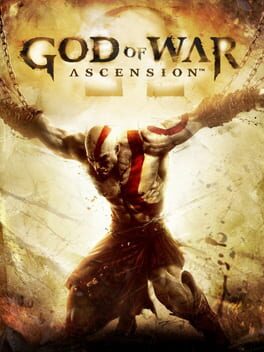
Developed by SCE Santa Monica Studio and published by Sony Computer Entertainment, God of War: Ascension is a video game released on March 12, 2013 for PlayStation 3. The genres associated with this entry are action, adventure, fantasy, historical and hack-and-slash, with both single-player and multiplayer modes.
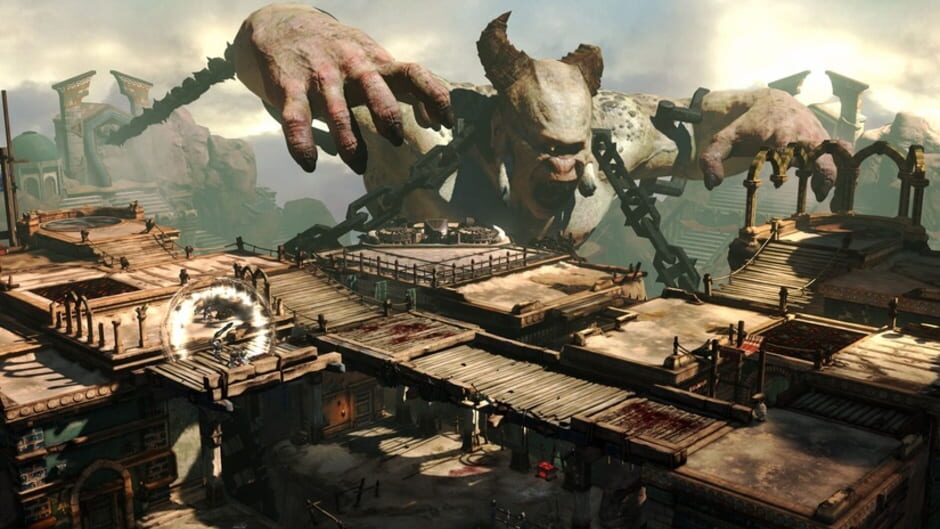
The game takes place before the main events told in the early God of War titles and follows a younger Kratos, at a time when his relationship with the gods and the consequences of oaths play a central role in the game’s universe. The Furies and the prison built from the body of the Hecatonchire Aegaeon are among the important elements of this context.
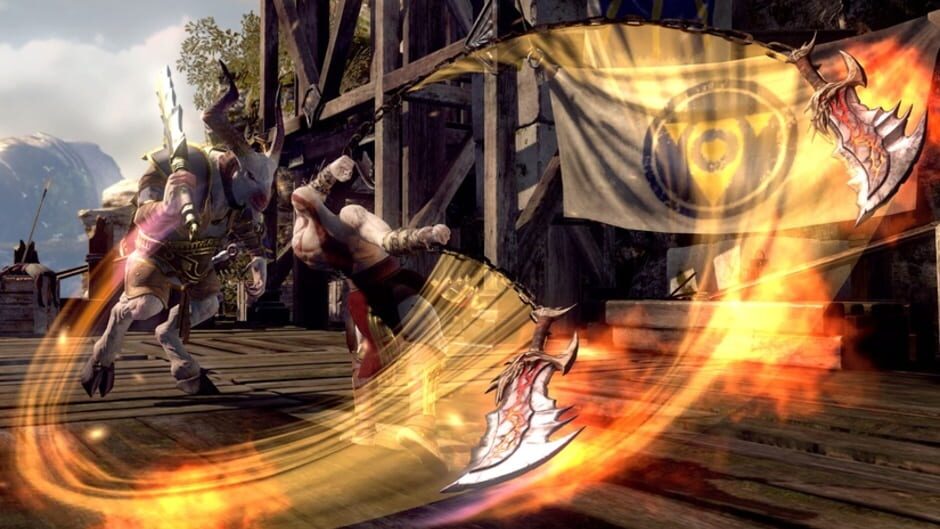
The gameplay retains the foundations of the series with real-time combat built around the Blades of Chaos, dodges, throws, combos and battles against groups of mythological creatures.
Ascension nevertheless reworks several mechanics. Kratos can now use a long-range grappling system that allows him to seize an opponent with one blade while continuing to fight with the other. The captured enemy can be held at a distance, thrown or directly incorporated into a combo.
This mechanic works both on the ground and in the air and reinforces the continuity of combos. It notably allows one opponent to be controlled while Kratos attacks other enemies, expanding crowd management compared with previous installments.
The World Weapon System introduces another form of variation. Kratos can pick up certain weapons found in the environments or dropped by enemies and use them temporarily alongside the Blades of Chaos.
These secondary weapons can be incorporated into attack sequences without significantly interrupting the rhythm of combat. The player can therefore alternate between the blades and a recovered weapon during the same encounter.
The Blades of Chaos can also receive different elemental properties associated with the gods, altering certain attacks and the offensive possibilities available. The system therefore retains a permanent primary weapon while varying its properties rather than multiplying entirely separate weapon sets.
The Rage meter also contributes to combat progression. Building it rewards chaining attacks together and grants access to more powerful offensive moves when Kratos maintains pressure on his enemies.
Certain executions also move away from some of the traditional QTE button prompts in favor of a freer system, in which the player must observe the enemy’s movements to determine when to attack or dodge.
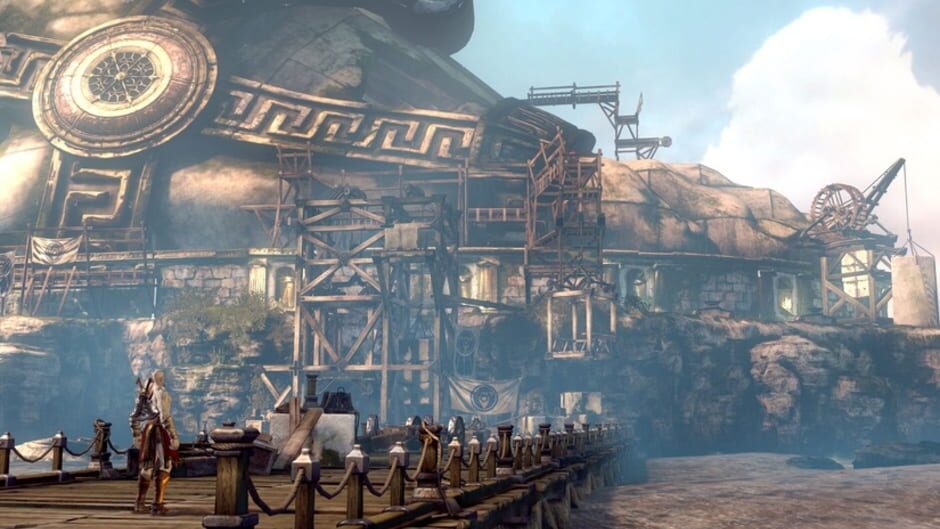
Exploration retains the usual components of the series with platforming, climbing, sliding and puzzle-solving sequences. Environments regularly take part in action sequences, with structures that move, collapse or change during progression.
The Life Cycle mechanic allows Kratos to affect the temporal state of certain environmental elements. He can alter the progression of objects or structures in order to solve puzzles and create pathways, while the ability can also be used in certain combat situations.
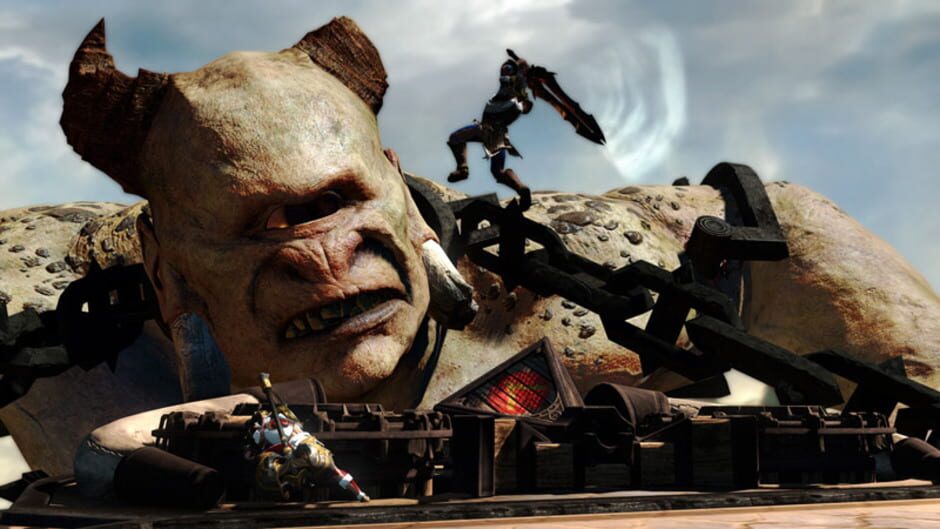
Battles against the largest creatures make extensive use of the large-scale staging characteristic of God of War. Some encounters take place within environments that are themselves moving, turning the surroundings into a direct component of the battle.
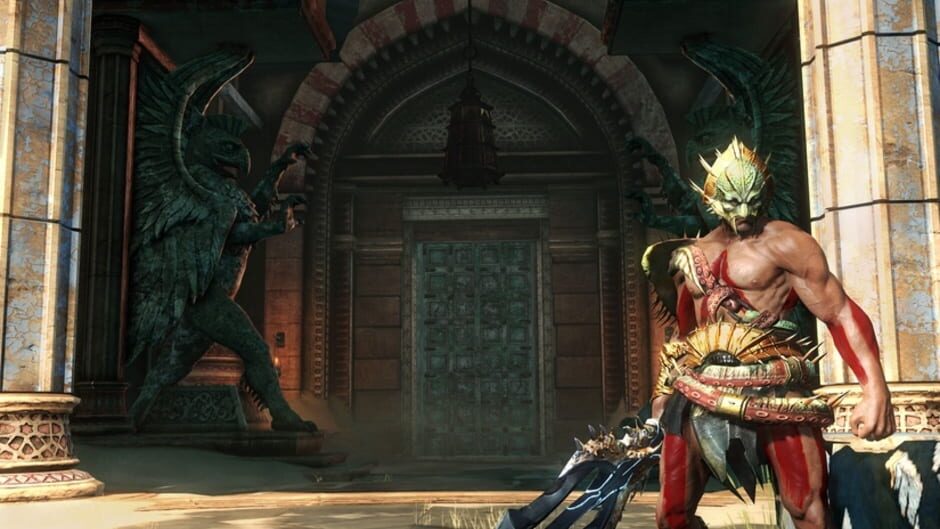
God of War: Ascension notably introduces multiplayer to the series. The player controls a warrior other than Kratos and chooses to pledge allegiance to one of the available gods, with each deity influencing the abilities, magic and fighting style of their champion.
Warriors can develop their equipment and abilities through experience, weapons, armor, relics and magic obtained over the course of battles. The choice of god therefore serves as the foundation for different gameplay orientations.
The multiplayer modes include competitive battles between several participants, as well as Trial of the Gods, a challenge that can be played alone or by two players in which participants face successive waves of mythological creatures under a time limit.
Multiplayer carries over several principles from the single-player combat while adapting them to confrontations between players: weapons, magic, special attacks, grappling and occasional cooperation become elements of a system built around the champions of the gods.
God of War: Ascension therefore retains the hack-and-slash foundations of the series while experimenting with several systems. Grappling, weapons collected from the environment, temporal interactions and multiplayer broaden a formula that remains centered on combat, platforming and large-scale mythological sequences.
Key takeaways
- God of War: Ascension retains the Blades of Chaos as Kratos’s primary combat tool.
- A new grappling system allows an enemy to be held, moved or thrown while attacks continue.
- The World Weapon System makes it possible to temporarily use weapons found in the environments or dropped by enemies.
- The Life Cycle mechanic alters the temporal state of certain elements to solve puzzles and intervene in some combat situations.
- The game introduces multiplayer to God of War, with warriors tied to different deities and equipped with their own abilities.
- Combat, platforming, puzzles and mythological confrontations remain the main components of the single-player campaign.
Conclusion
God of War: Ascension retains the action-adventure structure of the previous installments while reworking several elements of the combat system. The Blades of Chaos remain central, but grappling and weapons recovered from the environment allow for greater variation within attack sequences.
Platforming and puzzle mechanics are also developed around interactions with the environment, particularly through the Life Cycle system, which allows the state of certain structures to be altered.
Multiplayer represents the main structural evolution of the installment. It adapts some of God of War’s combat principles to battles between customizable champions whose abilities notably depend on their divine allegiance.
God of War: Ascension therefore combines the hack-and-slash foundations of the series with several experiments focused on combat fluidity, interaction with environments and the introduction of multiplayer confrontations.
Good to know
- God of War: Ascension was released on March 12, 2013.
- The game was developed by SCE Santa Monica Studio and published by Sony Computer Entertainment.
- It is available on PlayStation 3.
- The genres listed in this entry are action, adventure, fantasy, historical and hack-and-slash.
- It features Single player and Multiplayer modes.
- Ascension is the first God of War installment to include a multiplayer mode.
- The combat system notably introduces grappling, World Weapons and new interactions with the environments.