Overview
Developed by CyberConnect2 and published by Bandai Namco Entertainment, Bandai Namco Entertainment America and Bandai Namco Entertainment Europe, Dragon Ball Z: Kakarot is a video game released on January 17, 2020 for PlayStation 5, PlayStation 4, Xbox Series, Xbox One, Nintendo Switch and PC. The genres associated with this entry are action, adventure, science fiction, fantasy, RPG and hack-and-slash, with both single-player and multiplayer modes.
The game takes the form of an action RPG centered on the journey of Goku and the Z Fighters. It does not simply string battles together: the different stages of the adventure are connected through exploration, side activities, encounters and several progression systems inspired by the characters’ lives in the Dragon Ball Z universe.
The world is organized around different explorable areas that the player travels between throughout the story. Goku and the other characters can move through these environments on foot or by flying, collect resources, encounter enemies and reach cities, villages and locations associated with the Dragon Ball universe.
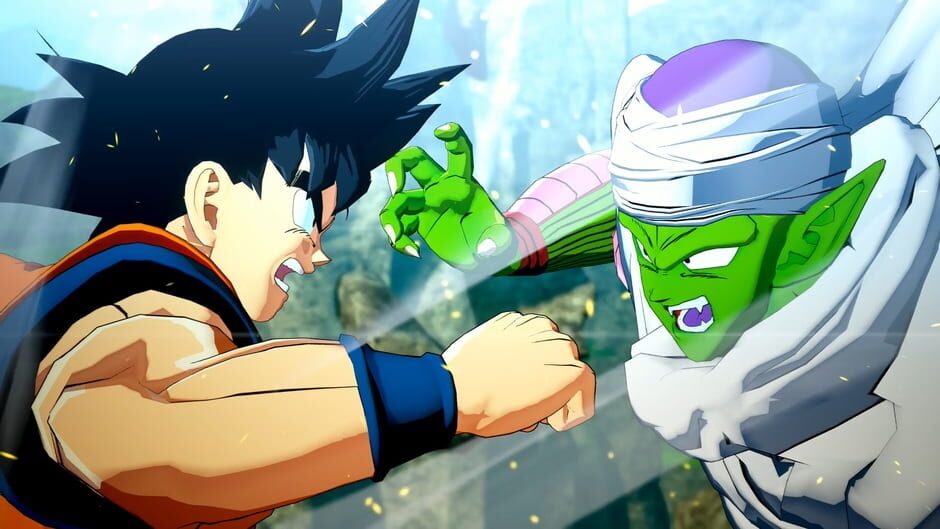
Battles take place in real time across large three-dimensional spaces. Characters can move freely around their opponent, fight at close range, use ranged attacks and unleash their signature techniques during confrontations that make extensive use of the aerial mobility associated with Dragon Ball.
Progression follows RPG principles. Characters gain experience, level up and gradually become more powerful. Battles are an important source of progression, but several other systems also allow their abilities to be improved.
Super Attacks play a central role in this progression. Z Orbs collected throughout the world or obtained during the adventure can be used to develop skills, while training areas provide access to new techniques or allow certain previously learned attacks to be improved.
Training is therefore not merely a narrative theme. Training Grounds located throughout different regions allow players to face Z Fighters, former opponents or different versions of characters in order to unlock or strengthen certain Super Attacks.
Food also contributes directly to progression. Ingredients collected during exploration can be used to prepare different dishes and full-course meals. Eating can provide temporary bonuses while also permanently increasing certain character stats.
This mechanic gives a purpose to the more everyday activities available throughout the world. The player can notably fish, gather ingredients, explore and complete side quests, connecting the periods between major battles to the overall progression system.
The Community Board is another important RPG system. Certain quests and stages of the story provide Soul Emblems representing different Dragon Ball characters. These emblems can be placed on several Community Boards to activate bonuses and improve different aspects of the adventure.
The placement of Soul Emblems also takes relationships between characters into account. Certain combinations provide additional bonuses and can trigger specific dialogue, linking this progression system to the connections between members of the Dragon Ball universe.
Although Goku occupies a central role, he is not the only controllable character. Gohan, Vegeta and Piccolo are among the playable fighters and have their own techniques and characteristics, while other Z Fighters can intervene as support characters during certain battles.
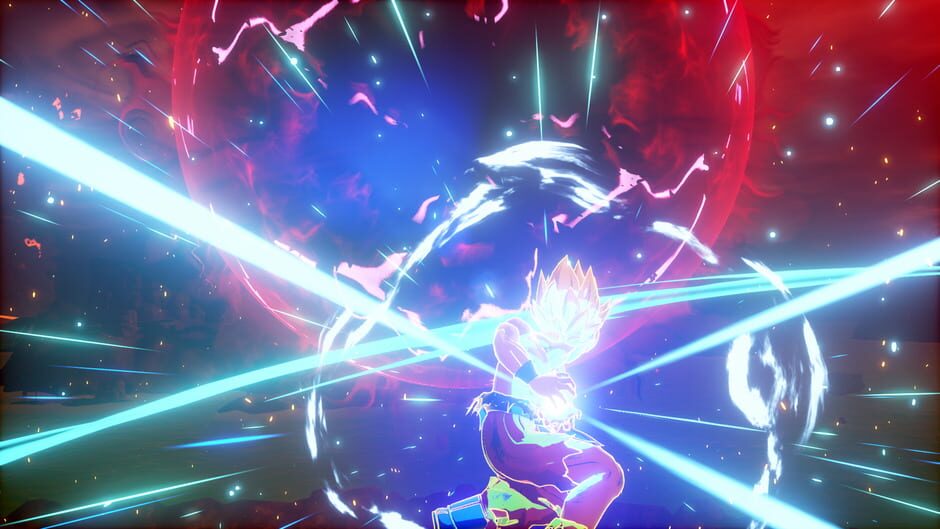
Major confrontations use large battlefields and destructible environments, with encounters against powerful opponents that make use of aerial movement, energy attacks and the characters’ gradually increasing strength.
Exploration also makes it possible to find the seven Dragon Balls. Once gathered, they can be used to summon Shenron and form part of activities that extend progression beyond the main storyline.
Dragon Ball Z: Kakarot also includes multiplayer elements through Dragon Ball Card Warriors, an online card game offering several types of battles between players, including casual matches, ranked matches and tournaments.
The visual identity recreates the characters, locations, attacks and effects associated with Dragon Ball Z through a highly stylized three-dimensional presentation. Battles use camera changes, energy effects and destruction to support the staging of the most important techniques.
Dragon Ball Z: Kakarot uses Unreal Engine 4. The engine supports its three-dimensional environments, aerial movement, combat, visual effects and the representation of the different regions explored throughout the adventure.
The overall experience is therefore organized around two complementary dimensions: reliving the battles of Dragon Ball Z and exploring its universe between those confrontations. RPG progression, training, food, exploration, character relationships and side activities all contribute directly to the development of the Z Fighters.
Key takeaways
- Dragon Ball Z: Kakarot is an action RPG that combines the major confrontations of Dragon Ball Z with exploration and activities performed between battles.
- Battles take place in real time across three-dimensional spaces, with close-range combat, energy attacks and aerial movement.
- Progression is based on experience, levels, Super Attacks, training and Z Orbs.
- Meals can provide temporary bonuses and permanently increase certain character stats.
- The Community Board uses Soul Emblems representing Dragon Ball characters to activate different bonuses.
- Goku shares parts of the adventure with other playable characters and support fighters, while fishing, exploration and side quests extend the experience beyond the major battles.
Conclusion
Dragon Ball Z: Kakarot builds its experience around the battles of Goku and the Z Fighters while giving an important place to the periods between them. Exploring, flying, fishing, eating and training therefore become parts of the progression system rather than simple side activities.
The RPG dimension relies on several complementary systems. Experience, levels, Super Attacks, food, Soul Emblems and Community Boards allow characters to develop in different ways throughout the adventure.
Battles meanwhile retain an action-oriented structure, with large three-dimensional spaces, extensive aerial mobility and techniques directly inspired by the fights of Dragon Ball Z.
Dragon Ball Z: Kakarot therefore combines action, RPG mechanics and exploration to represent both the major battles and the characters’ lives within the Dragon Ball Z universe, connecting everyday activities, relationships and training directly to their progression.
Good to know
- Dragon Ball Z: Kakarot was released on January 17, 2020.
- The game was developed by CyberConnect2 and published by Bandai Namco Entertainment, Bandai Namco Entertainment America and Bandai Namco Entertainment Europe.
- It is available on PlayStation 5, PlayStation 4, Xbox Series, Xbox One, Nintendo Switch and PC.
- The genres listed in this entry are action, adventure, science fiction, fantasy, RPG and hack-and-slash.
- It features Single player and Multiplayer modes.
- The game uses Unreal Engine 4.
- Progression notably combines experience, training, Super Attacks, cooking and Community Boards.