Presentation
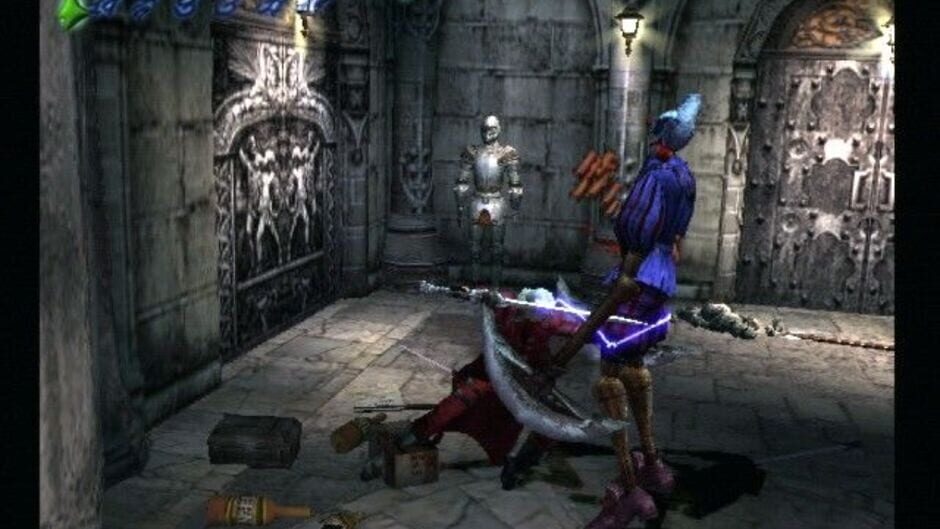
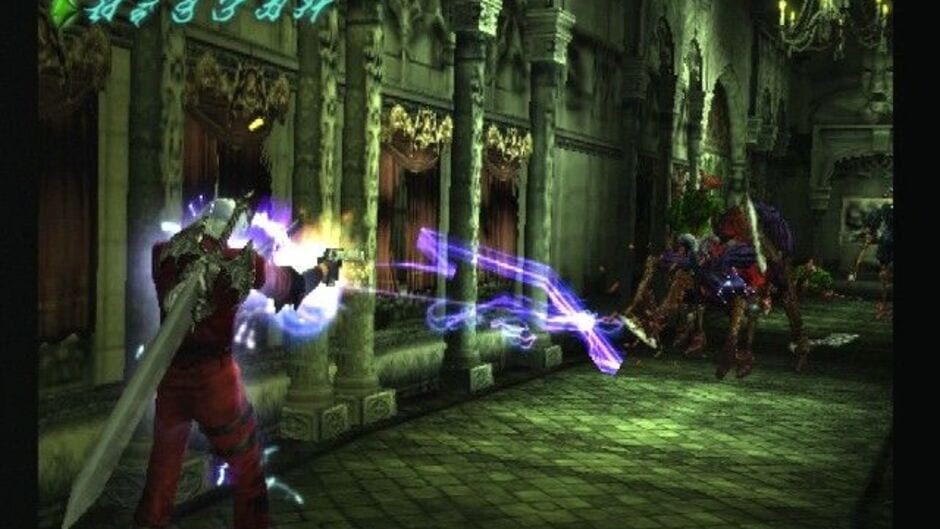
Devil May Cry places combat at the center of its identity. Capcom does not simply reward the ability to defeat enemies: the style system encourages Dante to vary his attacks, maintain combos and avoid damage in order to earn better evaluations.
Dante combines melee weapons and firearms within the same system. Rebellion is not yet present in this entry: Force Edge serves as his initial sword before Alastor is acquired, while Ebony & Ivory allow attacks to be extended from a distance. The player can therefore quickly move between launches, aerial attacks, gunfire and close combat.
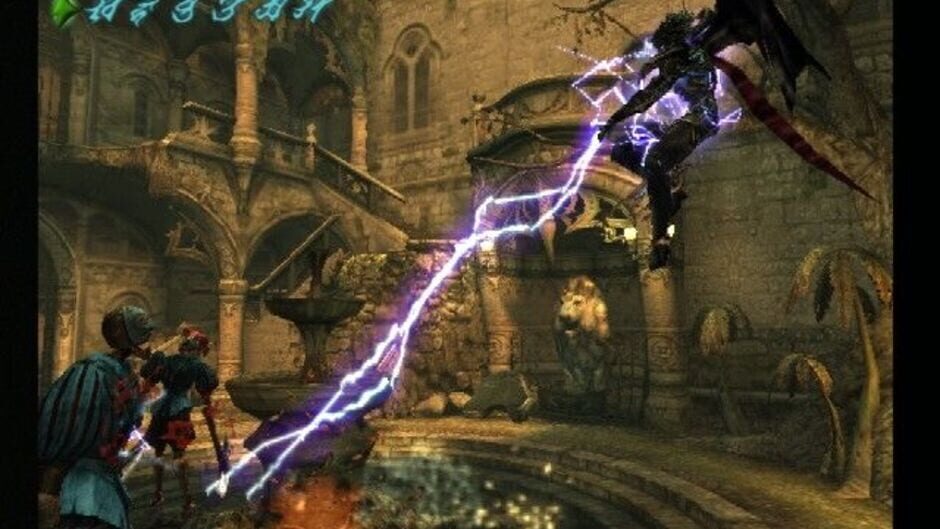
Alastor and Ifrit are the main Devil Arms obtained during the adventure. Alastor focuses on sword techniques and lightning, while Ifrit uses heavier close-range attacks based on fists, kicks and fire. Red Orbs are used to acquire new techniques and various items.
Devil Trigger temporarily allows Dante to unleash his demonic power. The transformation increases his offensive abilities and recovery while providing a resource that must be managed during more difficult battles.
The adventure is divided into missions evaluated according to several criteria, encouraging players to replay levels and improve their performance. Secret Missions also provide additional challenges focused on combat or movement mastery.
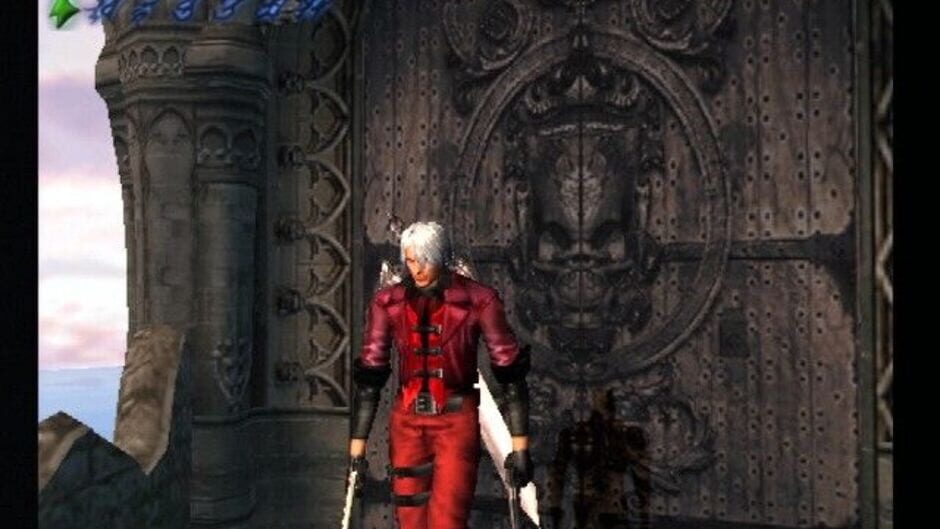
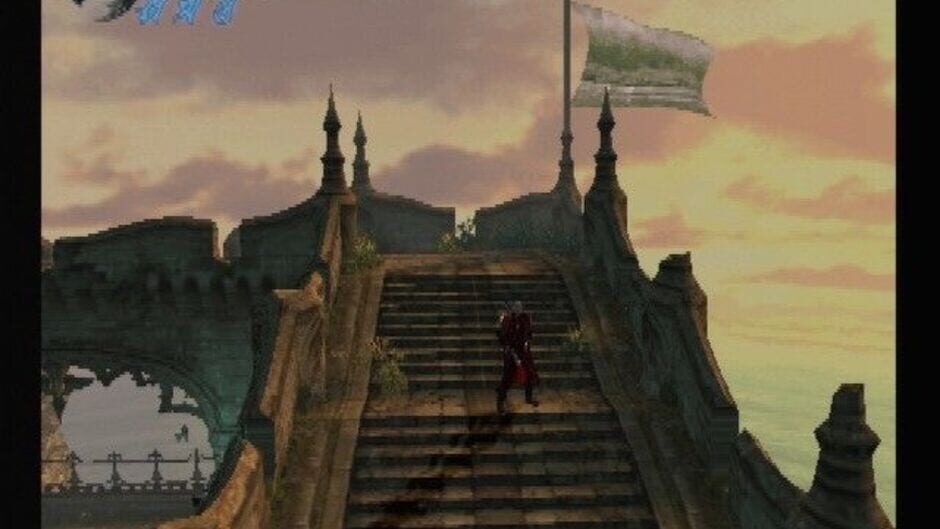
Mallet Island retains a strong survival horror influence. The central castle combines exploration, locked doors, items, mechanisms and returns to previously visited areas. Cameras often use predetermined angles that strengthen the Gothic atmosphere, although they can sometimes reduce combat readability.
Bosses play an important role, particularly Phantom, Griffon, Nightmare and Nelo Angelo. The latter gives the story its most personal dimension by gradually connecting the conflict against Mundus to Dante’s past and his brother Vergil.
The contrast between the dark environment and Dante’s provocative attitude already defines much of the series’ tone. The game therefore establishes several lasting foundations: stylish combat, Devil Trigger, Devil Arms, Sparda’s legacy and the rivalry between Dante and Vergil.
What to remember
- The first entry introduces Dante as a demon hunter and son of the legendary Sparda.
- Trish leads Dante to Mallet Island to prevent Mundus from returning.
- Combat combines melee weapons, firearms, aerial attacks and Devil Trigger.
- The style ranking rewards variety and mastery of combos.
- Alastor and Ifrit are the main Devil Arms acquired during the adventure.
- Mallet Island combines combat, exploration, puzzles and a strong survival horror atmosphere.
- Nelo Angelo is gradually revealed to be Vergil, Dante’s twin brother.
- The game establishes much of the mechanical and narrative foundation of the series.
Conclusion
Devil May Cry still stands between two traditions. Its Gothic castle, fixed camera angles and exploration directly recall survival horror, while Dante already possesses the mobility and power of an action-game protagonist.
The real break comes from combat. By asking the player to vary attacks and evaluating how enemies are defeated, the game gradually turns fighting into performance rather than a simple obstacle.
Some elements have aged, particularly the camera angles, the stiffness of certain movements and the repetition of several bosses. Later entries would greatly expand combos and the freedom given to Dante.
The essential principle is already present, however: defeating demons is not enough; the player must learn to do it with precision, variety and style. That idea becomes the core of Devil May Cry.
Good to know
- Devil May Cry was developed and published by Capcom under the direction of Hideki Kamiya.
- The original game was released for PlayStation 2 in 2001.
- The project originated from an early direction considered for Resident Evil 4 before becoming a new franchise.
- Dante is the son of Sparda and the human Eva, and the twin brother of Vergil.
- The main adventure contains 23 missions and is exclusively single-player.
- Several difficulty levels and Secret Missions extend replayability.
- The game is included in Devil May Cry HD Collection alongside Devil May Cry 2 and Devil May Cry 3 Special Edition.
- A standalone version was released for Nintendo Switch in 2019.