Presentation
Some games remain associated with a character, a world, or a mechanic. Cyberpunk 2077 also carries with it the turbulent story of its own release. Its launch in December 2020, particularly difficult on previous-generation consoles, has become impossible to fully separate from the way the work is perceived today.
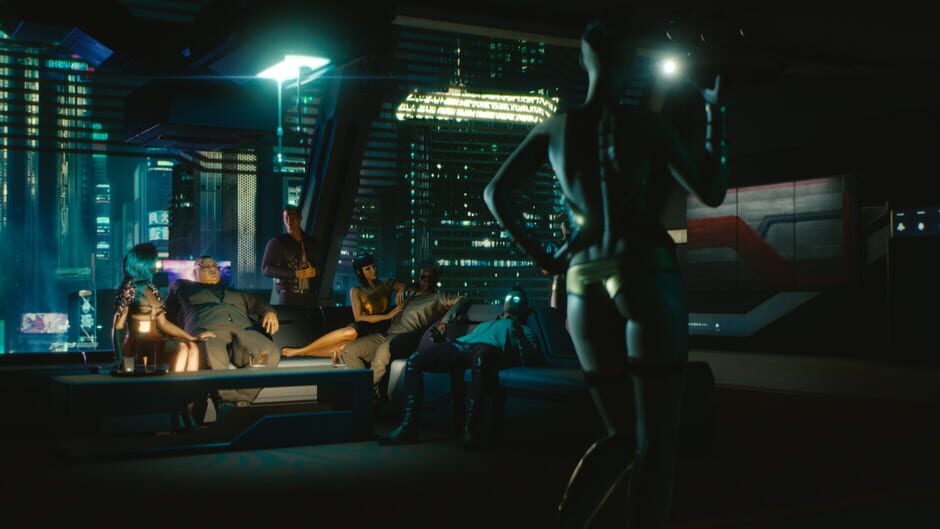
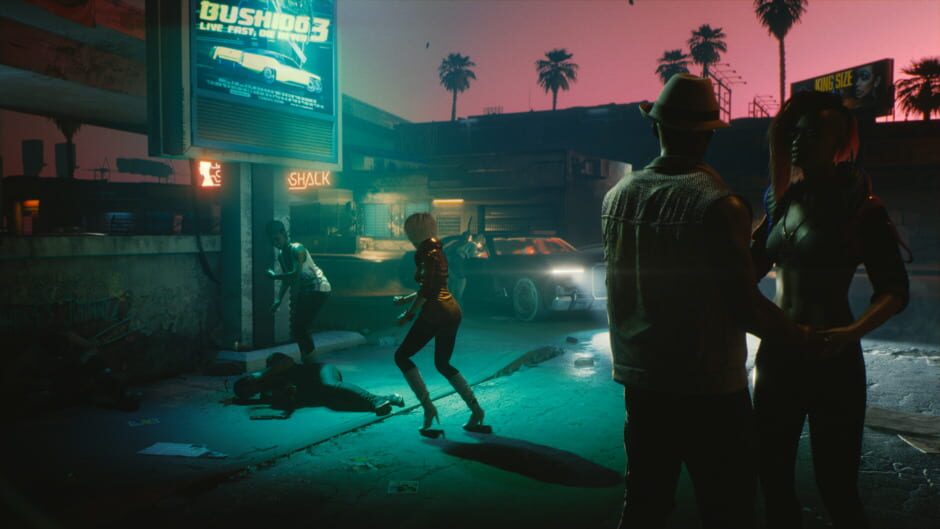
Behind that context, however, Night City was already there. The megalopolis is the true center of gravity of the game: corporate skyscrapers, working-class neighborhoods, suspended highways, markets, clubs, and desert outskirts compose a world saturated with advertising, violence, and technology.
The cyberpunk aesthetic is not limited to neon lights and implants. The commodification of bodies, the privatization of almost everything, the social gaps, and the power of corporations directly shape the characters and situations V encounters. Cybernetic enhancement can offer more power while constantly reminding that, in this society, even physical identity has become a market.
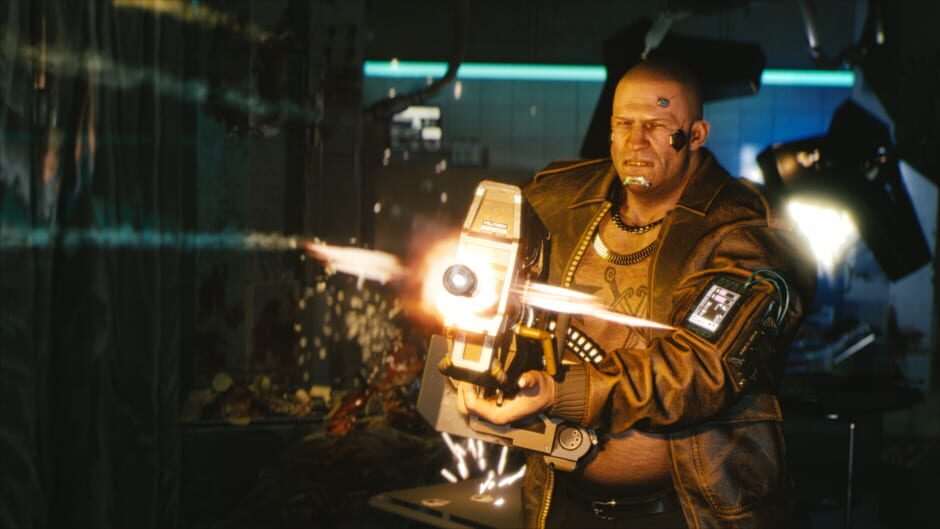
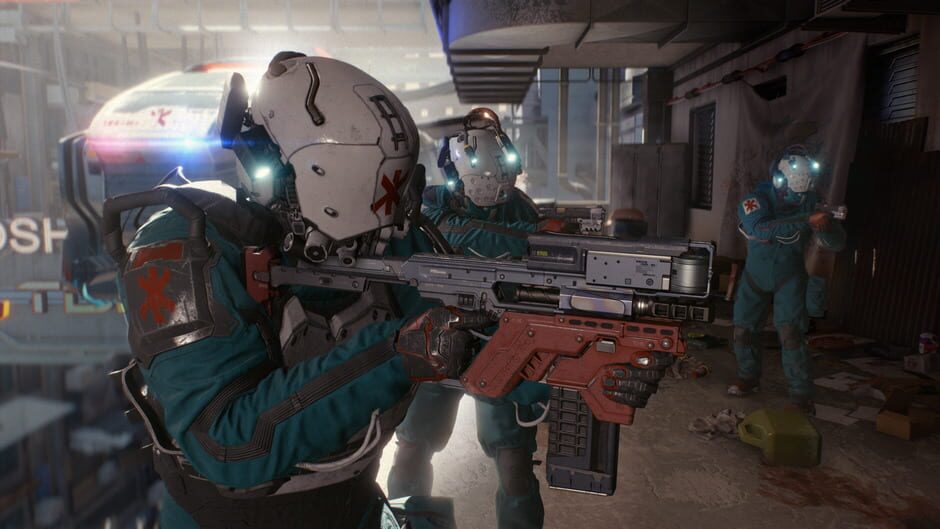
The gameplay combines RPG, first-person shooting, hacking, stealth, and open-world exploration. Weapons, skills, and cyberware allow building very different approaches: direct combat, melee weapons, stealth, or hacking can noticeably change the way a situation is resolved.
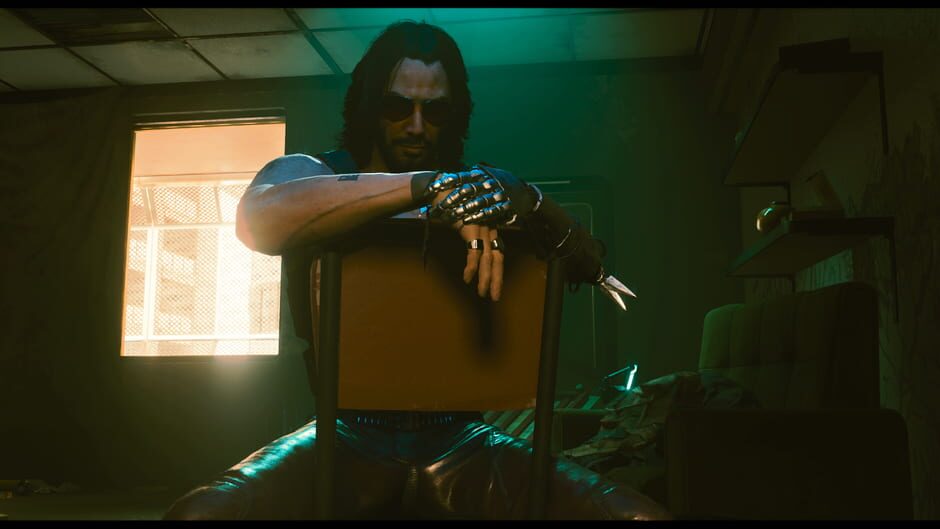
The relationship between V and Johnny Silverhand gives a more personal dimension to this universe. Johnny first appears as an intrusive presence whose existence threatens V's, but their exchanges gradually turn this opposition into a confrontation between two visions of Night City, two histories, and two identities forced to share the same space.
Cyberpunk 2077 also evolved considerably after its launch. Several years of fixes and redesigns changed some of its most important systems, eventually producing a version noticeably different from the one published in 2020. This reconstruction is now part of its history without having to become the sole subject of this sheet.
Key Takeaways
- Night City is the true heart of the game, as much through its architecture as through the inequalities, corporations, and technologies that structure its society.
- V can be developed according to very different approaches, thanks to weapons, skills, implants, hacking, and stealth options.
- Johnny Silverhand gradually shares V's mind, placing the question of identity at the center of the story.
- The 2020 launch profoundly marked the game's reputation, particularly because of the state of certain versions.
- Later updates largely reworked the experience, notably several progression and combat systems.
- Phantom Liberty extends the adventure with Dogtown and a storyline more oriented toward espionage.
Conclusion
Talking about Cyberpunk 2077 without mentioning its launch would amount to erasing part of its history. But talking only about its launch would produce another mistake: forgetting the game that existed behind the noise and the one it gradually became.
What best resists these different versions is Night City.
The city has a presence that goes beyond its size. A highway can dominate a neighborhood saturated with advertising, an elevator can lead to a strangely calm apartment, and a few streets are sometimes enough to move from corporate luxury to a misery that the neon signs no longer even try to hide. Night City gives the impression that the system keeps working perfectly precisely because it was never designed to work the same way for everyone.
V lives directly inside this contradiction. The implants allow being faster, tougher, or more dangerous, but the game takes place in a universe where upgrading one's body also means depending more on the technologies and companies that transform it. Enhancement becomes simultaneously a fantasy of power and a reminder that almost anything can be commodified.
Johnny Silverhand brings another layer to this question. His status as a legend masks a character far less clean than the image he keeps of himself. His presence in V's mind then turns the quest for survival into a problem of identity: what remains when two memories, two wills, and two histories begin to overlap?
The open world does not always reach the reactivity that its setting might suggest. Certain decisions really matter and character builds noticeably change the action, but Night City works better as the space of a great narrative RPG than as a total simulation of a futuristic society.
This is also what the years of reconstruction made it possible to better distinguish. The updates corrected or reworked enough systems to profoundly change the experience, without being able to erase what had happened in 2020.
Cyberpunk 2077 therefore remains a work marked by its contradictions: a game about a city that constantly sells the idea of becoming someone else, itself forced to spend several years becoming a more convincing version of what it wanted to be in the first place.
Good to Know
- Cyberpunk 2077 was released on December 10, 2020 on PC, PlayStation 4, and Xbox One.
- The game is developed and published by CD Projekt RED.
- The significant difficulties encountered by certain versions at launch led the studio to publicly acknowledge these problems and permanently marked the game's reception.
- Versions dedicated to PlayStation 5 and Xbox Series X|S then accompanied its evolution on the more recent consoles.
- Update 2.0, released in 2023, profoundly reworked several central systems, including progression and cyberware.
- The Phantom Liberty expansion, also released in 2023, introduces Dogtown and a new storyline centered notably on Solomon Reed.