Synopsis
Abducted aboard a mind flayer vessel, your character awakens with an illithid parasite implanted directly into their brain. This creature should gradually trigger ceremorphosis: an irreversible transformation that would turn its host into a new mind flayer.
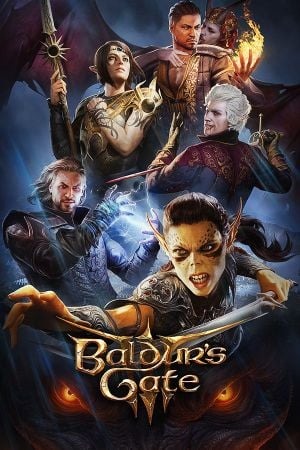
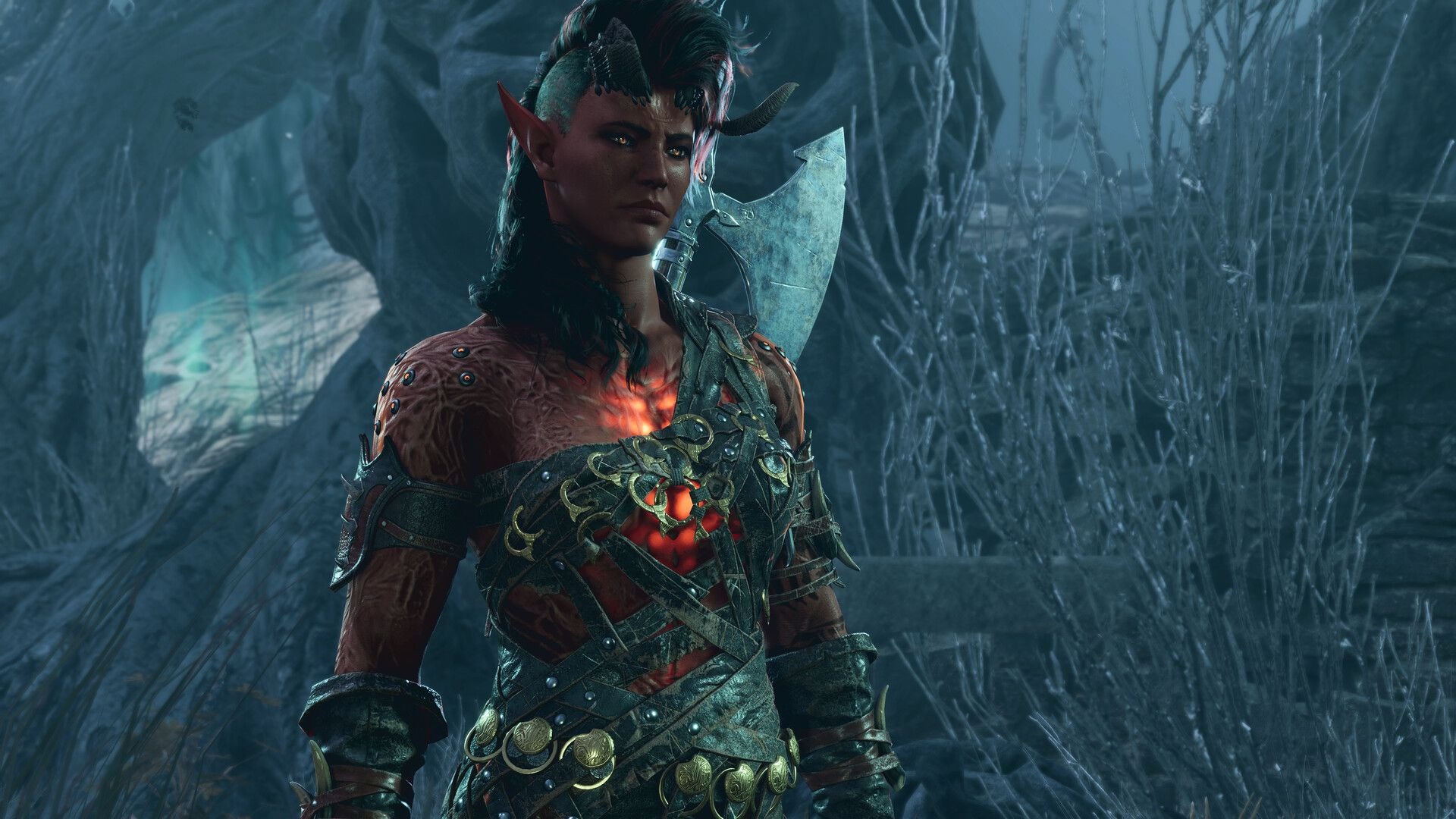
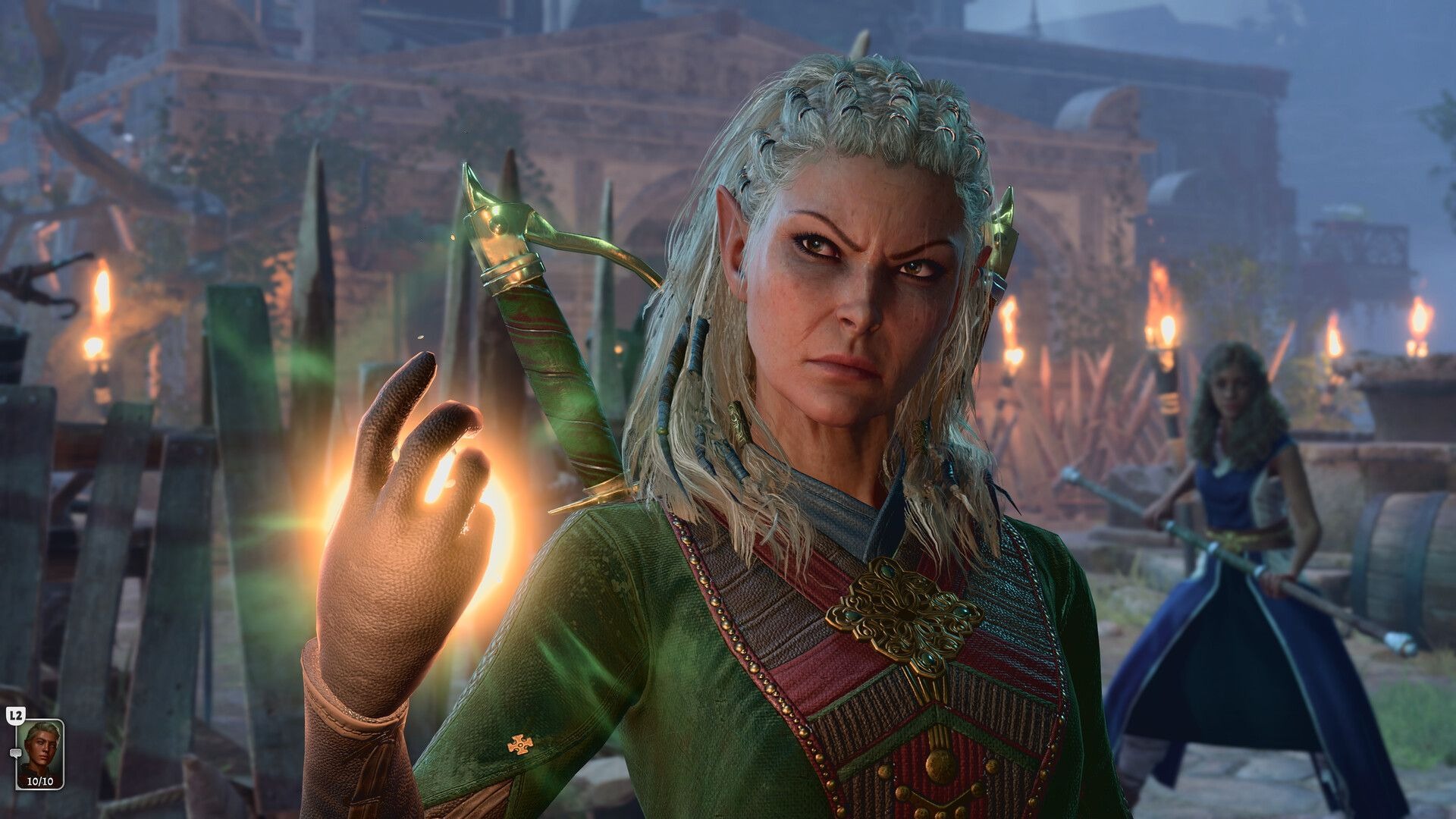
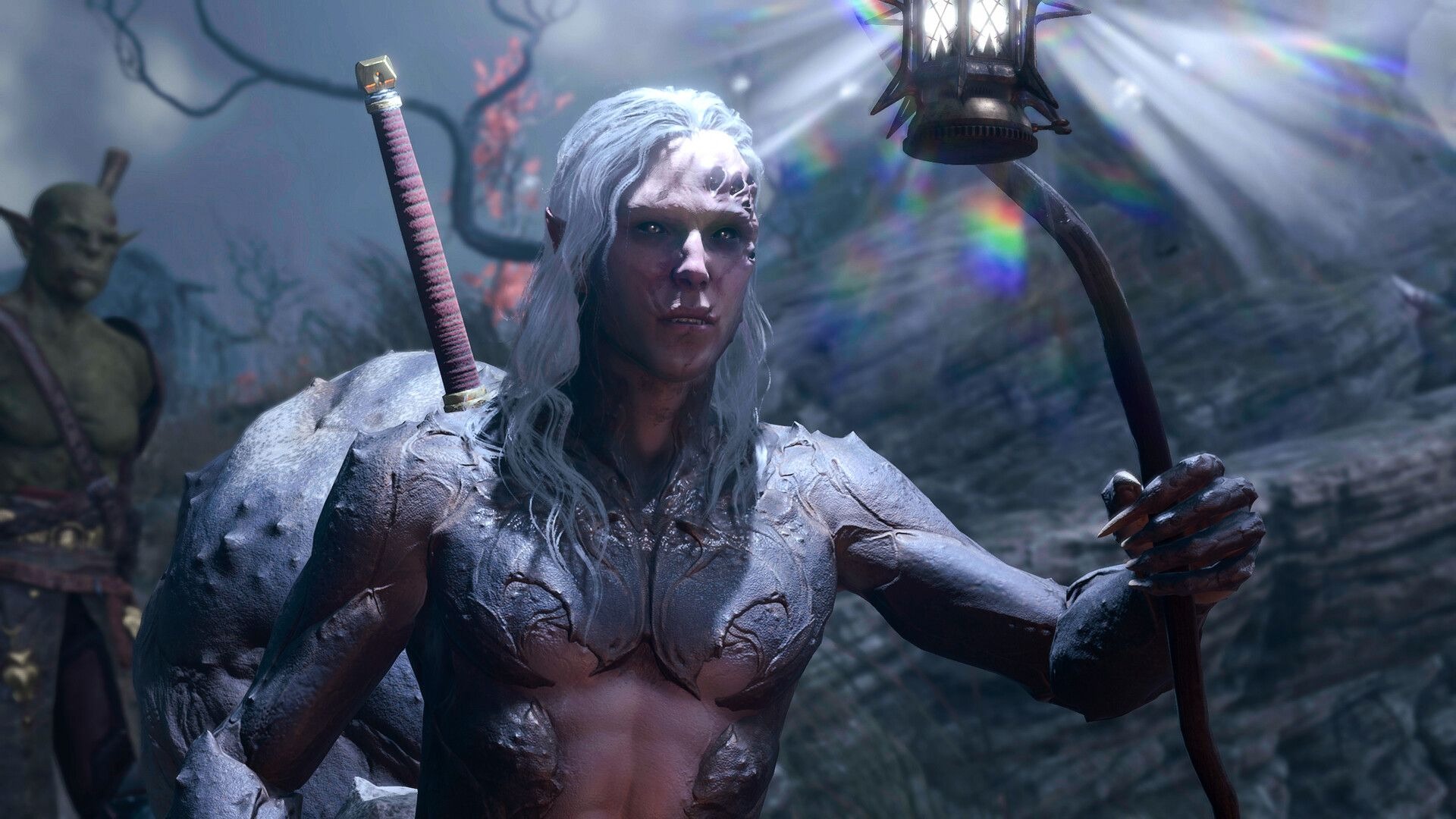
After the ship crashes, several survivors discover that they share the same problem. Among them are Shadowheart, Lae'zel, Astarion, Gale, Wyll and Karlach, individuals with very different origins, beliefs and secrets who can join the party throughout the adventure.
Yet the expected transformation does not happen normally. Instead, the parasites appear to grant strange abilities, while a mysterious power known as the Absolute gathers cultists, goblins and creatures around itself, some of whom carry the same parasite.
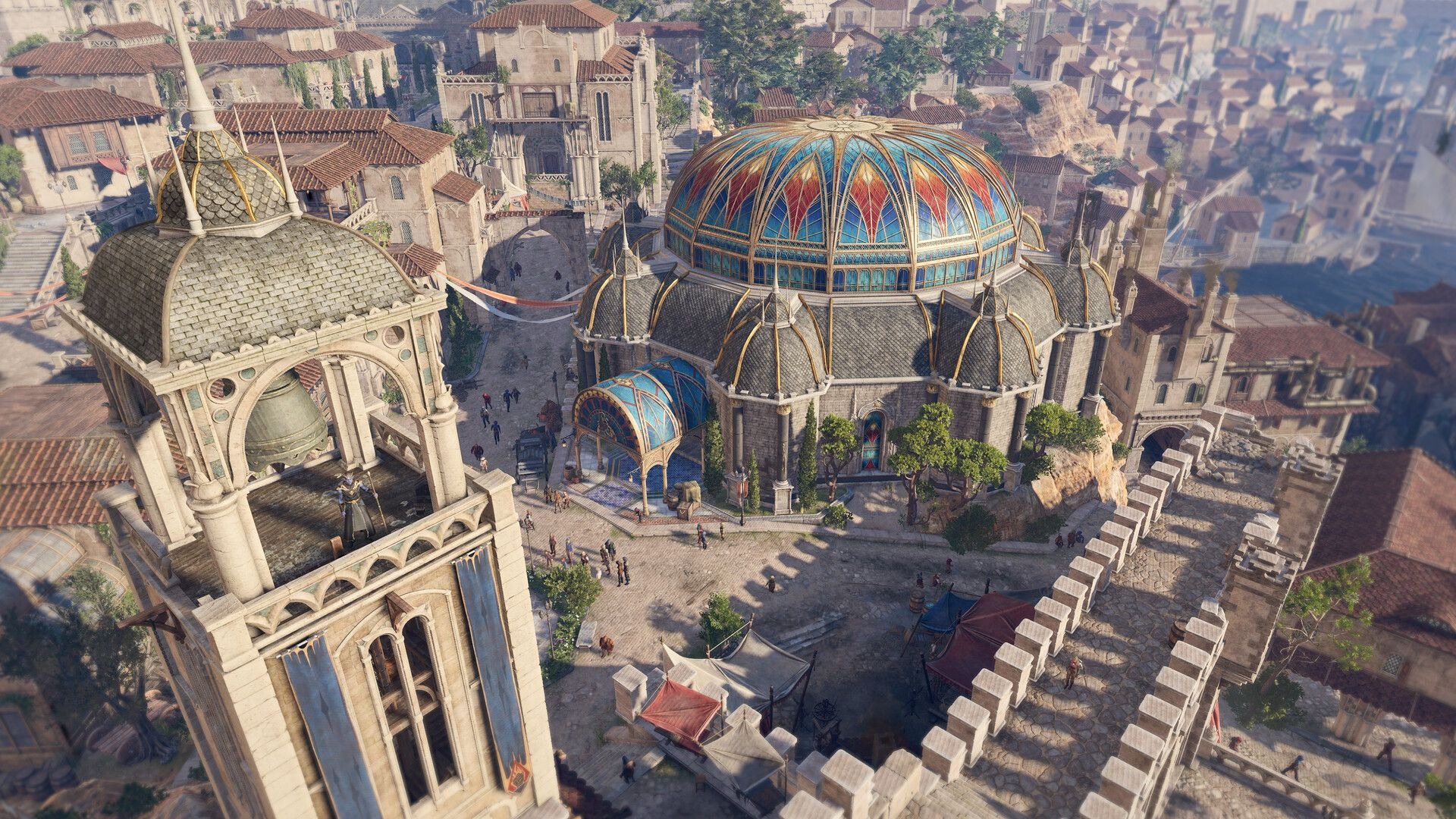
A journey across the Forgotten Realms then begins, in search of the origin of this infection and a way to survive it. Resisting the parasite's power, exploiting it or gradually surrendering to its influence becomes one of the many choices capable of changing the road to Baldur's Gate — and who will still be standing beside you when you finally reach it.
Overview
Baldur's Gate 3 sometimes feels less like a traditional RPG than a Dungeon Master who agreed to answer “try it” to almost every terrible idea their players came up with.
Larian Studios takes the universe of Dungeons & Dragons and many of the principles of its fifth edition to build a party-based RPG structured around dice rolls, skills, spells, classes and turn-based combat. But reducing the game to a digital adaptation of tabletop rules would miss precisely what makes it distinctive.
Its strength lies in the way those rules communicate with one another.
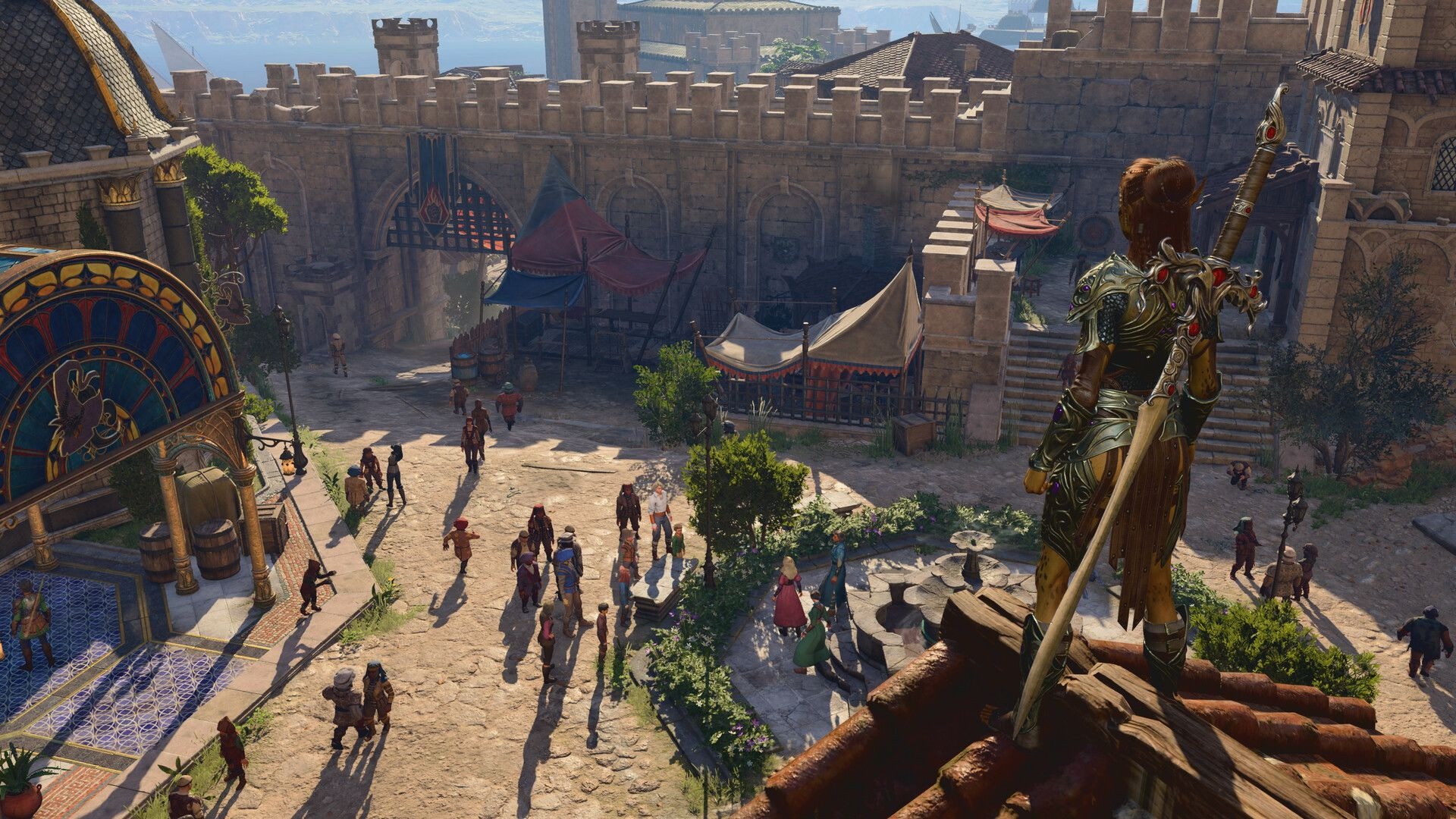
A door can be lockpicked, forced open, bypassed, destroyed or sometimes simply ignored by finding another route. A character can persuade a guard, read their thoughts, disguise themselves, turn invisible or start a fight another player may never encounter. A crate can become a step. A puddle of water can be electrified. A sufficiently strong character can sometimes solve a problem by throwing someone into a chasm.
Combat follows the same philosophy. Encounters play out in turns using actions, bonus actions, reactions, movement, spells, advantage, disadvantage and saving throws inspired by D&D. But the environment matters enough that the best attack is not always the one with the biggest numbers.
Verticality, surfaces, light, cliffs, objects and character positioning can completely transform an encounter. A difficult fight can be changed before it even begins simply because a player looked at the room differently.
That freedom extends to conversations. Many dialogues use the character's attributes, skills, classes, races, knowledge or specific circumstances. The famous d20 then appears directly on screen: persuasion, intimidation, deception or investigation guarantee nothing. Even an excellent idea can fail.
And Baldur's Gate 3 understands that failure can be interesting.
A poor decision or failed roll does not necessarily lead to a game over screen. It may open a new conversation, trigger a fight, close a quest, reveal another path or create a situation strange enough that the player simply decides to live with the consequences.
Key takeaways
- The game broadly adapts the principles of Dungeons & Dragons 5e. Classes, attributes, spells, dice rolls, skills, advantages and turn-based combat structure the experience.
- Situations often have several possible solutions. Dialogue, stealth, magic, exploration, environmental manipulation or violence can open very different paths.
- Companions are an essential part of the story. Their personal stories, beliefs, relationships and reactions evolve according to the decisions made throughout the adventure.
- Choices are not limited to major story decisions. Many consequences come from secondary conversations, characters saved or abandoned, places visited and even seemingly insignificant events.
- Multiplayer is an integral part of the game. Up to four players can share an online campaign, and Patch 8 added cross-play between PC, Mac, PlayStation 5 and Xbox Series.
- The game continues to embrace the unexpected. Its systems are open enough to produce solutions and situations the developers had to anticipate without ever imposing a single correct way to play.
PANACHES review
Baldur's Gate 3's real achievement may not be the number of choices it offers. It is how often the game manages to make you feel as though it had anticipated yours.
Many RPGs promise that decisions matter. A few dialogue options turn red or green. A faction likes you more. A cinematic changes at the end.
Larian takes the idea much further.
You move an object that looked like part of the scenery and discover a passage. You use a spell normally intended for combat during a conversation. You eliminate a character the story seemed to consider important and the game still looks for a way to continue. You save someone near the beginning of the adventure and meet them dozens of hours later in a situation that would never have existed without that first intervention.
That responsiveness creates a rather rare sensation: the world does not merely seem to contain choices, it seems to remember that you passed through it.
Obviously, the illusion has limits. There are still rails, necessary events and doors the story eventually has to close. But they become much harder to see because Larian builds an almost absurd number of side paths around them.
This philosophy works especially well with the companions.
Shadowheart, Lae'zel, Astarion, Gale, Wyll and Karlach could easily have become a gallery of characters designed to tick the major boxes of a fantasy party. The warrior. The wizard. The vampire. The mysterious cleric.
They become interesting when their certainties begin to crack.
The player can support them, contradict them, love them, manipulate them, abandon them or sometimes push them in a direction whose consequences only become visible much later. Some relationships can become profoundly different from one playthrough to another because the characters themselves do not necessarily finish the adventure with the same beliefs.
The game also has a much simpler quality: it is extremely fun to touch things.
Baldur's Gate 3 constantly rewards curiosity. Open a hatch. Talk to an animal. Examine a statue. Move crates. Drink a suspicious potion. Turn into a small creature to crawl into an absurd hole. Use a spell in a way its description clearly did not seem to anticipate.
That freedom allows the game to recover something many digital adaptations of tabletop role-playing lose: the pleasure of asking the Dungeon Master, “can I try this?”
Turn-based combat plays an essential role in that philosophy. It gives the player time to observe, think and improvise a solution rather than simply react. Some battles feel less like tests of power than small physical experiments where a few meters of elevation and a well-placed spell can matter more than a better sword.
Not everything is effortless, however.
The interface has to contain an impressive amount of items, skills, spells and rules. Inventory management can quickly start to feel like a second profession. Some systemic interactions require knowledge the game does not always explain perfectly, and the sheer density of possibilities can be as intimidating as it is exciting.
The final act also concentrates an enormous number of characters and quests inside Baldur's Gate. That abundance is almost logically consistent with everything the previous dozens of hours have built, but it can feel like arriving in a city where every person you meet suddenly has three urgent problems that need solving.
Then there are the dice.
They can turn perfect preparation into disaster because of one ridiculous result.
And that is exactly how it should be.
Because Baldur's Gate 3's great idea is ultimately not that every decision should produce the result you wanted. It is that every decision deserves an interesting consequence.
The RPG becomes less a story the player has to discover than a space in which they must accept letting a story create itself.
Baldur's Gate 3 does not merely ask: “What kind of hero do you want to play?” Much more often, it asks: “All right. You really did that. Now what do we do with the consequences?”
And somewhere behind the screen, you can almost imagine a Dungeon Master smiling before rolling a die.
Good to know
- Baldur's Gate 3 is developed and published by Larian Studios, a studio founded in 1996 in Ghent, Belgium, which has since grown into an international network of several studios.
- Development of the project began several years before release. A small initial team was already working on story and game design by late 2016, before the official agreement with Wizards of the Coast in 2017.
- An Early Access version launched on October 6, 2020 for PC and Mac. It allowed Larian to develop and test a significant part of the game's systems before the final release.
- The full version was released on PC on August 3, 2023, followed by PlayStation 5 on September 6, 2023.
- The full Mac version arrived with Patch 3 on September 22, 2023.
- Baldur's Gate 3 was then released on Xbox Series X|S on December 8, 2023.
- The game uses the Divinity 4.0 Engine, a new evolution of Larian's proprietary engine.
- The campaign can be played solo or cooperatively. Online multiplayer supports up to four players, while the game also offers local split-screen multiplayer on compatible platforms.
- Patch 8 was released on April 15, 2025. Presented by Larian as the game's final major update, it added cross-play, a photo mode, 12 new subclasses, improvements to mod support and split-screen play on Xbox Series S.
- Larian continued publishing smaller fixes after Patch 8. The official website still lists hotfixes released in 2025 and 2026, including Hotfix 36 on March 26, 2026.
- In September 2025, Baldur's Gate 3 also received a native Steam Deck version.
- Baldur's Gate 3 won Game of the Year at The Game Awards 2023.
- At the BAFTA Games Awards 2024, it notably won Best Game, Music and Narrative, as well as the Supporting Performer award for Andrew Wincott and the EE Players' Choice Award.