Overview
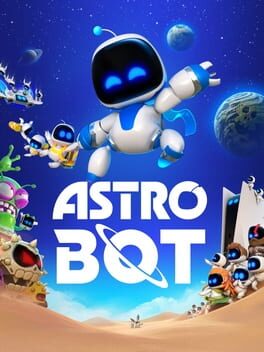
Developed by Team Asobi and published by Sony Interactive Entertainment, Astro Bot is a video game released on September 6, 2024. The platform listed in this entry is PlayStation 5. The associated genres are action, adventure, science fiction and platforming. The specified game mode is Single player and the engine listed is Havok.
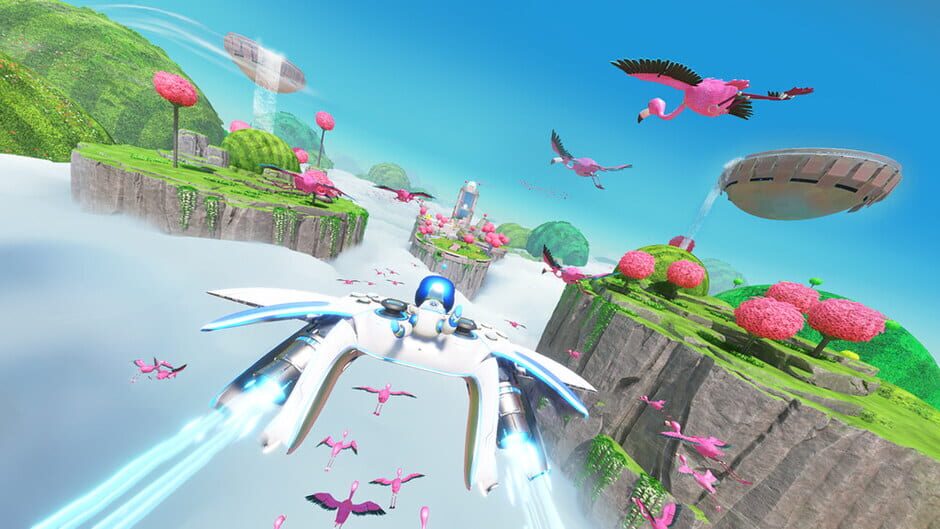
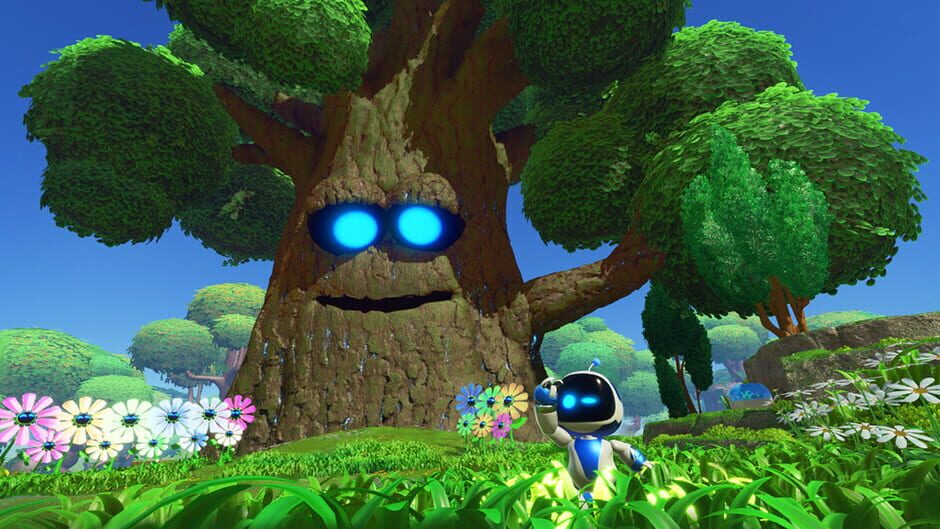
The game uses a 3D platforming and action structure organized around a journey through space. Astro travels across 6 galaxies and more than 80 levels, spread across planets with very different environments: forests, beaches, volcanoes, mechanical structures and areas built around more unusual ideas.
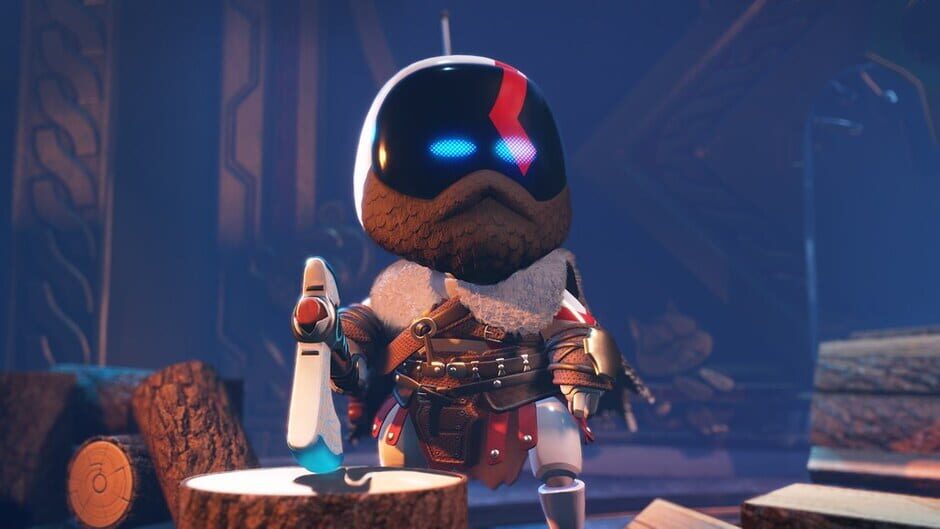
The main objective is to recover the scattered crew. The game includes 300 Bots to rescue, with more than 150 taking the appearance of characters associated with different generations and franchises from PlayStation history.
The rescued Bots are not only collectibles. Once gathered on the central planet, some can take part in group actions that make it possible to interact with the hub or access new elements.
Progression largely relies on Astro’s standard movement abilities, supplemented by more than 15 powers designed to temporarily change how levels are traversed and how enemies are confronted.
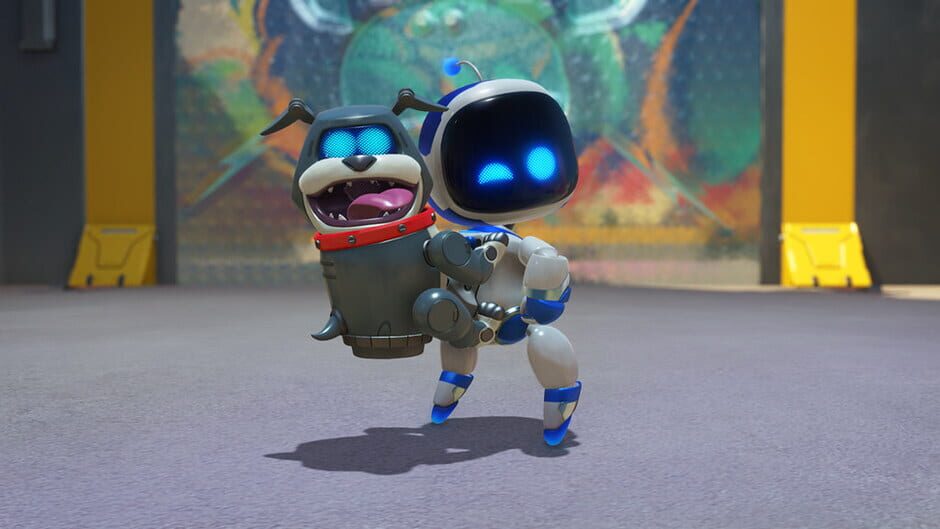
Barkster, a bulldog booster, allows Astro to perform an aerial dash capable of breaking through certain obstacles, enemies or materials. This burst of speed therefore works both as a movement tool and an offensive mechanic.
The Frog Gloves give Astro long-range punches and also allow him to grab onto or swing from certain elements. They therefore change both combat and platforming sequences at the same time.
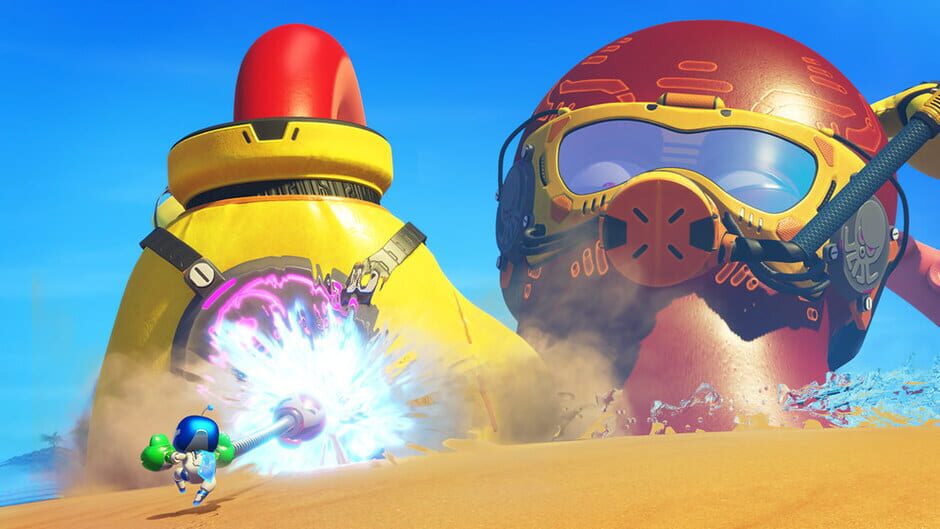
The Giant Sponge works differently: Astro can absorb water to become enormous, changing his relationship with the environment and allowing him to interact with elements that would otherwise be out of reach or too large.
Other powers transform his mobility even further. Astro can notably wear metal armor that allows him to roll through dangerous areas, squeeze into narrow spaces or be launched like a cannonball, while a transformation into a tiny mouse radically changes the scale of the environments.
These abilities are generally integrated directly into the level design. They are therefore not simply temporary bonuses: platforms, obstacles, enemies and mechanisms are arranged around how they work in order to create specific sequences.
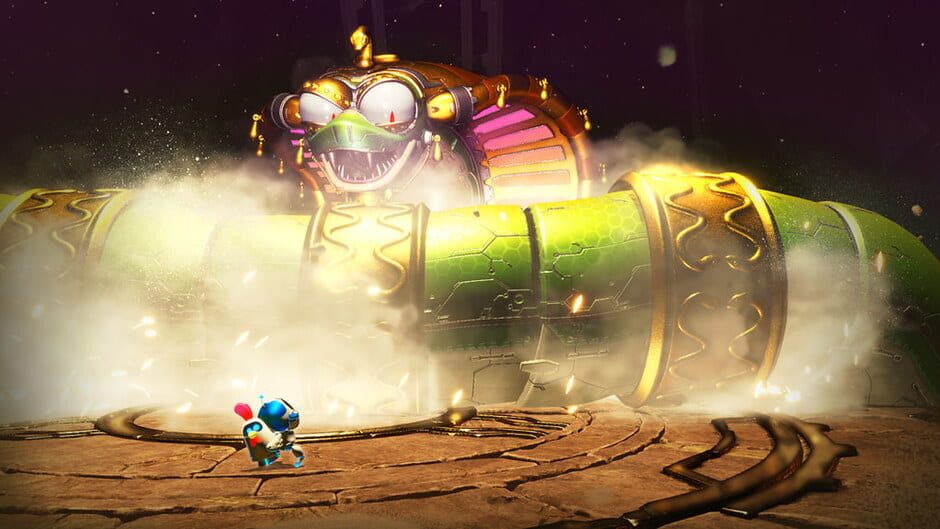
Combat remains integrated with movement. Astro can strike enemies directly, use his platforming moves to avoid them and take advantage of the powers available in each level against enemies or large-scale bosses.
Searching for Bots is accompanied by secrets and collectibles. Some areas require carefully observing the scenery, leaving the main path or using an ability in a particular way to reach hidden elements.
Coins collected during exploration can notably be used in the Gatcha Lab, where they provide different items associated with the Bots and the PlayStation references encountered throughout the adventure.
ASTRO BOT also directly uses the features of the DualSense controller. Haptic feedback conveys different surfaces and interactions, while adaptive triggers support the operation of certain powers and tools.
These sensations vary depending on the actions and environments: materials Astro moves across, boosters and certain abilities use vibration and trigger resistance to complement what is happening on screen.
The game therefore structures its progression around a succession of levels whose mechanics change regularly. Temporary powers, transformations, Bots to recover and variations in scale or movement constantly renew how the different planets are approached throughout the journey.
Key takeaways
- ASTRO BOT is a 3D platforming and action game built around a journey across multiple galaxies.
- The main adventure includes 6 galaxies and more than 80 levels.
- The game features 300 Bots to rescue, with more than 150 inspired by characters from PlayStation history.
- Astro can use more than 15 powers that temporarily modify movement, combat or interaction with the environment.
- These abilities notably include Barkster, the Frog Gloves and the Giant Sponge.
- Some rescued Bots can take part in group actions on the central planet.
- DualSense features, including haptic feedback and adaptive triggers, are directly integrated into movement and powers.
Conclusion
ASTRO BOT structures its adventure around a succession of planets, each developing its own platforming, exploration and interaction ideas.
Temporary powers are one of the main tools used to create this variety. Boosting, long-range punches, transformations and changes in scale regularly alter Astro’s abilities and the structure of the sequences he crosses.
Rescuing Bots adds another layer of progression centered on exploration and discovering secrets, with part of the crew directly inspired by characters connected to PlayStation history.
The game therefore combines 3D platforming, exploration, collecting and DualSense integration within a structure built around frequently renewing its movement mechanics.
Good to know
- Astro Bot was released on September 6, 2024.
- The game was developed by Team Asobi and published by Sony Interactive Entertainment.
- The platform listed in this entry is PlayStation 5.
- The associated genres are action, adventure, science fiction and platforming.
- The specified game mode is Single player.
- The engine listed in this entry is Havok.
- The adventure includes 6 galaxies, more than 80 levels and 300 Bots to rescue.
- Astro has access to more than 15 powers, while DualSense haptic feedback and adaptive triggers directly support certain mechanics.