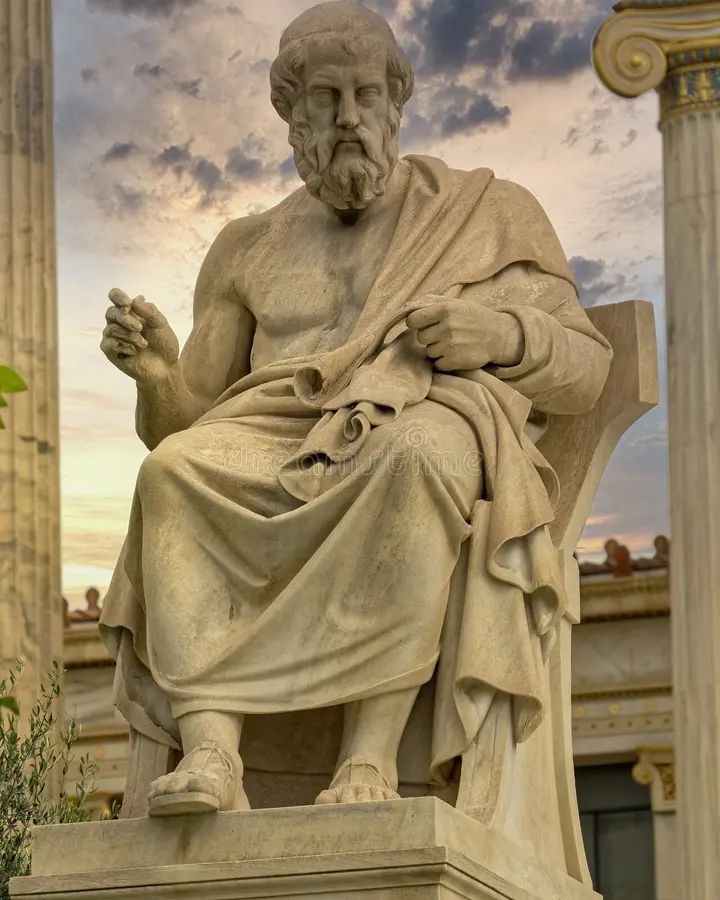
Platon
Details
- Roles
- Author
Referenced works
Referenced works (17)
Plato: Apology of Socrates
Author
Athens, 399 BCE. Socrates, a citizen without wealth or political power, appears before the city tribunal. What are the alleged facts? He is accused of not recognizing the existence of traditional gods, of introducing new deities and of corrupting the youth. Faced with his judges, Socrates alone defends himself and warns the Athenians: the philosopher is a blessing to the city and the city condemns itself by putting …
- Philosophy
Plato: Crito
Author
In 399 BCE, in Athens, Socrates appeared before the city tribunal. Accused of not recognizing the existence of traditional gods, of creating new deities and of corrupting youth, he is condemned to death. We have few testimonies left of his trial, but the one that Plato gives us in the Apology of Socrates elevates to the rank of founding myth of philosophy a fact that could have remained banal in the light of history…
- Philosophy
Plato: Gorgias
Author
The tone of Gorgias is particularly violent, and not only with regard to rhetoric. The dialogue formulates one of the most radical critiques that have been addressed to Athenian democracy, its dominant values and its prestige politics. Indeed, Socrates attacks all aspects of this policy, from the most concrete to the most ideological. But most of the criticism targets the condition which gives Athenian democracy its…
- Philosophy
Plato: The Republic
Author
What do artists do? The question runs through these two texts of Plato with sovereign irony. In the Ion, Socrates pushes to his limits a rhapsode who claims to interpret Homer by art: what he believes he has mastered is only divine possession – a favor granted by the Muses, not technical acquired through work. In book Together, these founding texts outline a question that philosophy has never ceased to reopen: if ar…
- Philosophy
Plato: The Symposium
Author
They lie on beds and talk about love and beauty. Their speeches follow one another, sometimes responding to each other, because there are several loves and several ways of desiring Beauty. To these men living in a time and place where the education of boys is inseparable from the sexuality which regulates the relationship between master and disciple, a foreigner, Diotima, opposes a feminine model of transmission of …
- Philosophy
Plato: The Statesman
Author
Plato seeks to define the true statesman and his own knowledge. Dialogue distinguishes political art from its imitations and examines the relationship between measure, law and government.
- Philosophy
Plato: The Trial of Socrates
Author
Through Apology, Criton and the final scene of the Phedon, this volume follows the accusation, condemnation and death of Socrates. It puts justice, fidelity to philosophy and freedom of conscience at the forefront.
- Philosophy
Plato: The Sophist
Author
A visitor from Elea undertakes to define the sophist through successive divisions. The dialogue confronts the problems of being, non-being, images and false discourse.
- Philosophy
Plato: The Laws
Author
The Laws are undoubtedly the last of the dialogues written by Plato. In the twelve books of this legislative sum of extraordinary ambition, the philosopher pronounces on an exorbitant number of aspects of human and civic life, produces a true political history of humanity, and recalls, with a clarity which has hardly any equivalent in the other dialogues, the general principles of his "physics" and his cosmology: th…
- Philosophy
Plato: The Myths of Plato
Author
This anthology brings together the great mythical stories by which Plato approaches the soul, knowledge, love, the city and beyond. The myth completes the argument when reasoning touches its limits.
- Philosophy
Plato: Menexenus
Author
Socrates recounts a funeral speech attributed to Aspasia. Through this ambiguous device, Plato questions civic rhetoric, patriotic narrative and the construction of collective memory.
- Philosophy
Plato: Meno
Author
Socrates and Meno ask whether virtue can be taught. The dialogue introduces the paradox of inquiry, recollection and the distinction between knowledge and true opinion.
- Philosophy
Plato: Phaedrus
Author
How to speak, why write? This is what two Athenians are discussing, at the end of the 5th century BC, lying near a flowering chaste tree, in the shade of a plane tree under which a spring flows, on the banks of the Ilissos, a few hundred meters from the Acropolis. But how can we evoke the power of discourse without speaking of the reality which produces discourse and over which its power is exercised, the human soul…
- Philosophy
Plato: Phaedo
Author
The Phaedo tells of a death, that of Socrates. But the story of these singular farewells is an opportunity to have a different discourse on this subject. Because Socrates dies after speaking, after tearing off his frightening “mask” of a witch from death, and betting on the immortality of our souls. With him, death and philosophy engage in the same work as Penelope, undoing what life has woven and freeing the soul …
- Philosophy
Plato: Protagoras
Author
Socrates meets the sophist Protagoras and asks about the teaching of virtue. Their exchange confronts rhetoric, political education and unity of virtues.
- Philosophy
Plato: Theaetetus
Author
Socrates questions the young Theaetetus about the nature of knowledge. Perception, true opinion and justification are examined in turn, without a final definition being reached.
- Philosophy
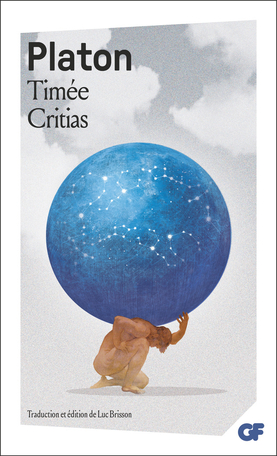
Plato: Timaeus
Author
How to talk about origins? How can we say what was the birth of the universe, that of man, that of society? From Timaeus to Critias, the answer does not vary: it is to a discourse which constitutes its object that the explanatory task falls. On the one hand, the cosmology of Timaeus which seeks the conditions for knowledge of the sensible world. On the other, the story of the war which opposed ancient Athens to Atla…
- Philosophy
Information may change.