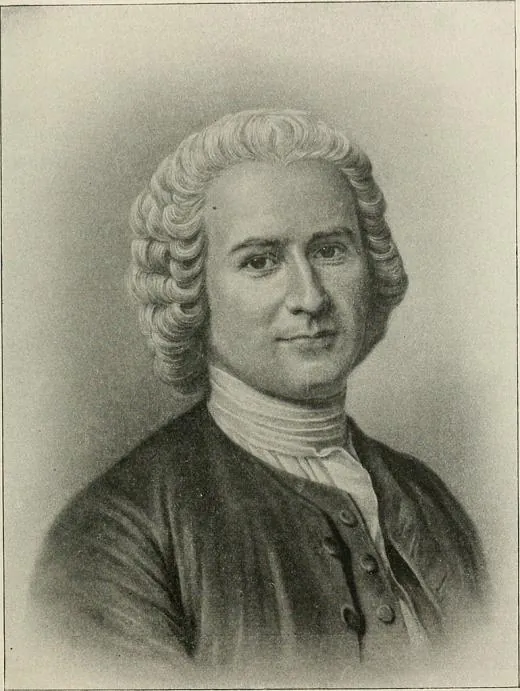
Jean-Jacques Rousseau
Details
- Roles
- Author
Referenced works
Referenced works (7)
Rousseau: Discourse on the Origin and Foundations of Inequality Among Men
Author
The "Discourse on the Origin and Foundations of Inequality Among Men" is one of the greatest texts ever written, one of the most beautiful of the Enlightenment, and one of Rousseau's two great essays with "The Social Contract". For Chomsky, it is a fundamentally revolutionary text avant la lettre. Rousseau sees inequality as the origin of social ills: wars, poverty, violence of all kinds. From the persistence of ine…
- Philosophy
Rousseau: Discourse on the Sciences and Arts
Author
The Discourse on the Sciences and the Arts is a text by Jean-Jacques Rousseau written as part of the Dijon Academy competition of 1750. Jean-Jacques Rousseau gives voice to the Roman hero Fabricius through prosopopeia in his Discourse. Winner of the competition, Rousseau saw his essay widely commented on and owed his fame to it, well before his magnum opus The Social Contract. As required by the competition, the spe…
- Philosophy
Rousseau: The Social Contract
Author
In The Social Contract, Rousseau establishes that a “just” social organization is based on a pact guaranteeing equality and freedom between all citizens. This pact is contracted between all the participants, that is to say the exhaustive set of citizens. In the social compact, everyone gives up their natural freedom to gain civil freedom. Popular sovereignty is the fundamental principle of the social contract. The i…
- Essay
- Philosophy
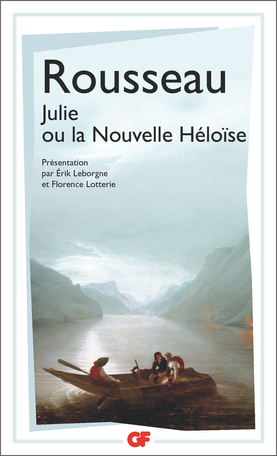
Rousseau: Julie, or the New Heloise
Author
“I saw the customs of my time, and I published these letters”: it is with these words that the “editor” Rousseau opens La Nouvelle Héloïse, a romantic correspondence between Julie d’Étange and her tutor Saint-Preux. On the shores of Lake Geneva, these “beautiful souls” form a small ideal society, where gentle passions and sincerity of feeling prevail, away from the evils of civilization. In line with Montesquieu's …
- Philosophy
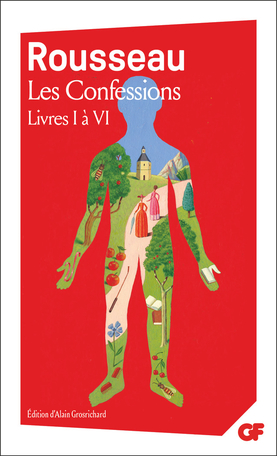
Rousseau: Confessions
Author
The Confessions of Jean-Jacques Rousseau is an autobiography covering the first fifty-three years of Rousseau's life, until 1765. The twelve books of the Confessions are divided into two distinct sets, defined by Rousseau himself: the first part consisting of books i to vi with the Preamble, written in 1765-1767, covers the years 1712-1740 (years of training, from birth in Geneva to settling in Paris at age 28) whil…
- Biography
- Philosophy
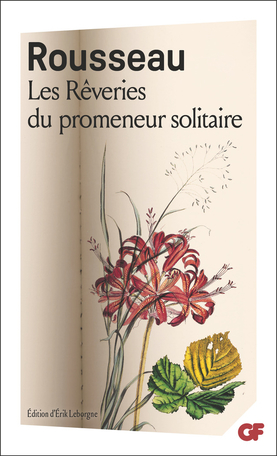
Rousseau: Reveries of a Solitary Walker
Author
After the "Confessions" and "Rousseau judge of Jean-Jacques", the philosopher wrote between 1776 and 1778 these "Rêveries d'un promeneur solitaire" before ending his days with René-Louis de Girardin at the Château d'Ermenonville. Sketched out day by day on playing cards before being composed and structured into ten “walks” – the last remaining unfinished – they were only published posthumously in 1782, in Geneva, by…
- Biography
- Philosophy
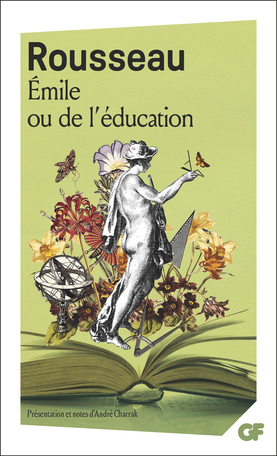
Rousseau: Emile, or On Education
Author
The publication of L'Émile, in 1762, restored the problem of education to its central place in philosophy. From his first months until his romantic encounter, Émile is followed at each stage, through experiences which first attest to the concern to consider “the child within the child”, instead of taking him out of his age. Rousseau shows that it is possible to educate a man according to nature and how vices and ine…
- Graphic novel
- Philosophy
Information may change.