Creating an image no longer happens through a single tool.
Today, a visual idea can begin as a sketch, move through a reference image, turn into a 3D scene, become a texture, an animation, a video, an interface, a render, concept art or a generative image to rework.
Digital art is not a single style.
It is a territory.
A territory of tools and practices
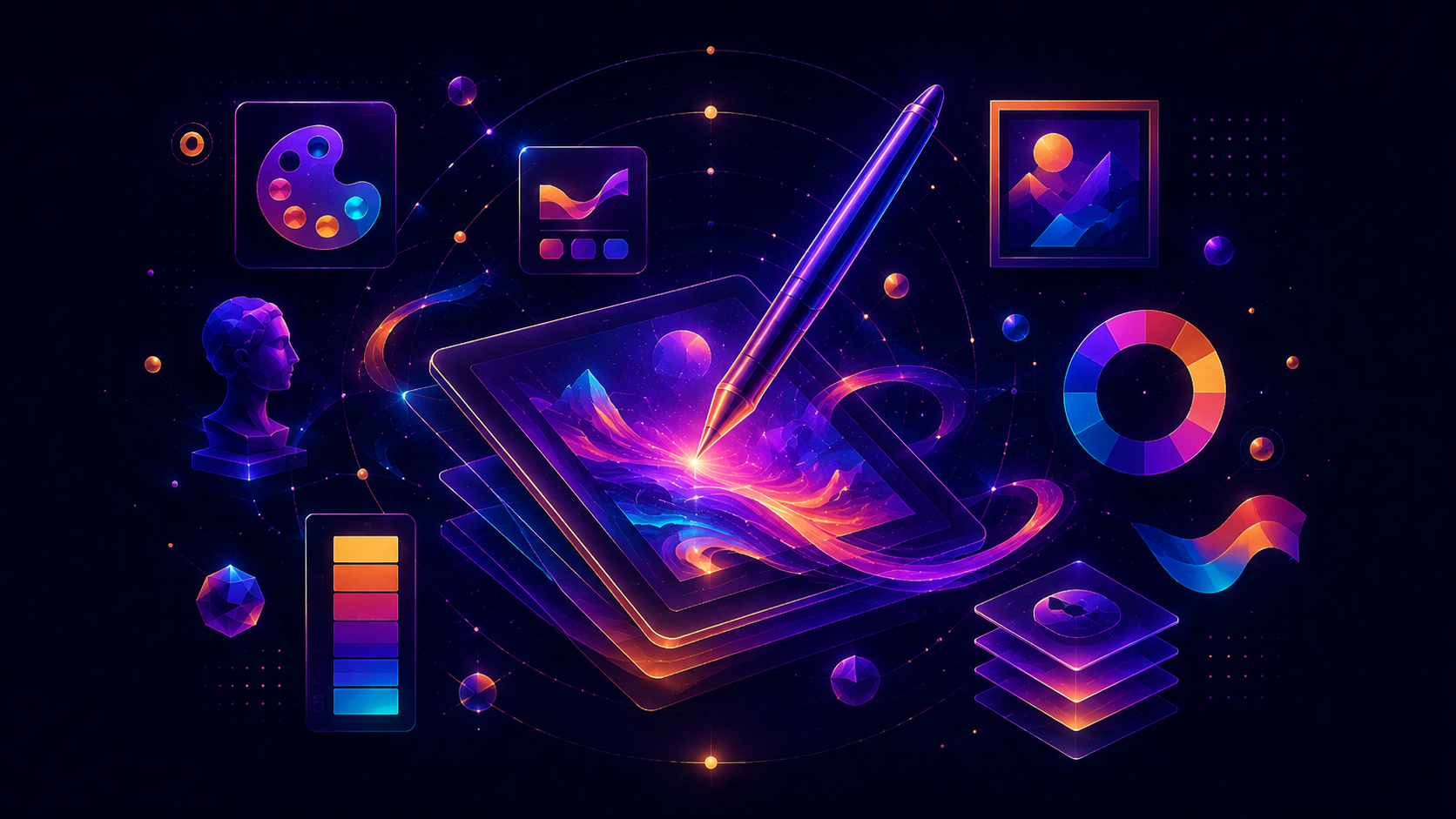
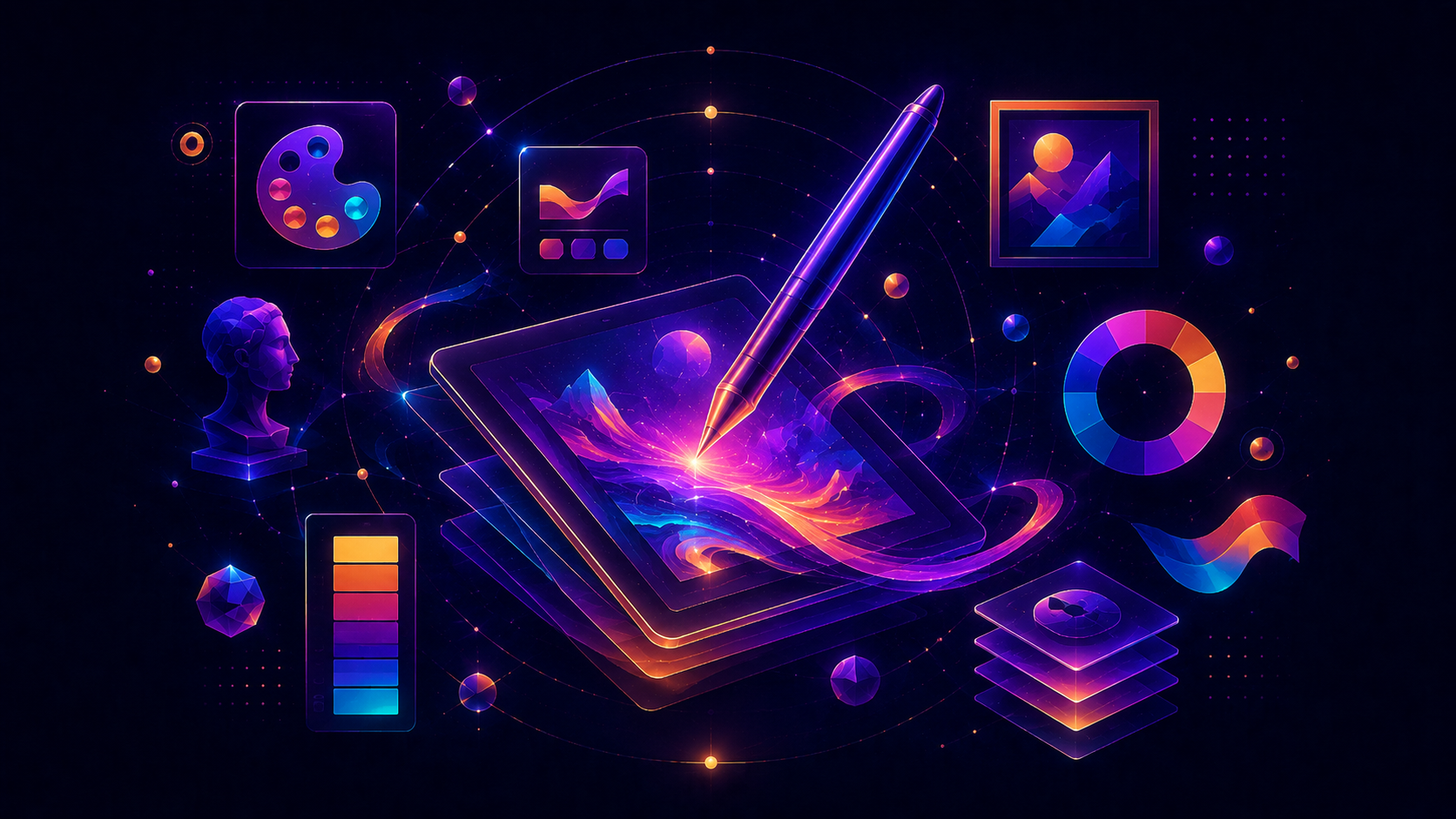
Inside it, we find 3D software, rendering engines, digital painting tools, image AI, motion design, video editing, compositing, texture libraries, cinematic references, interfaces, imaginary worlds and sometimes very technical experiments.
This diversity can feel dizzying.
But it also opens a precious possibility: building a hybrid visual workshop, capable of connecting several practices.
An artist can explore a form in 3D. Search for an atmosphere through references. Prepare a composition. Generate variations. Annotate images. Compare renders. Keep possible directions. Then return to a simpler version.
A more fluid way of creating
Digital creation makes the image more fluid.
Nothing has to be definitive from the first gesture.
An image can become a scene. A scene can become a video. A video can become a reference for a game, a poster, a moodboard, an article or a story.
This circulation changes the way we create.
We are no longer working only on an isolated image.
We are working through a set of passages: from an idea to a form, from a form to a variation, from a variation to a clearer intention.
Keeping the thread between versions
Panaches can support this kind of circulation.
A digital art project can bring together images, notes, files, inspirations, videos, documents, links, moodboards and reflections in the same space.
The goal is not to replace specialized software.
The goal is to help keep together what feeds the project.
A reference can clarify a composition. A note can refine an intention. A moodboard can set an atmosphere. An older version can remind us of a direction abandoned too quickly.
In digital art, the problem is not only producing.
It is not losing the thread between tools, versions, references and intention.
Technique, sensitivity and experimentation
Digital art has become an open workshop: technical, sensitive, experimental, sometimes chaotic, but deeply alive.
It requires method, but also intuition.
Mastery, but also play. Powerful tools, but also an eye capable of choosing. References, but not dependence on copying. Experiments, but not a complete loss of meaning.
Creating in this workshop means learning to navigate possibilities without being swallowed by them.
Key takeaways
Digital art is not limited to one style or one piece of software.
It is a hybrid territory where drawing, 3D, generative images, animation, video, textures, interfaces, references and experiments meet.
Panaches can help organize this circulation by keeping together the images, notes, files, inspirations, moodboards, documents and directions of a project.
In digital art, the challenge is not only to produce an image.
It is to keep the thread between tools, versions, references and creative intention.