Origins
Modern and contemporary classical music encompasses the transformations that have renewed art music composition since the late 19th century. Rather than constituting a single style, it brings together successive explorations, encounters and, at times, radical breaks with earlier musical traditions.
Its origins lie primarily in the upheavals of European musical language. Harmony, rhythm, instrumental forms and relationships between sounds gradually became fields of experimentation.
However, two concepts must be distinguished. Modern music generally refers to the transformations that emerged around the late 19th century and during the first half of the 20th century. The expression contemporary music is often used for art music developed since 1945, although its boundaries remain flexible.
Not all works composed during these periods were necessarily avant-garde. Some composers extended Romantic traditions, while others questioned their fundamental principles.
This coexistence represents one of the essential characteristics of modern musical creation.
Late Romanticism — A Musical Language Reaching Its Limits
During the second half of the 19th century, several composers developed particularly ambitious orchestral and harmonic writing.
Orchestras sometimes became enormous. Works explored increasingly pronounced dramatic contrasts, while tonal harmony grew richer in new tensions.
Richard Wagner contributed significantly to this evolution, notably through his musical theater and use of chromaticism.
This transformation influenced several generations of composers.
Gustav Mahler developed symphonies in which popular music, spirituality, irony and existential questions came together.
His work Das Lied von der Erde, composed during the early 20th century, combined voices and orchestra in a particularly original form.
Meanwhile, Richard Strauss continued exploring the expressive possibilities of the large orchestra. His symphonic poems notably investigated instrumental storytelling, while his opera Der Rosenkavalier demonstrated another aspect of his musical language.
However, this evolution did not lead every artist toward the same solutions.
Some sought to move beyond the rules of traditional harmony. Others preferred renewing orchestral colors or transforming inherited forms.
Musical modernity emerged from these different choices.
New Colors and New Harmonies
At the end of the 19th century, several composers began questioning traditional relationships between melody and harmony.
Chords could be used for their colors rather than for their function within a harmonic progression.
Modes, unusual scales and asymmetrical rhythms opened new possibilities.
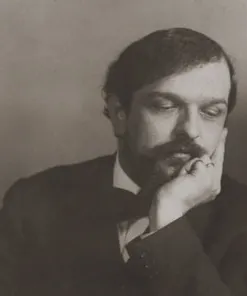
Claude Debussy played a fundamental role in this transformation.
His writing often emphasized timbres, resonances and subtle movements within the sonic material.
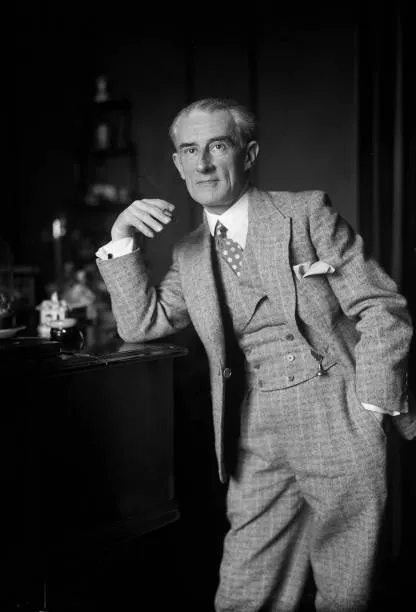
Meanwhile, Maurice Ravel explored orchestration with extraordinary precision.
In Russia, Alexander Scriabine developed a personal harmonic language connected to ambitious artistic and spiritual ideas.
These approaches anticipated several directions of 20th-century music.
Yet they did not constitute an organized collective break: each composer developed a personal relationship with inherited traditions.
Transformations in the Musical World
The emergence of modern music also accompanied profound social and technological changes.
Major concert halls, opera houses and conservatories occupied important positions in European cultural life.
The development of transportation allowed orchestras and soloists to travel more easily.
Printed scores encouraged the circulation of compositions.
From the beginning of the 20th century, recording technologies also began transforming listening practices.
Musical creation no longer depended exclusively on public performances.
This evolution would become essential when composers began using recording technologies directly as instruments of creation.
Emergence and Early Musical Scenes
Debussy and Ravel — The Revolution of Sonic Color
At the turn of the 20th century, Paris became one of the great centers of musical modernity.
Claude Debussy developed a language that renewed relationships between harmony, rhythm and orchestration.
His opera Pelléas et Mélisande, first performed in 1902, proposed a conception of musical theater based on suggestion and continuity of expression.
The works collected in the recording La Mer / L'après-midi d'un faune / Jeux illustrate different stages of his orchestral exploration.
Debussy investigated the possibilities of music that no longer necessarily relied on the dramatic developments of Romanticism.
Maurice Ravel pursued a distinct approach.
His writing was characterized notably by great mastery of musical forms and particular attention to instrumental sonorities.
The ballet Daphnis et Chloé, first performed in 1912, demonstrated the richness of his orchestration.
The composer also developed piano works and compositions inspired by different musical traditions.
These two artists are often associated with musical Impressionism, an expression whose limitations are widely recognized.
Above all, their works opened new possibilities in the organization of harmony and sonic color.
Vienna — Schönberg Questions Tonality
In Vienna, another major transformation took shape during the early 20th century.
Arnold Schönberg gradually explored a musical language in which traditional tonal relationships lost their central role.
His early works extended certain aspects of late Romanticism.
However, he subsequently developed atonal writing that questioned conventional hierarchies between notes.
Alban Berg and Anton Webern participated in this evolution.
These three composers are generally associated with the Second Viennese School.
During the 1920s, Schönberg developed the twelve-tone method of composition, also known as dodecaphony.
This technique organizes the twelve notes of the chromatic scale into a series used as compositional material.
Berg developed particularly expressive writing, notably in his operatic works.
Webern explored compositions that were often extremely concentrated, in which every timbre and musical event acquired particular importance.
These innovations became fundamental references for several postwar movements.
Stravinsky — Rhythm Becomes Revolutionary
At the beginning of the 20th century, the Ballets Russes, directed by Serge de Diaghilev, played a major role in encounters between music, dance and visual arts.
Igor Stravinsky developed several fundamental works through this company.
His ballet The Firebird (complete ballet) corresponds to a composition first performed in Paris in 1910, which still demonstrated certain Russian orchestral influences.
With The Rite of Spring, first performed in 1913, Stravinsky profoundly transformed the treatment of rhythm.
Irregular accents, rhythmic superimpositions and particularly powerful orchestral sonorities challenged audience expectations.
The work became one of the great milestones of musical modernism.
However, its importance did not rest solely on the uproar surrounding its premiere.
Above all, it lay in its writing, which opened new rhythmic and instrumental possibilities.
Stravinsky would subsequently continue changing his musical language, notably through works associated with Neoclassicism.
His career demonstrated that a modern composer could explore several aesthetics without retaining a single way of creating.
National Traditions — Several Paths Toward Modernity
Musical modernism did not develop exclusively in Paris or Vienna.
In Finland, Jean Sibelius pursued a deeply personal approach.
His symphonies developed forms based on the gradual transformation of motifs and careful attention to orchestral organization.
His Violin Concerto in D minor remains one of the great concertante works in the repertoire.
In Hungary, Bartók Béla explored folk traditions from Central and Eastern Europe.
Together with other researchers, he participated in studying and collecting traditional repertoires.
These investigations profoundly influenced his musical language.
Asymmetrical rhythms, modes and folk melodic structures became compositional materials.
His works collected in 6 String Quartets demonstrate this formal and instrumental exploration.
In Russia, Sergueï Rachmaninov pursued a direction more closely connected to Romanticism.
His Symphony no. 2 in E minor and piano concertos demonstrate profoundly melodic writing.
These different approaches show that it would be incorrect to identify musical modernity solely with the disappearance of tonality.
The United States — An Original Modernity
Across the Atlantic, several composers developed approaches distinct from the major European schools.
Charles Ives notably explored superimposed melodies, dissonances and references to American popular music.
His works offered sonic experiments that were particularly daring for their time.
The United States also possessed symphonic traditions that continued evolving.
Florence Price contributed to this history by combining orchestral composition with different influences from African American musical culture.
These approaches remind us that classical modernity was not exclusively a European phenomenon.
Exchanges between continents would gradually become one of the principal characteristics of 20th-century musical life.
The Golden Age
The 1920s–1930s — Neoclassicism Renews Historical Forms
Following the First World War, several composers developed a renewed interest in musical forms from previous centuries.
This direction is generally associated with Neoclassicism.
Rather than simply reproducing 18th-century music, it involved reinterpreting historical structures using a modern musical language.
Igor Stravinsky contributed significantly to this evolution.
His ballet Pulcinella, first performed in 1920, represented an important milestone in this aesthetic change.
Sergueï Prokofiev also explored relationships between historical forms, rhythmic energy and modern harmonies.
His First Symphony, often nicknamed the "Classical" Symphony, demonstrated this approach.
In France, Francis Poulenc developed a language combining melodic clarity, humor and expressiveness.
Neoclassicism thus became one of the responses to the musical transformations of the early 20th century.
It demonstrated that innovation could also emerge through the reinterpretation of traditions.
Between the Wars — Contrasting Musical Expressions
During the interwar period, composers pursued particularly diverse directions.
Some deepened atonal and serial research.
Others developed works based on the continuity of symphonic and operatic forms.
Sergueï Prokofiev notably composed several concertos and orchestral works combining virtuosity, lyricism and modernity.
His ballet Romeo and Juliet renewed the choreographic repertoire through its dramatic energy and musical richness.
In the Soviet Union, Dmitri Chostakovitch developed a body of work profoundly marked by the political and cultural tensions of his time.
His Fifth Symphony, first performed in 1937, became one of his most important works.
It demonstrated the complex relationships between artistic creation, official expectations and audience interpretations.
Modern music was therefore not a movement isolated from historical events.
Wars, political regimes and social transformations profoundly influenced the conditions of composition and performance.
Bartók — The Encounter Between Folk Music and Modernism
Bartók Béla occupies an essential place in the history of modern music.
His work relied on extensive knowledge of several folk traditions.
His ethnomusicological research helped renew his understanding of rhythms, modes and melodic structures.
This approach directly influenced his compositions.
His string quartets explored particularly demanding forms based on complex instrumental and rhythmic interactions.
His opera Duke Bluebeard's Castle developed a dramatic atmosphere characterized by harmonic and orchestral exploration.
During his exile in the United States, Bartók composed Concerto for Orchestra, completed in 1943.
The work explored the expressive possibilities of different instrumental families within a particularly elaborate architecture.
Bartók thus demonstrated that profoundly modern music could be built upon the study of folk traditions without reducing them to simple decorative elements.
The 1940s — Music Confronts War
The Second World War profoundly disrupted composers' lives and musical institutions.
Some artists were forced into exile.
Others had to compose under conditions of censorship, persecution or destruction.
The war also left its mark on several major works.
In France, Olivier Messiaen composed Quatuor pour la fin du Temps while in captivity, and the work was first performed in 1941 in a prisoner-of-war camp.
His language combined rhythmic exploration, spirituality and particularly original harmonies.
In the Soviet Union, Dmitri Chostakovitch continued composing symphonic and instrumental works deeply connected to the events of his time.
His quartets, some of which are collected in the recording String Quartets 1-13, demonstrate the evolution of his writing over several decades.
The final years of the war also prepared a major transformation of musical institutions.
After 1945, new generations would seek to reconstruct the possibilities of musical creation, sometimes by radically questioning previous traditions.
After 1945 — The Emergence of New Avant-Gardes
Following the Second World War, several European centers became essential places of musical experimentation.
The Darmstadt Summer Courses in Germany played an important role in exchanges between composers.
Karlheinz Stockhausen, Pierre Boulez and Luigi Nono participated in different stages of this history.
The research of Schönberg and Webern constituted major references.
Several composers developed forms of serialism that extended organizational principles to parameters beyond pitch.
Rhythm, dynamics and articulation could also be integrated into particularly rigorous structures.
However, these investigations did not produce a single aesthetic.
Composers pursued sometimes very different approaches, combining formal construction, dramatic expression and sonic experimentation.
Contemporary music began establishing itself as a collection of practices associated with new institutions, research and the creation of previously unheard repertoires.
1948 — Musique Concrète Transforms the Concept of an Instrument
In France, Pierre Schaeffer opened a new path by using recorded sounds directly as compositional materials.
In 1948, his first sound studies were broadcast on radio.
This approach became known as musique concrète.
Composers could record noises, change their speed, assemble them and transform how they were perceived.
Sound no longer necessarily had to be produced by a traditional instrument during a concert.
Pierre Henry subsequently participated in developing this new approach.
The activities of the Groupe de recherches musicales, established in 1958, contributed to the evolution of electroacoustic music.
Meanwhile, other European studios developed research based on the electronic generation of sounds.
Karlheinz Stockhausen notably contributed to these experiments.
Contemporary music thus began moving beyond the traditional framework of scores intended for acoustic instruments.
The studio itself became a place of composition.
The 1950s–1960s — The Boundaries of Sound
During the 1950s and 1960s, several composers explored new forms of creation.
Edgard Varèse developed an approach based on sound masses, rhythms and the possibilities of acoustic space.
Iannis Xenakis notably used mathematical models and architectural concepts in his compositions.
György Ligeti explored orchestral textures and the superimposition of musical lines.
Works could now emphasize gradual transformations of sound rather than traditional melodies.
In the United States, John Cage proposed a particularly different approach.
He explored chance, everyday sounds and the role of listening.
His work "4'33"," first performed in 1952 by pianist David Tudor, asks performers to produce no intentional sound during its duration.
The audience's attention is then directed toward sounds in the surrounding environment.
This proposal profoundly challenged conventional boundaries between composition and performance.
The 1960s–1970s — The Minimalist Revolution
In the United States, several composers developed an aesthetic based on repetition and the gradual transformation of motifs.
Terry Riley contributed to this evolution.
Steve Reich notably explored rhythmic displacement and repetitive processes.
His work "Music for 18 Musicians," first performed in 1976, constitutes a major reference.
Meanwhile, Philip Glass developed compositions based on repetitive structures and gradual harmonic transformations.
His opera "Einstein on the Beach," first performed in 1976, represented an essential milestone in this approach.
Minimalism differed from several European avant-gardes through its particular attention to pulse and easily perceptible processes.
However, it encompassed highly diverse forms.
Its influence would continue through film music, electronic creation and several contemporary movements.
The 1970s–1980s — Spectralism Explores the Inner Structure of Sound
In France, a new generation of composers became particularly interested in the acoustic properties of sound.
Gérard Grisey and Tristan Murail are among the great references of spectralism.
Their research relied notably on analyzing the harmonic components of a sound.
Composition could then be built upon these acoustic phenomena.
Relationships between harmony and timbre became particularly important.
Hugues Dufourt also participated in the history and theoretical formulation of this movement.
Spectralism transformed traditional conceptions of orchestration.
Instruments could be used to reconstruct or transform the properties of a complex sound.
This approach exerted a lasting influence on several generations of composers.
IRCAM — Research Meets Composition
The opening of IRCAM in Paris in 1977 represented an important milestone in the history of contemporary music.
The institute, established through the initiative of Pierre Boulez, developed collaborations between composers, researchers and engineers.
Its activities notably concerned acoustics, computer music and sound processing.
New technologies made it possible to explore forms of composition that could not be achieved using traditional instruments alone.
Computer systems could transform sounds in real time or participate in organizing musical structures.
IRCAM also contributed to training and the presentation of new works.
It became one of the important centers of international musical research.
This evolution illustrated the growing relationship between artistic creation and scientific research.
Since the 1980s — A Plurality of Musical Languages
From the 1980s onward, contemporary creation became characterized by increasing diversity.
Serial techniques, electronic research and spectral approaches continued evolving.
However, other composers developed very different aesthetics.
Arvo Pärt constructed a musical language often based on great economy of means and spiritual references.
Henryk Górecki participated in another development, characterized notably by meditative musical forms.
John Adams combined certain minimalist influences with particularly expressive orchestral writing.
In Russia and the former Soviet sphere, Sofia Gubaidulina developed music marked by highly personal instrumental and spiritual explorations.
In Japan, Toru Takemitsu notably investigated relationships between timbre, silence and musical traditions.
These approaches demonstrated that contemporary music no longer corresponded to a dominant movement.
It encompassed a multitude of conceptions of composition.
The 1990s–2020s — New Generations
At the end of the 20th century and the beginning of the 21st, composers continued exploring new musical languages.
Kaija Saariaho developed a body of work particularly attentive to timbre and relationships between instruments and technologies.
Her opera "L'Amour de loin," first performed in 2000, demonstrated the possibility of renewing contemporary musical theater.
Unsuk Chin explored particularly inventive rhythmic and orchestral structures.
Helmut Lachenmann developed an approach giving essential importance to instrumental gestures and sounds usually considered secondary.
Pauline Oliveros renewed conceptions of listening and improvisation.
Meredith Monk explored the possibilities of the voice through multidisciplinary compositions and performances.
Éliane Radigue developed a distinctive approach based on sustained sounds and their transformations.
During the 21st century, Caroline Shaw, Thomas Adès, Gabriela Ortiz and Anna Thorvaldsdottir represented different directions within an increasingly international creative landscape.
Contemporary music is now characterized by the coexistence of languages that may be experimental, narrative, acoustic, electronic or connected to multiple cultural traditions.
Movements and Subgenres
Musical Impressionism
Musical Impressionism is a term frequently associated with harmonic and orchestral research from the late 19th and early 20th centuries.
Claude Debussy and Maurice Ravel represent two major references, although the term does not fully describe their approaches.
Sonic color, modes and harmonic transformations occupy important places.
This movement helped renew relationships between melody, harmony and orchestration.
Expressionism and Atonality
Musical Expressionism developed particularly during the early 20th century.
It is associated with writing often characterized by tension and expressive contrasts.
Arnold Schönberg and Alban Berg participated in this history.
Atonality more broadly describes music that does not rely on traditional tonal hierarchies.
It does not necessarily constitute a single compositional system.
Twelve-Tone Music and Serialism
The twelve-tone technique is a compositional method developed by Arnold Schönberg during the 1920s.
It relies on organizing the twelve chromatic notes into a series.
After 1945, several composers extended certain serial principles to other musical parameters.
Pierre Boulez and Karlheinz Stockhausen participated in these investigations.
These methods profoundly influenced several European avant-garde movements.
Neoclassicism
Neoclassicism developed particularly during the interwar period.
It involved reinterpreting certain historical musical forms through modern languages.
Igor Stravinsky and Sergueï Prokofiev represented different expressions of this approach.
The movement could emphasize structural clarity without simply returning to 18th-century practices.
Rhythmic and Orchestral Modernism
This movement brings together several early 20th-century explorations of rhythm and orchestral possibilities.
Igor Stravinsky developed particularly innovative rhythmic structures.
Bartók Béla also explored complex rhythms, notably informed by folk traditions.
These transformations concerned accents and meters as much as instrumental sonorities.
Musique Concrète
Musique concrète emerged in France in 1948 through the research of Pierre Schaeffer.
It uses recorded sounds as compositional materials.
Pierre Henry subsequently participated in its development.
Sounds can be transformed, assembled and organized directly on their recording medium.
This approach represents a fundamental milestone in the history of electroacoustic creation.
Electronic and Electroacoustic Music
Electronic art music developed notably from the middle of the 20th century.
It uses technologies that make it possible to generate or transform sounds directly.
Electroacoustic music encompasses several practices combining recording, sound processing and musical creation.
Karlheinz Stockhausen and researchers at the Groupe de recherches musicales contributed to different stages of this history.
Digital technologies subsequently expanded compositional possibilities considerably.
Experimental Music and Indeterminacy
Experimental music encompasses different approaches that question the conventions of composition and performance.
John Cage represents one of its major figures.
Chance, environmental sounds and performers' interventions can participate in constructing a work.
These practices notably question the boundaries between music, noise and silence.
Minimalism and Repetitive Music
Musical minimalism developed primarily in the United States during the 1960s.
It often emphasizes repeated motifs and gradual transformations.
Terry Riley, Steve Reich and Philip Glass are among its great references.
The genre underwent several developments and influenced different forms of classical and popular creation.
Spectral Music
Spectral music developed particularly during the 1970s.
It notably relies on acoustic analysis of sounds and their harmonic components.
Gérard Grisey and Tristan Murail contributed strongly to its establishment.
Timbre and its transformations became essential elements of composition.
Microtonal Music
Microtonal research explores intervals smaller than the semitone of conventional Western equal temperament.
It possesses a long history and developed through several modern experiments.
Composers may use new tuning systems or particular instrumental techniques.
These investigations notably maintain relationships with spectral music and different non-Western musical traditions.
Aleatoric and Conceptual Music
Certain modern compositions allow a place for chance or open procedures.
Performers' decisions can participate in the musical realization.
Other works are based primarily on an artistic concept that transforms listening conventions.
John Cage contributed strongly to these developments.
These approaches do not necessarily correspond to a particular sonic style.
Contemporary Vocal and Operatic Music
Contemporary creation continues exploring the voice and musical theater.
Composers can transform relationships between singing, language, gesture and orchestra.
Kaija Saariaho and Unsuk Chin represent different approaches to this evolution.
New productions may also incorporate electronic processing and multimedia stage design.
Opera therefore remains a living space for creation.
Legacy and Influence Today
Modern and contemporary classical music has profoundly transformed ways of composing, performing and listening.
Its history cannot be summarized as a succession of radical breaks.
Some composers sought to move beyond inherited traditions, while others preferred transforming them gradually.
Debussy renewed the possibilities of harmony and timbre.
Stravinsky profoundly influenced the evolution of orchestral rhythm.
Schönberg developed new principles of pitch organization.
Bartók demonstrated the importance of folk traditions in modern creation.
Subsequent generations explored the possibilities of studios, computers and new forms of performance.
These approaches opened possibilities that continue influencing composers today.
The Orchestra — An Instrument Constantly Renewed
The orchestra occupies an essential place in the history of modern music.
Early 20th-century composers transformed orchestration techniques inherited from Romanticism.
Instruments could be used in unusual registers.
Percussion sometimes acquired a particularly important place.
Strings and winds made it possible to create increasingly varied sonic textures.
The orchestral works of Claude Debussy, Maurice Ravel and Igor Stravinsky represent several fundamental stages of this evolution.
Contemporary composers continue these investigations.
They may combine acoustic instruments with electronic processing or explore new playing techniques.
The orchestra therefore remains a space for experimentation rather than merely a means of transmitting works from the past.
The Score — New Ways of Writing Music
The musical transformations of the 20th century also renewed notation.
Traditional scores remain fundamental in numerous works.
However, some composers developed graphic instructions or systems allowing performers greater freedom.
Others used computer programs or electronic devices.
Scores can now describe gestures, processes or sonic transformations.
This evolution sometimes changes relationships between composer and performer.
Performing a work may require close collaboration between musicians, sound engineers and researchers.
Contemporary creation thus expands the possibilities of musical transmission.
Women Composers — Renewed Visibility
The history of musical modernism has long emphasized certain male figures.
Yet several women composers contributed to its transformations.
Lili Boulanger developed remarkable orchestral and vocal writing during the early 20th century.
Florence Price participated in the history of American symphonic music.
Sofia Gubaidulina explored particularly personal instrumental and spiritual approaches.
Kaija Saariaho became one of the great figures of international contemporary creation.
Caroline Shaw and Gabriela Ortiz represent different directions among more recent generations.
These careers demonstrate the diversity of musical creation and the importance of a more complete representation of its history.
Institutions — Supporting Creation
Contemporary music maintains an important relationship with cultural institutions.
Orchestras, conservatories, festivals and specialized ensembles participate in creating new works.
Some institutions organize residencies and commissions for composers.
IRCAM contributes to musical experimentation and research.
Specialized ensembles develop performance techniques adapted to new repertoires.
These organizations play an essential role in transmitting works.
They also make it possible to preserve archives and technologies required by certain compositions.
Their activities help establish contemporary creation over the long term.
Influences on Cinema and Popular Music
Modern musical research has influenced numerous forms of creation beyond concert halls.
The orchestral techniques of Debussy, Ravel and Stravinsky helped renew the expressive possibilities of film music.
Repetitive and minimalist approaches also found continuations in different audiovisual fields.
Musique concrète and electroacoustic creation contributed to transforming sound production techniques.
Research into timbre influenced several compositional and sound design practices.
These relationships do not mean that all popular music derives from contemporary art music.
Instead, they demonstrate lasting exchanges between several artistic traditions.
Music That Can Sometimes Be Difficult to Approach
Contemporary music can sometimes surprise listeners accustomed to tonal structures or traditional melodies.
Certain works emphasize dissonance, textures or slow transformations.
Others use sounds that do not correspond to conventional classical instruments.
This diversity can make listening less immediately familiar.
However, it does not necessarily represent a deliberate desire for complexity.
Composers develop very different approaches.
Some works emphasize dramatic intensity, while others favor repetition, contemplation or experimentation.
Discovering contemporary music therefore involves recognizing this plurality rather than seeking a language shared by every work.
An Increasingly International Art Form
Modern classical music initially developed primarily in several major European centers.
However, its history gradually became international.
American composers developed their own approaches from the beginning of the 20th century.
Exchanges with Asia, Africa and Latin America contributed to enriching musical practices.
Contemporary creation institutions now bring together artists from highly diverse traditions.
Composers can work with international ensembles, digital technologies and instruments originating from different cultural contexts.
This evolution questions the idea of musical modernity as an exclusively European phenomenon.
It also opens new reflections on relationships between art music traditions and musical practices around the world.
The 2020s — Between Heritage and New Inventions
During the 2020s, contemporary music continues evolving in several directions.
Composers continue exploring acoustic instruments and orchestral forms.
Digital technologies allow new sonic transformations.
Interactive systems and multimedia collaborations occupy an increasingly important place in certain productions.
Other artists prefer developing works based on voice, instrumental traditions or great simplicity of means.
Minimalism, spectral approaches and electroacoustic research continue influencing new generations.
Contemporary creation therefore does not constitute a completed movement.
It remains a space where inherited practices encounter new possibilities.
A History of Musical Freedom
Modern and contemporary classical music tells the story of a profound transformation in musical creation.
At the end of the 19th century, several composers began pushing the boundaries of Romantic traditions.
During the early 20th century, Debussy, Ravel, Stravinsky and Schönberg explored new languages.
Bartók developed particularly rich encounters between folk traditions and art music composition.
Meanwhile, Mahler, Sibelius, Rachmaninov and Strauss demonstrated that Romantic legacies could give rise to profoundly personal works.
After 1945, serial, electronic and experimental research opened new directions.
Minimalism and spectralism subsequently proposed other ways of understanding time, harmony and timbre.
Contemporary works continue this diversity today.
The history of this music therefore does not describe the replacement of one style by another.
It demonstrates the coexistence of multiple ways of composing and understanding sound.
From the last great Romantic symphonies to the digital experiments of the 21st century, modern and contemporary classical music remains a history of exploration, freedom and artistic invention.