Claude Debussy (1862–1918) was a major French composer associated with musical Impressionism and the transformation of classical music in the early twentieth century. His innovative style emphasizes tonal colors, subtle harmonies and formal freedom, drawing inspiration from poetry, nature and visual arts. His compositions include piano music, orchestral works and vocal pieces. Clair de lune, La Mer, Prélude à l'après-midi d'un faune and the opera Pelléas et Mélisande remain among his most celebrated creations.
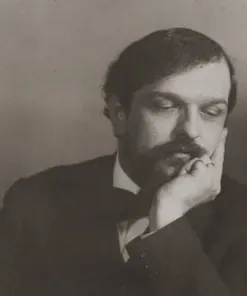
Claude Debussy
When harmonies become colors and music suggests more than it describes.
Details
- Type
- Music
- Countries
- 🇫🇷 France
- Genres
- Classical, Musical impressionism, Modernism and avant-garde
- Albums
- 3
Synopsis
Claude Debussy
Glossary terms: Chord, Composer, Composition, Development, Ensemble, Exposition, Harmonic (overtone), Harmony, Impressionism, Mode, Opera, Orchestration, Piano, Scale, Short story, Suite, Timbre, Tone, Transformation, Visual arts
Trailer
Watch the trailer
Overview
Presentation
Claude Debussy (1862–1918) was a French composer whose work marked a major transformation in European musical language. Born in Saint-Germain-en-Laye, he entered the Paris Conservatoire in 1872 and won the Prix de Rome in 1884. He gradually moved away from the harmonic and formal conventions of Romanticism, developing a distinctive approach centered on timbre, nuance and musical atmosphere.
Influenced by Symbolist poetry, painting and non-European musical traditions encountered notably at the 1889 Paris World's Fair, he explored new expressive possibilities. His piano compositions, orchestral works and opera Pelléas et Mélisande contributed to the emergence of a modern musical aesthetic, frequently associated with Impressionism, although Debussy himself disliked the label.
Key Points
Debussy transformed the use of harmony and orchestration. Whole-tone scales, modes, chords with ambiguous tonal functions and subtle instrumental combinations allowed him to create constantly shifting soundscapes. His compositions often favor suggestion, delicate contrasts and fluidity over conventional dramatic development.
His major works include Clair de lune, from the Suite bergamasque, Prélude à l'après-midi d'un faune, inspired by a poem by Stéphane Mallarmé, and La Mer, a collection of three symphonic sketches. His opera Pelléas et Mélisande introduced a distinctive relationship between text, voice and orchestra. His piano collections Préludes and Images further demonstrate the richness of his instrumental writing.
Conclusion
Claude Debussy opened new directions in Western classical music by transforming the relationships between harmony, timbre and musical form. His influence extends far beyond Impressionism, establishing his compositions as a foundation of twentieth-century musical modernism.
Did You Know?
- Birth: August 22, 1862, in Saint-Germain-en-Laye; died March 25, 1918, in Paris.
- Education: entered the Paris Conservatoire in 1872 and won the Prix de Rome in 1884 with the cantata L'Enfant prodigue.
- Orchestral work: Prélude à l'après-midi d'un faune premiered in 1894.
- Opera: Pelléas et Mélisande, based on Maurice Maeterlinck's play, premiered at the Paris Opéra-Comique in 1902.
- Piano: his two books of Préludes, published in 1910 and 1913, each contain twelve pieces.
Link graph
Open in the full graphLoading the graph…
Only the strongest links are shown.
View the list ({count})
Discography
Discography (3)


Album
1985
La Mer / L'après-midi d'un faune / Jeux
- Classical
- Musical impressionism
- Modernism and avant-garde
