

Overview
Sony Pictures Animation is an American animation studio founded in 2002 within Sony Pictures Entertainment.
The company was created to develop characters, stories and animated feature films, while its sister company Sony Pictures Imageworks already possessed extensive expertise in visual effects and computer imagery.
This distinction remains fundamental to the studio’s operating model.
Sony Pictures Animation primarily serves as the creative center of its productions: story development, screenwriting, storyboards, character design, visual research and the overall definition of each film’s look.
For many of its projects, Sony Pictures Imageworks then handles a large part of the digital production process, including layout, animation, rendering and lighting.
This organization gradually allowed Sony to build a true animation studio without confusing its creative development activity with its long-established visual-effects operation.
Sony Pictures Animation’s first feature film, Open Season, was released in 2006.
It was followed in 2007 by Surf’s Up, a mockumentary about surfing penguins that received an Academy Award nomination for Best Animated Feature.
The studio then developed several popular franchises through Cloudy with a Chance of Meatballs, The Smurfs and especially Hotel Transylvania.
The arrival of Genndy Tartakovsky on Hotel Transylvania notably helped strengthen an animation philosophy based on posing, exaggeration and rhythm rather than realism alone.
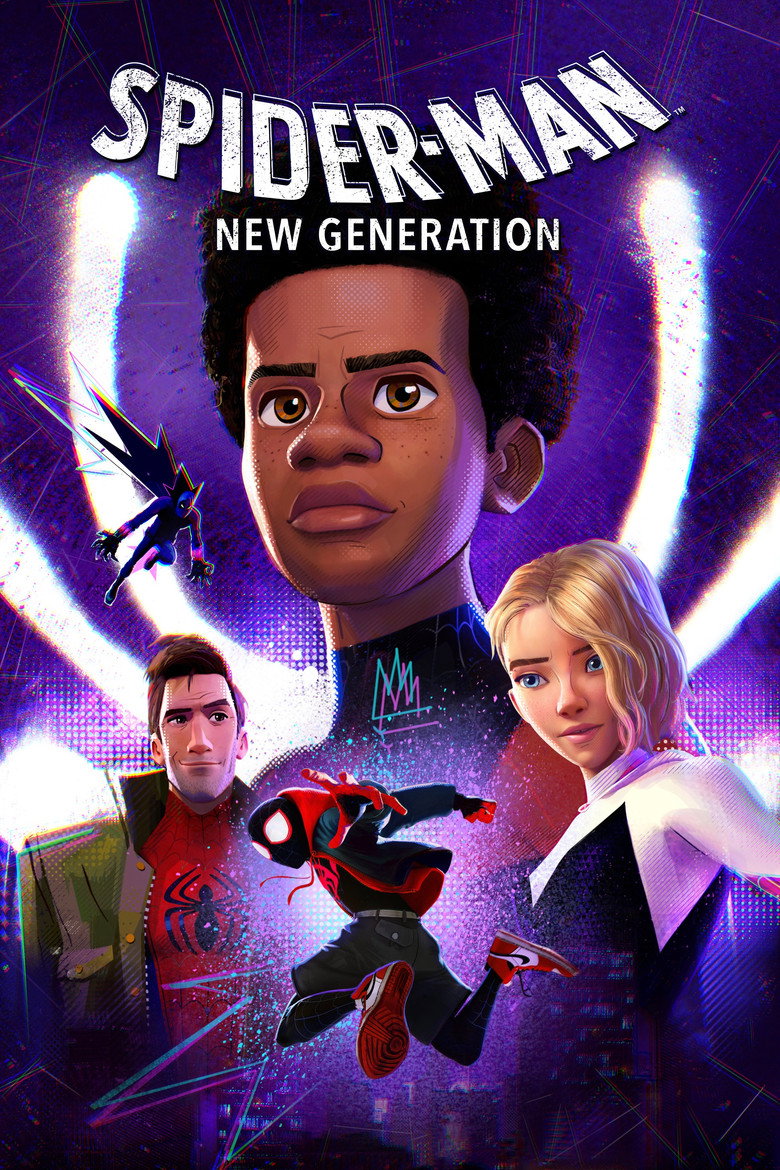
An even more significant transformation came with Spider-Man: Into the Spider-Verse in 2018.
The film combined 3D animation, comic-book language, frame-rate experimentation, textures, halftone patterns and graphic effects to create an aesthetic radically different from dominant computer-animation standards.
Its critical success and Academy Award for Best Animated Feature profoundly strengthened the studio’s identity.
Sony Pictures Animation continued this experimentation with The Mitchells vs. the Machines, Spider-Man: Across the Spider-Verse and KPop Demon Hunters, while also producing very different projects such as Vivo, Fixed and GOAT.
The studio has also expanded into series with productions including Agent Elvis, Young Love and the Hotel Transylvania universe.
In 2026, Sony Pictures Animation operates within the Sony Pictures Motion Picture Group, itself part of Sony Pictures Entertainment, a subsidiary of Japanese group Sony.
The studio is led by presidents Kristine Belson and Damien de Froberville.
History
2001-2002 — Sony prepares its own animation studio
At the beginning of the 2000s, computer animation was becoming increasingly important in Hollywood.
Pixar had already demonstrated the viability of computer-animated features with Toy Story, while DreamWorks Animation had achieved major success with productions such as Shrek.
Sony, meanwhile, already possessed an important asset: Sony Pictures Imageworks.
Created several years earlier, Imageworks specialized in visual effects, character animation and digital tool development.
Its teams had notably worked on productions combining digital characters with live action.
Sony considered several options for the future of this activity before deciding to develop its own animated feature films.
2002 — Sony Pictures Animation is founded
On May 9, 2002, Sony announced the creation of a new division dedicated to computer-animated feature films.
The company was named Sony Pictures Animation.
Sandra Rabins and Penney Finkelman Cox, who had previously helped create and develop DreamWorks’ animation division, were chosen to build and lead the new studio.
Their role was to develop projects, assemble creative teams and define the division’s first productions.
Sony Pictures Animation worked closely with Sony Pictures Imageworks from the beginning.
This organization would remain central to its operations.
Two complementary companies
The distinction between Sony Pictures Animation and Sony Pictures Imageworks is important.
Sony Pictures Animation develops projects upstream.
Its teams work notably on stories, screenplays, storyboards, characters, art direction and the overall vision of each film.
Once production enters the fabrication phase, Sony Pictures Imageworks generally handles a substantial part of the digital production.
Artists and technicians from both companies therefore work closely together, while the two entities maintain different roles.
This organization also allows Imageworks to continue its separate visual-effects work on productions outside the Sony Pictures Animation catalog.
The ChubbChubbs! and Imageworks’ capabilities
Around the creation of the new division, Sony Pictures Imageworks also produced the short film The ChubbChubbs!.
It was the first fully computer-animated short produced by Imageworks.
The story follows Meeper, a small alien trying to warn the inhabitants of a space bar about the arrival of particularly dangerous creatures.
The film allowed the teams to test their methods for complete animation production.
The ChubbChubbs! later won the Academy Award for Best Animated Short Film.
Although it originated directly at Imageworks, it symbolically accompanied the beginning of Sony’s new animation ambitions.
2003 — Building the first slate
One year after its creation, Sony Pictures Animation began presenting several projects.
The young studio attracted directors and artists from different companies.
Among the projects in development was Open Season, which would become its first feature film.
From the beginning, Sony sought not to build only one franchise, but to test different genres and approaches.
The company also developed relationships with other animation studios, including British company Aardman.
The collaboration with Aardman
Sony developed a financing, production and distribution relationship with Aardman Animations.
This collaboration notably produced projects such as Arthur Christmas and The Pirates! Band of Misfits.
Aardman’s presence within the catalog greatly broadened the visual identity of productions associated with Sony Pictures Animation.
It also reinforced the idea that the studio did not need to impose a single technique or appearance across all of its projects.
2006 — Open Season
Open Season was released in 2006.
It became the first feature film from Sony Pictures Animation.
The film was directed by Jill Culton and Roger Allers, with Anthony Stacchi as co-director.
The story follows Boog, a domesticated grizzly bear living peacefully with a forest ranger, whose life is disrupted when he meets Elliot, an extremely talkative deer.
The two animals end up in the wilderness just as hunting season begins.
For Sony, the project primarily represented the transition from several years of development into genuine industrial-scale feature-film production.
A first franchise
Open Season was successful enough to produce several follow-ups.
The property therefore became Sony Pictures Animation’s first franchise.
Later sequels, however, often followed production and distribution models different from the original theatrical film.
The historical importance of the 2006 feature remains above all that it demonstrated Sony’s ability to develop and produce its own large-scale animation.
2007 — Surf’s Up
The following year, Sony Pictures Animation released a very different production with Surf’s Up.
The film follows Cody Maverick, a young penguin passionate about surfing.
Rather than telling his story traditionally, directors Ash Brannon and Chris Buck adopted the conventions of a sports documentary.
Characters speak directly to a fictional camera crew.
Camera movements, interviews and deliberate imperfections create the impression of a real documentary being filmed in a world populated by penguins.
An early major recognition
This approach gave Surf’s Up a visual identity very different from other computer-animated films of the period.
The film received an Academy Award nomination for Best Animated Feature.
Although its commercial performance was not enough to immediately make Sony Pictures Animation a market leader, it already demonstrated a willingness to experiment with filmmaking language.
That tendency would become much more important later in the studio’s history.
2009 — Cloudy with a Chance of Meatballs
In 2009, Sony Pictures Animation released Cloudy with a Chance of Meatballs, directed by Phil Lord and Christopher Miller.
Inspired by the children’s book by Judi and Ron Barrett, the film follows Flint Lockwood, a young inventor who creates a machine capable of turning water into food.
The invention soon causes weather events involving hamburgers, ice cream, spaghetti and other giant foods.
The production stands out through its rapid-fire humor, deliberately exaggerated characters and rejection of overly rigid realism.
Lord and Miller
Phil Lord and Christopher Miller brought a particular energy to the studio.
Their direction embraced distortions, graphic breaks and absurd visual ideas.
Characters could adopt extremely pushed poses and their expressions did not necessarily need to reproduce realistic human movement perfectly.
This philosophy anticipated part of the evolution Sony Pictures Animation would undergo several years later.
Cloudy with a Chance of Meatballs became a success and received a sequel in 2013.
2011 — The Smurfs
In 2011, Sony Pictures Animation participated in The Smurfs.
The production combined digital characters with live-action footage.
The famous characters created by Peyo leave their own world and find themselves in New York City.
The film became a significant commercial success.
A sequel followed in 2013, while Sony later returned to the property with a fully animated approach in Smurfs: The Lost Village in 2017.
This period demonstrated SPA’s ability to work both on fully animated productions and hybrid projects.
2011 — Arthur Christmas
That same year, Arthur Christmas offered a particularly inventive vision of Santa Claus.
Produced with Aardman, the film imagines the enormous logistical operation required to deliver presents to hundreds of millions of children in a single night.
Behind this spectacular machinery is the story of Arthur, Santa’s clumsy but deeply caring son.
The project combines Aardman’s attention to detail and humor with computer-animation production.
2012 — The Pirates! Band of Misfits
In 2012, the relationship with Aardman continued through The Pirates! Band of Misfits.
Unlike most Sony Pictures Animation productions, the film uses stop-motion animation.
The presence of stop motion in the catalog confirms that Sony does not necessarily define its identity solely through computer-generated imagery.
The studio increasingly operates as a structure capable of supporting worlds with very different artistic approaches.
2012 — Hotel Transylvania
The year 2012 also introduced one of Sony Pictures Animation’s most important franchises: Hotel Transylvania.
The film was directed by Genndy Tartakovsky, creator of works including Dexter’s Laboratory and Samurai Jack.
The story imagines a hotel built by Dracula where monsters can hide from humans.
His daughter Mavis, however, dreams of discovering the outside world.
The accidental arrival of a young human, Johnny, completely disrupts the hotel’s balance.
Genndy Tartakovsky and exaggerated animation
Genndy Tartakovsky’s influence extends beyond the film’s story.
The director sought to bring 3D animation closer to the graphic freedom of traditional cartoons.
Characters adopt extreme poses.
Movement can suddenly accelerate or stop.
Silhouettes deform far more than in many computer-animated productions seeking constant physical continuity.
This approach helped Sony Pictures Animation develop a visual language less dependent on realism.
Hotel Transylvania becomes a franchise
The success of the first film led to Hotel Transylvania 2 in 2015 and Hotel Transylvania 3: Summer Vacation in 2018.
Dracula, Mavis, Johnny and the other monsters gradually became one of the studio’s most important properties.
Hotel Transylvania: Transformania continued the franchise in 2022.
The universe also expanded through short films and series.
In 2026, Sony Pictures Animation continues to develop new productions connected to Hotel Transylvania.
2013 — Cloudy with a Chance of Meatballs 2
Cloudy with a Chance of Meatballs 2 was released in 2013.
The film extends Flint Lockwood’s world by imagining hybrid creatures combining animals and food.
The animation makes extensive use of absurd yet instantly readable designs.
The production confirmed Cloudy as one of the first franchises strongly associated with Sony Pictures Animation.
2015 — Kristine Belson becomes president
In 2015, Kristine Belson became president of Sony Pictures Animation.
She already had extensive animation experience, notably at DreamWorks Animation, where she had produced The Croods and participated in several other projects.
Her arrival came as SPA was seeking to renew its creative identity.
The studio already had several established franchises, but also needed to distinguish itself within a market now filled with technically accomplished 3D productions.
The answer gradually became giving more room to the specific visual vision of each project.
2015 — Hotel Transylvania 2
Hotel Transylvania 2 was released that same year.
Genndy Tartakovsky returned to direct.
The film notably develops the relationship between Dracula and his grandson Dennis.
Its success confirmed the franchise’s commercial strength.
Hotel Transylvania became one of the financial pillars allowing Sony Pictures Animation to develop more experimental projects alongside it.
2017 — Smurfs: The Lost Village
In 2017, Smurfs: The Lost Village abandoned the hybrid approach of Sony’s previous Smurfs adaptations and returned to a fully animated world.
The art direction sought more strongly to recover the colors and graphic simplicity of Peyo’s original creations.
The film allowed the studio to reinterpret an already familiar property by completely changing its visual language.
2017 — The Emoji Movie
That same year saw the release of The Emoji Movie.
The production imagines a hidden world inside a smartphone populated by emojis, each expected to express one specific emotion.
The film achieved moderate commercial success but received particularly negative critical reception.
This episode represents one of the most contested periods in the studio’s history.
It came, however, shortly before the project that would radically transform Sony Pictures Animation’s artistic image.
The Spider-Verse project
Sony holds the film rights associated with Spider-Man and sought to develop an animated production very different from its live-action adaptations.
Phil Lord and Christopher Miller returned to the Sony ecosystem with an ambitious proposal.
The film should not simply tell another Spider-Man story.
It should feel as though an actual comic book had come alive on screen.
This idea forced Sony Pictures Animation and Sony Pictures Imageworks teams to question many established conventions of 3D animation.
Miles Morales
The chosen lead character was Miles Morales.
Created in Marvel comics, Miles is a Brooklyn teenager who becomes Spider-Man in his own universe.
The multiverse allows the film to bring together several versions of the character.
Peter B. Parker, Gwen Stacy, Spider-Man Noir, Peni Parker and Spider-Ham each possess distinctive graphic characteristics.
The differences between characters therefore become not only narrative but also visual.
2018 — Spider-Man: Into the Spider-Verse
Spider-Man: Into the Spider-Verse was released in 2018.
Directed by Bob Persichetti, Peter Ramsey and Rodney Rothman, the film represented a major turning point for Sony Pictures Animation.
Its imagery combines 3D modeling, drawing, print halftones, motion lines, chromatic aberration, onomatopoeia and numerous processes directly inspired by comic books.
The frame rate and animation style of individual characters can also vary.
The goal is no longer to hide the manufactured nature of digital imagery, but to use it deliberately as a graphic language.
An Oscar and major influence
Spider-Man: Into the Spider-Verse won the Academy Award for Best Animated Feature.
Its success was highly significant for Sony.
The studio demonstrated that a major computer-animated feature did not need to follow a single aesthetic based on realistic surfaces and constant fluidity.
The film’s influence quickly became visible across the industry.
Many studios began developing productions combining 2D, 3D, drawing and graphic stylization more aggressively.
Sony Pictures Animation consequently became closely associated with a new wave of visual experimentation.
2018 — Hotel Transylvania 3
That same year, Hotel Transylvania 3: Summer Vacation was released.
Dracula and his family leave their hotel for a cruise designed for monsters.
Genndy Tartakovsky again returned as director.
The success of the third installment confirmed the franchise’s longevity alongside the artistic disruption represented by Spider-Verse.
A studio that no longer wants one visual style
After Spider-Verse, Sony Pictures Animation increasingly strengthened a philosophy that each film should be allowed to develop its own visual language.
The goal was no longer necessarily to recognize an identical “Sony style” across every production.
Instead, the studio sought to adapt technology and animation to the needs of each project.
This idea became particularly visible in the films that followed.
2019 — Hair Love
Hair Love, directed by Matthew A. Cherry, tells the story of a father and daughter through a simple moment: styling her hair.
Sony Pictures Animation participated in the development of the short.
The film won the Academy Award for Best Animated Short Film in 2020.
Its universe was later expanded into the series Young Love.
2021 — The Mitchells vs. the Machines
In 2021, The Mitchells vs. the Machines, directed by Mike Rianda and co-directed by Jeff Rowe, continued the studio’s graphic renewal.
The film follows Katie Mitchell, a teenager passionate about filmmaking, and her dysfunctional family as a technological uprising threatens humanity.
Phil Lord and Christopher Miller participated as producers.
The film combines 3D animation, drawings, graphic annotations, imagery inspired by social media and visual effects directly connected to Katie’s imagination.
An aesthetic built around character
In The Mitchells vs. the Machines, graphic elements are not simply decorative.
They frequently represent the way Katie sees the world.
Her emotions, humor and creativity appear directly on screen.
The film therefore pushes further the idea that technique should be determined by narrative point of view.
Distributed notably through Netflix in the unusual context of the pandemic, the film received strong critical recognition and an Academy Award nomination for Best Animated Feature.
2021 — Vivo
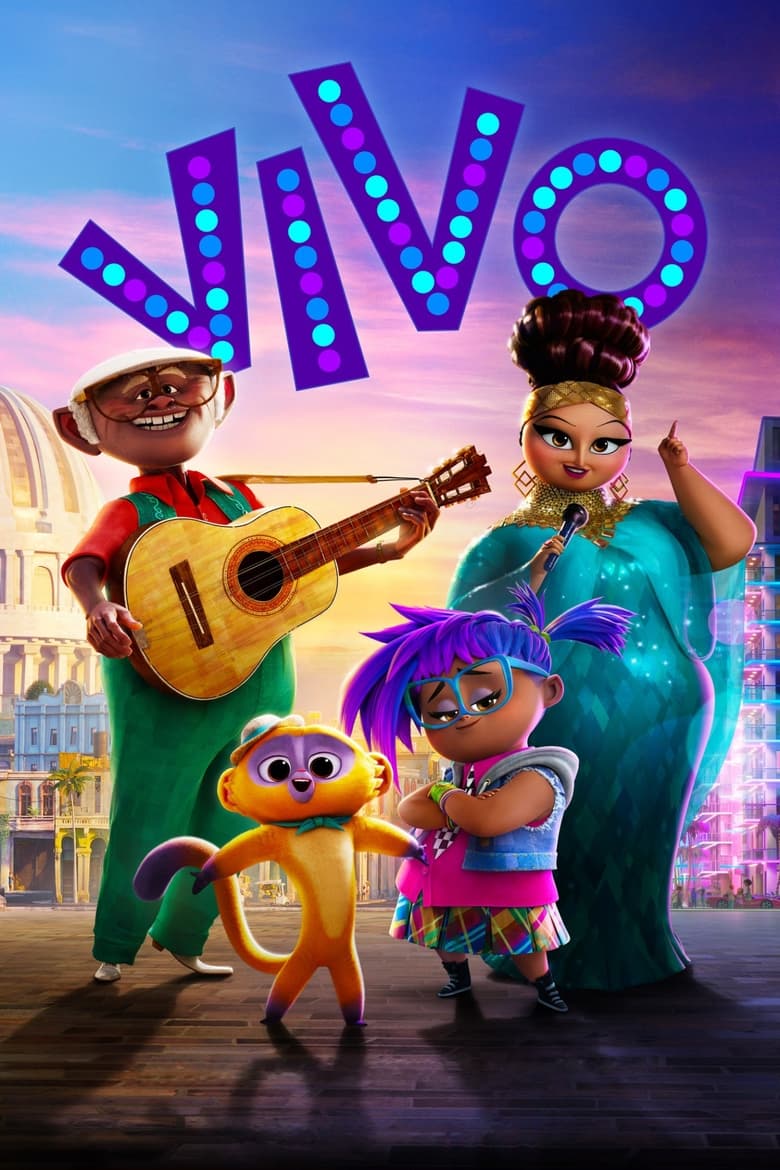
Also in 2021, Sony Pictures Animation produced Vivo, a musical adventure featuring original songs by Lin-Manuel Miranda.
The film follows a musical kinkajou tasked with delivering an old love song.
His journey connects Havana and Miami.
The project allowed the studio to explore musical storytelling further while developing a colorful art direction different from its major franchises.
Wish Dragon
Wish Dragon, also released in 2021, was written and directed by Chris Appelhans.
The film follows Din, a young man in Shanghai, and Long, a dragon capable of granting wishes.
The project was developed within an international production context and is strongly rooted in contemporary China.
Chris Appelhans would later become one of the directors of KPop Demon Hunters.
2022 — Hotel Transylvania: Transformania
Hotel Transylvania: Transformania continued the franchise in 2022.
Genndy Tartakovsky no longer directed the film but remained involved as screenwriter and executive producer.
This time, Dracula and several monsters are transformed into humans while Johnny becomes a creature himself.
The production became the fourth main feature in the series.
Sony nevertheless continued developing the universe through other formats.
2023 — Spider-Man: Across the Spider-Verse
In 2023, Spider-Man: Across the Spider-Verse continued the story of Miles Morales.
The film was directed by Joaquim Dos Santos, Kemp Powers and Justin K. Thompson.
Its visual ambition increased considerably.
Characters travel through multiple universes, each with different graphic rules.
Painting, collage, drawing, computer animation, comic-inspired effects and shifts in color can change depending on the world or emotional state of the characters.
Multiple styles within one film
Across the Spider-Verse does not simply reproduce the aesthetic of the first film.
Each dimension develops its own visual language.
Gwen Stacy’s universe, for example, uses colors and textures that shift with her emotional state.
Other worlds use radically different approaches.
The film therefore turns the multiverse itself into a graphic laboratory.
Its visual work received considerable recognition and the film was nominated for the Academy Award for Best Animated Feature.
2023 — Sony Pictures Animation moves into series
The year 2023 also marked an important expansion into television and streaming.
Agent Elvis launched on Netflix.
The series imagines Elvis Presley secretly working as a spy alongside his musical career.
It became Sony Pictures Animation’s first adult animated series.
The studio also developed Young Love for Max, expanding the world of the short film Hair Love.
This diversification confirmed that SPA was no longer defined exclusively by theatrical feature films.
2024 — The Spider Within
In 2024, Sony Pictures Animation and Sony Pictures Imageworks released The Spider Within: A Spider-Verse Story.
The short was developed through the LENS program, designed to give emerging creators leadership experience within a production.
The story follows Miles Morales as he experiences an anxiety attack.
The project demonstrates how the Spider-Verse universe can also support much more intimate stories outside its major feature films.
2025 — KPop Demon Hunters
In 2025, Sony Pictures Animation released KPop Demon Hunters, directed by Maggie Kang and Chris Appelhans.
The film follows Rumi, Mira and Zoey, members of a globally successful K-pop group who secretly lead a second life as demon hunters.
Their new enemies take the form of a boy band whose members are themselves demons.
The project combines music, action, Korean culture, fantasy and highly stylized animation.
A new global phenomenon
KPop Demon Hunters became a major worldwide success.
The production confirmed the studio’s ability to create an original universe not dependent on an existing franchise.
The film also stands out through its relationship with music and K-pop culture, which are not simply decorative but fundamental parts of the story and character identities.
For Sony Pictures Animation, its success demonstrated that the visual experimentation developed since Spider-Verse could also support entirely new properties.
2025 — Fixed
Sony Pictures Animation simultaneously developed a very different production with Fixed, directed by Genndy Tartakovsky.
The film follows Bull, a dog who discovers that he is scheduled to be neutered the next day and decides to spend one final adventure with his friends.
Unlike most of the studio’s historic catalog, Fixed is explicitly aimed at adult audiences.
It became Sony Pictures Animation’s first R-rated animated feature comedy.
The project again demonstrates the studio’s desire to broaden the limits of the audiences and formats it can address.
2025 — Damien de Froberville becomes president
In 2025, Damien de Froberville was promoted to president of Sony Pictures Animation.
He now leads the studio alongside Kristine Belson.
Belson retains major responsibility for films and series as well as creative strategy and development of the studio’s slate.
This leadership structure accompanies a period in which SPA simultaneously develops theatrical features, streaming films, series and new franchises.
2026 — GOAT
On February 13, 2026, Sony Pictures Animation released GOAT.
This original sports comedy takes place in a world entirely populated by animals.
Its main character, Will, is a small goat who dreams of competing in roarball, a contact sport dominated by much larger animals.
The film is directed by Tyree Dillihay, with Adam Rosette as co-director.
Basketball player Stephen Curry is among the producers through Unanimous Media and also voices one of the characters.
An original production after major franchises
GOAT occupies a particular place in the studio’s recent catalog.
After Spider-Verse, Hotel Transylvania and several collaborations involving major properties, the film returns to an original universe.
It nevertheless retains the studio’s modern visual philosophy: the graphic style does not merely attempt to reproduce reality, but seeks to translate the energy of sport and the personalities of its characters.
As of October 2026, GOAT is the most recent theatrical feature from Sony Pictures Animation.
Spider-Man: Beyond the Spider-Verse
Sony Pictures Animation is also continuing production on Spider-Man: Beyond the Spider-Verse.
The film is intended to conclude the story begun with Into the Spider-Verse and continued with Across the Spider-Verse.
Its theatrical release is scheduled for June 18, 2027.
Bob Persichetti and Justin K. Thompson are directing.
The project remains one of the studio’s major productions currently in development.
Hotel Transylvania continues
The Hotel Transylvania universe also remains active.
After four main feature films and several shorts, Sony Pictures Animation continues developing new projects within the property.
The franchise therefore demonstrates remarkable longevity since its creation in 2012.
Along with Spider-Verse, it remains one of the historic pillars of the studio’s catalog.
Sony Pictures Animation in 2026
In 2026, Sony Pictures Animation is a division of the Sony Pictures Motion Picture Group within Sony Pictures Entertainment.
The company is therefore indirectly owned by Japan-based Sony Group Corporation.
The studio remains led by Kristine Belson and Damien de Froberville.
Its catalog now includes feature films, short films and series.
Its contemporary identity relies less on a single visual aesthetic than on the ability to adapt its visual language to each project.
What sets it apart
Sony Pictures Animation and Imageworks: two different roles
One of Sony’s essential characteristics is the distinction between Sony Pictures Animation and Sony Pictures Imageworks.
SPA serves as the upstream creative force.
Its teams develop stories, scripts, storyboards, characters, visual research and the overall look of projects.
Imageworks, meanwhile, operates as a major digital-production and visual-effects studio.
On many SPA projects, its teams handle a large part of layout, animation, lighting and rendering.
Directors and artists from both companies nevertheless work closely together to preserve the vision established by Sony Pictures Animation.
An identity built on diversity
Sony Pictures Animation no longer seeks to apply exactly the same visual style to all its productions.
Hotel Transylvania relies on highly exaggerated poses.
Spider-Verse turns comic-book language into animated language.
The Mitchells vs. the Machines mixes 3D with personal drawings.
KPop Demon Hunters combines cinematic animation, Korean pop culture and musical energy.
This diversity has itself become one of the studio’s signatures.
Spider-Verse and the break from digital realism
For much of 3D animation history, studios continually sought to improve the realism of lighting, materials and movement.
Spider-Man: Into the Spider-Verse takes a different direction.
The film instead asks how every available digital tool can be used to create a genuinely graphic image.
Halftones, outlines, drawings, color offsets and differences in animation timing become deliberate artistic choices.
This approach profoundly influenced global animation from the late 2010s onward.
Animation that embraces exaggeration
Genndy Tartakovsky’s work on Hotel Transylvania also plays an important role.
His characters are not restricted by perfectly realistic proportions or movement.
A pose can be distorted to make it funnier or easier to read.
Movement can be extremely fast.
Animation timing becomes an expressive tool in itself.
This freedom helped prepare the ground for the even more radical experimentation of the studio’s later productions.
Franchises and original creations
Sony Pictures Animation regularly alternates between familiar properties and original creations.
The Smurfs and Spider-Man rely on pre-existing universes.
Open Season, Cloudy with a Chance of Meatballs, Hotel Transylvania, The Mitchells vs. the Machines, Vivo, KPop Demon Hunters and GOAT develop or reinterpret worlds with very different trajectories.
This combination allows the studio to maintain commercial franchises while taking artistic risks on other productions.
Cinema, streaming and series
The studio is no longer limited to the traditional model of a feature film produced exclusively for theaters.
The Mitchells vs. the Machines, Vivo, KPop Demon Hunters and Fixed illustrate different collaborations with streaming platforms.
Agent Elvis and Young Love also demonstrate its expansion into series.
This flexibility allows Sony Pictures Animation to work with more varied formats, audiences and partners than during its early years.
An American studio within a Japanese group
Sony Pictures Animation also occupies a distinctive institutional position.
The studio is part of Sony Pictures Entertainment, itself integrated into the Japanese Sony group.
It therefore combines a Hollywood base with the international infrastructure of a company whose activities also include technology, music, video games and other areas of entertainment.
This position gives Sony an especially broad ecosystem, even though Sony Pictures Animation retains its own creative activity.
Good to know
- Sony Pictures Animation was founded in May 2002.
- The official creation of the division was announced on May 9, 2002.
- Sandra Rabins and Penney Finkelman Cox led the new studio during its early years.
- They had previously contributed to the development of animation at DreamWorks.
- Sony Pictures Animation was created within Sony Pictures Entertainment.
- The studio has worked closely with Sony Pictures Imageworks from the beginning.
- Sony Pictures Animation and Sony Pictures Imageworks are two distinct entities.
- Sony Pictures Animation primarily develops stories, scripts, storyboards, characters and art direction.
- Sony Pictures Imageworks handles a large part of the digital production on many SPA projects.
- Imageworks also continues an independent visual-effects business for outside productions.
- The ChubbChubbs! was the first fully computer-animated short produced by Sony Pictures Imageworks.
- The ChubbChubbs! won the Academy Award for Best Animated Short Film.
- Open Season was released in 2006.
- It was the first Sony Pictures Animation feature film.
- The film was directed by Jill Culton and Roger Allers, with Anthony Stacchi as co-director.
- Surf’s Up was released in 2007.
- The film uses the format of a mockumentary centered on surfing.
- Surf’s Up received an Academy Award nomination for Best Animated Feature.
- Cloudy with a Chance of Meatballs was released in 2009.
- The film was directed by Phil Lord and Christopher Miller.
- The Smurfs was released in 2011, combining computer animation with live action.
- Arthur Christmas was released in 2011 as part of the collaboration with Aardman.
- The Pirates! Band of Misfits was released in 2012.
- Hotel Transylvania was released in 2012.
- The film marked Genndy Tartakovsky’s feature-directing debut.
- Hotel Transylvania became one of the studio’s principal franchises.
- Cloudy with a Chance of Meatballs 2 was released in 2013.
- Hotel Transylvania 2 was released in 2015.
- Kristine Belson became president of Sony Pictures Animation in 2015.
- Smurfs: The Lost Village was released in 2017.
- The Emoji Movie was also released in 2017.
- Spider-Man: Into the Spider-Verse was released in 2018.
- The film introduced Miles Morales as the central character of the animated Spider-Verse franchise.
- Its visual style combines 3D animation with numerous techniques inspired by comic books.
- Spider-Man: Into the Spider-Verse won the Academy Award for Best Animated Feature.
- Hotel Transylvania 3: Summer Vacation was released in 2018.
- Hair Love won the Academy Award for Best Animated Short Film in 2020.
- The Mitchells vs. the Machines was released in 2021.
- The film was directed by Mike Rianda and co-directed by Jeff Rowe.
- Phil Lord and Christopher Miller produced The Mitchells vs. the Machines.
- Vivo was released in 2021 with original songs by Lin-Manuel Miranda.
- Wish Dragon was also released in 2021.
- Hotel Transylvania: Transformania continued the franchise in 2022.
- Spider-Man: Across the Spider-Verse was released in 2023.
- It received an Academy Award nomination for Best Animated Feature.
- Agent Elvis became Sony Pictures Animation’s first adult animated series in 2023.
- Young Love was also launched in 2023.
- The Spider Within: A Spider-Verse Story was released in 2024.
- The short was developed through Sony Pictures Animation and Sony Pictures Imageworks’ LENS program.
- KPop Demon Hunters was released on Netflix in 2025.
- The film was directed by Maggie Kang and Chris Appelhans.
- KPop Demon Hunters became a major worldwide success for the studio.
- Fixed, directed by Genndy Tartakovsky, was released in 2025.
- Fixed became Sony Pictures Animation’s first R-rated animated feature comedy.
- Damien de Froberville became president of Sony Pictures Animation in 2025.
- He leads the studio alongside Kristine Belson.
- GOAT was released theatrically on February 13, 2026.
- The film was directed by Tyree Dillihay and co-directed by Adam Rosette.
- Stephen Curry participated in production through Unanimous Media.
- As of October 2026, GOAT is the studio’s most recent theatrical feature film.
- Spider-Man: Beyond the Spider-Verse is currently in production.
- Its release is scheduled for June 18, 2027.
- Bob Persichetti and Justin K. Thompson are directing Beyond the Spider-Verse.
- The Hotel Transylvania franchise also remains in development.
- In 2026, Sony Pictures Animation produces feature films, series and short films.
- Sony Pictures Animation is a division of the Sony Pictures Motion Picture Group.
- Sony Pictures Entertainment is a subsidiary of Sony Group Corporation, based in Japan.
- Sony Pictures Animation remains active in 2026 under the leadership of Kristine Belson and Damien de Froberville.