











Overview
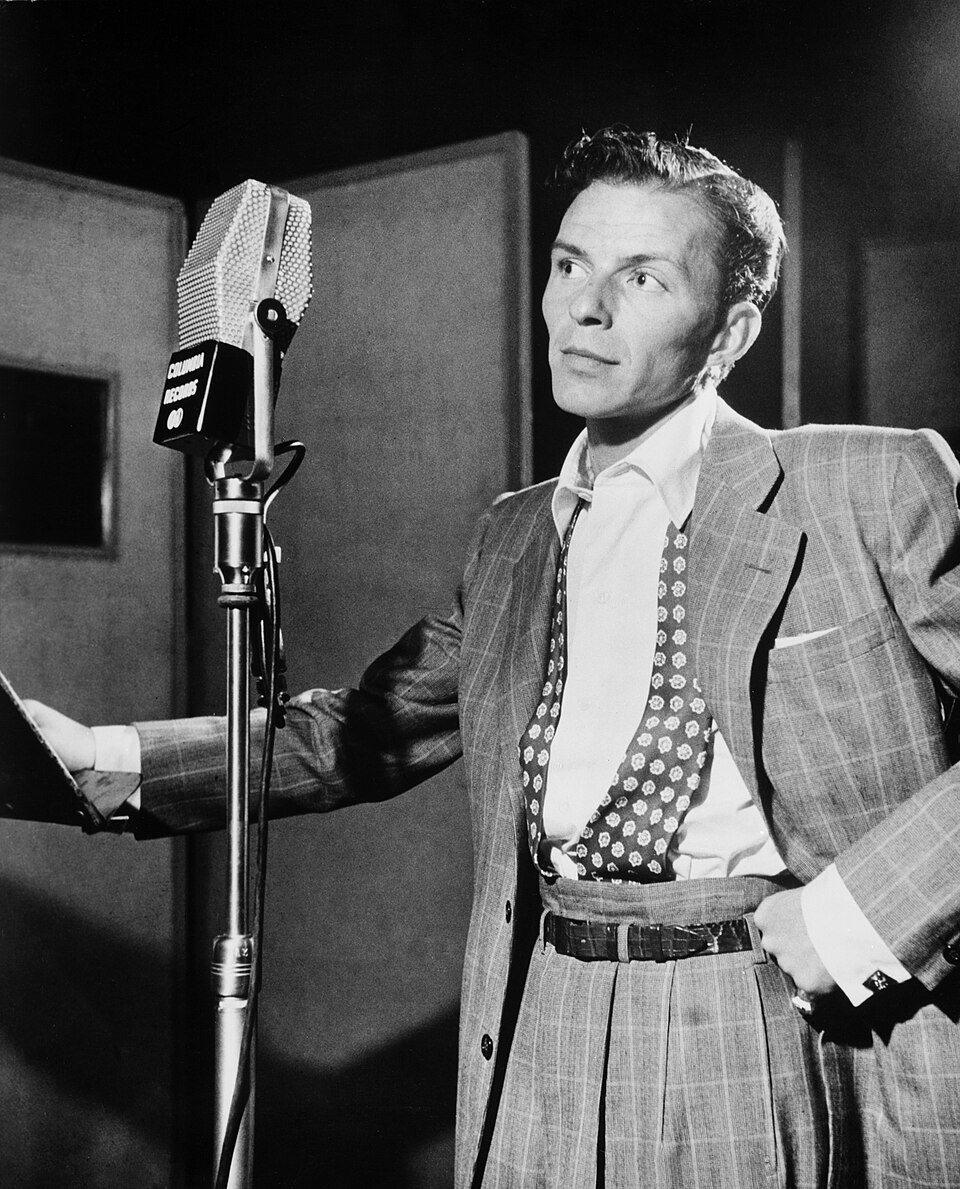
Reprise Records is an American record label founded in 1960 by Frank Sinatra. Established at a time when major record companies exercised considerable control over their artists, it emerged from the singer's desire for greater independence in his musical decisions and recording production.
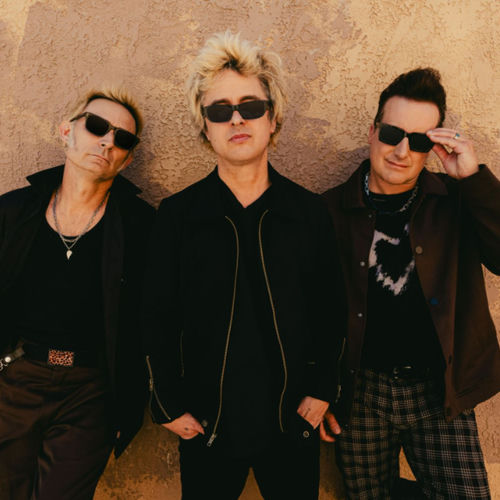
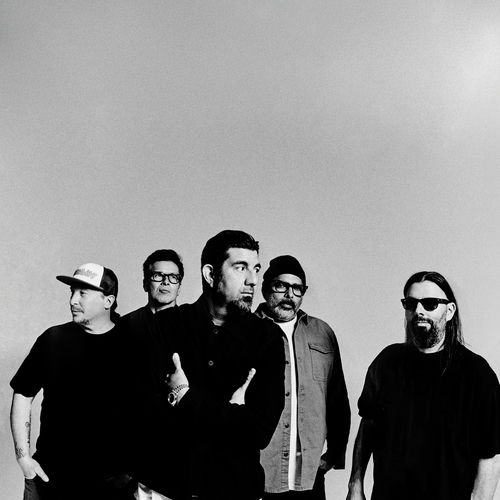
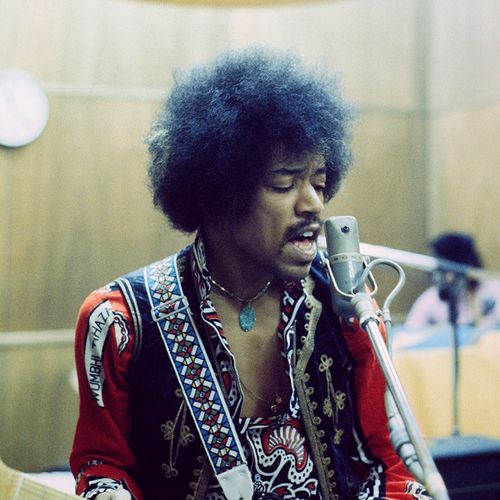
Initially associated with jazz and traditional popular music, Reprise quickly expanded into folk, rock and alternative music. Following its acquisition by Warner Bros. in 1963, the label worked with artists including Jimi Hendrix, Neil Young and, later, Eric Clapton. It also became one of the principal recording labels for Green Day and Deftones.
Albums such as Francis Albert Sinatra & Antônio Carlos Jobim (1967), After the Gold Rush (1970), Harvest (1972), Dookie (1994), American Idiot (2004) and Diamond Eyes (2010) illustrate the diversity of its history.
Today, Reprise Records belongs to Warner Music Group. Its identity remains present on new releases, reissues and albums by artists with long-standing relationships with the label.
History
1960-1963 — Frank Sinatra and the foundation of the label
Frank Sinatra founded Reprise Records in December 1960, seeking to leave Capitol Records and gain greater freedom over his productions. The singer particularly wanted more direct involvement in artistic decisions and the management of his recordings.
The name Reprise refers to musical terminology and the idea of a fresh beginning. Sinatra recruited experienced industry professionals, including Mo Ostin, who quickly assumed an important role in the company's management.
Early releases included Sinatra's recordings as well as albums by other popular music and jazz performers. The label welcomed Dean Martin, Sammy Davis Jr. and several artists associated with Sinatra's musical circle.
Despite the fame of its founder, the company encountered financial difficulties. In 1963, Sinatra sold two-thirds of Reprise to Warner Bros., opening a new chapter in the label's history.
1964-1979 — Warner, Jimi Hendrix and Neil Young
Integration into Warner Bros. gave Reprise access to a broader distribution network. Mo Ostin played an essential role in developing the Warner-Reprise organisation, which increasingly embraced contemporary musical styles.
Frank Sinatra continued recording with Moonlight Sinatra (1966) and Francis Albert Sinatra & Antônio Carlos Jobim (1967). The latter combined his vocals with the guitar playing and compositions of Brazilian musician Antônio Carlos Jobim in a repertoire influenced by bossa nova.
The same period brought success for Nancy Sinatra, particularly with These Boots Are Made for Walkin' (1966), released on Reprise.
The label also handled American releases by Jimi Hendrix. His recordings, originally distributed under other brands in some territories, appeared through Reprise in the United States. Its catalogue also included several posthumous releases, such as Rainbow Bridge (1971) and War Heroes (1972).
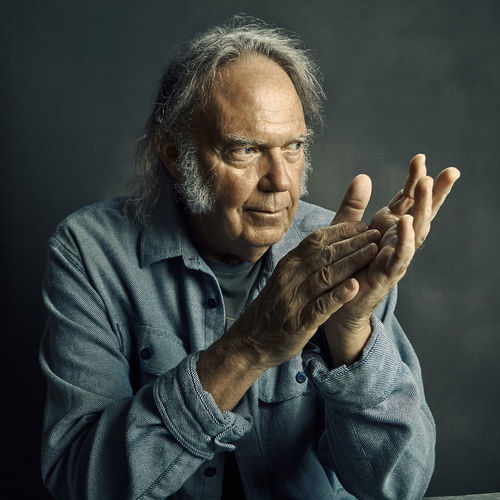
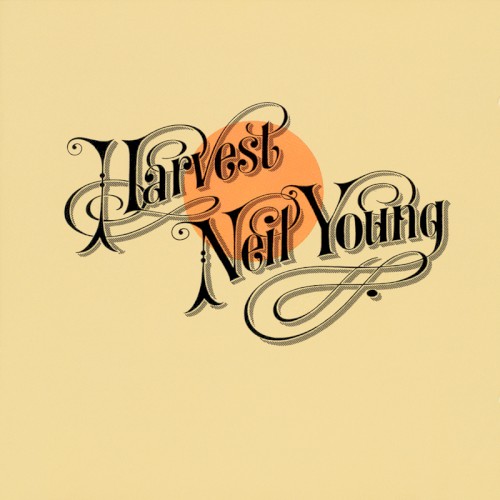
In 1968, Neil Young released his debut solo album on Reprise. He subsequently established a long-lasting relationship with the label, marked by Everybody Knows This Is Nowhere (1969), After the Gold Rush (1970), Harvest (1972) and Zuma (1975).
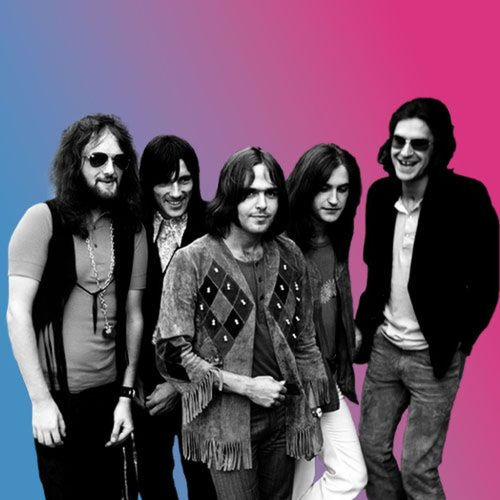
Reprise also distributed several albums by The Kinks in the United States, including Kinks-Size and Kinkdom (1965), whose configurations differed from the original British releases.
This period profoundly changed the label's catalogue, which now combined traditional pop, folk, rock and musical experimentation.
1980-2003 — Neil Young, Eric Clapton and the rise of punk rock
During the 1980s, Reprise continued its association with Neil Young, whose albums explored different musical directions. After a period with Geffen Records, he returned to Reprise with This Note's for You (1988), followed by Freedom (1989).
Eric Clapton also became associated with the label, releasing albums including Journeyman (1989), From the Cradle (1994), Pilgrim (1998) and Reptile (2001). His productions combined blues, rock and pop influences.
In 1994, Reprise released Dookie, the third studio album by Green Day. Featuring songs such as Basket Case and When I Come Around, the record helped bring punk rock to a broad international audience.
The partnership continued with Insomniac (1995), Nimrod (1997) and Warning (2000), reflecting the band's evolution towards more varied songwriting.
Meanwhile, Reprise maintained relationships with other rock and blues performers, while its catalogue benefited from Warner Music's international distribution resources.
2004-2019 — American Idiot and new generations of rock
In 2004, Green Day released American Idiot, a concept album combining punk rock, musical storytelling and criticism of American society. The band continued this approach with 21st Century Breakdown (2009), before releasing the trilogy ¡Uno!, ¡Dos! and ¡Tré! in 2012.
Reprise also developed its relationship with Deftones, an alternative metal band from Sacramento. Albums including Diamond Eyes (2010), Koi no Yokan (2012) and Gore (2016) reflected a musical style combining heavy guitars, atmospheric textures and sonic experimentation.
Neil Young continued releasing new projects through Reprise, including Le Noise (2010), A Letter Home (2014) and Peace Trail (2016).
The label's catalogue thus brought together artists from several generations while maintaining particularly long-standing relationships with certain musicians.
2020-2025 — New releases and catalogue continuity
From 2020 onward, Reprise continued operating within Warner Music Group, often working alongside Warner Records for distribution and promotion.
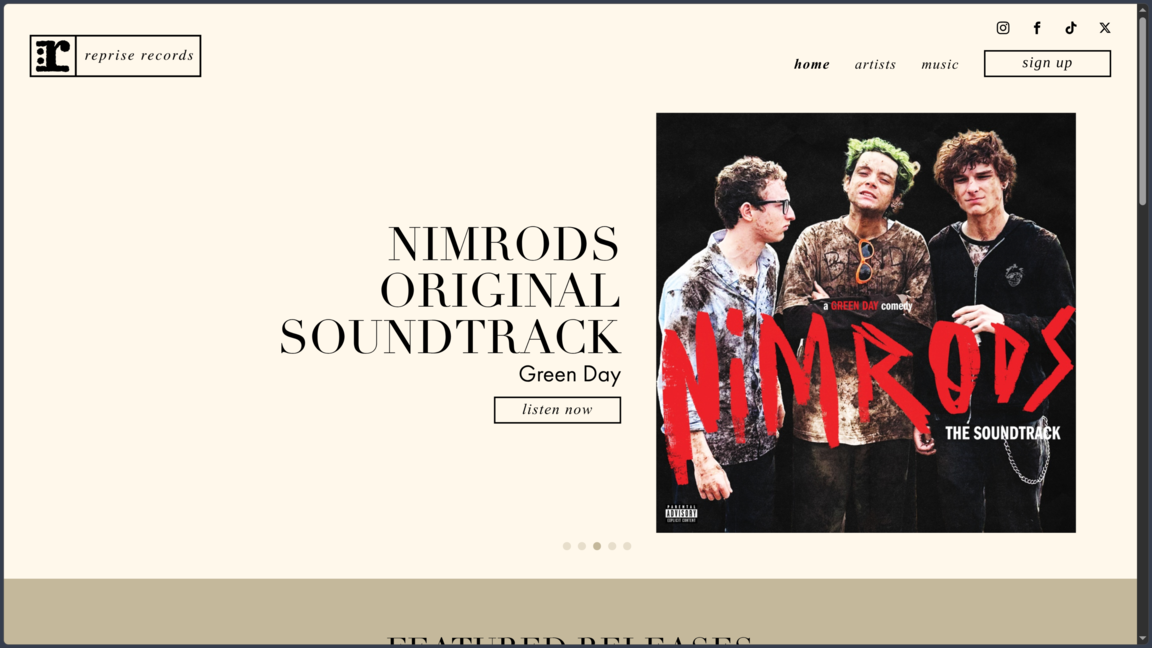
Green Day released Father of All Motherfuckers (2020), followed by Saviors (2024), produced with Rob Cavallo, who had previously worked on several of the band's major albums.
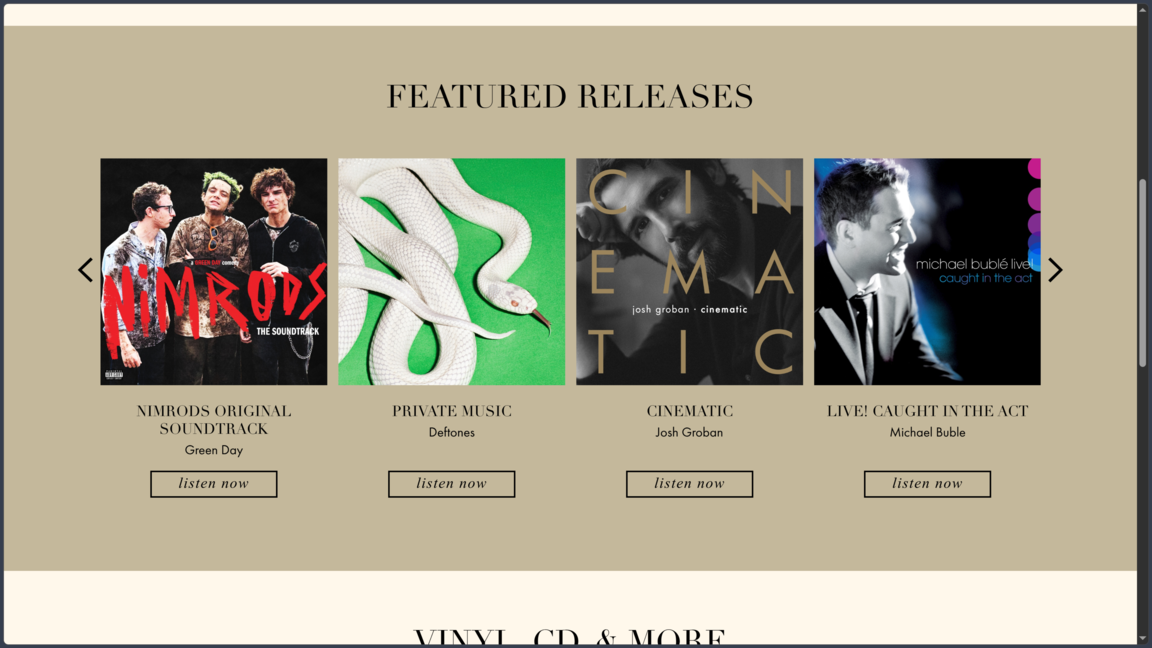
Deftones also continued its recording career with Ohms (2020) and private music (2025), the latter released through Reprise and Warner Records.
Neil Young maintained a significant presence in the catalogue through new productions and archival recordings. World Record (2022), recorded with Crazy Horse and produced alongside Rick Rubin, was followed by Early Daze (2024), a collection featuring recordings from the band's early years.
These releases illustrate the continuity of a label whose activities combine the creation of new albums with the preservation and development of its musical heritage.
Distinctive Features
Origins rooted in artistic independence
Reprise Records was established by Frank Sinatra to gain greater control over his career and recordings. This founding principle helped create an identity associated with respect for musicians and their creative decisions.
An important role in the evolution of rock
From the 1960s onward, Reprise worked with major rock and folk artists, particularly Jimi Hendrix and Neil Young. Its catalogue subsequently expanded into blues-rock, punk and alternative metal through Eric Clapton, Green Day and Deftones.
Long-term relationships with musicians
Several artists have released albums under the Reprise name across multiple decades. Partnerships with Neil Young, Eric Clapton and Green Day illustrate this continuity.
An identity connected to Warner Music
Since 1963, Reprise has been part of the Warner organisation. Albums may carry the Reprise, Warner Bros. Records or Warner Records names depending on the period, agreements and territory, without these necessarily representing completely separate recording businesses.
Key Facts
- Founded: December 1960, in the United States.
- Founder: Frank Sinatra, following his period with Capitol Records.
- Original purpose: greater artistic independence for the singer.
- Influential executive: Mo Ostin, a central figure in the development of Reprise and Warner.
- Acquisition: Warner Bros. purchased two-thirds of Reprise in 1963.
- Early artists: Frank Sinatra, Dean Martin and Sammy Davis Jr.
- 1960s success: Nancy Sinatra's These Boots Are Made for Walkin'.
- Classic rock: American releases by Jimi Hendrix and albums by Neil Young.
- Blues-rock: Eric Clapton, including Journeyman (1989).
- Punk rock: Green Day, with Dookie (1994) and American Idiot (2004).
- Alternative metal: Deftones, including Diamond Eyes, Ohms and private music.
- Recent releases: Saviors and Early Daze (2024), followed by private music (2025).
- Status: active record label within Warner Music Group.