
Overview
Playground Games is a British video game development studio founded in 2010 in Royal Leamington Spa, in central England. Since 2018, it has belonged to Microsoft and forms part of Xbox Game Studios.
Its name remains primarily associated with Forza Horizon, a series conceived as a more open and accessible interpretation of the Forza automotive universe. While Forza Motorsport focuses more heavily on circuit competition, Horizon turns driving into a journey: large open environments, automotive festivals, exploration, music, spectacular events and hundreds of vehicles gradually became the identity of the series.
The first Forza Horizon, released in 2012, immediately established this formula in Colorado. Playground worked in close partnership with Turn 10 Studios, creator of the Forza franchise. This collaboration allowed the young studio to draw on Forza’s automotive and technological expertise while developing its own interpretation of racing games.
Each installment then expanded the ambition of the concept. Forza Horizon 2 explored southern Europe, Forza Horizon 3 Australia, Forza Horizon 4 Great Britain and Forza Horizon 5 Mexico. In 2026, Forza Horizon 6 took the festival to Japan and continued this approach through an even larger environment.
Playground is no longer limited to automotive games, however.
From the second half of the 2010s, the studio began assembling a new team around an open-world project. Following its acquisition by Microsoft in 2018, this development became considerably more ambitious. In 2020, Playground finally revealed that it was working on a new interpretation of Fable, the RPG series formerly developed by Lionhead Studios.
The change of genre is substantial. Playground moves from an open-world driving game to an action RPG, with exploration, combat, storytelling, characters, reputation and player choice. The new Fable is not presented as a simple sequel, but as a fresh start for Albion, aiming to preserve the British humor and major principles of the series while rebuilding its universe for a new generation.
This evolution has also transformed the structure of the studio. Playground opened a second site in Leamington Spa in 2018, followed by a third in 2024. The teams can therefore work simultaneously on Forza Horizon and Fable without abandoning the specialty that built the studio’s reputation.
The recent evolution of Forza Horizon also reflects a wider shift in Xbox strategy. Long strongly associated with Xbox consoles and PC, Forza Horizon 5 arrived on PlayStation 5 in 2025, opening the series to a new audience. The new Fable has likewise been announced for PlayStation 5 alongside Xbox and PC versions.
In 2026, Playground Games is therefore no longer simply “the Forza Horizon studio.” It is becoming a developer capable of managing several major open-world productions, across very different genres, while remaining deeply associated with the pursuit of spectacular, accessible environments designed around player freedom.
History
2010-2012 — Building a new branch of Forza
Playground Games was founded in 2010 in Leamington Spa.
The studio was built around experienced developers from the British games industry and quickly established a close relationship with Turn 10 Studios and Microsoft.
Its first project was ambitious: create a racing game capable of preserving Forza’s automotive standards while moving beyond traditional circuits.
Forza Horizon was released in 2012.
The game set its automotive festival in Colorado and offered an open world in which races represented only part of the experience. Exploration, road discovery, music and festival atmosphere became just as important as competition.
This formula immediately gave Playground its own identity within the Forza franchise.
2014-2016 — Horizon becomes a global series
Forza Horizon 2, released in 2014, moved the series to Europe and became the first Playground installment designed for Xbox One.
The open world gained greater importance, notably through changing weather, a day-night cycle and greater freedom to leave the roads.
With Forza Horizon 3 in 2016, the studio took another major step forward.
Australia offered highly contrasting environments, and the player no longer simply participated in the festival but helped develop it. The game also arrived on Windows 10 through the Xbox Play Anywhere program.
Horizon then became one of the major series in the Xbox ecosystem and allowed Playground to build a particular reputation for designing automotive open worlds.
2018 — Microsoft acquires Playground Games
The year 2018 marked a turning point.
Microsoft announced the full acquisition of Playground Games after several years of exclusive partnership around Forza.
The studio officially joined Microsoft Studios, later renamed Xbox Game Studios.
The same year saw the release of Forza Horizon 4, set in a representation of Great Britain. The introduction of dynamic seasons regularly transformed the landscape and driving conditions, giving the same territory several distinct identities.
But 2018 also corresponded to a deeper internal transformation.
Playground opened a second studio in Leamington Spa to work on another open-world project. Microsoft already indicated that the expertise acquired through Horizon would be applied to a new production unrelated to racing.
2020-2024 — Forza Horizon 5 and the revival of Fable
In 2020, the secret project was officially revealed: Playground was developing a new version of Fable.
The choice attracted attention because the series had historically been associated with Lionhead Studios, which Microsoft closed in 2016. Playground therefore had to take over a highly recognizable franchise while building a new team capable of producing an RPG.
Meanwhile, the studio continued its automotive work.
Forza Horizon 5 was released in November 2021 and placed its open world in Mexico. The game further expanded environmental diversity with deserts, jungles, cities, beaches, canyons and volcanic areas.
Playground now found itself in a new configuration: the same studio was working in parallel on the continuation of a series it had created and on the revival of a historic Xbox franchise.
In 2024, a third site opened in Leamington Spa, confirming the studio’s expansion and the long-term coexistence of several major production teams.
2025-2026 — Horizon moves beyond the traditional Xbox ecosystem
In 2025, Forza Horizon 5 arrived on PlayStation 5.
The change was symbolic. A series long identified as a showcase for the Xbox ecosystem became available on a competing console as part of Microsoft’s evolving multiplatform strategy.
Playground simultaneously worked on Forza Horizon 6.
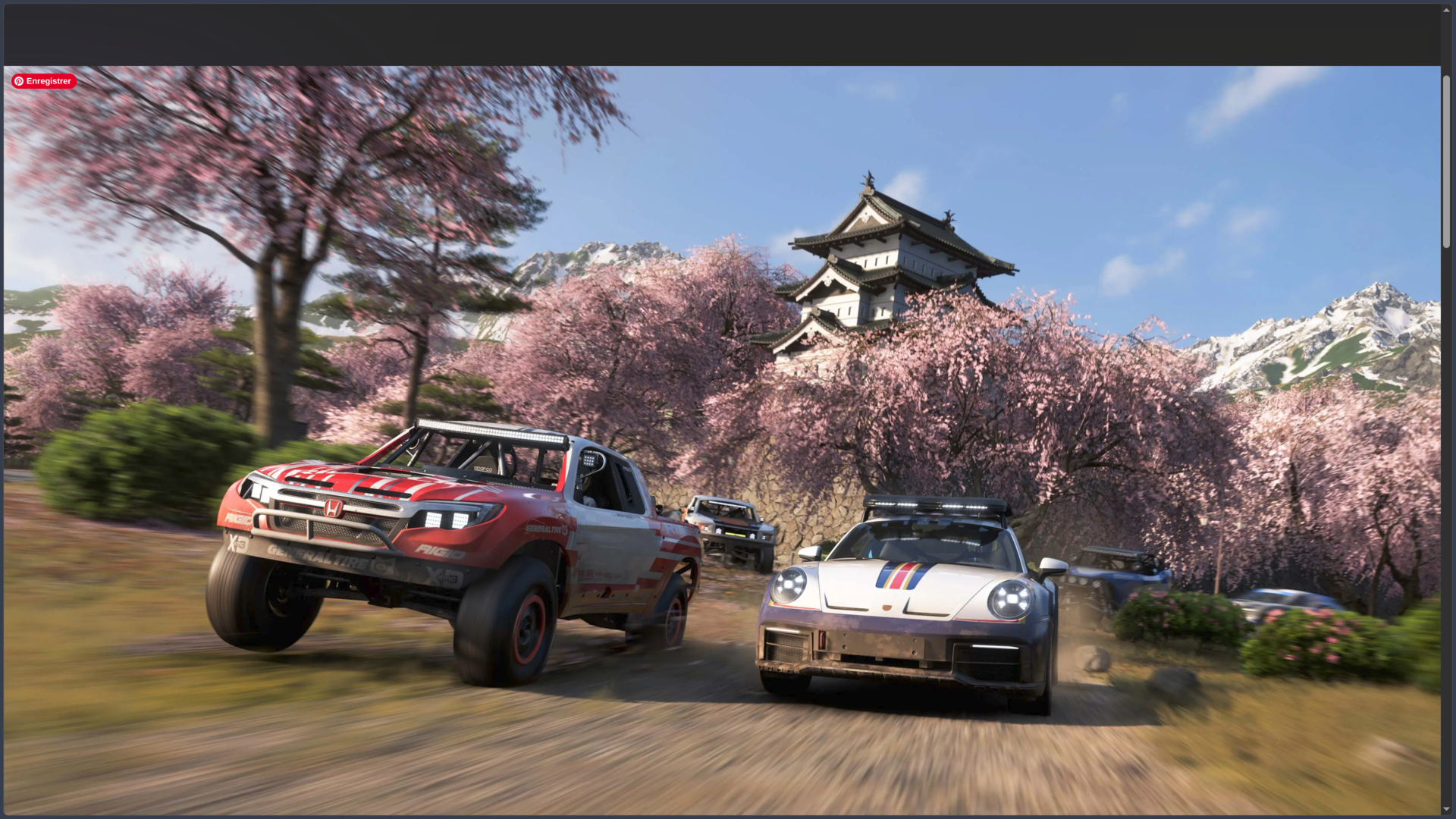
Released on May 19, 2026, the installment moved the festival to Japan and offered more than 550 real vehicles. The game continued a formula refined over more than a decade: combining automotive culture, exploration and spectacle within a vast open environment.
The Horizon series now consists of six main installments developed around the same core idea, but each with its own destination and interpretation of the festival.
Fable opens a second chapter
In parallel, Playground continued its most different project.
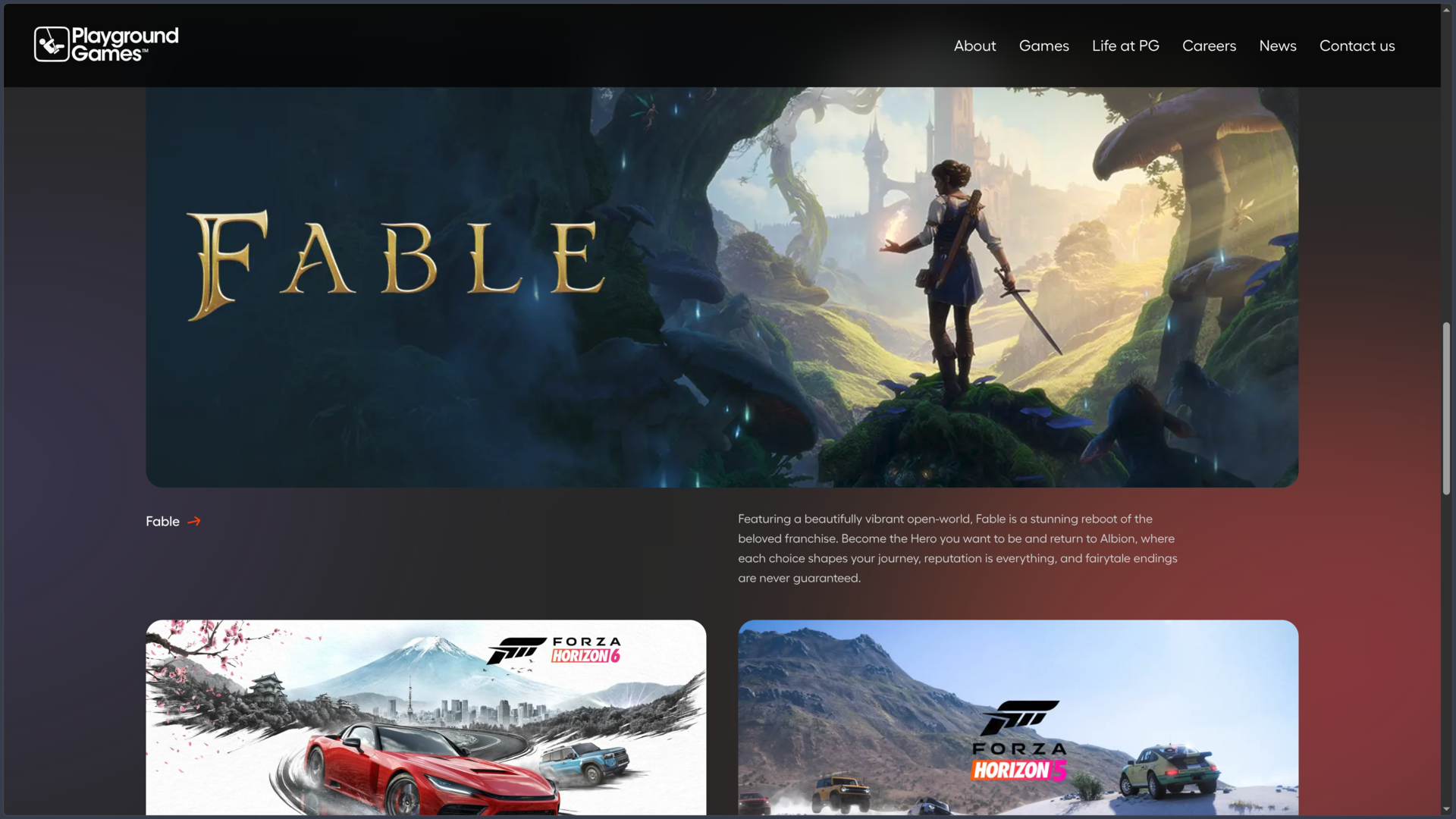
The new Fable rebuilds Albion around an open-world action RPG in which the player defines their hero, develops their reputation and influences their relationships with inhabitants.
The project retains several historical elements of the series: British humor, moral choices, everyday life, social relationships and a blend of fairy tale and satire.
But it does not seek to reproduce the exact structure of the earlier games.
Playground presents it as a fresh start for the franchise.
After several years of development, release is scheduled for February 23, 2027 on Xbox Series X|S and PC, with a PlayStation 5 version also planned.
For Playground, Fable therefore represents far more than another game: it must demonstrate that the expertise built through Forza Horizon can be transferred to an entirely different universe, combat system and narrative structure.
What sets it apart
Turning racing into an open-world adventure
Playground’s main contribution comes from the way it approaches driving.
In Forza Horizon, cars are not used only to win races.
They allow players to travel through a territory, discover landscapes, take part in events, collect vehicles or simply drive freely.
This approach can sometimes make Horizon feel closer to an exploration game than to a traditional racing game.
The festival gives this freedom a coherent framework: music, events, automotive gatherings and discoveries form a single universe.
Using each destination as a game identity
The different Forza Horizon installments are not distinguished only by their cars.
Each game is built around a clearly identifiable territory: Colorado, southern Europe, Australia, Great Britain, Mexico and then Japan.
Landscapes, roads, cities, weather conditions and cultural references become an essential part of the experience.
Playground therefore does not simply build large maps. The studio seeks to give each open world enough personality to refresh a formula that otherwise remains highly consistent.
Making automotive simulation accessible without removing its depth
Playground draws on Forza’s technical heritage while adopting a much less intimidating approach than a pure simulation.
Driving must be immediately enjoyable, while enthusiasts can still use tuning, variable assists, vehicle classes and deeper progression systems.
This ability to combine accessibility and automotive credibility largely explains Forza Horizon’s reach beyond the traditional racing game audience.
Moving from the wheel to the RPG without abandoning the open world
Fable represents a radical change of genre, but not a complete break from Playground’s historical skills.
The studio remains focused on creating a world that players want to explore.
What changes are the tools: cars and roads give way to characters, combat, quests, social relationships and choices.
This transition is probably the greatest challenge in the studio’s history. It must prove that Playground is not only an expert in one specific formula, but can transfer its vision of open-world design to entirely different experiences.
Good to know
- Playground Games was founded in 2010 in Royal Leamington Spa, England.
- The studio developed the first Forza Horizon in 2012 in partnership with Turn 10 Studios.
- Playground is responsible for all six main Forza Horizon installments, from the Colorado setting of 2012 to Japan in Forza Horizon 6.
- Microsoft acquired Playground Games in 2018, making the studio part of what is now Xbox Game Studios.
- The studio opened a second site in 2018 and a third in 2024, all located in Leamington Spa.
- Forza Horizon 5 arrived on PlayStation 5 in 2025, marking the expansion of the series beyond Xbox and PC platforms.
- Forza Horizon 6 was released on May 19, 2026 and sets its festival in Japan.
- Playground is also developing the new Fable, an open-world action RPG scheduled for February 23, 2027, representing the studio’s first major project outside automotive games.