









Overview
Paramount Pictures is an American film studio whose history dates back to 1912, with the creation of Famous Players Film Company by producer Adolph Zukor.
This origin makes Paramount one of the oldest Hollywood studios still active today.
The Paramount Pictures name appeared a few years later around a distribution company founded by W. W. Hodkinson. Famous Players, Jesse L. Lasky’s company and Paramount were gradually brought together to form the business that became the modern studio.
Over more than a century of activity, Paramount has participated in nearly every major transformation of the American film industry: the development of feature-length cinema, the studio system, the arrival of sound, television, blockbusters, global franchises, digital filmmaking and streaming.
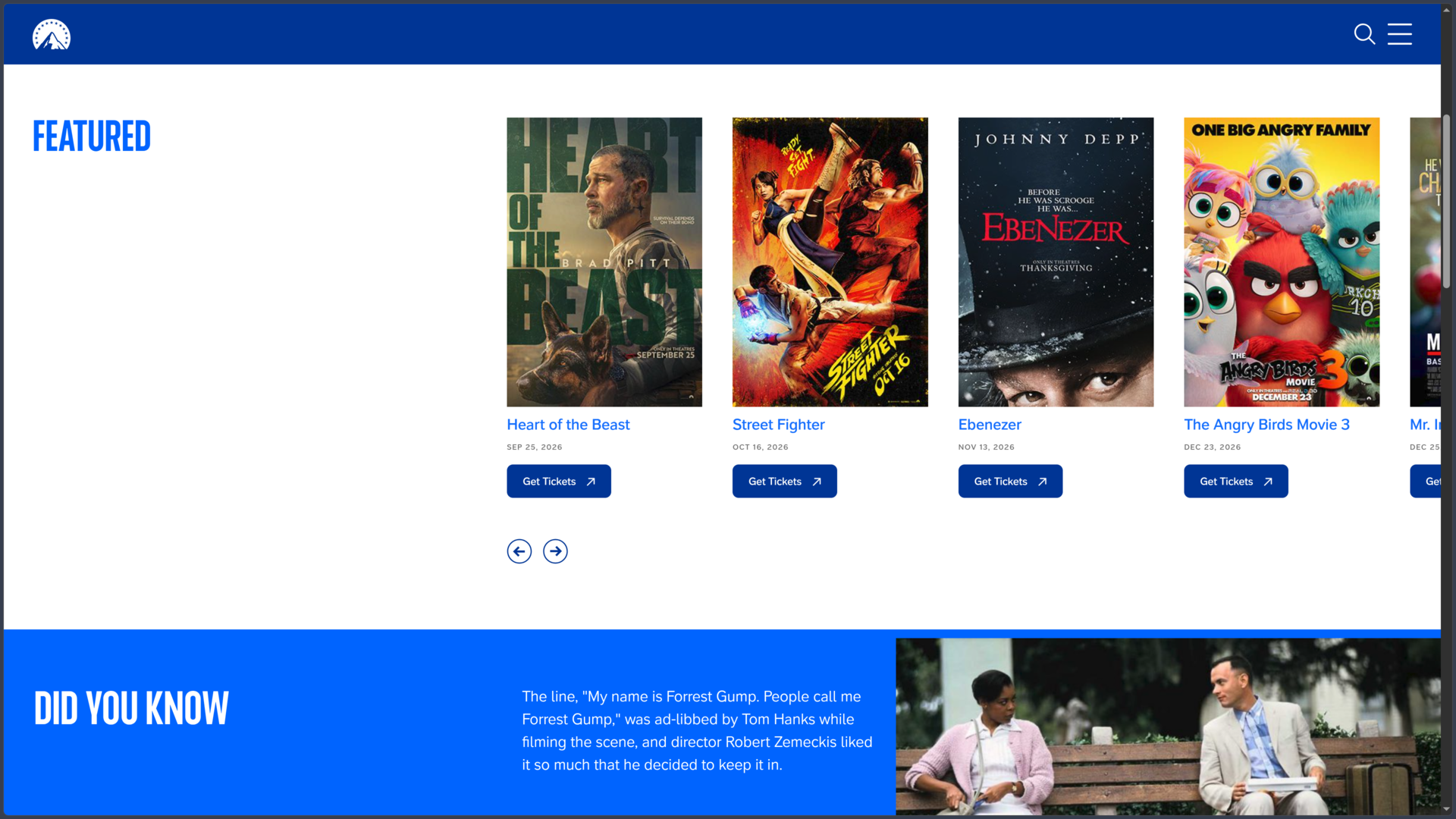
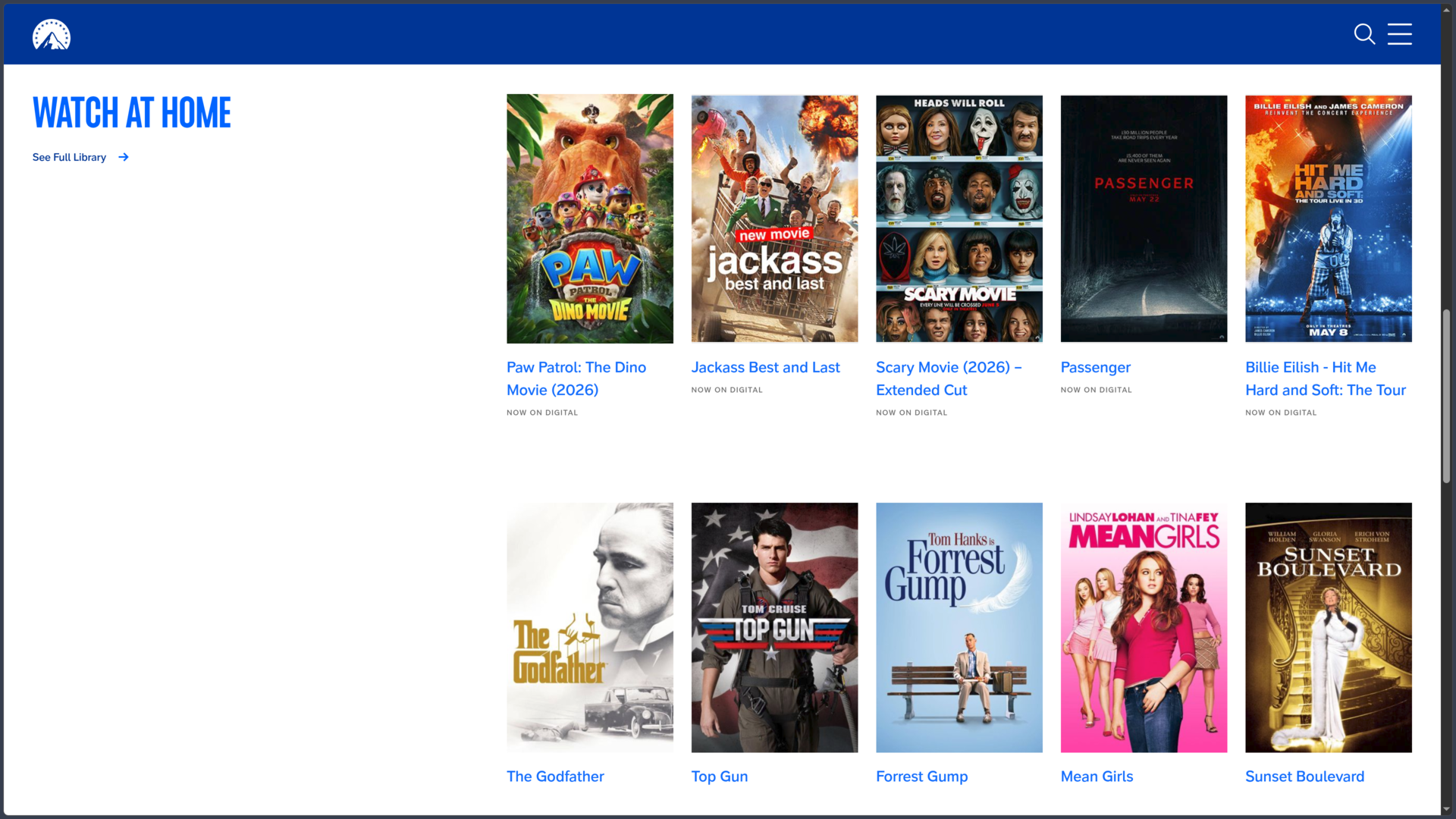
Its catalog is associated with works and franchises such as Wings, Sunset Boulevard, The Godfather, Chinatown, Grease, Indiana Jones, Top Gun, Forrest Gump, Mission: Impossible, Star Trek, Transformers, A Quiet Place and Sonic the Hedgehog.
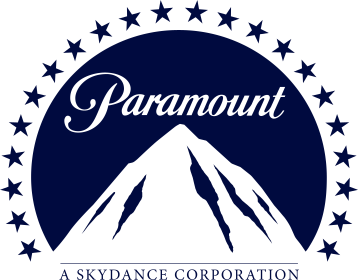
The famous mountain surrounded by stars is also one of the oldest and most recognizable visual identities in cinema.
Paramount Pictures has had many parent companies throughout its history, including Gulf+Western, Paramount Communications, Viacom, ViacomCBS and Paramount Global.
In 2025, Paramount Global merged with Skydance Media, opening a new era under the leadership of David Ellison.
Since October 2026, following Paramount Skydance’s acquisition of Warner Bros. Discovery, the combined group has operated under the Skydance name. Paramount Pictures nevertheless remains a distinct film studio within the larger organization.
History
1912 — Adolph Zukor founds Famous Players
Paramount’s official history begins in 1912.
Adolph Zukor, an entrepreneur involved in film exhibition in New York, founded Famous Players Film Company with the idea of producing feature-length films starring recognized stage actors.
The strategy stood apart from an American film industry still largely structured around much shorter productions.
Zukor notably helped distribute Queen Elizabeth, starring Sarah Bernhardt, in the United States, demonstrating that audiences existed for longer and more prestigious films.
This ambition to combine established stars with feature-length productions became one of the foundations of the future Paramount.
Jesse L. Lasky and Hollywood
At the same time, Jesse L. Lasky developed his own production company with several partners, including Cecil B. DeMille.
The team made The Squaw Man, released in 1914 and often described as one of the first major feature films produced in Hollywood.
This presence contributed to establishing the Los Angeles area as the increasingly dominant center of the American film industry.
Lasky’s films, like those of Zukor, were distributed by a new company already carrying a name that would become famous: Paramount Pictures.
1914 — The Paramount name and the mountain
The distribution company Paramount Pictures Corporation was created around W. W. Hodkinson.
The Paramount name was intended to symbolize first-class productions.
Hodkinson also developed the idea for the famous logo depicting a mountain surrounded by stars.
Over the decades, the mountain became one of Hollywood’s oldest visual symbols, undergoing several graphic updates without losing its basic concept.
This visual continuity has accompanied the studio throughout its history.
1916 — The modern structure emerges
In 1916, Adolph Zukor’s Famous Players merged with Jesse L. Lasky’s company to form Famous Players-Lasky Corporation.
The new company then strengthened its relationship with Paramount Pictures, which had been distributing their films.
The various structures were eventually consolidated around what would become Paramount Pictures.
Zukor understood early on the value of controlling several parts of the film business: production, distribution and theatrical exhibition.
This vertical integration helped transform Paramount into one of the most powerful companies in the American film industry.
The 1920s — Stars and studio expansion
Paramount became one of the major studios of the silent-film era.
Its catalog featured stars such as Gloria Swanson, Clara Bow, Rudolph Valentino, Mary Pickford and Douglas Fairbanks, depending on the period and their various production or distribution relationships.
The studio also worked with filmmakers such as Cecil B. DeMille, who would play a major role in shaping Paramount’s taste for spectacle.
In 1926, Paramount began developing in Hollywood the studio lot that still forms the heart of its historic facilities today.
The original site covered around 26 acres and included four major sound stages.
It would later undergo extensive expansion.
1927 — Wings enters Academy Awards history
In 1927, Paramount distributed Wings, a spectacular film about World War I aviators.
At the first Academy Awards ceremony, the film received the award that corresponds today to the Academy Award for Best Picture.
Wings also remains famous as the only fully silent film to have won the Academy’s top honor.
The victory came as Paramount and Hollywood entered another major transformation: the arrival of sound cinema.
The 1930s — Paramount in Hollywood’s golden age
Despite the difficulties caused by the Great Depression, Paramount remained one of Hollywood’s leading studios.
The company developed a particularly diverse slate during the period.
The provocative comedies of Mae West, films starring the Marx Brothers, musical productions associated with Bing Crosby and the large-scale spectacles of Cecil B. DeMille all illustrate this era.
Like the other major studios, Paramount operated through a highly organized industrial system in which actors, directors, writers and technicians could be tied to the company through long-term contracts.
The studio also held considerable interests in theatrical exhibition.
The 1940s-1950s — From the studio system to a new Hollywood
Paramount continued producing several major films over the following decades.
Double Indemnity, Sunset Boulevard, Roman Holiday, Rear Window and The Ten Commandments are among the works associated with different stages of this period.
But the traditional industrial model was beginning to change.
In 1948, the U.S. Supreme Court ruling in United States v. Paramount Pictures fundamentally challenged the control major studios exercised over theater chains.
Paramount was gradually required to separate its exhibition business from its production and distribution activities.
The decision contributed to the dismantling of the classical American studio system.
The 1960s — Gulf+Western and Desilu
In 1966, Paramount was acquired by the conglomerate Gulf+Western Industries.
The transaction opened a new industrial era.
The following year, Paramount acquired Desilu Studios, developed by Lucille Ball and Desi Arnaz.
The acquisition significantly strengthened the studio’s television activities and production infrastructure.
Properties such as Star Trek and Mission: Impossible, which originated on television within the Desilu environment, gradually became part of Paramount’s exploitable library and would later develop into two major film franchises.
The 1970s — The Godfather and a new era of American cinema
The 1970s represent one of Paramount’s most prestigious periods.
In 1972, the studio released The Godfather, directed by Francis Ford Coppola and adapted from Mario Puzo’s novel.
The film became a massive success and notably won the Academy Award for Best Picture.
The Godfather Part II, released in 1974, deepened that achievement and became another classic of American cinema.
During the same period, Paramount was associated with Chinatown, Saturday Night Fever and later Grease.
The studio therefore accompanied the New Hollywood era while continuing to produce major popular successes.
The 1980s — Indiana Jones and Top Gun
At the beginning of the 1980s, Paramount participated in the arrival of a new generation of blockbusters.
The studio distributed Raiders of the Lost Ark in 1981 and subsequent entries from the first period of the Indiana Jones film series, developed by Lucasfilm with George Lucas and Steven Spielberg.
In 1986, Top Gun, directed by Tony Scott and produced by Don Simpson and Jerry Bruckheimer, became one of the defining films of the decade.
Its combination of action, music and aerial spectacle turned the film into a cultural phenomenon.
Paramount developed a slate combining large-scale entertainment, comedies and productions aimed at very broad audiences.
1989 — Gulf+Western becomes Paramount Communications
In 1989, Gulf+Western continued its transformation into a group increasingly focused on media and entertainment.
The company adopted the name Paramount Communications.
The change reflected the importance Paramount had acquired within the group.
The studio had become central enough for its parent company to take its name.
This period would nevertheless be relatively short.
1994 — Viacom acquires Paramount
In 1994, Viacom acquired Paramount Communications after a major financial battle over control of the company.
Paramount Pictures then joined a media group that progressively included television, cable and other entertainment businesses.
That same year, Forrest Gump became one of the studio’s biggest successes and notably won the Academy Award for Best Picture.
The decade also saw Paramount prepare one of its most important modern franchises.
1996 — Mission: Impossible comes to the big screen
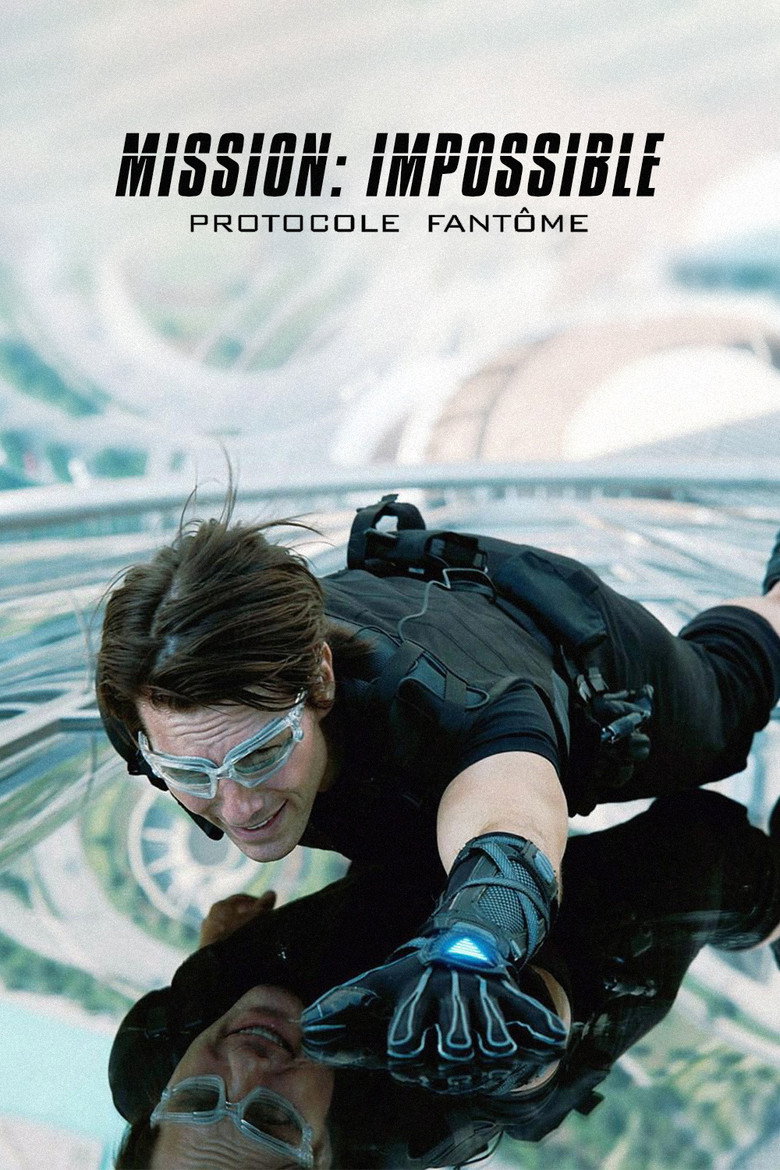
In 1996, Paramount transformed the television series Mission: Impossible into a major film franchise.
The first film was directed by Brian De Palma and starred Tom Cruise as Ethan Hunt.
Its success launched a series that would continue for several decades.
The franchise gradually became known for practical stunts, changing directors and Tom Cruise’s unusually deep involvement in production.
Mission: Impossible became one of the modern properties most closely associated with Paramount Pictures.
1997 — Titanic
Paramount then participated in one of the greatest phenomena in film history with James Cameron’s Titanic.
The film was developed in partnership with 20th Century Fox.
Paramount notably handled the North American release, while Fox managed much of the international distribution.
Released in 1997, Titanic became the highest-grossing film in the world at the time and won eleven Academy Awards, including Best Picture.
The co-production remains one of the most spectacular examples of cooperation between two major Hollywood studios.
The 2000s — Transformers and the return of Star Trek
At the beginning of the twenty-first century, Paramount strengthened its strategy around major international franchises.
In 2007, Transformers, directed by Michael Bay, transformed the Hasbro toys into a global blockbuster franchise.
Its success led to several sequels and spin-offs and established Transformers as one of the most important properties distributed by Paramount.
In 2009, Star Trek returned to cinemas under the direction of J. J. Abrams with a new generation of actors.
The studio thus maintained both historic franchises and newer properties designed for a global market.
Viacom, CBS and corporate reorganizations
Paramount’s parent company underwent several transformations at the same time.
After Viacom and CBS were brought together in 2000, the group was split again at the end of 2005.
Paramount Pictures remained within the new Viacom, while CBS Corporation became a separate company.
The two groups ultimately reunited in 2019 to form ViacomCBS.
For Paramount Pictures, these transformations changed the corporate structure without interrupting the studio’s continuity.
The 2010s — Franchises and diversification
Paramount continued developing its major franchises throughout the 2010s.
Mission: Impossible entered a new period with Ghost Protocol, Rogue Nation and later Fallout.
Transformers continued to expand, while Star Trek received additional films.
The studio also participated in more varied productions such as The Big Short, Arrival, A Quiet Place and Rocketman, depending on the different production and distribution arrangements involved.
This period confirmed Paramount’s generalist identity, combining blockbusters, genre films and awards-oriented productions.
2020 — Sonic finds its audience in cinemas
In 2020, Paramount launched Sonic the Hedgehog, an adaptation of Sega’s video-game character.
After an initial trailer triggered widespread criticism of the character’s design, the production chose to redesign Sonic before release.
The film ultimately became a success and launched a new franchise.
The sequels gradually expanded Sonic’s cinematic universe, accompanied by television spin-offs.
The franchise quickly became one of the studio’s important newer properties.
2022 — ViacomCBS becomes Paramount Global
In February 2022, ViacomCBS announced a name change.
The group became Paramount Global, or simply Paramount in its communications.
More than a century after the creation of Famous Players, the historic studio brand thus became the name of the entire parent company.
The change also reflected the growing importance of Paramount+, the global streaming service that also uses the mountain as its visual identity.
Paramount Pictures nevertheless remained the film studio within the group and should not be confused with Paramount Global as a whole.
Top Gun: Maverick and the return of a historic franchise
That same year, Top Gun: Maverick revived a property whose first film dated back to 1986.
Tom Cruise returned as Pete “Maverick” Mitchell in a production relying heavily on real aerial photography.
The film became a major critical and commercial success.
Its performance demonstrated Paramount’s ability to revive an older franchise when a project had genuine creative justification rather than merely repeating the original film.
2025 — Paramount and Skydance merge
On August 7, 2025, Skydance Media and Paramount Global completed their merger.
The combined company initially adopted the name Paramount, a Skydance Corporation.
David Ellison, founder of Skydance Media, became the head of the new group.
The transaction brought Paramount’s historic library and global capabilities together with Skydance’s production operations and technology.
For Paramount Pictures, the merger represented another change in parent company but no break with its history dating back to 1912.
2026 — Paramount enters a new group with Warner Bros.
Another major transformation followed only a year later.
On October 6, 2026, Paramount completed its acquisition of Warner Bros. Discovery.
The combined company adopted the name Skydance.
The new group now includes two of Hollywood’s oldest active studios: Paramount Pictures and Warner Bros. Pictures.
The two brands nevertheless remain distinct.
Paramount Pictures therefore continues to exist as a specific studio and catalog, with its own franchises, history and visual identity.
What sets it apart
One of the oldest major studios still active
Paramount traces its history back to 1912.
This longevity means the studio has passed through almost the entire history of Hollywood feature filmmaking: silent cinema, sound, the classical studio system, New Hollywood, blockbusters, franchises and streaming.
Few studios can claim comparable continuity.
This history also explains the exceptional depth of its catalog.
The mountain and the stars
The Paramount logo is one of cinema’s most famous visual signatures.
The mountain surrounded by stars appeared during the company’s early years and has evolved graphically over time without losing its fundamental concept.
Unlike many film brands that have been completely redesigned over the decades, Paramount has preserved an immediately recognizable symbol for more than a century.
The mountain has become inseparable from the studio’s identity.
A history closely tied to Hollywood itself
Paramount has an important physical distinction: its historic studio remains located in Hollywood.
The current lot began taking shape in 1926 and has expanded considerably since then.
Paramount presents it as the last major historic studio whose principal production lot remains in Hollywood itself.
This location creates a direct continuity with the classical era of American cinema.
A generalist catalog
Paramount is not built around a single genre or property.
The Godfather represents crime drama, Grease the musical, Indiana Jones adventure, Top Gun aerial action, Mission: Impossible espionage, Star Trek science fiction, Transformers large-scale spectacle and Sonic video games.
This diversity is one of the studio’s most enduring characteristics.
Franchises spanning multiple generations
Several properties associated with Paramount have lasted for decades.
Mission: Impossible originated as a television series in the 1960s before becoming a film franchise in 1996.
Star Trek followed a similar trajectory.
Top Gun achieved a major return thirty-six years after the first film.
This ability to evolve older properties while developing new franchises remains an important part of Paramount’s modern strategy.
A studio brand that became the name of an entire group
Paramount’s corporate history includes a relatively unusual reversal.
For many years, Paramount Pictures belonged to groups with other names: Gulf+Western, Viacom and later ViacomCBS.
In 2022, the studio’s own name finally became the name of the entire company: Paramount Global.
Even after the transformations of 2025 and 2026, the Paramount Pictures brand remains strong enough to be preserved as a distinct film identity within Skydance.
Good to know
- Paramount Pictures officially traces its history back to 1912, when Adolph Zukor founded Famous Players Film Company.
- The Paramount Pictures name later appeared with the distribution company developed around W. W. Hodkinson.
- Famous Players and Jesse L. Lasky’s company merged in 1916, before their consolidation with Paramount.
- The famous mountain surrounded by stars has accompanied the brand since its early years.
- Paramount’s current historic Hollywood studio lot began development in 1926.
- Wings, released in 1927, received the award corresponding to the first Academy Award for Best Picture.
- Paramount played a major role in the classical Hollywood studio system.
- The 1948 United States v. Paramount Pictures ruling contributed to ending the vertical integration of studios and their theater chains.
- Gulf+Western Industries acquired Paramount in 1966.
- Paramount acquired Desilu Studios in 1967, strengthening its television operations.
- The Godfather, released in 1972, became one of the studio’s most emblematic works.
- Paramount distributed the first Indiana Jones films beginning in 1981.
- Top Gun became a worldwide phenomenon in 1986.
- Gulf+Western adopted the name Paramount Communications in 1989.
- Viacom acquired Paramount Communications in 1994.
- Mission: Impossible became a film franchise in 1996.
- Paramount partnered with 20th Century Fox on Titanic, released in 1997.
- Transformers began its film series in 2007 and became a major global franchise.
- Sonic the Hedgehog launched a new Paramount franchise in 2020.
- Viacom and CBS reunited in 2019 as ViacomCBS.
- ViacomCBS became Paramount Global in February 2022.
- Top Gun: Maverick, released in 2022, successfully revived the franchise launched in 1986.
- Skydance Media and Paramount Global completed their merger on August 7, 2025.
- On October 6, 2026, Paramount completed its acquisition of Warner Bros. Discovery and the combined group adopted the Skydance name.
- In 2026, Paramount Pictures remains an active and distinct film studio, alongside Warner Bros. Pictures within the new group.