


Overview
Metro-Goldwyn-Mayer, generally known by the initials MGM, is an American film studio founded in 1924.
It was created through the combination of Metro Pictures Corporation, Goldwyn Pictures Corporation and Louis B. Mayer Productions, organized under the leadership of entrepreneur Marcus Loew.
Louis B. Mayer took charge of production operations in California, while the young Irving Thalberg became one of the new studio’s principal creative forces.
MGM quickly established itself as one of the pillars of the classical Hollywood studio system.
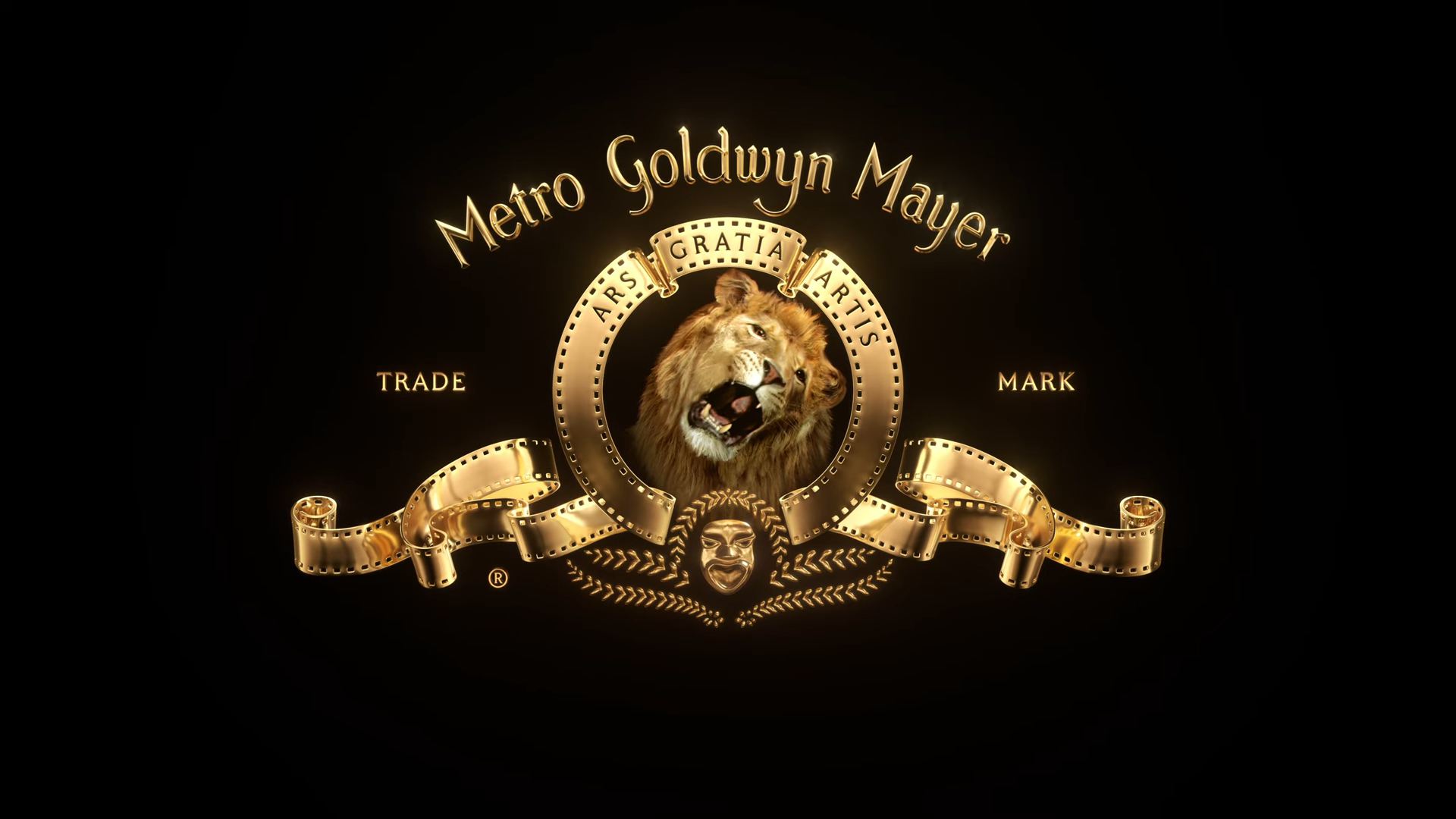
Its emblem, the lion surrounded by a strip of film bearing the motto Ars Gratia Artis — “Art for Art’s Sake” — became one of the most recognizable logos in cinema history.
During its golden age, MGM built its prestige around an enormous catalog and an exceptional concentration of stars. The studio famously promoted the idea that it had “more stars than there are in heaven,” with performers such as Greta Garbo, Clark Gable, Joan Crawford, Spencer Tracy, Judy Garland, Gene Kelly, Elizabeth Taylor and many other major figures.
MGM made a particularly important contribution to the history of the musical with Meet Me in St. Louis, An American in Paris, Singin’ in the Rain and Gigi, while also producing dramas, adventure films, epics, comedies and family productions that became classics.
Its history includes titles such as Ben-Hur, The Wizard of Oz, Grand Hotel, Mutiny on the Bounty, Forbidden Planet, North by Northwest and the monumental Ben-Hur of 1959.
Over time, the company nevertheless went through profound transformations: the decline of the classical studio system, changes of ownership, the acquisition of United Artists, the sale of part of its catalog to Ted Turner, financial difficulties and restructuring.
After filing for Chapter 11 bankruptcy protection in 2010, MGM gradually rebuilt a major presence in film and television, notably through Skyfall, The Hobbit, Creed, Fargo, The Handmaid’s Tale and No Time to Die, depending on its various roles in those productions.
In 2022, Amazon acquired MGM.
The company’s legacy was subsequently integrated into Amazon MGM Studios, combining MGM’s historic activities with productions developed by Amazon.
More than a century after its creation, the MGM lion remains associated with one of the most important legacies in American cinema.
History
1924 — The birth of Metro-Goldwyn-Mayer
MGM’s story begins with Marcus Loew, an entrepreneur who controlled a major chain of movie theaters.
To supply his theaters with films, Loew had acquired Metro Pictures Corporation.
He subsequently took control of Goldwyn Pictures Corporation, which notably owned important production facilities in Culver City, California.
But these businesses needed strong enough production leadership to supply the theater network consistently.
Loew therefore turned to Louis B. Mayer, an established producer who already ran his own company.
On April 17, 1924, Metro Pictures, Goldwyn Pictures and Louis B. Mayer Productions were combined to form Metro-Goldwyn-Mayer.
The Goldwyn name remained in the new studio’s title even though Samuel Goldwyn himself was not involved in its management.
Louis B. Mayer became head of the California studio operations.
Alongside him was Irving Thalberg, a young producer known for his ability to supervise both the artistic and financial sides of filmmaking.
The Mayer-Thalberg partnership would profoundly shape MGM’s identity.
Leo the Lion and Ars Gratia Artis
MGM inherited from Goldwyn Pictures one of the most famous symbols in cinema: the lion surrounded by a circle of film.
Different lions appeared over the decades.
The one most enduringly associated with the studio became Leo, introduced in the 1950s and eventually established as the emblematic face of the logo.
Around him appears the Latin motto Ars Gratia Artis, generally translated as “Art for Art’s Sake.”
The lion’s roar gradually became inseparable from MGM films.
At a time when every major studio was trying to build an instantly recognizable identity, the symbol gave MGM an especially powerful signature.
The early years — Ben-Hur and The Big Parade
MGM quickly achieved major successes.
In 1925, the studio notably released The Big Parade by King Vidor, a major hit centered on the First World War.
The same year brought Ben-Hur: A Tale of the Christ, a superproduction begun before MGM’s formation but completed under the new studio.
The production was difficult and expensive, particularly because of its spectacular chariot race.
The success of Ben-Hur nevertheless helped establish MGM as a studio capable of producing works on an exceptional scale.
This ambition became one of the company’s defining characteristics.
Mayer and Thalberg
During the 1920s and 1930s, MGM’s power rested largely on the complementary roles of Louis B. Mayer and Irving Thalberg.
Mayer ran the studio, handled relationships, contracts and overall strategy.
Thalberg directly supervised the production of a large number of films.
He placed particular importance on script development, preview screenings and adjustments made before release.
Under their leadership, MGM gradually became one of Hollywood’s most prestigious studios.
The quality of Thalberg’s work was such that after his early death in 1936, the Academy named the Irving G. Thalberg Memorial Award after him, honoring producers whose careers demonstrate consistently high standards.
“More stars than there are in heaven”
MGM also built its identity around its performers.
During the height of the studio system, actors were signed to long-term contracts and their careers were largely managed by the companies employing them.
MGM gradually assembled an exceptional roster of stars.
Greta Garbo, Norma Shearer, Joan Crawford, Clark Gable, Spencer Tracy, Jean Harlow, Mickey Rooney, Judy Garland, Gene Kelly, Elizabeth Taylor, Ava Gardner and many others worked at the studio.
This concentration inspired the famous slogan associated with MGM: “More stars than there are in heaven.”
The studio marketed the personalities of its stars almost as strongly as the films themselves.
1932 — Grand Hotel
In 1932, MGM released Grand Hotel, directed by Edmund Goulding.
The film brought together a prestigious cast including Greta Garbo, John Barrymore, Joan Crawford, Wallace Beery and Lionel Barrymore.
This gathering of stars became one of the clearest examples of the studio’s power.
Grand Hotel won the Academy Award for Best Picture.
The production perfectly reflected the identity MGM was trying to establish: sophistication, prestige and star power.
1935 — Mutiny on the Bounty
Mutiny on the Bounty, starring Charles Laughton and Clark Gable, was released in 1935.
The film adapted the famous mutiny aboard HMS Bounty.
The ambitious production became a major success and won the Academy Award for Best Picture.
MGM once again demonstrated that it could combine popular spectacle with institutional recognition.
1936 — The death of Irving Thalberg
Irving Thalberg died in 1936, at only 37 years old.
His death deprived MGM of one of its principal creative architects.
The studio remained extremely powerful, but its internal balance changed.
Louis B. Mayer continued to lead the company while different producers took on greater responsibility over specific production units.
MGM entered a period in which its production system reached enormous scale.
1939 — The Wizard of Oz
The year 1939 marked one of the high points of Hollywood’s golden age.
MGM produced The Wizard of Oz, adapted from L. Frank Baum’s novel and starring Judy Garland as Dorothy.
The transition from sepia-toned Kansas to the vivid world of Oz powerfully showcased the possibilities of Technicolor.
The song Over the Rainbow became inseparable from both the film and Judy Garland.
Although its initial box-office performance did not yet reflect the enormous status it would later achieve, The Wizard of Oz gradually became one of the most famous films in American cinema history.
Gone with the Wind
The same year saw the release of Gone with the Wind.
The film was principally produced by David O. Selznick through Selznick International Pictures, but MGM played an important role in its distribution and in agreements that notably enabled Clark Gable to participate.
Its phenomenal success further strengthened MGM’s position at the top of Hollywood in the late 1930s.
The golden age of the musical
MGM became particularly famous for its musicals.
Under the influence of producer Arthur Freed, among others, the studio developed a series of films that permanently shaped the genre.
Meet Me in St. Louis, released in 1944 with Judy Garland, combined songs, color and family drama.
Easter Parade, On the Town, An American in Paris, Singin’ in the Rain, The Band Wagon and Gigi continued the tradition.
Performers such as Gene Kelly, Fred Astaire, Judy Garland and Cyd Charisse became closely associated with this era.
MGM productions stood out through their sets, choreography, costumes and sophisticated use of color.
Tom and Jerry
MGM also maintained an important animation operation.
The studio was notably home to William Hanna and Joseph Barbera, who created Tom and Jerry in the early 1940s.
The series of animated shorts became one of the most famous in American animation history.
Several episodes won Academy Awards.
This activity showed that MGM’s power was not limited to live-action feature films.
War and the postwar years
During the Second World War, MGM, like the other major American studios, participated in productions connected to the war effort.
After 1945, the company remained extremely powerful.
It continued producing major musicals while also developing dramas, historical films and spectacular adventures.
But the industrial model on which Hollywood had been built was beginning to change.
Television was becoming increasingly important, audience habits were evolving and antitrust decisions gradually forced separation between film production and theater ownership.
1951 — Louis B. Mayer leaves the studio
Internal tensions increased at MGM around the beginning of the 1950s.
In 1951, Louis B. Mayer left the studio he had led since its creation.
His departure symbolized the end of an era.
The classical studio system itself was also beginning to lose its power.
MGM still possessed an exceptional brand and many stars, but now had to adapt to a profoundly different film market.
Singin’ in the Rain
In 1952, MGM released Singin’ in the Rain, directed by Gene Kelly and Stanley Donen.
The film humorously depicts Hollywood’s transition from silent cinema to sound.
Gene Kelly, Donald O’Connor and Debbie Reynolds lead the musical, which also reuses several songs from the studio’s catalog.
Over time, Singin’ in the Rain became one of the most celebrated works in musical cinema.
Today it remains one of the most enduring symbols of MGM’s golden age.
The major productions of the 1950s
MGM continued relying on spectacular films to attract audiences to theaters.
The studio developed widescreen productions, historical adventures and ambitious musicals.
An American in Paris won the Academy Award for Best Picture.
Gigi also became a major success and won nine Oscars.
At the same time, MGM explored science fiction with Forbidden Planet, which became a genre landmark.
1959 — Ben-Hur
In 1959, MGM returned to one of its major historical subjects with a new adaptation of Ben-Hur, directed by William Wyler and starring Charlton Heston.
The production was enormous.
Its chariot race became one of the most famous sequences in cinema history.
The film achieved worldwide success and won eleven Academy Awards, including Best Picture.
Ben-Hur represented both one of the peaks of classical Hollywood spectacle and one of the final great triumphs of traditional MGM.
The 1960s — A model losing momentum
During the 1960s, the industry changed rapidly.
Production costs increased, audiences grew younger and the system that had once allowed studios to control the careers of their stars had largely disappeared.
MGM still achieved several successes but also faced expensive productions that were increasingly difficult to make profitable.
The studio had to reduce its operations and reconsider an organization inherited from the golden age.
1969 — Kirk Kerkorian takes control
In 1969, businessman Kirk Kerkorian took control of MGM.
His arrival opened several particularly turbulent decades in the company’s history.
The studio sharply reduced production and increasingly emphasized the value of its name, catalog and assets.
Kerkorian also used the MGM brand in hotels and casinos in Las Vegas.
The film and hotel businesses would later be separated.
The movie studio continued to exist in an environment very different from the Mayer era.
1981 — MGM acquires United Artists
In 1981, MGM acquired United Artists.
Founded in 1919 by Charlie Chaplin, Mary Pickford, Douglas Fairbanks and D. W. Griffith, United Artists had a prestigious history and relationships with several particularly important franchises.
The combined company became known as MGM/UA.
The acquisition notably gave MGM a lasting connection with properties such as James Bond and Rocky, even though their histories, producers and rights structures each had their own specific characteristics.
United Artists also retained a distinct identity within the broader organization.
1986 — Ted Turner and the separation of the historic catalog
In 1986, Ted Turner acquired MGM/UA.
His interest was focused particularly on the studio’s enormous film library, which was valuable for supplying his television networks.
But the financial burden of the transaction was considerable.
Only months after the acquisition, Turner sold MGM’s production and distribution operations back.
He nevertheless retained a very large part of the pre-1986 MGM film library.
This separation became one of the most important events in the studio’s modern history.
The MGM name, new productions and business activities continued on one side, while much of the golden-age catalog became part of the Turner library.
The Turner catalog would later become integrated into the Warner universe.
The late 1980s and the 1990s
MGM then entered a long period of ownership changes and restructuring.
The studio remained active but no longer possessed the industrial dominance it had enjoyed during its golden age.
Its name and modern catalog nevertheless retained considerable value.
United Artists also remained part of its organization.
During the 1990s, MGM developed or acquired various libraries and companies, once again strengthening its portfolio of films and properties.
James Bond and MGM
The acquisition of United Artists placed MGM in an especially close relationship with James Bond.
The franchise remained historically produced by EON Productions, but United Artists and later MGM played an essential role in its financing and distribution.
Films such as GoldenEye, Tomorrow Never Dies, The World Is Not Enough and Die Another Day therefore appeared within the MGM/UA ecosystem.
This relationship became one of MGM’s most important assets.
Rocky and the United Artists catalog
Rocky, created by Sylvester Stallone and released in 1976 through United Artists, also became an especially important property within MGM.
The saga continued with numerous sequels.
Decades later, it was renewed through Creed, which passed part of its legacy to a new generation of characters.
Rocky and Creed therefore became two of the most recognizable franchises associated with modern MGM.
2005 — An acquisition led by Sony and investors
At the beginning of the 2000s, MGM once again changed owners.
In April 2005, a consortium including Sony Corporation of America, Providence Equity Partners, Texas Pacific Group, Comcast and DLJ Merchant Banking Partners completed its acquisition of the company.
MGM became privately held.
Sony Pictures then became involved in distribution and cooperation around various productions.
The transaction gave the investor group access to an extremely valuable catalog, but MGM also retained a high level of debt.
Financial difficulties
Over the following years, debt became a major problem.
MGM’s value rested largely on its catalog and major franchises, but the company had fewer resources than the major studios to maintain regular production.
Its difficulties eventually disrupted the development of several projects.
The studio was forced to undertake a major restructuring.
2010 — Bankruptcy and restructuring
In November 2010, MGM filed for protection under Chapter 11 of U.S. bankruptcy law.
The studio carried several billion dollars in debt.
A restructuring plan proposed converting much of that debt into ownership in the reorganized company.
The process moved quickly.
In December 2010, MGM emerged from bankruptcy with a reorganized financial structure and new leadership.
Gary Barber and Roger Birnbaum, from Spyglass Entertainment, took control of the studio.
The restructuring gave MGM a new foundation from which to restart production.
2012 — Skyfall
One of the symbols of MGM’s return was Skyfall, released in 2012.
The third James Bond film starring Daniel Craig became one of the biggest successes in the history of the franchise.
MGM was once again fully associated with a major international production.
The same period also saw the studio participate in The Hobbit trilogy, developed with New Line and Warner Bros.
These projects restored major theatrical visibility to MGM.
MGM Television
Television simultaneously became an increasingly important part of the company’s strategy.
MGM Television became involved in particularly significant series such as Vikings, Fargo, The Handmaid’s Tale and later Wednesday.
This activity showed that the company was no longer dependent only on theatrical releases.
Television gradually became one of the major engines of modern MGM.
2015 — Creed
In 2015, Creed, directed by Ryan Coogler, revived the Rocky universe.
Michael B. Jordan stars as Adonis Creed, the son of Apollo Creed, while Sylvester Stallone returns as Rocky Balboa.
The film successfully extended a historic franchise while creating a new identity.
Its success led to several sequels.
Creed therefore became one of the major properties in MGM’s contemporary catalog.
No Time to Die
MGM also remained involved in the James Bond films produced by EON Productions.
Following Spectre, No Time to Die became Daniel Craig’s final Bond adventure.
The production was delayed by several difficulties, notably the Covid-19 pandemic, before being released in 2021.
The film concluded the cycle that had begun with Casino Royale.
For MGM, Bond remained one of the most strategically important assets in its modern history.
2021 — Amazon announces the acquisition of MGM
On May 26, 2021, Amazon announced an agreement to acquire MGM for $8.45 billion.
The attraction of the deal rested notably on the company’s enormous catalog and numerous properties.
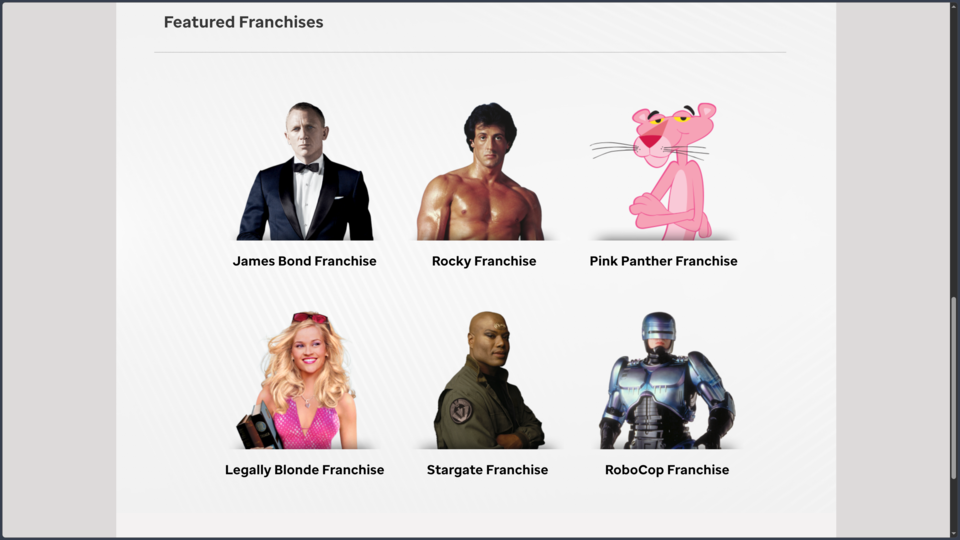
Amazon stated at the time that MGM possessed more than 4,000 films and 17,000 television episodes, with franchises and titles connected to James Bond, Rocky, Creed, RoboCop, The Pink Panther, Legally Blonde and Stargate.
The transaction marked one of the largest ownership changes in the studio’s history.
2022 — MGM joins Amazon
On March 17, 2022, Amazon announced the completion of the acquisition.
MGM joined the company’s Prime Video and Amazon Studios operations.
The company retained its enormous legacy while gaining access to the resources of a global technology and media group.
Amazon stated that it intended to preserve MGM’s heritage while developing new stories from its catalog.
After nearly a century of relative independence, acquisitions and restructuring, the lion entered a new era.
Amazon MGM Studios
Amazon’s creative operations and MGM’s legacy were progressively brought together under the identity Amazon MGM Studios.
The organization develops and acquires films for both theaters and Prime Video while also producing original television series.
The MGM name remains present within this structure, notably through its catalog, historic properties, MGM+ and the MGM Studios website.
Metro-Goldwyn-Mayer Studios Inc. also continues to exist within corporate structures controlled by Amazon.
2024 — A century of history
In 2024, MGM reached the symbolic milestone of its 100th anniversary.
The studio could look back on an especially turbulent century: the birth of the Hollywood studio system, the golden age of stars, musicals, the collapse of the classical model, ownership changes, the rise of franchises and the transition into the streaming era.
Few film brands possess such a long and recognizable history.
The lion continues to embody that continuity despite the company’s profound transformations.
2025 — A new chapter for James Bond
In 2025, Amazon MGM Studios, Michael G. Wilson and Barbara Broccoli announced a historic transformation involving James Bond.
A new joint structure was created around the franchise rights.
The transaction was completed in March.
Amazon MGM Studios then obtained creative control over future James Bond productions, while the different parties remained co-owners of the property.
The change significantly strengthened the direct role of MGM’s modern successor in shaping the future of 007.
2026 — MGM’s legacy within Amazon MGM Studios
In 2026, Metro-Goldwyn-Mayer’s legacy forms one of the foundations of Amazon MGM Studios.
The group develops films for theaters and Prime Video, exploits its numerous franchises and continues distributing its catalog.
Historic brands such as United Artists and Orion Pictures also continue to be used on certain productions.
More than a century after its creation, MGM is therefore no longer the independent major that dominated Culver City under Louis B. Mayer.
But its name, lion, franchises and heritage continue to hold a central place in the film industry.
What sets it apart
The MGM lion
Few studio logos are as recognizable as MGM’s.
The roaring lion surrounded by film stock has appeared throughout almost the entire history of the company.
Different animals were used over the decades, but Leo became the most famous.
The logo goes far beyond its commercial function.
It became a symbol of Hollywood itself and of the golden age of American cinema.
The studio of stars
MGM built an essential part of its reputation on the power of its performers.
During the classical studio era, the company assembled some of the most famous personalities in world cinema.
This strategy allowed it to offer prestigious productions in which the actors themselves were major attractions.
The phrase “More stars than there are in heaven” perfectly summarizes this culture.
The Hollywood musical
MGM holds a major place in the history of the musical.
Works such as Meet Me in St. Louis, An American in Paris, Singin’ in the Rain, The Band Wagon and Gigi remain landmarks of the genre.
The studio developed exceptional expertise in choreography, music, production design, costumes and the use of color.
This tradition represents one of MGM’s most important contributions to cinema history.
Productions on an enormous scale
MGM also distinguished itself through its taste for spectacle.
Both versions of Ben-Hur, its large historical adventures and various superproductions demonstrate a consistent willingness to use scale as a cinematic attraction.
This ambition reached one of its peaks with Ben-Hur in 1959 and its eleven Academy Awards.
A history spanning all of Hollywood
MGM’s evolution almost summarizes the history of the American film industry by itself.
The studio passed through silent cinema, sound, Technicolor, the star system, television, the collapse of the studio system, home video, cable television, major franchises and streaming.
Its various crises and transformations reflect Hollywood’s economic upheavals across an entire century.
A catalog built from several legacies
Modern MGM does not rely only on films historically produced under the lion.
The acquisition of United Artists and other libraries added numerous works and franchises to its universe.
It was notably through this legacy that MGM became closely associated with Rocky, Creed and James Bond.
This accumulation of different histories explains both the richness and exceptional complexity of its catalog.
Film and television
Unlike the golden-age MGM identified primarily with cinema, the contemporary company also developed a strong television identity.
Series such as Fargo, Vikings, The Handmaid’s Tale and Wednesday helped renew its presence with audiences.
This diversification later facilitated its integration with Amazon’s television and streaming operations.
Good to know
- Metro-Goldwyn-Mayer was founded on April 17, 1924.
- The studio was created through the combination of Metro Pictures, Goldwyn Pictures and Louis B. Mayer Productions.
- The operation was organized under the leadership of Marcus Loew.
- Louis B. Mayer took charge of the studio’s California operations.
- Irving Thalberg became one of MGM’s principal production figures.
- The famous lion came from the legacy of Goldwyn Pictures.
- The logo bears the motto Ars Gratia Artis.
- Ben-Hur became one of the new studio’s first major superproductions in 1925.
- Grand Hotel won the Academy Award for Best Picture.
- Mutiny on the Bounty also won Best Picture.
- Irving Thalberg died in 1936, at only 37 years old.
- The Wizard of Oz was released in 1939 with Judy Garland.
- MGM also played an important role in the distribution of Gone with the Wind.
- The studio became one of the great landmarks of the Hollywood musical.
- Tom and Jerry were developed within MGM’s animation department by William Hanna and Joseph Barbera.
- Louis B. Mayer left MGM in 1951.
- Singin’ in the Rain was released in 1952.
- Ben-Hur, directed by William Wyler and released in 1959, won eleven Academy Awards.
- Kirk Kerkorian took control of the studio in 1969.
- MGM’s film operations were later separated from the hotel businesses carrying the same name.
- MGM acquired United Artists in 1981.
- The acquisition notably strengthened its connection with the Rocky and James Bond franchises.
- Ted Turner acquired MGM/UA in 1986.
- Turner quickly sold back the production operations but retained much of the pre-1986 MGM library.
- This historic library was later integrated into the Turner and Warner universe.
- A consortium including Sony, Providence Equity Partners, Texas Pacific Group, Comcast and DLJ Merchant Banking Partners completed the acquisition of MGM in 2005.
- MGM filed for Chapter 11 bankruptcy protection in November 2010.
- The studio emerged from bankruptcy in December 2010 following restructuring.
- Skyfall helped return MGM to the forefront in 2012.
- MGM also developed major television operations with series such as Fargo, Vikings, The Handmaid’s Tale and Wednesday.
- Creed, released in 2015, revived the Rocky universe around Adonis Creed.
- No Time to Die was released in 2021 and concluded Daniel Craig’s era as James Bond.
- Amazon announced in May 2021 its intention to acquire MGM for $8.45 billion.
- The acquisition was completed on March 17, 2022.
- MGM was then described as having a catalog of more than 4,000 films and 17,000 television episodes.
- MGM’s historic operations were subsequently integrated into Amazon MGM Studios.
- MGM+ also continues the studio name in premium television.
- MGM celebrated its centenary in 2024.
- In March 2025, Amazon MGM Studios gained creative control over future James Bond productions through a new joint structure with Michael G. Wilson and Barbara Broccoli.
- In 2026, MGM’s name, catalog and franchises continue to be exploited within Amazon MGM Studios.