


Overview
Infinity Ward is an American video game development studio founded in 2002 and based in California. Creator of the original Call of Duty (2003), it has played a central role in the history of the first-person shooter franchise, particularly through the Modern Warfare series.
The studio became known for its story-driven military campaigns, cinematic presentation and fast-paced multiplayer combat. Call of Duty 4: Modern Warfare (2007) marked a turning point in its history, moving away from the Second World War setting of the earlier games to depict fictional contemporary conflicts. Modern Warfare 2 (2009) and Modern Warfare 3 (2011) continued this development.
Infinity Ward also created Call of Duty: Ghosts (2013) and Call of Duty: Infinite Warfare (2016), before introducing a new narrative continuity with Call of Duty: Modern Warfare (2019) and Modern Warfare II (2022).
An Activision subsidiary, the studio now works alongside several international development teams on different parts of Call of Duty, including campaigns, multiplayer modes and free-to-play experiences such as Warzone.
History
2002-2006 — Foundation and creation of Call of Duty
Infinity Ward was founded on May 20, 2002, by Grant Collier, Jason West and Vince Zampella, together with former developers of Medal of Honor: Allied Assault (2002). Several team members came from 2015, Inc., the studio that had worked on that game for Electronic Arts.
The newly established company focused on creating a military shooter set during the Second World War. Published by Activision in October 2003, Call of Duty featured several campaigns in which players controlled American, British and Soviet soldiers.
Unlike war games built around an isolated protagonist, Call of Duty placed particular emphasis on allied soldiers, coordinated military operations and scripted events accompanying the player's progress.
On October 30, 2003, one day after the game's release, Activision announced its complete acquisition of Infinity Ward, in which it already held a financial stake.
Call of Duty 2 (2005) expanded this approach with new Second World War campaigns, graphical improvements and an Xbox 360 release. Infinity Ward established itself as one of the franchise's principal development teams.
2007-2011 — Modern Warfare and the transformation of multiplayer shooters
In 2007, Infinity Ward developed Call of Duty 4: Modern Warfare, abandoning the historical setting of previous instalments in favour of a fictional contemporary military conflict.
The game introduced characters who became closely associated with the franchise, including Captain Price and John "Soap" MacTavish. Its campaign combined special operations, urban warfare and spectacular scripted sequences.
Its multiplayer component also represented an important step forward, introducing customisable classes, perks, killstreak rewards and a progression system that unlocked additional equipment.
Call of Duty: Modern Warfare 2 (2009) expanded these mechanics while continuing the story of the original game's characters. It introduced the cooperative Special Ops mode and greater customisation of rewards earned during multiplayer matches.
In March 2010, Infinity Ward experienced a major internal crisis when Jason West and Vince Zampella were dismissed by Activision. Their departure was followed by that of several studio employees. The two executives subsequently founded Respawn Entertainment.
Despite this reorganisation, Infinity Ward continued working on the franchise. Call of Duty: Modern Warfare 3 (2011), co-developed with Sledgehammer Games, concluded the original Modern Warfare trilogy.
2013-2016 — Ghosts and Infinite Warfare
Following the first Modern Warfare trilogy, Infinity Ward explored new settings with Call of Duty: Ghosts (2013).
The game introduced an independent storyline set in a near-future military conflict, featuring new characters and a special forces unit known as Ghosts. It also introduced Extinction, a four-player cooperative mode involving battles against extraterrestrial creatures.
In 2016, the studio developed Call of Duty: Infinite Warfare, taking military combat into a science-fiction setting involving space warfare.
Its campaign featured battles aboard spacecraft, zero-gravity operations and sequences piloting Jackal fighters. The game retained the foundations of first-person shooting while introducing environments and combat situations rarely explored in the franchise.
These two productions demonstrated Infinity Ward's interest in exploring new narrative settings while preserving the action mechanics associated with Call of Duty.
2019-2022 — The return of Modern Warfare and the development of Warzone
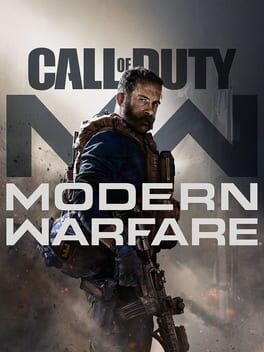
In 2019, Infinity Ward returned to its principal franchise with Call of Duty: Modern Warfare, a reimagining of the universe introduced in 2007.
The game established a new narrative continuity around Captain Price, presenting a contemporary interpretation of military operations. The studio also introduced a substantially modernised version of its proprietary engine, improving graphics, animation, lighting and audio systems.
Its multiplayer expanded weapon customisation through Gunsmith and introduced different combat formats, including Gunfight and Ground War.
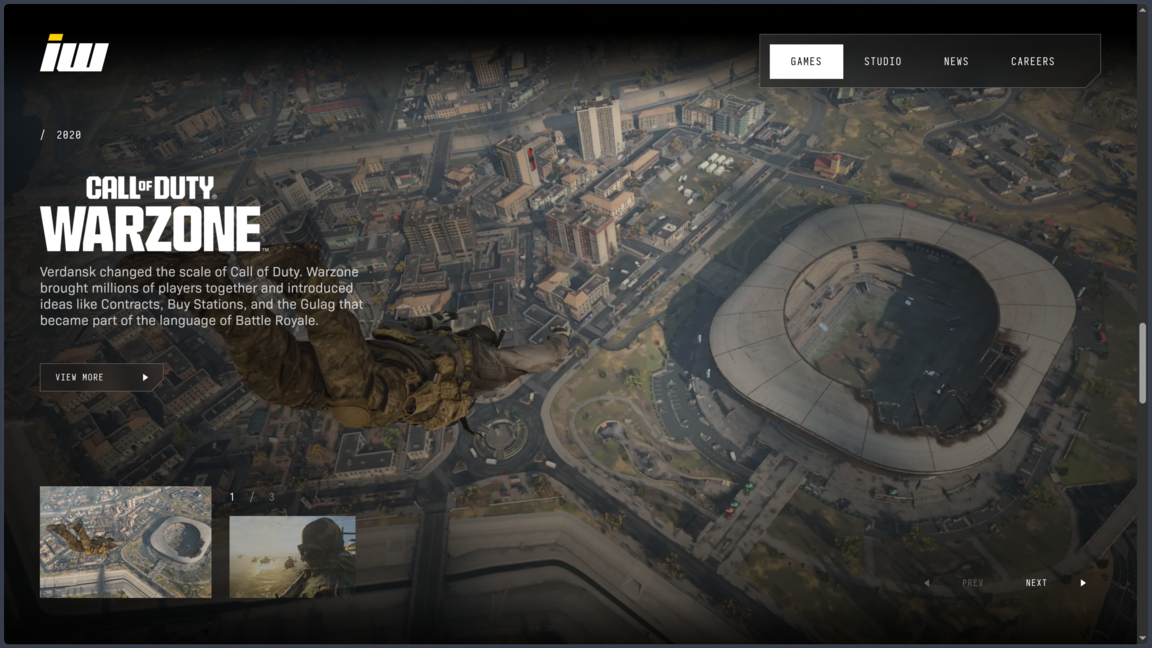
In March 2020, Infinity Ward worked with other Activision studios to launch Call of Duty: Warzone, a free-to-play battle royale experience connected to Modern Warfare.
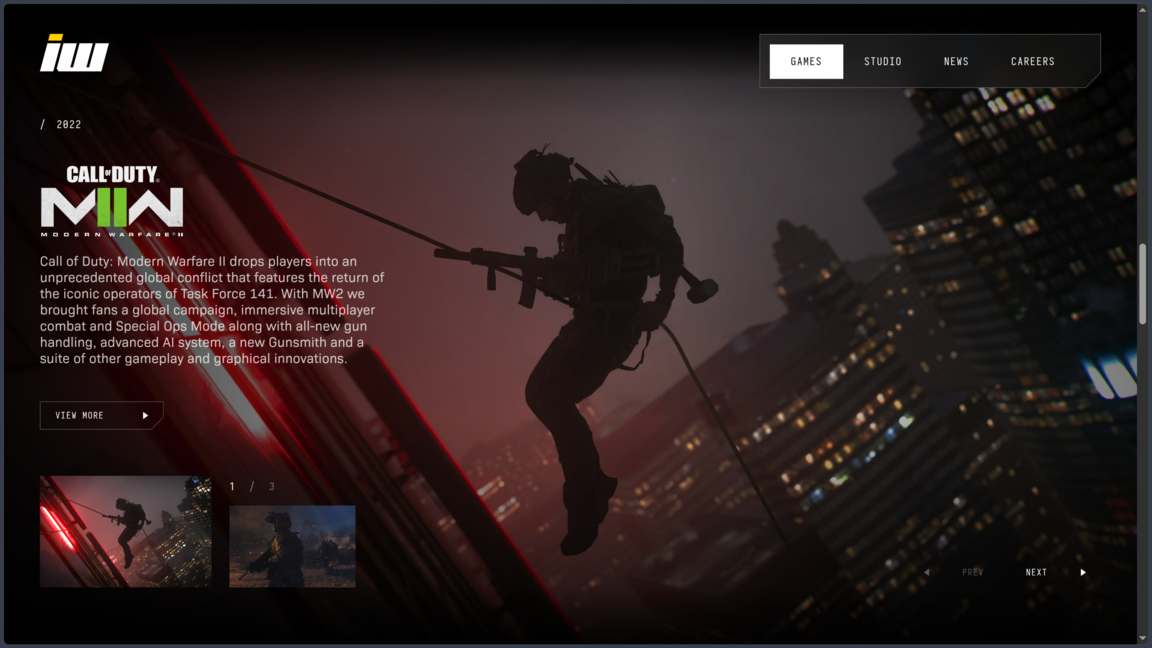
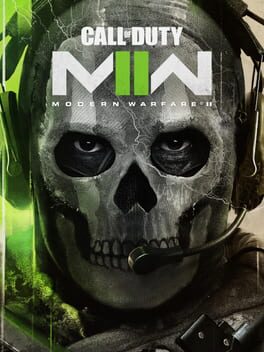
In 2022, Call of Duty: Modern Warfare II continued the new storyline. The game expanded animation systems, interactions with aquatic environments and equipment customisation.
That same year, Infinity Ward led the development of Call of Duty: Warzone 2.0, working notably alongside Raven Software. This new version introduced the Al Mazrah map and the DMZ mode, built around exploration, missions and equipment extraction.
These productions marked the evolution of Call of Duty into an interconnected ecosystem combining traditional premium games, seasonal content and free multiplayer experiences.
2023-2026 — Shared development and Modern Warfare 4
The production of Call of Duty now relies on an organisation involving several Activision studios. Infinity Ward retains a major role in the evolution of the Modern Warfare universe, while other teams contribute to campaigns, multiplayer modes and additional content.
Call of Duty: Modern Warfare III (2023), for example, was primarily developed by Sledgehammer Games in partnership with Infinity Ward.
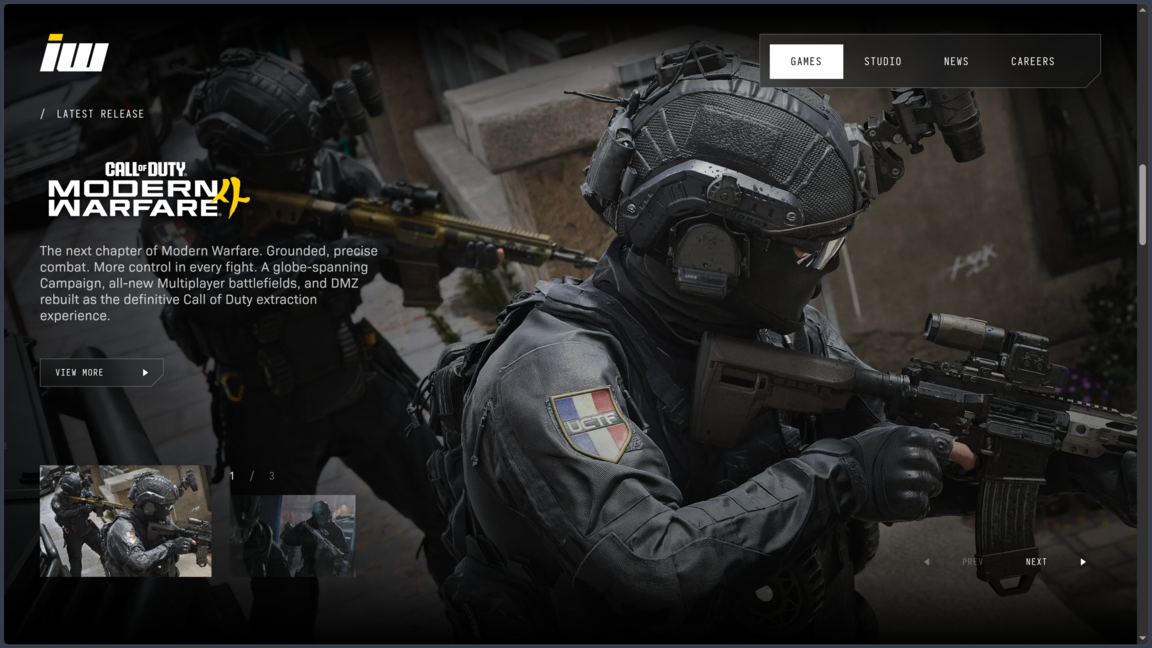
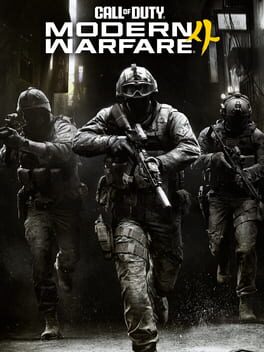
This collaboration between studios continued with Call of Duty: Modern Warfare 4, whose development was led by Infinity Ward.
Released on October 23, 2026, the game continued the new Modern Warfare continuity with a campaign centred on conflict on the Korean Peninsula and new operations involving Captain Price.
It also featured multiplayer combat and a DMZ mode dedicated to extraction missions in hostile territory.
This production reaffirmed Infinity Ward's position among the teams responsible for the major creative and technical directions of the Call of Duty franchise.
Distinctive Features
The creation of Call of Duty
Infinity Ward created the original Call of Duty in 2003, emphasising collective military operations, multiple narrative perspectives and presentation inspired by war cinema. This approach helped establish the franchise's initial identity.
Modern Warfare's influence on multiplayer gaming
With Call of Duty 4: Modern Warfare, the studio popularised a multiplayer progression model based on custom classes, perks, killstreak rewards and unlockable equipment. These systems influenced numerous later first-person shooters.
Cinematic presentation
Infinity Ward's campaigns frequently rely on scripted sequences, changes in perspective and varied missions. Infiltration operations, urban combat and large-scale military set pieces are recurring elements of its work.
Development of proprietary technology
Infinity Ward develops and evolves the IW technology used by several Call of Duty instalments. Its modernisation for Modern Warfare (2019), followed by wider adoption across the franchise, supported advances in graphical rendering, animation and multiplayer environments.
Key Facts
- Founded: May 20, 2002, in the United States.
- Founders: Grant Collier, Jason West and Vince Zampella.
- Team origins: former developers of Medal of Honor: Allied Assault.
- First game: Call of Duty (2003).
- Acquisition: Activision took full ownership of the studio in October 2003.
- Major turning point: Call of Duty 4: Modern Warfare (2007).
- Historical crisis: departure of Jason West and Vince Zampella in 2010, followed by a major studio reorganisation.
- Original trilogy: Modern Warfare (2007), Modern Warfare 2 (2009) and Modern Warfare 3 (2011).
- Science-fiction settings: Ghosts (2013) and Infinite Warfare (2016).
- New continuity: Modern Warfare (2019) and Modern Warfare II (2022).
- Free-to-play: contribution to Warzone (2020), followed by leadership of Warzone 2.0 (2022) alongside Raven Software.
- Recent production: Modern Warfare 4, released on October 23, 2026.
- Status: active development studio within Activision.