

Overview
Éditions Clair de Lune is a French publishing house founded in 1999 and based in Marseille. Its activity has primarily developed around comics, with a longstanding focus on fantasy, science fiction and speculative fiction more broadly.
Over time, however, the publisher chose not to remain confined to a single genre. Humor, supernatural fiction, thrillers, historical stories, children’s titles and contemporary adventures gradually joined its catalog.
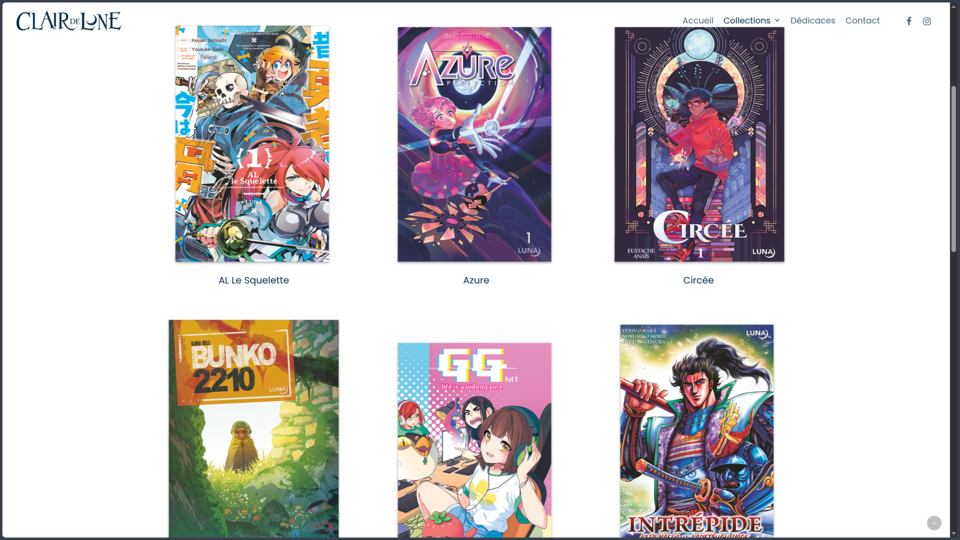
This diversification also concerns the origins of the works it publishes. French-language creations were joined by Italian comics, Korean manhwa and later Japanese manga. Clair de Lune thus built a catalog at the crossroads of several comics traditions.
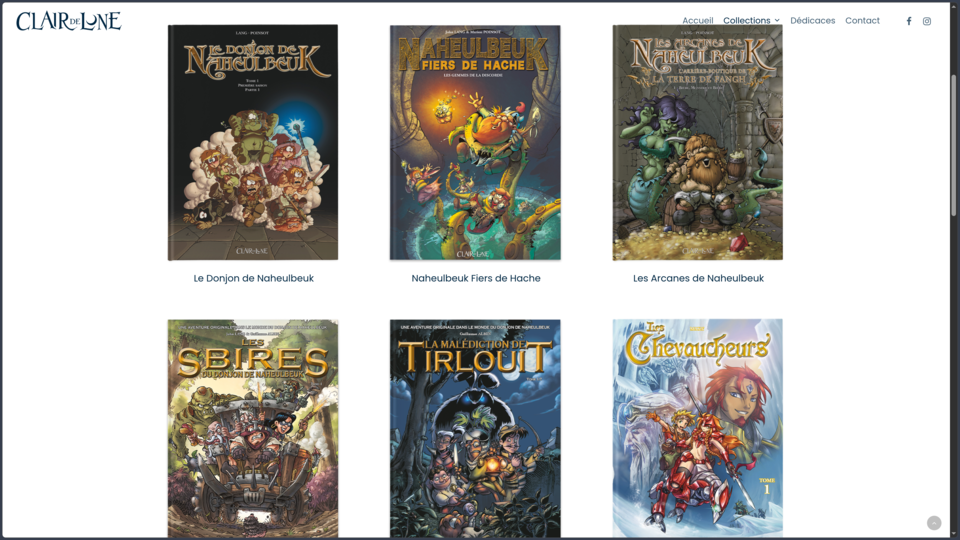
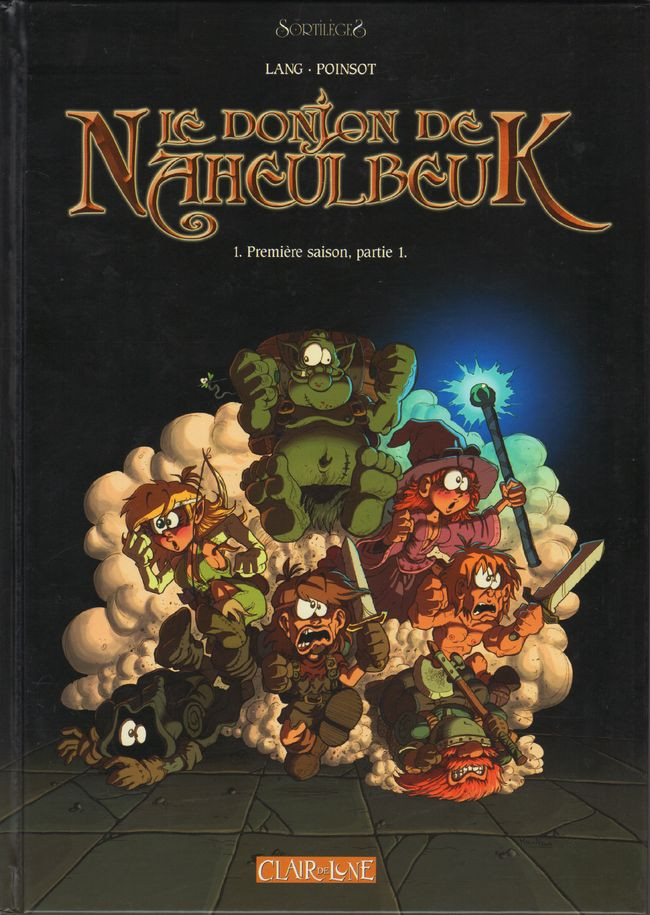
The publisher remains particularly closely associated with Le Donjon de Naheulbeuk, John Lang’s humorous fantasy universe adapted into comics with Marion Poinsot. Published since 2005, the adaptation became one of the publisher’s emblematic series and expanded through several cycles, collected editions and related publications.
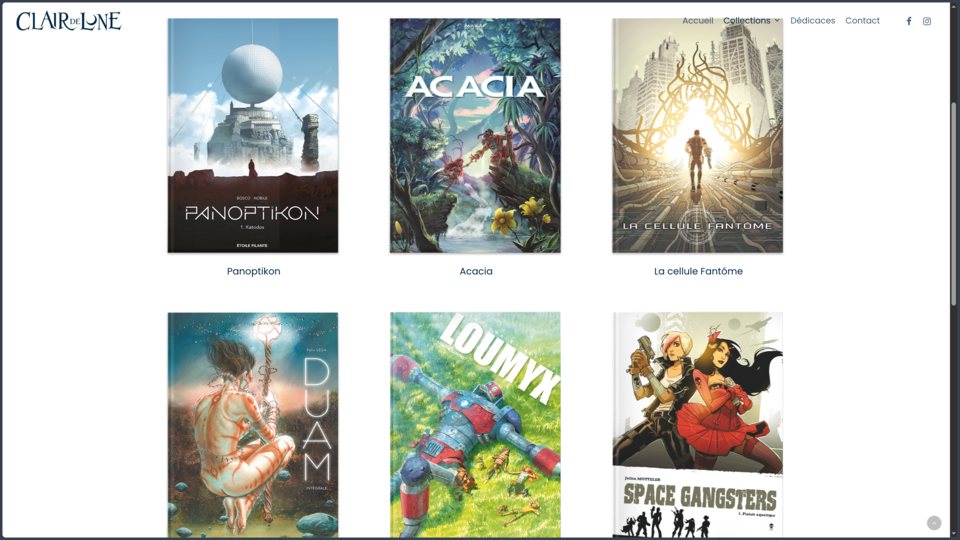
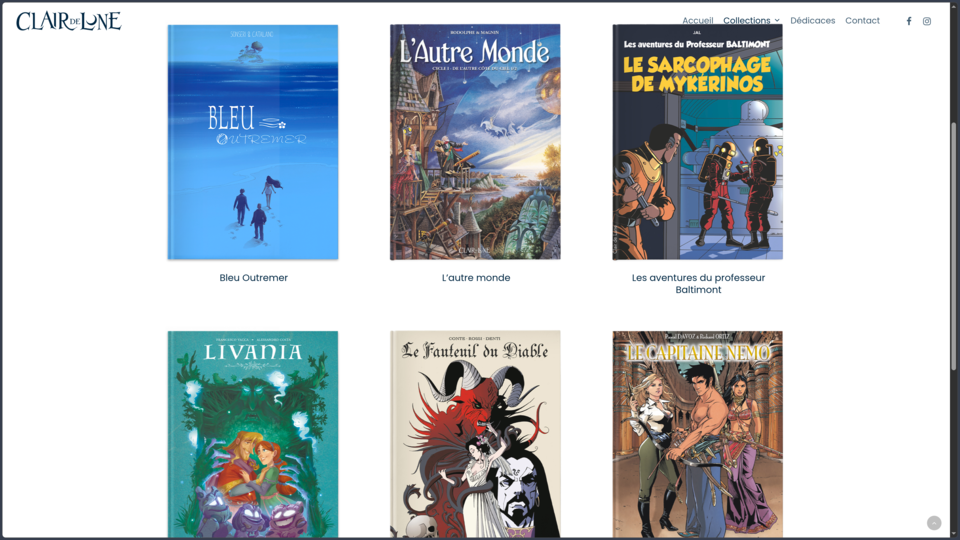
Today, Clair de Lune continues this approach to diversity, bringing together European comics, manga, fantasy, science fiction, humor, children’s publishing and stories inspired by real people and events.
History
1999 — Founding of the publishing house
Éditions Clair de Lune was founded in 1999 in Marseille.
The publisher initially focused on genre comics, with a strong presence of fantasy and science fiction. This positioning coincided with a period when speculative fiction was gaining an increasingly important place within French-language comics.
The catalog gradually expanded into other tones and genres. Humor, supernatural fiction and thrillers allowed Clair de Lune to develop a less specialized identity than in its early years while retaining a strong affinity for fictional worlds.
The 2000s — Fantasy, humor and catalog expansion
During the 2000s, Clair de Lune expanded its publications and welcomed a wide variety of series while strengthening its position in speculative comics.
The publisher also became interested in Italian comics and notably released fumetti, opening its catalog to an editorial tradition that remained less represented in France than Franco-Belgian productions.
This willingness to seek out works beyond the French market gradually became an important part of its identity.
2005 — Le Donjon de Naheulbeuk moves into comics
A particularly significant turning point came in 2005 with the publication of the comic-book adaptation of Le Donjon de Naheulbeuk.
Created by John Lang, the universe was originally known as a parody audio saga that played with the conventions of role-playing games and heroic fantasy. Its transition to comics, with Marion Poinsot as artist, allowed it to reach a new audience while giving the Land of Fangh and its characters a lasting visual identity.
The main series developed across 25 volumes and was followed by collected editions and several extensions devoted to the Naheulbeuk universe.
For Clair de Lune, the publication became one of the most recognizable elements of its catalog and strengthened the publisher’s connection to humorous fantasy.
2009 — Expansion into manhwa
In 2009, Clair de Lune turned toward Korean comics and began publishing manhwa in France.
This direction extended its international approach while allowing the publisher to explore other graphic and narrative traditions. Among its early releases was Mabinogi, a manhwa adaptation of the video game universe of the same name.
During the same period, Clair de Lune continued working with Italian series, further strengthening a catalog that was no longer limited to French productions.
2011 — Development of manga publishing
In 2011, the publisher expanded its editorial scope again by entering the Japanese manga market.
Manga therefore joined a catalog that now brought together Franco-Belgian comics, Italian works, Korean manhwa and Japanese publications.
This development did not replace Clair de Lune’s historical editorial directions: it complemented them. Fantasy, humor and European comics continued to exist alongside the new Asian collections.
A catalog that continues to evolve
Over the years, Clair de Lune has maintained this open editorial structure rather than concentrating on a single specialty.
Its recent catalog still combines comics and manga and can move from a fantasy story to a Japanese romantic comedy, from a historical album to a humorous adventure or a story devoted to a real-life personality.
Its historical universes also remain present. Le Donjon de Naheulbeuk continues to be available through its albums, collected editions and new stories connected to the Land of Fangh.
More than twenty-five years after its creation, Clair de Lune therefore remains an active independent publisher whose catalog has grown through successive expansions rather than through a break with its original identity.
What sets it apart
A catalog open to several comics traditions
One of Clair de Lune’s clearest characteristics is the coexistence of several editorial traditions.
The publisher has released French-language comics, Italian fumetti, Korean manhwa and Japanese manga. This diversity prevents its catalog from depending on a single narrative or graphic model.
It also reflects a discovery-driven approach: finding series capable of reaching French readers regardless of their country of origin.
A longstanding connection to speculative fiction
Although its catalog has diversified considerably, Clair de Lune remains deeply connected to fantasy, science fiction and supernatural fiction.
These genres have accompanied the publisher since its early years and helped shape its identity among readers.
Naheulbeuk is the best-known expression of this connection, but it belongs to a broader editorial interest in adventure, imaginary worlds and genre storytelling.
Naheulbeuk, from an audio phenomenon to a lasting graphic universe
The place occupied by Le Donjon de Naheulbeuk goes beyond that of a single series within the catalog.
Its adaptation accompanied the transformation of a phenomenon born online and in audio form into a fully developed graphic universe. Characters, locations and creatures acquired a lasting visual representation through the work of Marion Poinsot and the various artists involved in related publications.
The main series was joined by other books and stories, including Les Arcanes de Naheulbeuk, Les Sbires de Naheulbeuk and Naheulbeuk : Fiers de Hache.
This continuity illustrates a publisher’s ability to support and develop a fictional universe over time rather than simply releasing a one-off adaptation.
An independent and eclectic identity
Clair de Lune does not exactly fit the profile of either a major general-interest publishing house or a publisher specialized in a single niche.
Its identity is instead built around an eclectic catalog capable of moving from a European production to a manga, from a historical narrative to humorous fantasy.
This editorial flexibility largely explains the sometimes surprising variety of its publications and remains one of the publisher’s most recognizable characteristics.
Good to know
- Éditions Clair de Lune was founded in 1999 and is based in Marseille.
- The publishing house is headed by Pierre Leoni.
- Its historical catalog is particularly associated with fantasy, science fiction, supernatural fiction and humor.
- Clair de Lune also publishes works originating from several European and Asian comics traditions.
- The publisher began releasing manhwa in 2009 and developed its manga catalog from 2011.
- Le Donjon de Naheulbeuk has been published in comic-book form by Clair de Lune since 2005.
- The main Naheulbeuk series is complete in 25 volumes, alongside collected editions and related series set in the same universe.
- Related publications include Les Arcanes de Naheulbeuk, Les Sbires de Naheulbeuk and Naheulbeuk : Fiers de Hache.
- In 2026, Éditions Clair de Lune remains active and continues to publish new comics and manga.