




Presentation
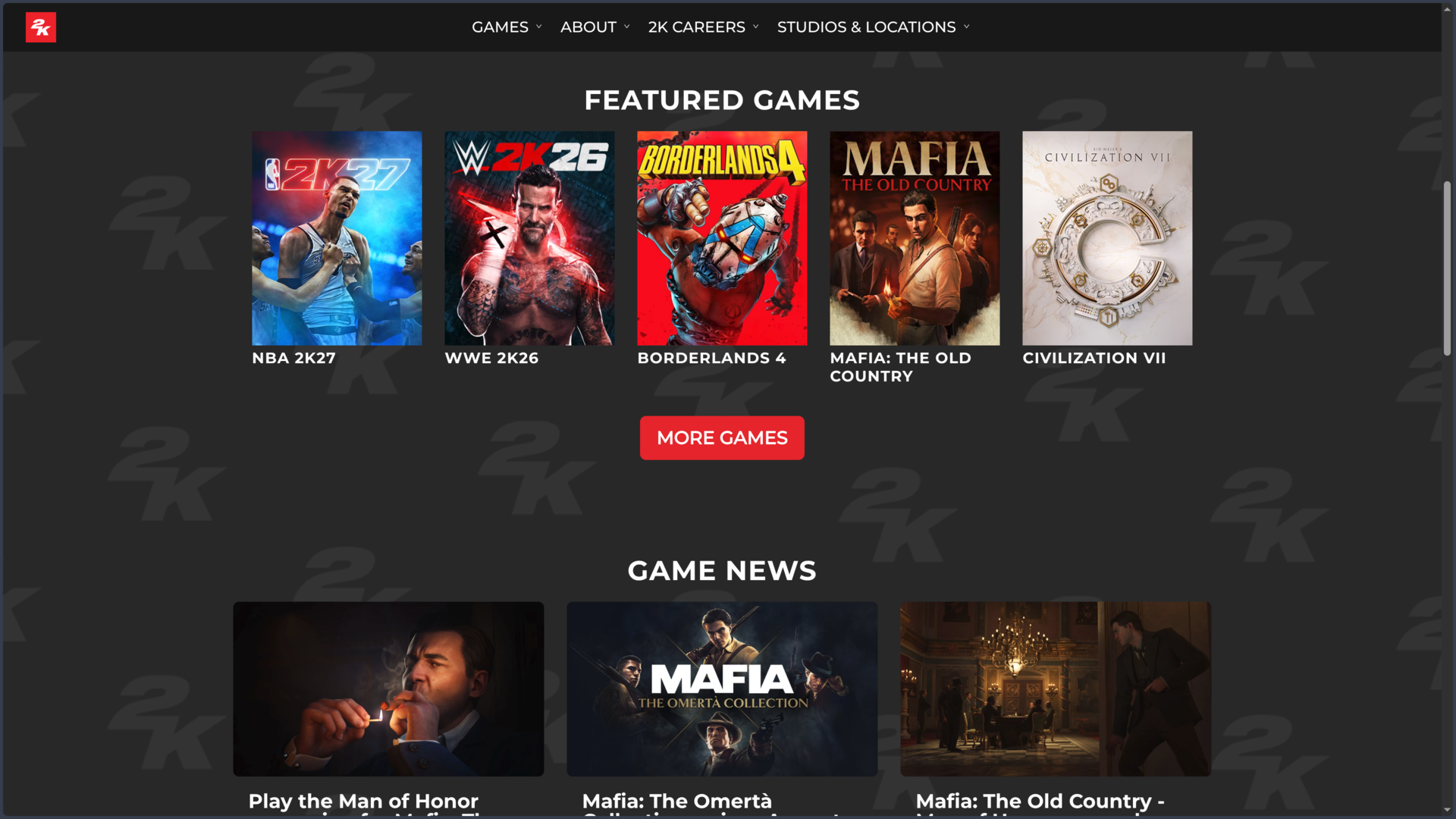
Created in 2005 within Take-Two Interactive, 2K occupies a distinctive position among major American publishers. Its catalogue brings together productions that can seem to belong to entirely different worlds: sports simulation with NBA 2K, strategy with Sid Meier’s Civilization, shooter and role-playing elements with Borderlands, narrative experiences such as BioShock, and historical action with Mafia. This diversity is not peripheral to its identity; it is precisely what defines the way the label is organized.
2K therefore does not operate like a development studio with a single creative method shared across all of its works. Development is handled by distinct teams whose expertise and cultures remain identifiable: Visual Concepts for its major sports series, Firaxis Games for strategy, Hangar 13 for Mafia, Cloud Chamber for BioShock, and Gearbox for Borderlands. The publisher can also work with external developers. Its role is to support, finance, publish, market and sustain a group of properties whose production needs can be radically different.
This organization was already visible when the label was created. 2K emerged after Take-Two acquired Visual Concepts and Kush Games, teams strongly associated with sports simulations already carrying the “2K” name. Almost immediately, the new label broadened its scope with rights related to Civilization, followed by the integration of Firaxis Games. From its first year, 2K was therefore not built around a single genre but around several specialized pillars.
This logic strengthened over the following two decades. BioShock, Borderlands, Mafia, XCOM, WWE 2K and PGA TOUR 2K joined a portfolio combining properties owned within Take-Two, sports or cultural licenses, and collaborations with partner studios. In 2024, Take-Two’s acquisition of Gearbox Entertainment and its integration into 2K further reinforced this model by bringing the publisher directly together with the studio with which it had developed the Borderlands franchise for many years.
2K is currently headquartered in Novato, California, while its network of studios and offices extends across several regions of the world. This international dimension does not change the label’s central function: enabling teams with very different specializations to build and sustain franchises aimed at equally different audiences.
History
2005: building a second major pillar for Take-Two
2K was created in January 2005 within a very specific context. Take-Two Interactive had just acquired the American studios Visual Concepts and Kush Games from Sega, both particularly known for sports simulations. The “2K” name already had strong visibility through series such as NBA 2K, and Take-Two used it to establish a new publishing label alongside a dedicated sports division, 2K Sports.
This origin gave the new organization a strong initial foundation, but Take-Two broadened its scope almost immediately. Only days after acquiring Visual Concepts, the company announced that it had secured certain rights related to Civilization and entered into a partnership with Firaxis Games. In November of the same year, Firaxis was acquired and joined the 2K label directly.
These two moves established a structure that would remain characteristic of the publisher. Visual Concepts brought a regular sports production cycle tied to licenses, seasons and short release rhythms. Firaxis operated almost at the opposite end of the spectrum: major strategy games could require several years of development and relied on complex systems designed to evolve over time. From very early on, 2K therefore learned to make production cultures and rhythms coexist without managing them in exactly the same way.
From BioShock to Borderlands: expanding the portfolio without standardizing it
In 2006, Take-Two acquired Irrational Games, which also joined the development network associated with 2K. The studio was then working on BioShock, released in 2007. The project gave the publisher a property very different from its sports or strategy series and strengthened its presence among players interested in narrative worlds and single-player experiences.
BioShock matters in 2K’s history not because it transformed the publisher into an auteur studio. The game’s creative identity remained deeply tied to Irrational Games. What changed was the composition of 2K’s portfolio: the publisher demonstrated that productions with very different ambitions, methods and audiences could coexist under the same label.
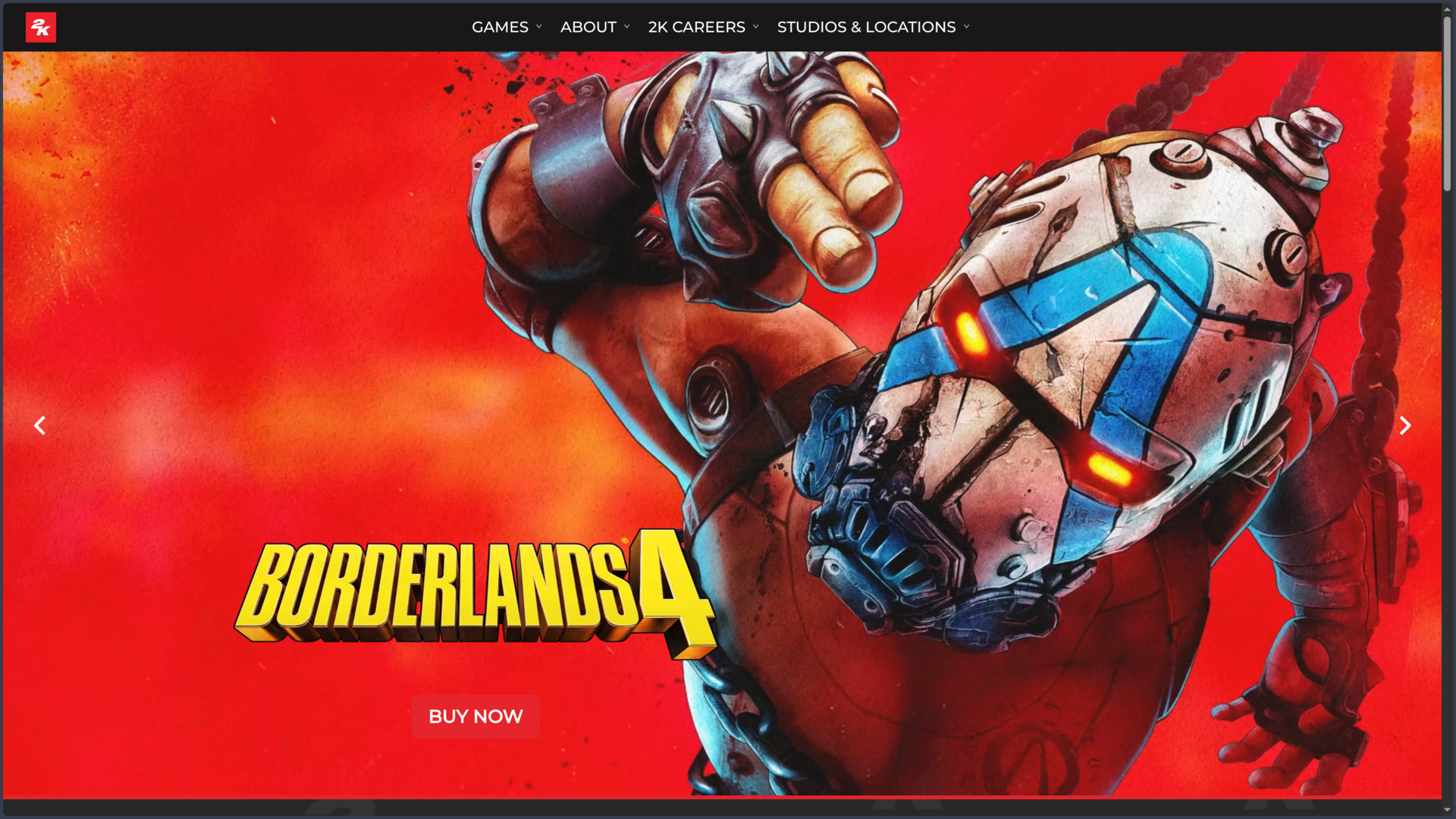
The relationship with Gearbox Software produced another structurally important franchise a few years later. Borderlands, published by 2K in 2009, combined shooting, role-playing progression, cooperation and an immediately recognizable visual identity. Gearbox remained outside Take-Two at the time, but the collaboration continued across several installments and became one of the longest-running publishing relationships in 2K’s catalogue.
The development of Mafia followed yet another path. The property, originating with Illusion Softworks and later 2K Czech, was gradually entrusted to Hangar 13, a studio formed during the 2010s. Here again, the continuity of a franchise depended less on an unchanging team than on the publisher’s ability to organize its transfer and development across different structures.
Franchises operating on different rhythms
During the 2010s, 2K’s identity became clearer precisely because it did not reduce itself to a common aesthetic. Its major series follow several different timeframes.
NBA 2K, developed by Visual Concepts, follows a regular cycle closely tied to the professional sports calendar. The publisher also expanded its sports activities through WWE 2K, golf and the return of TopSpin. In these productions, annual or regular continuity, official licenses and associated services play an essential role.
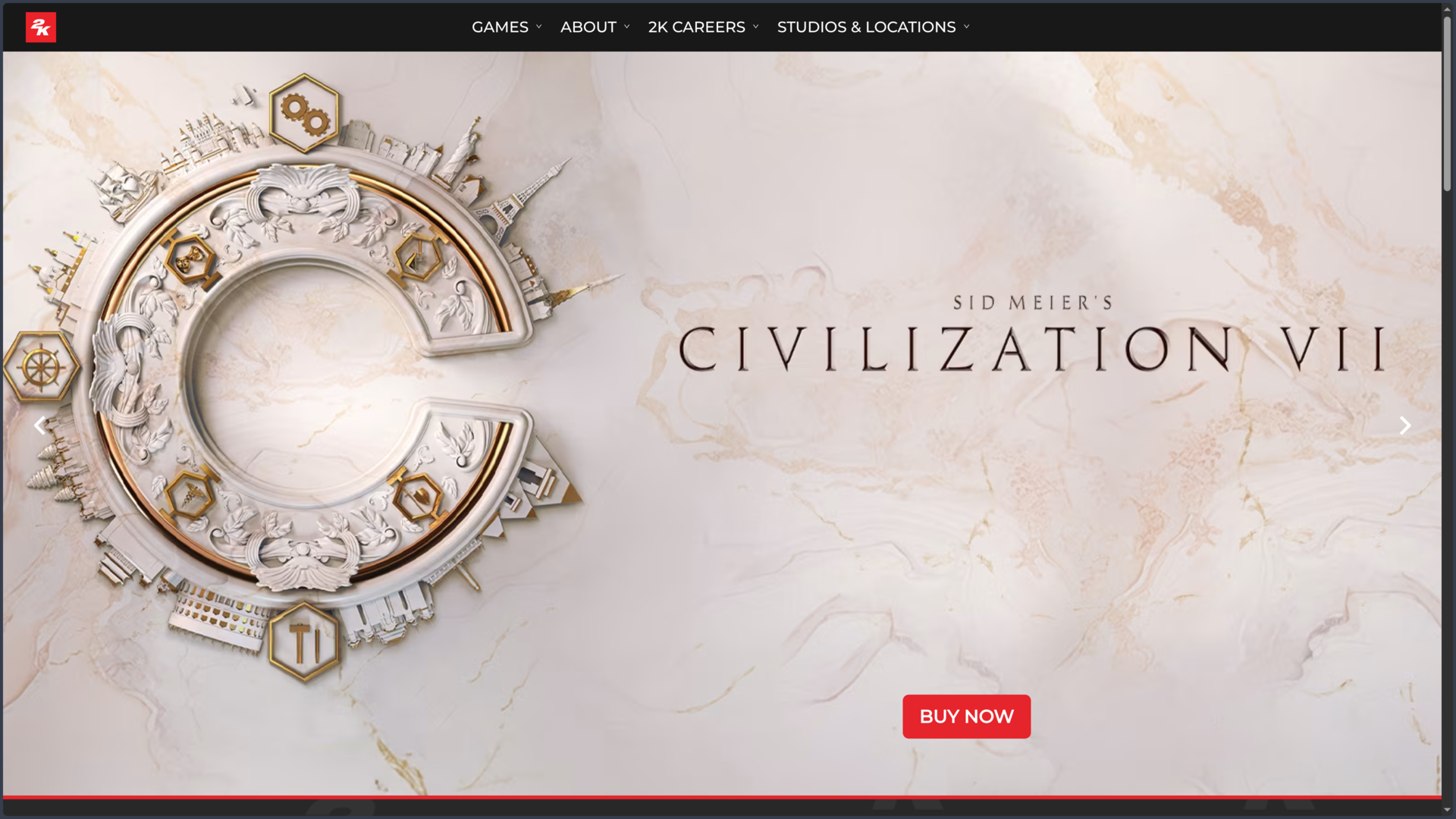
By contrast, Civilization operates on much longer cycles. Firaxis can spend several years designing a new installment, while expansions and updates extend each generation. With XCOM, the studio also developed another strategic family, giving 2K a group of games in which systemic depth occupies a central place.
BioShock, Mafia and Borderlands follow still other rhythms. A property may remain without a major new installment for several years, change development studios or require the creation of an entirely new team. The creation of Cloud Chamber to work on a new BioShock illustrates this ability to build a structure around a property rather than forcing its return into the schedule of an existing studio.
This diversity is one of the essential differences between 2K and a traditional developer. The publisher does not seek to produce the same kind of experience every year. It simultaneously organizes recurring sports franchises, long-gestating strategy games, narrative productions and projects based on external licenses.
Building and integrating studios
2K’s growth has not been limited to acquiring properties. The publisher has also developed or integrated studios serving different needs. Hangar 13 was structured around large-scale narrative productions. Cloud Chamber was created to continue the BioShock universe. 31st Union emerged as a new studio tasked with developing new properties, while HB Studios strengthened 2K’s activities in golf.
This organization does not mean that each studio is interchangeable. On the contrary, their identities remain distinct enough that the developer’s name regularly appears alongside 2K when games are presented. The publisher is the level connecting these teams, organizing investment and supporting properties; it does not replace their individual histories.
The integration of Gearbox Entertainment in 2024 represents a particularly significant step. 2K and Gearbox had worked together for nearly twenty years, especially around Borderlands. When Take-Two acquired Gearbox, this long-standing publisher-partner relationship became an internal relationship within the same group. The transaction also brought additional properties to Take-Two and strengthened 2K’s development network.
The change was important without altering the label’s fundamental logic. Gearbox did not simply become a creative extension of 2K: the studio retained its own identity, while the publisher gained an internal partner with an established production culture, teams and properties.
What sets it apart
Making several gaming cultures coexist
The most visible characteristic of 2K is the distance between the different creative cultures present within its portfolio. Part of its activity is based on sports, another on strategy, and another on shooters, action or narrative experiences. Searching for a single “2K formula” shared by the gameplay of NBA 2K, Civilization and BioShock would therefore make little sense.
The coherence lies elsewhere: in the ability to maintain several pillars, each with its own specialists. Visual Concepts does not need to work like Firaxis, and Firaxis does not need to reproduce the culture of Gearbox or Hangar 13. The differences between these teams are not a problem that the organization needs to erase; they are precisely the reason for keeping them identifiable as separate studios.
This structure also prevents 2K from depending on a single genre or calendar. While a sports franchise may operate on a regular cadence, a major strategy or action production may require several years. These rhythms complement one another rather than overlap.
Franchises built for the long term
Several 2K properties have now existed long enough for their management to extend far beyond simply launching a new installment. Civilization, NBA 2K, BioShock, Mafia and Borderlands each possess their own history, including changes in technical generations, studios, audiences and distribution models.
The publisher’s role then becomes determining how to sustain a property without necessarily producing it continuously. BioShock can experience a long period between major releases. Civilization can evolve through generations separated by several years. NBA 2K, by contrast, follows the regular renewal of a sports season. Mafia can change development structures while preserving its identity as a series.
This variety requires 2K to adapt the support of each franchise to its nature rather than applying a single cycle across the entire catalogue. The longevity of its properties therefore becomes as much an organizational question as a production one.
A clear boundary between publishing and creation
2K’s catalogue also demonstrates why it is important to distinguish the publisher from the studio actually developing the game. Civilization VII is a Firaxis Games production. The main NBA 2K games are developed by Visual Concepts. Mafia is associated with Hangar 13. Borderlands carries the culture of Gearbox. This attribution is not a minor detail: it explains how 2K functions.
The publisher provides a shared level of publishing, marketing, brand management and production support, but the studios retain the specialized expertise that gives each work its particular character. A franchise can therefore be closely associated with 2K without every creative decision originating directly from the publisher.
This distinction also allows 2K to work with studios it does not own. Its history includes many external collaborations, some temporary and others sufficiently durable to become structural. The long-standing relationship with Gearbox before its integration into Take-Two is the clearest example.
Between owned properties and external licenses
Finally, 2K builds its portfolio from two different resources: properties controlled within Take-Two and licenses belonging to external partners.
Franchises such as BioShock, Borderlands, Mafia and Civilization give the group considerable ability to determine their long-term evolution. Alongside them, NBA 2K, WWE 2K and PGA TOUR 2K depend on relationships with sports organizations and must represent competitions, brands and athletes that exist outside video games.
These two models impose different responsibilities. An internal property can be put on hold, transferred to a new team or developed in new directions. A sports license must, in parallel, maintain a relationship with its partner, follow the real-world evolution of the sport and meet the expectations of an audience that directly compares the game with an existing competition.
2K’s ability to maintain these two logics within the same organization explains much of its current profile. The label is neither exclusively the owner of its fictional worlds nor simply an operator of licensed brands: it has developed through the balance between these two forms of catalogue.
Good to know
- 2K was created in January 2005 within Take-Two Interactive.
- Its creation followed the acquisition of Visual Concepts and Kush Games, two studios closely associated with the 2K sports series.
- 2K Sports existed from the creation of the label as its division dedicated to sports games.
- Take-Two secured rights related to Civilization in 2005 and acquired Firaxis Games later that same year.
- Irrational Games joined 2K’s development network in 2006 before the release of BioShock in 2007.
- 2K and Gearbox Software began their relationship around Borderlands before Gearbox ultimately joined Take-Two and 2K in 2024.
- 2K’s current portfolio notably covers sports, strategy, action, shooters and narrative productions.
- 2K is headquartered in Novato, California, while its studios and offices are distributed across several countries.
- The publisher is part of Take-Two Interactive, alongside the group’s other major development and publishing organizations.