In Sid Meier's Civilization VII, the player takes control of a historical leader and builds an empire meant to endure across several major periods of human history. From Antiquity to the Modern Age through the Exploration Age, each transition reshapes the economic, scientific, cultural and military possibilities of the campaign. The leader remains at the center of this long journey, while the civilization they represent can evolve from one Age to the next depending on the decisions made and the paths unlocked during the game.

Video game
2025
Historical
Simulation
Strategy
Tactical
Sid Meier's Civilization VII
- 2K Publisher
- Firaxis Games Developer
Build an empire across three Ages, evolve your civilization and adapt your strategy to the transformations of history.
Details
- Type
- Video game
- Release
- 2025-02-11
- Genres
- Historical, Simulation, Strategy, Tactical
- Platforms
- PlayStation 5, PlayStation 4, Xbox Series, Xbox One, Nintendo Switch, PC, Mac, Linux, Nintendo Switch 2
- Game modes
- Single player, Multiplayer
Synopsis
Sid Meier's Civilization VII
Trailer
Watch the trailer
Overview
Presentation
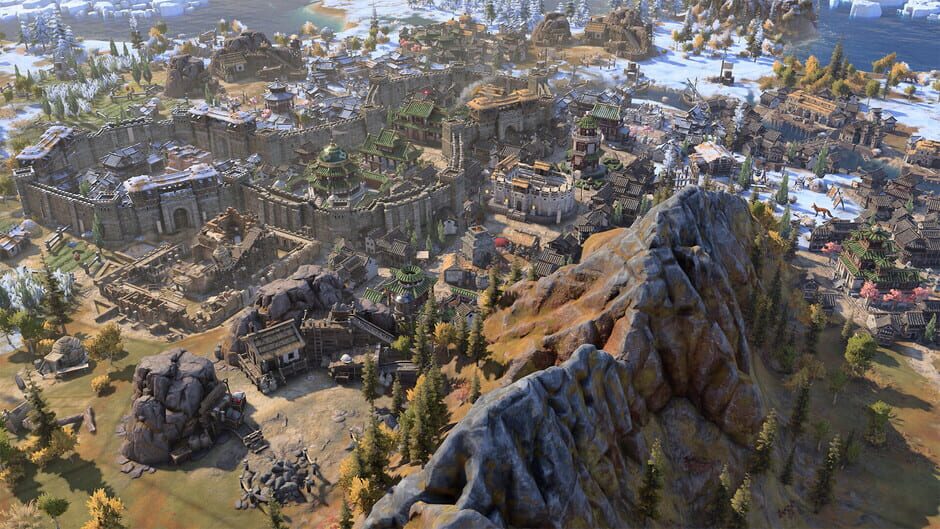
Sid Meier's Civilization VII continues the series' turn-based strategy formula: explore the world, develop settlements, exploit resources, research new technologies, maintain diplomatic relations and compete with other powers to build a lasting empire.
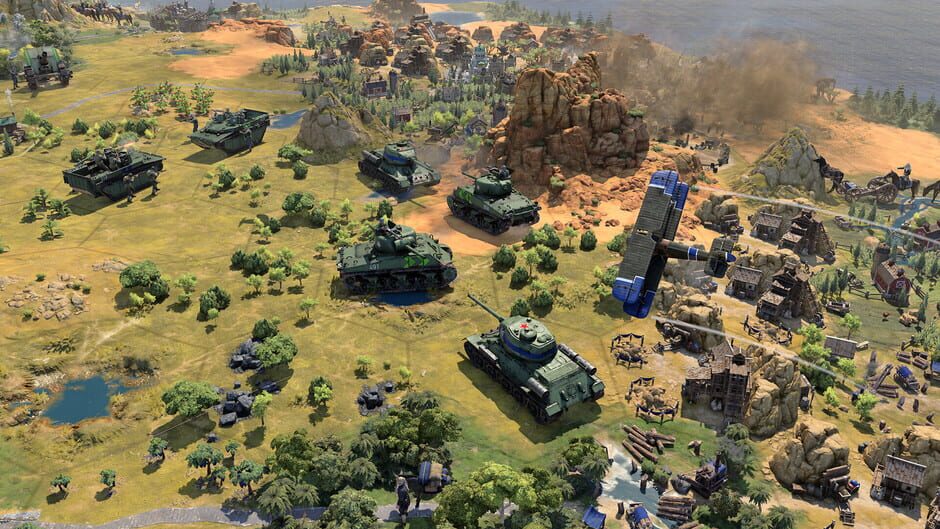
Its main evolution is built around the three Ages that now structure a campaign: Antiquity, Exploration and Modern. Each period has its own civilizations, technologies, civics, units, buildings, resources and gameplay systems.
When moving into a new Age, the player chooses a new civilization to continue the story of their empire. The available options depend in part on the previous civilization, the selected leader and certain actions completed during the game. The same empire can therefore follow several historical or alternative paths.
The leader, however, remains present throughout the entire campaign. For the first time in the series, leaders are selected independently from civilizations, allowing different historical figures to be paired with different cultures. Their attributes can also progress over the course of the game.
Each Age offers several Legacy Paths tied to the main economic, military, scientific and cultural directions. Reaching their objectives grants advantages and influences the transition into the next period.
The end of an Age is also marked by a Crisis that gradually affects every empire. These events introduce new constraints and force players to temporarily adapt their strategy before entering the next period.
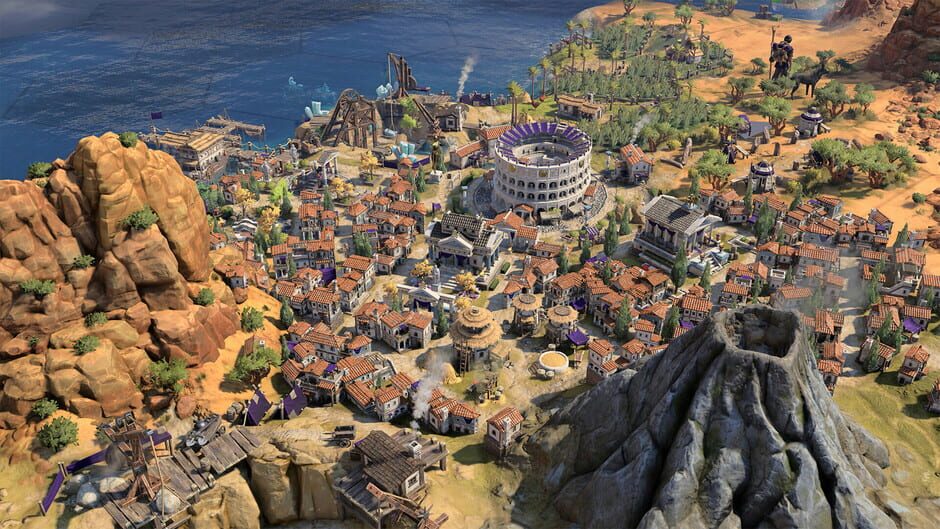
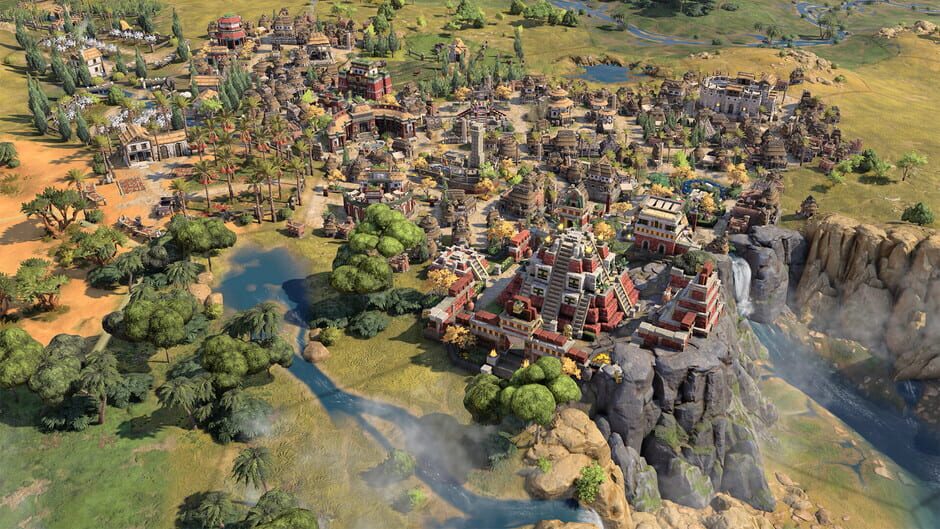
Territorial development still revolves around cities and settlements, but several systems have been reorganized to reduce repetitive management. Buildings are integrated directly into urban districts, while certain constructions, traditions and wonders can retain their importance across the Ages.
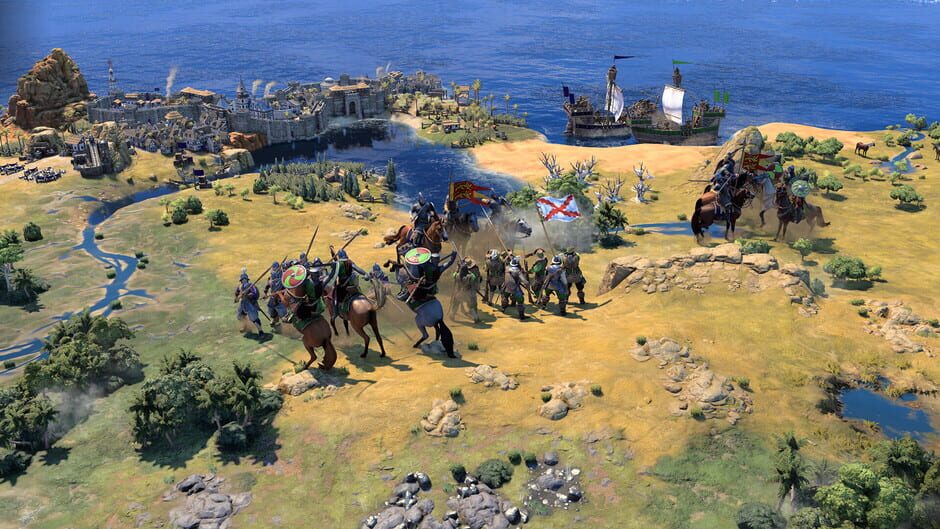
Combat notably introduces Commanders, military units capable of grouping several troops together to simplify movement. They gain experience and promotions, then deploy their forces on the battlefield. Their progression is preserved during Age transitions.
Diplomacy relies on an Influence resource used to negotiate agreements, support joint initiatives, apply pressure or develop relations with independent powers present on the map.
Key points
- A turn-based 4X strategy game.
- A campaign divided into Antiquity, Exploration and Modern.
- Each Age has its own civilizations, units and technologies.
- The civilization can change during an Age transition.
- The leader remains the same throughout the campaign.
- Leaders and civilizations can be selected independently.
- Legacy Paths structure the objectives of each period.
- Crises occur at the end of Ages.
- Commanders group armies and gain experience.
- Influence plays a central role in diplomacy.
- Exploration, science, economy, culture and warfare remain the main development pillars.
Conclusion
Sid Meier's Civilization VII preserves the series' traditional objective — developing an empire across the centuries — while significantly changing the way that progression is structured.
The three Ages divide the campaign into more distinct stages, each with its own challenges, while changing civilizations allows the same empire to evolve instead of keeping a completely fixed identity from beginning to end.
Persistent leaders, crises, Legacy Paths and commanders therefore place greater emphasis on transitions and adaptation while preserving the major economic, scientific, cultural, diplomatic and military components of Civilization.
Good to know
Sid Meier's Civilization VII was developed by Firaxis Games and published by 2K.
The game was released on February 11, 2025 for PlayStation 4, PlayStation 5, Xbox One, Xbox Series X|S, Nintendo Switch, Windows, macOS and Linux.
A Nintendo Switch 2 Edition was later released on June 5, 2025.
The campaign can be played solo offline. Online multiplayer features require an Internet connection.
The game supports cross-platform multiplayer on compatible platforms, with some limits on match size depending on the version and Age.
Players can also use a 2K Account to share progression across compatible platforms.
Several updates and additional content releases have been published since launch. This entry focuses on the core structure of Civilization VII and the systems that define its campaign, without separately detailing every civilization, leader or additional content release.