












Overview
20th Century Studios is an American film studio founded in 1935 following the merger of Fox Film Corporation and Twentieth Century Pictures. Long known as 20th Century Fox, it has belonged to The Walt Disney Company since 2019 and is now one of the main production labels within Walt Disney Studios.
Its history covers a large part of the development of modern Hollywood cinema.
During the golden age of the studio system, the company produced major musicals, dramas, historical epics and adventure films. It later accompanied technological changes in cinema with CinemaScope, took part in the rise of the modern blockbuster and gradually built a catalog containing some of the most famous franchises in popular cinema.
Planet of the Apes, Alien, Predator, Die Hard, X-Men, Kingsman and Avatar are among the universes closely associated with the studio.
Its history also includes major films such as The Grapes of Wrath, All About Eve, The Sound of Music, Star Wars, Titanic and Avatar, along with many other works that defined their eras.
Following its acquisition by Disney in 2019, the studio abandoned the 20th Century Fox name and became 20th Century Studios in 2020. This new identity clearly separates the studio from today’s Fox Corporation, which brings together television, news and sports operations that remained independent from Disney.
In 2026, 20th Century Studios continues to operate in cinemas and on streaming platforms, while drawing on its extensive heritage and developing both original films and new generations of its historic franchises.
History
1935 — The merger of Fox Film and Twentieth Century Pictures
20th Century-Fox Film Corporation was officially created on May 31, 1935 through the merger of two companies.
The first, Fox Film Corporation, had been developed around entrepreneur William Fox and already possessed major production and theater infrastructure.
The second, Twentieth Century Pictures, had been founded in 1933 by Joseph M. Schenck and Darryl F. Zanuck and had quickly established itself through several ambitious productions.
The merger therefore combined Fox’s infrastructure with the creative and commercial experience of the Twentieth Century Pictures team.
Darryl F. Zanuck became one of the central figures of the new studio and played a major role in defining its identity over the following decades.
20th Century-Fox quickly joined the ranks of the major Hollywood studios of the golden age.
The 1930s-1940s — Establishing itself among the major studios
During its early years, the studio developed a highly diverse slate.
Musicals, social dramas, historical adventures, war films and star-driven productions followed one another.
The Grapes of Wrath, directed by John Ford in 1940 and adapted from John Steinbeck’s novel, became one of the most important films of this period.
The studio worked with many stars and helped shape the careers and public images of figures such as Shirley Temple, Tyrone Power, Betty Grable and Gene Tierney.
This strategy allowed 20th Century-Fox to consolidate its place within the classical Hollywood studio system.
The 1950s — CinemaScope and large-format spectacle
The arrival of television pushed studios to find new ways to attract audiences to theaters.
20th Century-Fox played an important role in this transformation through the commercial development of CinemaScope, a process that allowed much wider images to be projected.
The Robe, released in 1953, became the studio’s first major film presented in the format.
CinemaScope was quickly used for historical epics, musicals and large-scale adventures whose visual scope clearly distinguished the theatrical experience from home television.
This innovation became one of the studio’s most important technical contributions to film history.
The 1960s — Cleopatra, financial crisis and The Sound of Music
The early 1960s were marked by one of the most famous and difficult productions in Hollywood history: Cleopatra.
Starring Elizabeth Taylor and Richard Burton, the film suffered enormous budget overruns and seriously weakened the studio’s finances despite substantial box-office revenue.
20th Century-Fox was forced to reduce production and sell some of its assets.
A few years later, The Sound of Music, released in 1965, became an enormous worldwide success.
The film contributed significantly to the company’s financial recovery and became one of the most famous musicals in American cinema history.
1968 — Planet of the Apes launches a lasting franchise
In 1968, the studio released Planet of the Apes, adapted from Pierre Boulle’s novel.
The film depicts a society dominated by intelligent apes and ends with one of the most famous images in science-fiction cinema.
Its success quickly led to several sequels, followed by television series and new adaptations.
Decades later, the franchise would undergo several cinematic revivals, including a new series beginning with Rise of the Planet of the Apes in 2011.
Planet of the Apes thus became one of the most enduring properties in the history of 20th Century.
1977 — Star Wars transforms the industry
In 1977, 20th Century-Fox distributed Star Wars, written and directed by George Lucas.
The project was considered risky at the time, but its success exceeded every expectation.
Star Wars became a worldwide cultural phenomenon and helped profoundly transform the economics of American cinema, particularly around blockbusters, merchandising and franchises.
The studio also distributed The Empire Strikes Back and Return of the Jedi, although Lucasfilm retained a distinctive role in the ownership and production of the saga.
The historic association between Fox and the original Star Wars films remained visible for decades through the famous logo and fanfare that preceded the movies.
1979 — Alien redefines science-fiction horror
Two years after Star Wars, 20th Century-Fox released Alien, directed by Ridley Scott.
The film combines science fiction, horror and a confined-space thriller around the crew of the Nostromo facing an extraterrestrial creature.
Its aesthetic, environments and the design of the Xenomorph built around the work of H. R. Giger gave it an instantly recognizable identity.
The franchise later expanded with Aliens, Alien 3, Alien Resurrection, crossovers with Predator and new films and series.
Alien became one of the most important pillars of the studio’s catalog.
The 1980s — Predator, Die Hard and a change of ownership
During the 1980s, the studio developed several new franchises.
Predator, released in 1987, introduced the extraterrestrial hunter that would lead to numerous sequels, crossovers and adaptations.
In 1988, Die Hard helped reshape the action genre around the character of John McClane and became the starting point of another enduring franchise.
At the same time, the studio’s ownership structure changed.
In the mid-1980s, Rupert Murdoch and his group took control of the company, which gradually became part of the News Corporation media empire.
The name also evolved: the historic hyphen in Twentieth Century-Fox disappeared, giving way to Twentieth Century Fox and later the commonly used 20th Century Fox.
The 1990s — Titanic, animation and international expansion
The 1990s saw the studio further strengthen its catalog.
In 1997, 20th Century Fox participated with Paramount in Titanic, directed by James Cameron.
The film became a worldwide phenomenon, won eleven Academy Awards and established a new historical record at the global box office.
The studio also expanded its animation activities, notably through its relationship with Blue Sky Studios, whose films such as Ice Age would later become major franchises within the Fox group.
This period also saw the rise of other labels connected to the group, including Fox Searchlight, which specialized in more independent productions and would later follow a distinct path under Disney.
2000 — X-Men contributes to the superhero revival
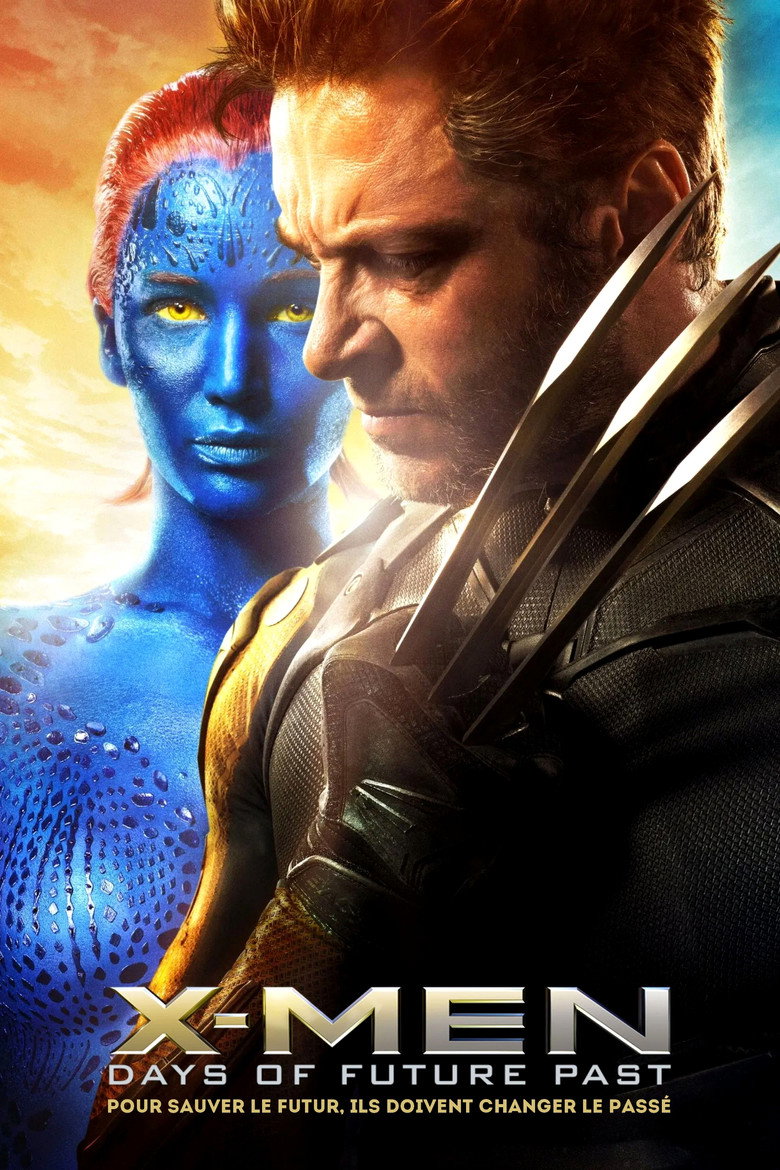
In 2000, X-Men brought Marvel Comics’ mutant universe to the big screen.
Its success, together with Blade and soon Spider-Man, contributed to the long-term return of superheroes to Hollywood cinema.
20th Century Fox then developed a franchise including numerous sequels, prequels and spin-offs centered especially on Wolverine and Deadpool.
For nearly twenty years, the film rights to the X-Men and Fantastic Four were therefore an important part of the relationship between Fox and Marvel.
Disney’s acquisition of 21st Century Fox would later fundamentally change this situation by bringing these characters under the same corporate group as Marvel Studios.
2009 — Avatar establishes a new global benchmark
Another major milestone came with Avatar, written and directed by James Cameron.
Released in 2009, the film made extensive use of performance capture and 3D projection to create the world of Pandora.
Its success was exceptional.
Avatar became the highest-grossing film in worldwide box-office history, a position it would retain or regain depending on re-releases and changes in the rankings.
The franchise became one of the studio’s most important assets.
Avatar: The Way of Water continued the saga in 2022, followed by Avatar: Fire and Ash in 2025.
2013 — From News Corporation to 21st Century Fox
In 2013, News Corporation separated its operations.
The film and television activities, including 20th Century Fox, joined the newly created 21st Century Fox, while a new News Corp mainly retained publishing and newspaper operations.
During this period, the studio continued to exploit its major franchises while producing new films.
Titles such as The Martian, The Revenant, Deadpool, Logan and The Greatest Showman notably marked the final years before the Disney acquisition.
2019 — Disney acquires 21st Century Fox
On March 20, 2019, The Walt Disney Company completed its acquisition of most of the assets of 21st Century Fox.
The transaction notably included 20th Century Fox, Fox Searchlight, several television operations, FX and National Geographic.
Some activities were not part of the deal: Fox News, Fox Sports, the Fox network and several local stations were grouped separately within the new Fox Corporation.
20th Century Fox therefore joined Walt Disney Studios with a catalog spanning several decades and franchises including Avatar, Alien, Predator and Planet of the Apes.
The transaction also brought Disney the film assets connected to the X-Men, Fantastic Four and Deadpool, facilitating their eventual integration with Marvel Studios.
2020 — 20th Century Fox becomes 20th Century Studios
In 2020, Disney retired the 20th Century Fox name in favor of 20th Century Studios.
The change notably helped distinguish the film studio now owned by Disney from Fox Corporation, the independent company that continued using the Fox name for its television, news and sports operations.
The famous Art Deco monument, searchlights and fanfare nevertheless remained at the center of the studio’s visual identity.
The change of name therefore represented more of a brand evolution than a break with the company’s history.
The 2020s — Keeping the heritage alive under Disney
Under Disney, 20th Century Studios continues to develop several of its historic universes.
Kingdom of the Planet of the Apes continued the revived franchise in 2024.
Alien: Romulus brought the Alien saga back toward its horror roots the same year.
The Predator franchise also entered a new period with Prey, followed by Predator: Killer of Killers and Predator: Badlands.
The Avatar films meanwhile remain among the most ambitious productions associated with the studio.
20th Century also develops original projects and adaptations that do not rely solely on its older franchises.
In 2026 — A historic studio still active
In 2026, 20th Century Studios remains one of the active labels within Walt Disney Studios.
Disney clearly distinguishes it from Searchlight Pictures, which is more focused on auteur cinema and specialized productions.
20th Century retains a broader identity, capable of producing blockbusters, genre films, literary adaptations, thrillers, comedies and projects intended for streaming.
Its recent catalog includes titles such as Avatar: Fire and Ash, Predator: Badlands, The Devil Wears Prada 2, The Dog Stars and Whalefall.
More than ninety years after the 1935 merger, the studio therefore continues operating under its third major identity: Twentieth Century-Fox, 20th Century Fox and now 20th Century Studios.
What sets it apart
One of Hollywood’s historic pillars
20th Century Studios belongs to the generation of major studios that shaped the American film industry during Hollywood’s golden age.
Its history spans more than nine decades and crosses nearly every major transformation in American cinema: the rise of widescreen formats, the decline of the classical studio system, the emergence of the blockbuster, the development of franchises, digital filmmaking, streaming and the consolidation of major media groups.
This historical continuity is one of its defining characteristics.
An exceptional science-fiction catalog
Few major studios possess so many major franchises directly associated with science fiction.
Planet of the Apes, Alien, Predator and Avatar represent four very different visions of the genre, alongside many other films produced or distributed throughout the studio’s history.
The company has therefore repeatedly accompanied the evolution of special effects, from makeup and physical creatures to performance capture and digital environments.
Franchises able to reinvent themselves across generations
Several of the studio’s properties have demonstrated exceptional longevity.
Planet of the Apes, launched in 1968, continues to receive new films more than half a century later.
Alien and Predator, launched in 1979 and 1987 respectively, also remain active.
The ability to reinterpret an established universe for new generations while preserving its identity is now an important part of 20th Century’s catalog.
One of cinema’s most recognizable visual identities
The monumental structure bearing the studio’s name, illuminated by powerful searchlights, is one of the most recognizable logos in film history.
The famous fanfare associated with the logo further strengthens that identity.
Despite changes in ownership and the transition from Fox to Disney, these elements were retained when the company became 20th Century Studios.
They provide an immediate sense of continuity between the different eras of the company.
A catalog extending far beyond franchises
Although Avatar, Alien and Planet of the Apes occupy major places in its identity, the studio’s history cannot be reduced to franchises.
The Grapes of Wrath, All About Eve, The Sound of Music, Patton, The French Connection, Titanic, Fight Club, Cast Away, The Martian and The Revenant illustrate the diversity of films associated with the company.
This range allows the studio to retain a generalist identity, unlike companies more heavily specialized in a specific genre or production model.
An identity now separate from Fox Corporation
The 2020 name change also reflects an unusual corporate situation.
The historic studio descended from Fox now belongs to Disney, while the Fox brand continues to exist within a different company, Fox Corporation.
20th Century Studios and Fox Corporation should therefore no longer be viewed as divisions of the same group.
Removing the word Fox from the studio name helps make that separation clearer.
Good to know
- 20th Century-Fox Film Corporation was founded on May 31, 1935 through the merger of Fox Film Corporation and Twentieth Century Pictures.
- Darryl F. Zanuck played a central role in developing the new studio.
- 20th Century-Fox became one of the major studios of Hollywood’s golden age.
- The studio helped popularize CinemaScope during the 1950s, notably with The Robe.
- Cleopatra severely weakened the company’s finances in the early 1960s.
- The success of The Sound of Music in 1965 later helped restore its financial position.
- Planet of the Apes began in 1968 and became one of the longest-running franchises in the catalog.
- The studio distributed the original Star Wars in 1977, as well as the next two films in the original trilogy.
- Alien began in 1979, Predator in 1987 and Die Hard in 1988.
- Rupert Murdoch and News Corporation took control of the studio in the mid-1980s.
- Titanic, co-produced with Paramount and released in 1997, became one of the biggest successes in film history.
- X-Men, released in 2000, launched a major series of Marvel films at Fox.
- Avatar, released in 2009, became the highest-grossing film in worldwide box-office history.
- In 2013, the studio joined 21st Century Fox following the restructuring of News Corporation.
- Disney completed its acquisition of 21st Century Fox on March 20, 2019.
- The studio adopted the name 20th Century Studios in 2020.
- 20th Century Studios, owned by Disney, should not be confused with today’s Fox Corporation.
- Disney currently presents Avatar, Alien, Planet of the Apes, Predator, Die Hard and Kingsman among the studio’s emblematic franchises.
- In 2026, 20th Century Studios remains an active film label within Walt Disney Studios, producing projects for both theaters and streaming.