PANACHES Culture · Works

Book — PANACHES Culture

Discover films, animation, series, anime, documentaries, live, manga, BD, comics, books, games, music, then explore their associated studios, tools and articles.

23 works

Nagarjuna: Fundamental Verses of the Middle Way
Book

Nagarjuna: Fundamental Verses of the Middle Way

Nāgārjuna subjects fundamental concepts to rigorous criticism and shows that no phenomenon has an independent existence. Emptiness refers to dependent arising and opens the Middle Way.

  • Philosophy
🇮🇳 India
Nagarjuna: The Book of Fortune
Book

Nagarjuna: The Book of Fortune

Addressed in the form of advice, this text links ethical conduct, discernment and the path towards awakening. Nāgārjuna presents a wisdom that can be practised at the heart of existence.

  • Philosophy
🇮🇳 India
Nagarjuna: Verses from the Center
Book

Nagarjuna: Verses from the Center

These verses set out the Middle Way by dismantling fixed oppositions between being and non-being. They invite us to understand emptiness without turning it into another substantial doctrine.

  • Philosophy
🇮🇳 India
Napoleon Hill : A Year of Growing Rich
Book 1993

Napoleon Hill : A Year of Growing Rich

A fifty-two-step program, one per week, to clarify its objectives, build confidence and gradually apply the principles of success developed by Napoleon Hill.

  • Essay
  • Self-help
🇺🇸 United States
Napoleon Hill : Master Your Mind
Book

Napoleon Hill : Master Your Mind

Napoleon Hill presents a method of transforming an ambition into a concrete project. From his exchange with Andrew Carnegie, he shows how to develop a creative vision, discipline his thinking, set specific goals and organize his ideas to make effective decisions.

  • Essay
  • Self-help
🇺🇸 United States
Napoleon Hill : Success Through a Positive Mental Attitude
Book 1959

Napoleon Hill : Success Through a Positive Mental Attitude

Napoleon Hill and W. Clement Stone show how a positive mental attitude, coupled with specific goals and persevering action, can turn difficulties into opportunities for progress.

  • Essay
  • Self-help
🇺🇸 United States
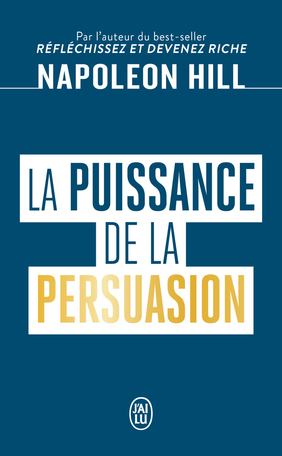
Napoleon Hill : The Power of Persuasion
Book 1970

Napoleon Hill : The Power of Persuasion

Napoleon Hill presents persuasion as a skill based on attitude, clarity of purpose, and ability to mobilize others. The book proposes principles to recognize opportunities, take advantage of setbacks, and bring a group into a common vision.

  • Essay
  • Self-help
🇺🇸 United States
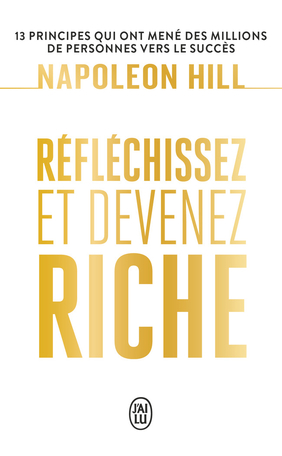
Napoleon Hill : Think and Grow Rich
Book

Napoleon Hill : Think and Grow Rich

They hold in their hands the absolute classic of professional and personal success. For more than twenty years Napoleon Hill has studied the richest and most influential people of his time – industrialists, inventors and entrepreneurs – to understand what lies behind every great success. He has thus discovered the secret of success, which owes nothing to chance. From his investigation this book, which brings toget…

  • Essay
  • Self-help
🇺🇸 United States
Napoleon Hill : Work Miracles
Book

Napoleon Hill : Work Miracles

I wrote this book to help you make sure that life brings you what you want, thanks to a self-discipline system. Discover the principles of the miracles of life through which you can finally enjoy the twelve great riches of existence. By understanding how miracles are born, you will have access to half the password. The other half is already in you. With this book, you will find the necessary teachings to recognize a…

  • Essay
  • Self-help
🇺🇸 United States
Nietzsche : Beyond Good and Evil
Book

Nietzsche : Beyond Good and Evil

"Perhaps the time is very near when we will see that the cornerstone of the sublime and unconditioned buildings that dogmatic philosophers were no longer to raise was at the bottom only popular superstition coming from an immemorial time (like the superstition of the soul which, becoming superstition to the subject and to the self, continues to this day (i) the creation of wrongs, (ii) any puncture of words, perhaps…

  • Essay
  • Philosophy
🇩🇪 Germany
Nietzsche : Daybreak
Book

Nietzsche : Daybreak

In Aurore (1881), Nietzsche continued the undertaking of radical criticism of the morals begun in Human, too human, and thus laid the foundations for a philosophical project whose last works, from Par-surpasse to Ecce homo, would be crowned. The philosopher imposes himself here as a worker of darkness, drilling the bottom of civilization to reveal the more or less noble origins of ideals, beliefs and morals, undermi…

  • Essay
  • Philosophy
🇩🇪 Germany
Nietzsche : Human, All Too Human
Book

Nietzsche : Human, All Too Human

When it was published in 1878, Human, too human, left readers perplexed: we do not recognize the author of The Birth of Tragedy. Yet, the break between the two works is not as radical as we wanted to think. Rather, it is a profound and decisive self-assertion movement that manifests itself in this new book. Freed from his past influences, Nietzsche reinvests his questions on a new mode and, in doing so, consolidates…

  • Essay
  • Philosophy
🇩🇪 Germany
Nietzsche : On the Genealogy of Morality
Book

Nietzsche : On the Genealogy of Morality

"How much blood and horror at the bottom of all the good things!" writes Nietzsche. The Genealogy of Morality applies this disacralizing principle: the moral ideal (ascetic) now has a price, payable "in the pound of flesh". "Modern" men, of "progress", have here a mirror for their prohibitions, their impotences and their misunderstandings: the mevery of democratic consensus, the morale of the flock, the sad passions…

  • Essay
  • Philosophy
🇩🇪 Germany
Nietzsche : On the Invention of Morality
Book 1887

Nietzsche : On the Invention of Morality

The "good", the "bad": these "values", which influence our thoughts, our judgments and our actions, seem obvious to us, even natural. Wrongly, Nietzsche tells us. These are in fact habits that have been instilled in us, since ancient times, by the most cruel punishments. Worse: far from being a mark of evolved humanity, they are the symptom of a civilization sick of its morals. In Nietzsche's eyes, the real culprit …

  • Essay
  • Philosophy
🇩🇪 Germany
Nietzsche : On Truth and Lies in a Nonmoral Sense
Book

Nietzsche : On Truth and Lies in a Nonmoral Sense

In parallel with the writing of his first book, The Birth of Tragedy, Nietzsche is investigating a second problem: the status of the true. The text he then wrote, From Truth and Lie in the Extra-Moral sense, leads to the most radical intellectual upheaval ever developed in philosophy: the questioning of the idea of objective truth, and the identification of illusion as the very condition of life. It is therefore the…

  • Essay
  • Philosophy
🇩🇪 Germany
Nietzsche : Second Untimely Meditation
Book

Nietzsche : Second Untimely Meditation

Nietzsche's Second Untimely Consideration is a violent polemic address against the society of his time, where he sees an era and culture dedicated to "historical illness." "We live in an era in danger of death for the major reason that it idolaters history. To get rid of this cult is to regain the pressing demand of life and to give it right, is to plead again for an artistic conception of life. Analysing the histor…

  • Essay
  • Philosophy
🇩🇪 Germany
Nietzsche : The Birth of Tragedy
Book

Nietzsche : The Birth of Tragedy

Published in 1872, The Birth of Tragedy is the birth certificate of a philosopher convinced that only confrontation with what is foreign to us gives us access to ourselves. By questioning the genesis of the ancient tragedy from the impulses of the Apollolinian and the Dionysiac, Nietzsche sheds light on the sense of pessimism inherent in presocratic Greece. This "pessimism of force", lucid as to the painful nature o…

  • Essay
  • Philosophy
🇩🇪 Germany
Nietzsche : The Gay Science
Book

Nietzsche : The Gay Science

To question the fanaticism of the truth that governs philosophy, to recognize life alone as the source of all value, independence for the supreme virtue of the philosopher, and to seek an unprecedented reconciliation of art and science: this is the meaning of gay knowledge for Nietzsche. Published in 1882, this book is republished and expanded in 1887.It implements the main themes of Nietzsche's thinking, including …

  • Philosophy
🇩🇪 Germany
Nietzsche : The Philosopher's Book
Book

Nietzsche : The Philosopher's Book

"No one now knows what a good book looks like," Nietzsche writes in The Book of the Philosopher. From this aborted project, a vast exposition of the relations of philosophy to art, science and civilization, there are studies whose fragmentary character does not shock the spirit of Nietzschean l'élan. Historical Milestones faced with the mirror of interpretation and program for the philosophy of tomorrow marry in a o…

  • Essay
  • Philosophy
🇩🇪 Germany
Nietzsche : Thus Spoke Zarathustra
Book 1998

Nietzsche : Thus Spoke Zarathustra

That a Goethe, that a Shakespeare cannot breathe for a moment in this atmosphere of passion and altitude, that Dante, near Zarathustra, be only a believer, and not someone who begins by creating the truth, a spirit that governs the world, a destiny – may the poets of Veda be priests and not even worthy to undo the Zarathustra's shoes, that is still only a litot and gives no idea of the distance, the Azurean solitude…

  • Philosophy
🇩🇪 Germany
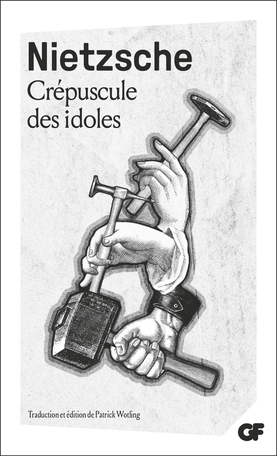
Nietzsche : Twilight of the Idols
Book

Nietzsche : Twilight of the Idols

"The fastest and most thorough introduction to my philosophy. I do not think it is possible to give more substance in such a small space." Nietzsche thus presents the Twilight of Idols. Written in 1888, when the first testimonies of international recognition appear, this book is designed to offer the most effective way of access to the understanding of its main "philosophical heterodoxys" and the originality of its…

  • Essay
  • Philosophy
🇩🇪 Germany
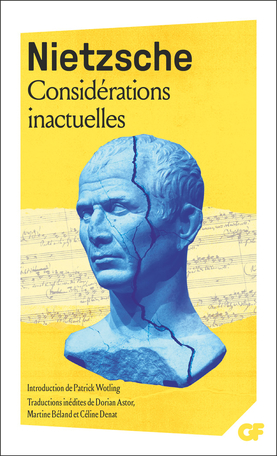
Nietzsche : Untimely Meditations
Book

Nietzsche : Untimely Meditations

From this project of a life will result four writings: David Strauss, the confessor of the faith and the writer, The advantages and disadvantages of history for life, Schopenhauer educator and Richard Wagner in Bayreuth, where the philosopher denounces the evil symptoms of German culture, in which Schopenhaer and Wagner are exceptions and offer counter-models. At the beginning of the 1870s, young Nietzsche envisaged…

  • Essay
  • Philosophy
🇩🇪 Germany
Notes from an underground
Book

Notes from an underground

"I am a sick man... I am a mean man. A rather repulsive man. I think I have the liver sick. By the way, I don't understand anything about my illness and I don't know exactly what hurts me." In a "infected" room that he designates as his "hole," a former civil servant of forty years old is plunged into a state of suffering that paradoxa-ly limits to enjoyment. As opposed to the man of action, direct and spontaneous, …

  • Novel
  • Philosophy