Overview
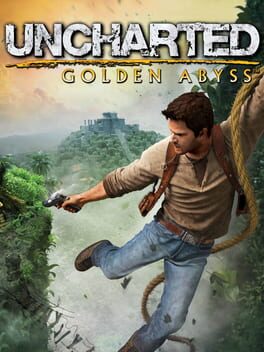
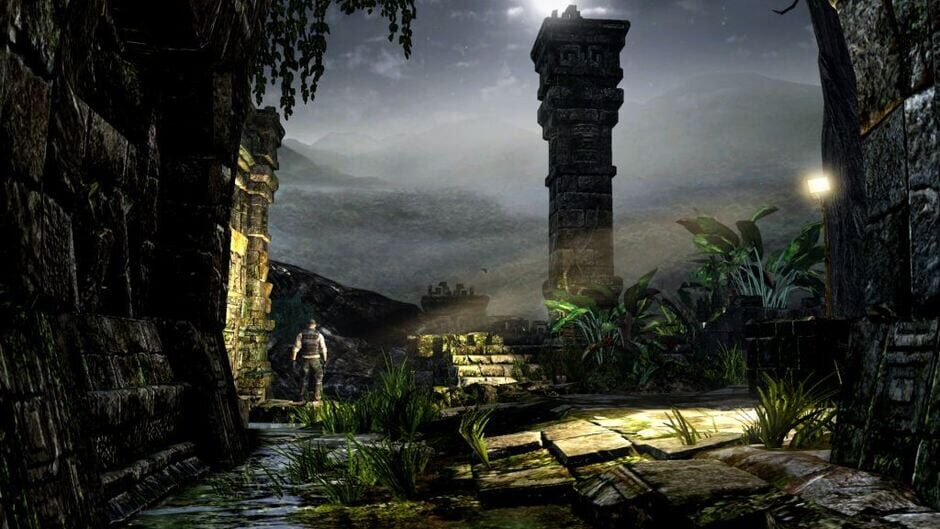
Uncharted: Golden Abyss sets its adventure before the events of Uncharted: Drake’s Fortune and brings Nathan Drake into an archaeological investigation connected to the conquistadors, the Sete Cidades and the legends of the Seven Cities of Gold. The investigation pairs Nathan with Marisa Chase and places their exploration at the center of a conflict involving Jason Dante and Roberto Guerro.
Developed by SCE Bend Studio and published by Sony Computer Entertainment, the game was released on December 17, 2011. The platform listed in this entry is PS Vita. The associated genres are action, adventure, FPS and platformer. The specified game mode is Single player.
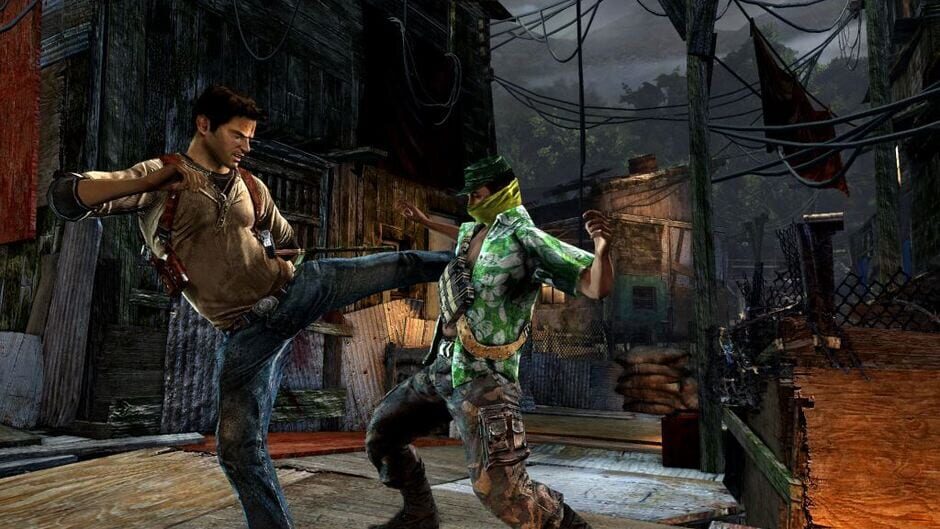
Golden Abyss retains the main elements of the Uncharted experience: exploration of ruins, climbing, platforming sections, puzzles, artifact hunting and armed combat. Its structure remains organized around narrative progression through successive levels rather than an open environment.
Its main distinction comes from its use of PS Vita-specific controls. The two analog sticks retain traditional control over movement and aiming, while the touchscreen, rear touch pad and motion sensors are integrated into different actions.
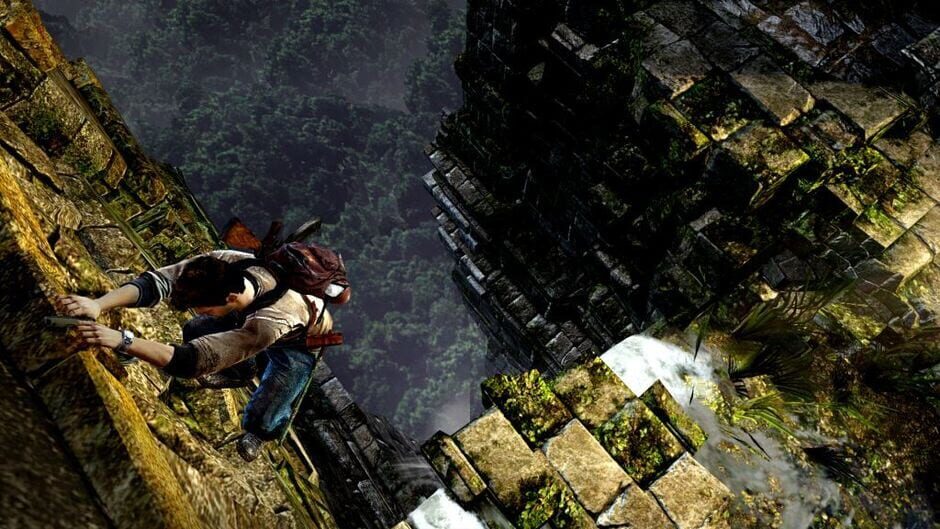
During climbing, the player can use traditional controls or draw a path directly on the touchscreen between several handholds. Nathan then performs the movements corresponding to the indicated route. Certain crossings, jumps and interactions with obstacles also make use of the touchscreen.
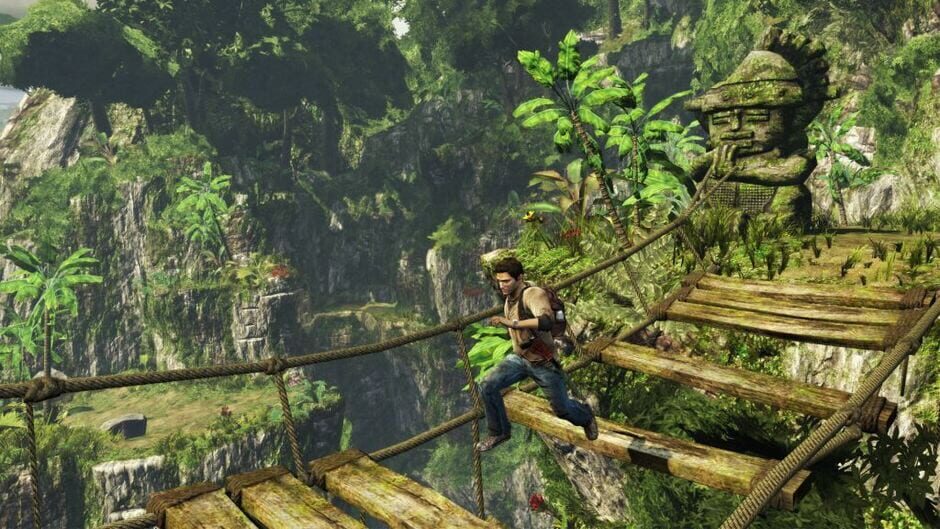
Ropes also support several control methods. They can be manipulated using traditional controls, touch input or motion sensors depending on the required action, allowing the game to alternate between analog control and interactions specific to the handheld system.
Aiming benefits from the Intu-Aim system. The analog sticks remain at the center of control, but the PS Vita’s gyroscope can be used to make small corrections by slightly tilting the console. This function therefore complements analog aiming rather than replacing it.
Touch controls also come into play during certain combat encounters. Several contextual actions and melee sequences use gestures performed on the screen, while grenade throws can be aimed by directly adjusting their trajectory with a finger.
Golden Abyss also expands Nathan’s archaeological exploration. The player discovers treasures, artifacts and clues that do more than simply fill a collection: several sets can be used to reconstruct Mysteries connected to the locations, characters and events encountered during the adventure.
Some discoveries must be documented through photography. The console can then be moved like a camera to adjust the framing, once again using its motion sensors. Other archaeological objects require rubbings performed directly on the touchscreen in order to reveal their inscriptions or patterns.
This structure gives optional objects a greater role than in progression focused solely on the main campaign. Side paths and less obvious areas can conceal photographs, rubbings, artifacts, treasures and elements associated with the different Mysteries.
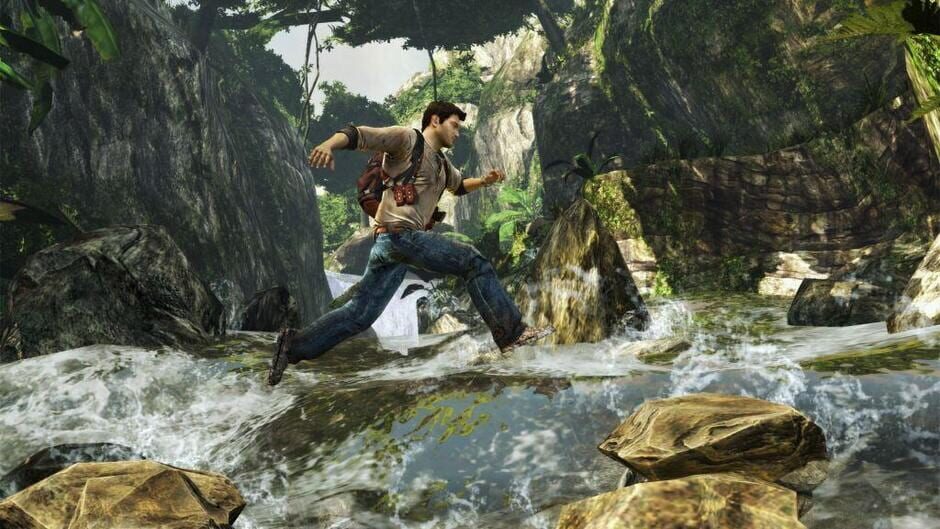
Platforming sequences remain directly tied to Nathan’s usual movements: climbing walls, crossing gaps, moving along ledges and using ropes. Touch functions then provide an alternative or complementary method for performing some of these actions.
Golden Abyss therefore adapts the Uncharted structure to a handheld console without reducing it to a simple conversion of the existing installments. The adventure remains built around a combination of exploration, platforming, combat and puzzles, but uses the PS Vita’s hardware features to change the way players aim, climb, examine and document discoveries.
Key takeaways
- Golden Abyss takes place before Uncharted: Drake’s Fortune and follows Nathan Drake on a new archaeological investigation.
- The investigation notably focuses on the Sete Cidades and the legend of the Seven Cities of Gold.
- The adventure combines exploration, platforming, puzzles and combat.
- The touchscreen can be used to draw a climbing route or perform certain interactions.
- The Intu-Aim system combines analog sticks and the gyroscope to refine aiming.
- Touch controls and motion sensors also play a role in certain combat and traversal sequences.
- Exploration allows players to find treasures, artifacts, photographs, rubbings and Mystery elements.
- Photography and the examination of certain discoveries directly use the PS Vita’s specific features.
Conclusion
Golden Abyss retains the fundamental structure of Uncharted while adapting it to the possibilities of the PS Vita. Climbing, exploration, puzzles and combat remain at the center of the adventure, but several of these actions can now be performed through touch controls or motion sensors.
These features are particularly involved in how the environment is examined. Photographs, rubbings and Mystery collections give archaeological discoveries a more substantial mechanical role beyond the treasures collected during progression.
The game also retains analog controls for its main actions and notably uses the gyroscope as a complement to aiming. Golden Abyss therefore distinguishes itself less by transforming the Uncharted formula than by adapting that formula to the PS Vita’s different methods of interaction.
Good to know
- Uncharted: Golden Abyss was released on December 17, 2011.
- The game was developed by SCE Bend Studio and published by Sony Computer Entertainment.
- The listed platform is PS Vita.
- The associated genres are action, adventure, FPS and platformer.
- The specified game mode is Single player.
- The story takes place before Uncharted: Drake’s Fortune.
- Golden Abyss notably uses the PS Vita’s touchscreen, rear touch pad and motion sensors.
- The Intu-Aim system allows the gyroscope to be used for small aiming adjustments.