Overview
The Witcher introduces Geralt of Rivia to video games through a situation that allows the player to discover his world alongside him: the witcher has lost almost all of his memories. The attack on Kaer Morhen and the theft of the mutagens then give his journey a clear direction, combining monster hunting, investigation, political conflicts and decisions whose consequences are not always immediately visible.
Developed and published by CD Projekt RED, with Atari, Inc. also listed as a publisher, the game was released on October 26, 2007. The platforms listed in this entry are PC and Mac. The associated genres are action, adventure, fantasy and RPG. The specified game mode is Single player, and the engine used is the Aurora Engine.
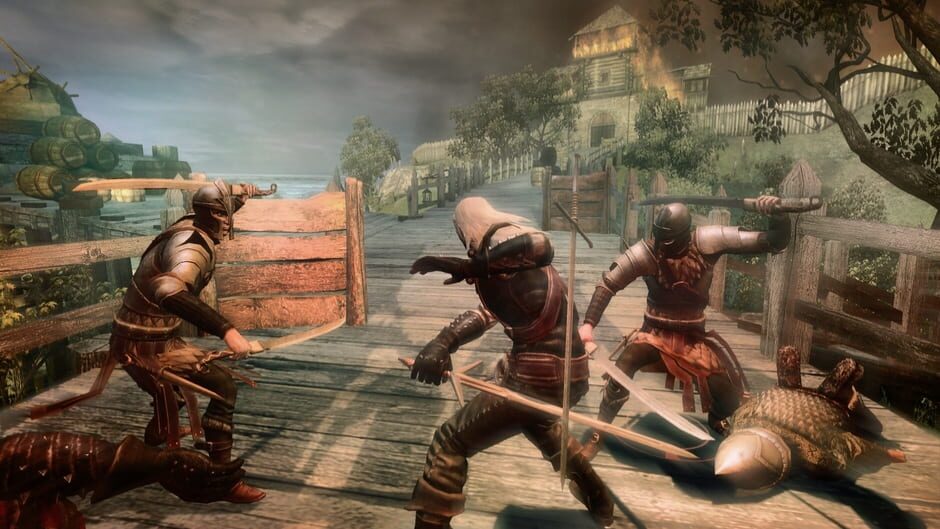
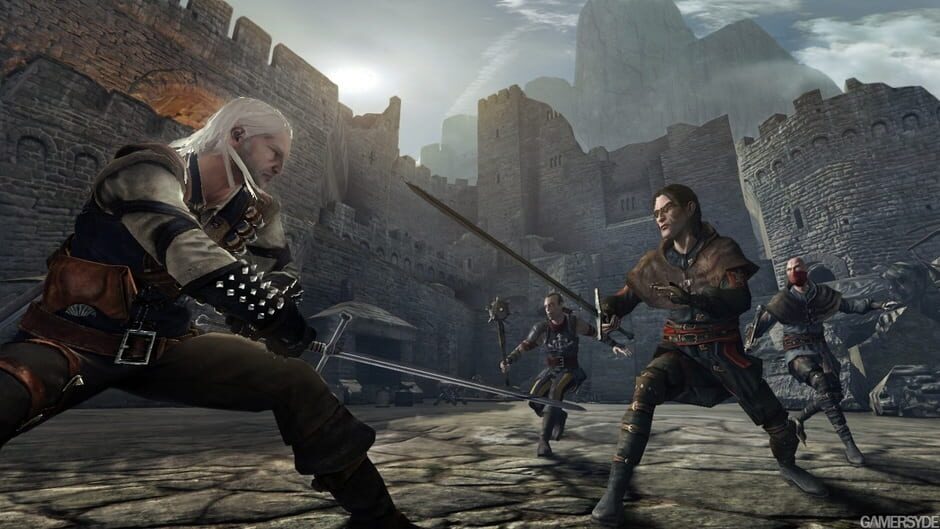
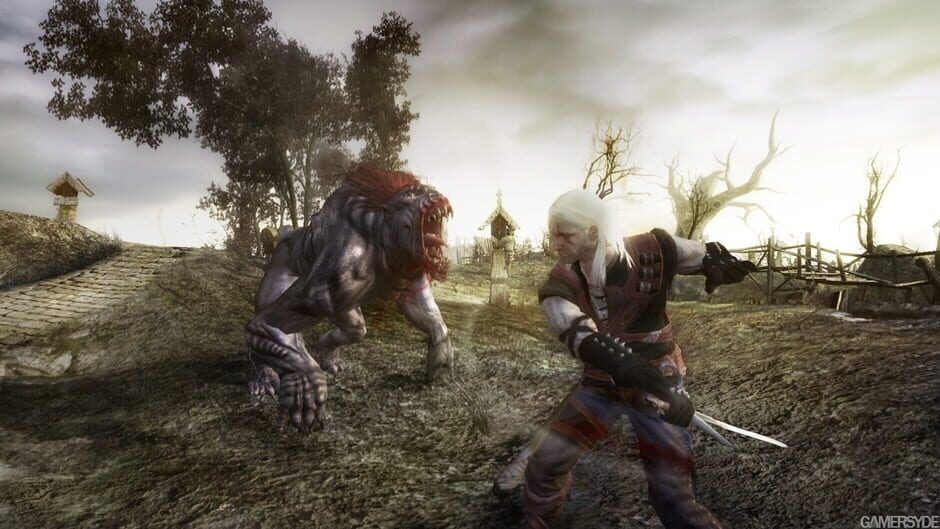
Combat is built around a distinctive system of real-time attack sequences. Geralt does not simply strike by repeatedly using the same command: the player must chain attacks at the right moment in order to continue combinations and maintain their effectiveness.
Three main approaches allow these sequences to be adapted to the enemies encountered. The strong style favors heavy blows against resistant opponents, the fast style targets more agile enemies and the group style uses broader attacks when Geralt is surrounded by several foes.
The witcher’s two swords also serve different purposes. The steel sword is mainly used against humans and ordinary creatures, while the silver sword is intended for monsters and supernatural beings. Each benefits from the different combat styles, requiring the player to select both the appropriate weapon and approach for the target.
Geralt’s abilities extend beyond swordsmanship. Signs are a simplified form of magic used by witchers. Aard can notably push back or unbalance enemies, Igni uses fire, Yrden creates a magical trap, Quen provides protection and Axii affects a target’s mind. Their effectiveness can improve through talents invested in the corresponding skills.
Alchemy plays an equally important role in preparation. Geralt can craft potions with various effects, but consuming them increases his toxicity level. Oils applied to weapons can prepare him for specific encounters, while bombs add further tactical options. Crafting depends on recipes, ingredients and skills acquired through progression.
Meditation supports several of these systems. It notably allows the player to manage certain alchemical preparations and develop Geralt by spending talents earned through progression. The player can therefore invest in attributes, combat styles, Signs and different skills to gradually shape their approach.
Progression offers a particularly broad range of abilities, martial skills and magical powers. Rather than limiting Geralt to a single specialization path, he can be developed around sword combat, Signs, his attributes or several complementary approaches.
The narrative structure also gives an important place to choices and their consequences. Several morally ambiguous decisions can alter later events, and some consequences only become visible long after the initial choice. The game therefore avoids always revealing immediately which decision will lead to which outcome.
Quests can also offer different resolutions and place Geralt between groups whose interests conflict. This structure supports a world where the available answers are not systematically reduced to a clearly good solution and a clearly bad one.
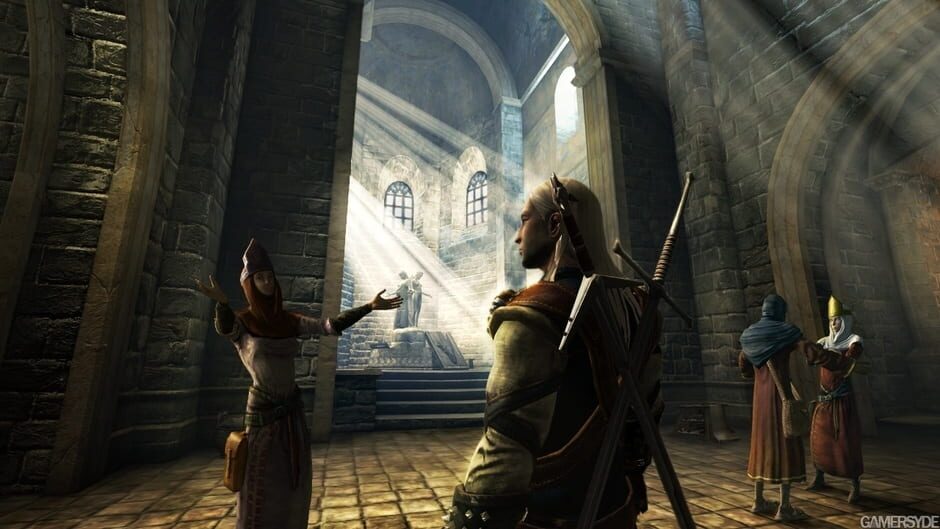
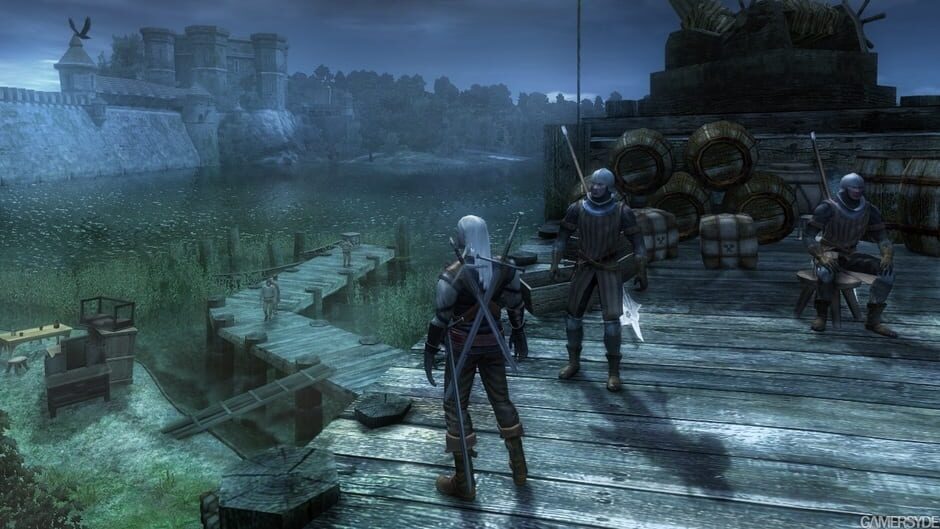
Exploration takes place across several areas unlocked as the story progresses rather than in a fully open world. Vizima and its surroundings occupy an important place in this structure, with different districts, swamps, underground areas and outdoor locations opening according to chapter progression.
The Witcher also offers several camera perspectives. Two isometric views provide a more distant perspective on the action, while a camera positioned behind Geralt brings the game closer to a third-person action RPG.
The first The Witcher therefore establishes several elements that define its own identity: combat based on styles and the rhythm of attack chains, substantial preparation through alchemy, Signs integrated into Geralt’s development and a narrative that can let several hours pass before revealing the consequences of a decision.
Key takeaways
- Geralt begins the adventure with amnesia after being found and brought back to Kaer Morhen.
- The attack on the fortress and the theft of the witcher mutagens begin the search for Salamandra.
- Combat relies on three main approaches: strong style, fast style and group style.
- Geralt switches between a steel sword and a silver sword depending on the nature of his opponents.
- The Signs Aard, Igni, Yrden, Quen and Axii complement sword attacks.
- Alchemy allows Geralt to prepare potions, oils and bombs, with a toxicity system linked to potion consumption.
- Progression develops attributes, combat styles, Signs and different skills through talents.
- Some consequences of choices appear long after the original decision, contributing to the story’s nonlinear structure.
Conclusion
The Witcher builds its gameplay around Geralt’s profession rather than combat based solely on equipment strength. Identifying the opponent, selecting the appropriate sword and style, preparing potions or oils and using Signs all belong to the same logic of preparation.
Its progression also leaves several paths open between swordsmanship, magic and character attributes. The distinctive rhythm of attacks and the three combat styles give the first installment mechanics that differ significantly from those developed later in the series.
The narrative completes this structure by sometimes delaying the effects of decisions made during quests. Combat, alchemy and choices therefore follow the same principle: Geralt regularly has to act without immediately possessing all the information or knowing every consequence of his actions.
Good to know
- The Witcher was released on October 26, 2007.
- The game was developed by CD Projekt RED.
- CD Projekt RED and Atari, Inc. are listed as publishers.
- The platforms listed are PC and Mac.
- The associated genres are action, adventure, fantasy and RPG.
- The specified game mode is Single player.
- The engine used is the Aurora Engine.
- The combat system notably combines two swords, three combat styles, Signs and alchemy.