Presentation
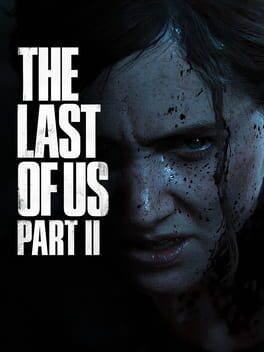
The first The Last of Us asked how far someone could go to protect a person who had become essential. Part II begins when that decision has already produced its consequences.
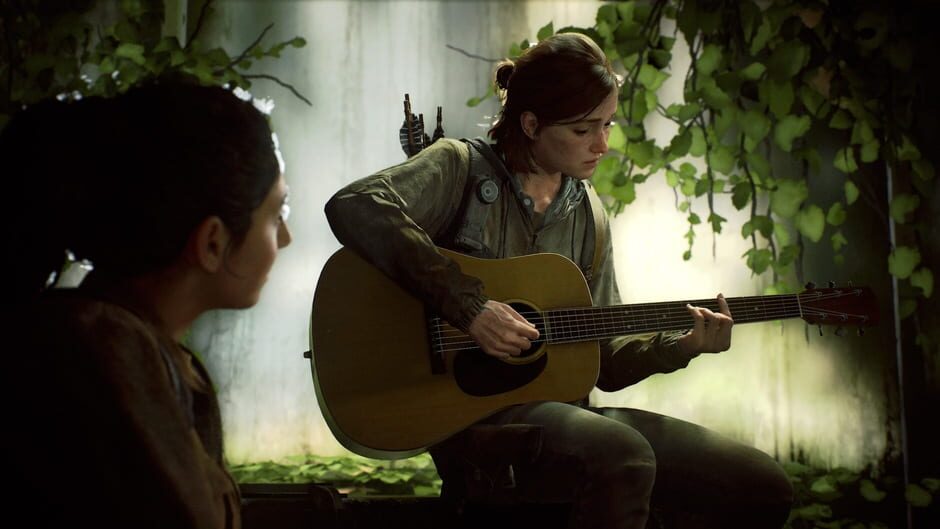
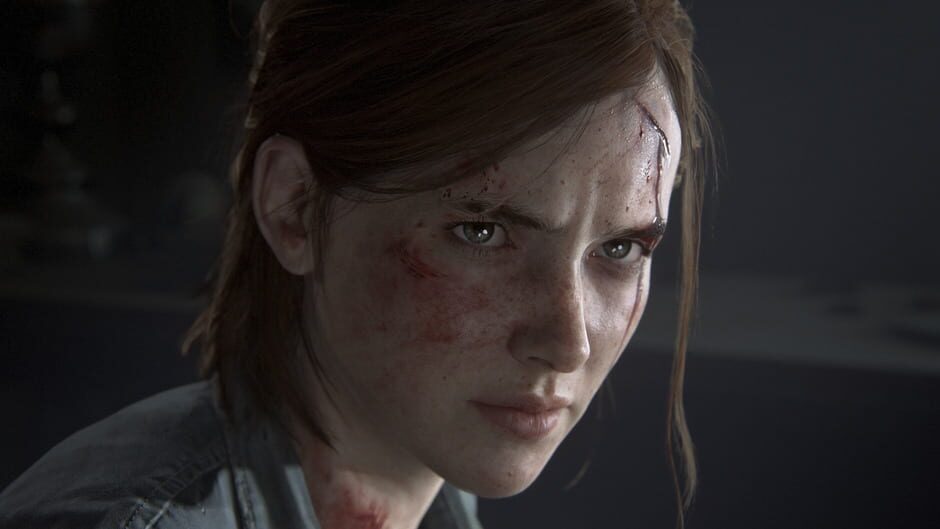
Ellie is no longer the teenager Joel had to escort. Naughty Dog also refuses to rebuild a new adventure around the same duo. The story takes a more conflictual direction and organizes a large part of its point around the gaze the player casts on the characters.
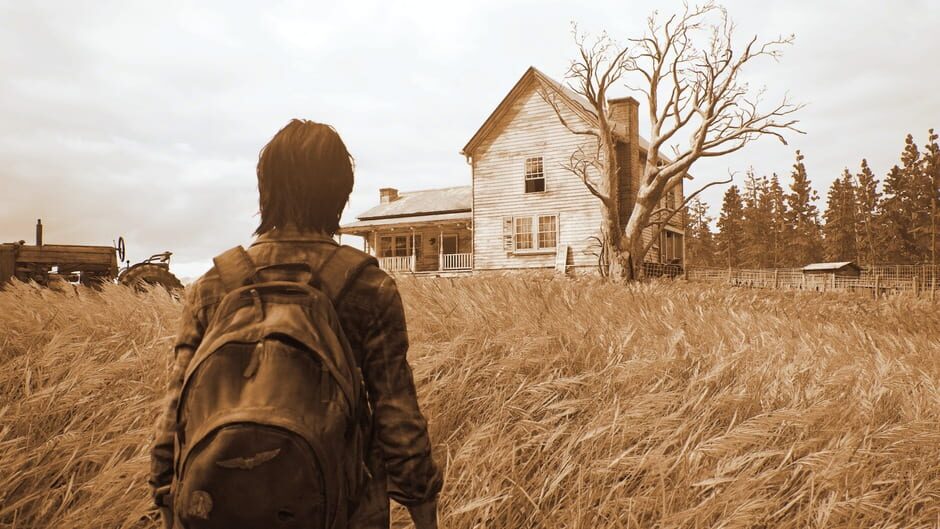
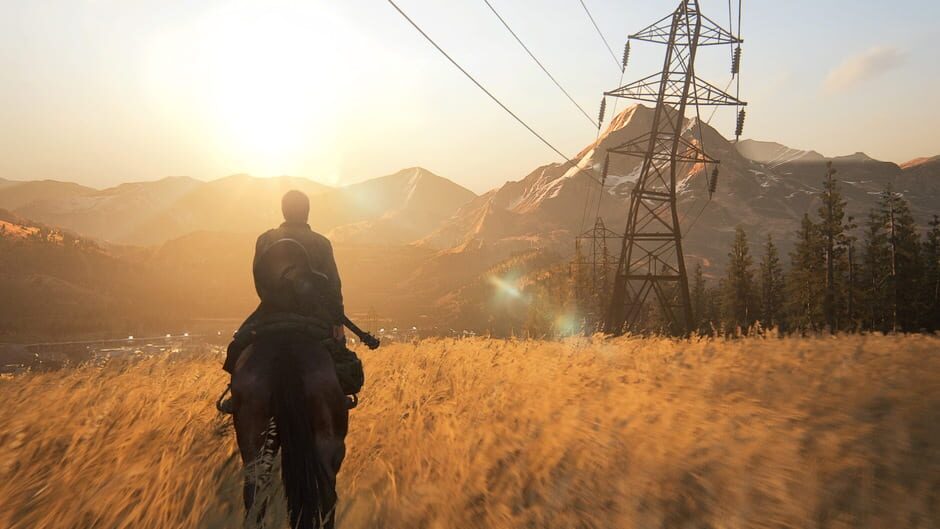
Seattle becomes the main stage of this story. Its flooded streets, wrecked buildings, residential neighborhoods, and forests offer larger spaces than in the first episode without turning the game into a true open world.
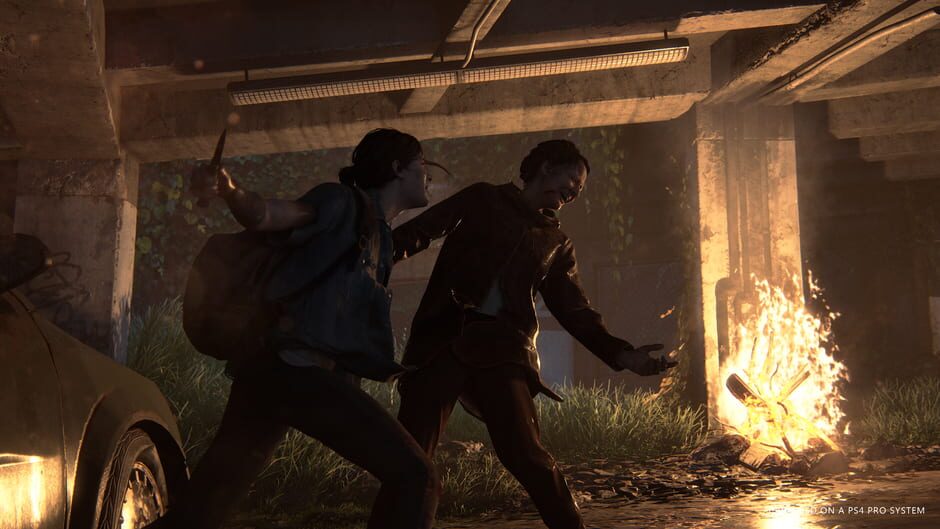
Gameplay especially gains in mobility. Ellie can crawl, dodge, slip under certain obstacles, and make more use of verticality. Melee combat, firearms, crafting, and stealth chain together with much more flexibility, allowing a silent situation to very quickly turn into a confrontation and then into flight.
Enemies reinforce this feeling. They communicate, search for their allies, and sometimes call each other by first name. Dogs can follow the player's tracks, while the spaces offer more possibilities to disappear after being spotted.
But the essential transformation is not mechanical. Part II uses the change of perspective to challenge the reading the player had built of the events. The adventure does not only seek to show what Ellie feels; it gradually confronts this emotion with those of people one would have preferred to keep considering only as obstacles.
Key Takeaways
- The story directly follows from the consequences of the first game, particularly the choices and lies surrounding Joel and Ellie.
- Ellie's revenge is the initial engine of the story, but the game gradually questions its cost.
- Gameplay gains in mobility and flexibility, with more open spaces and less rigid stealth.
- Enemies are more individualized, to make violence less abstract.
- The change of perspective is a central narrative mechanic, forcing the player to reconsider certain characters and events.
- Accessibility plays an important role, with many settings to adapt the experience.
PANACHES Review
The Last of Us Part II does not simply ask the player to watch Ellie take revenge. It asks how long they are willing to consider this revenge legitimate when those on the other side stop being anonymous.
The first episode proceeded almost in the opposite direction. It gradually built attachment to Joel and Ellie until making emotionally understandable a deeply questionable decision.
Part II starts from a very easy emotion to share: anger.
Then it spends a large part of its story dismantling it.
This intent directly crosses combat. Naughty Dog has never made its characters so efficient. Ellie moves quickly, improvises with the environment, disappears in the grass, and can turn a silent infiltration into an extremely brutal confrontation in a few seconds.
But the game refuses to make this efficiency comfortable.
An enemy calls out to someone who no longer answers. A dog has a name. A person met only as an obstacle can reappear later in a completely different context.
The mechanic constantly encourages the player to become better at violence while the story asks him to look at its consequences.
This contradiction is probably Part II's greatest strength.
It also produces some of its limits. The game organizes its parallels and perspective shifts with such precision that one can sometimes feel the mechanics behind the emotion. Naughty Dog clearly wants to shift the player's judgment, and this intent can feel powerful or manipulative depending on how one accepts the device.
The change of point of view remains a particularly risky decision. It forces the player to spend time with characters the story had previously taught them to reject.
And no mechanic can guarantee that empathy will follow.
That is precisely what makes the proposal interesting. Understanding someone does not necessarily mean forgiving them, and the game accepts that some players will never completely change their judgment.
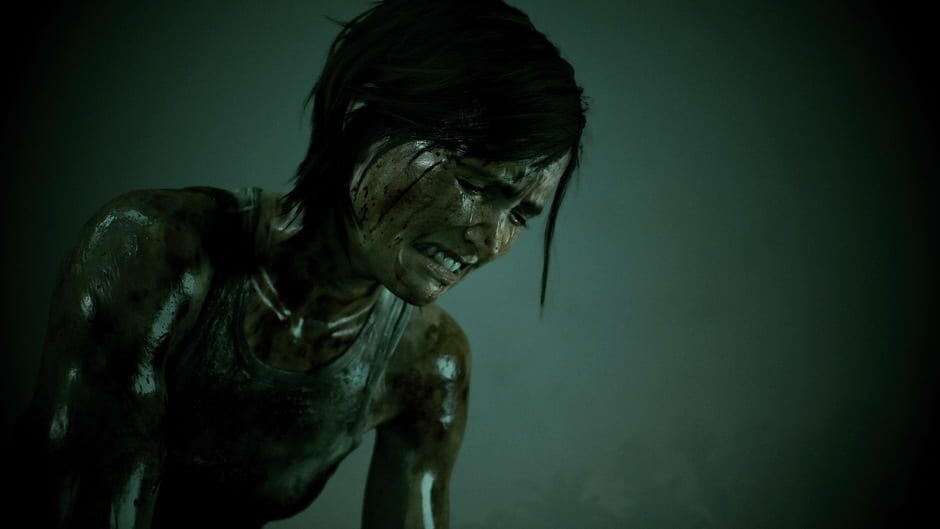
Violence, for its part, keeps a rarely so physical weight. The animations, the sound, and the transitions between stealth and confrontation give the fights a brutality that often leaves the places strangely silent once they are over.
The adventure could probably have been shorter. Its willingness to extensively explore each parallel sometimes ends up dulling the emotional fatigue it seeks to produce.
But this stubbornness also matches its ambition.
The Last of Us Part II prefers risking rejection rather than reproducing the relationship and emotions that made its predecessor work.
It does not seek to offer a new comfortable adventure with Joel and Ellie.
It asks what comes after.
Good to Know
- The Last of Us Part II was released on June 19, 2020 on PlayStation 4.
- The game is developed by Naughty Dog and published by Sony Interactive Entertainment.
- The story takes place five years after the events of the first The Last of Us.
- The experience is designed as an entirely solo adventure.
- The game offered at launch more than sixty accessibility settings.
- The Last of Us Part II Remastered was later released on PlayStation 5, before being adapted to PC.