In Sid Meier's Civilization VI, the player takes control of a historical civilization and guides it from its earliest settlements to the major advances of the modern era. Exploration, scientific research, cultural development, diplomacy, religion and military power gradually shape an empire whose cities expand directly across the map. Facing other leaders and city-states, the player must exploit the territory, choose priorities and pursue one of several paths that can lead their civilization through the centuries and toward victory.
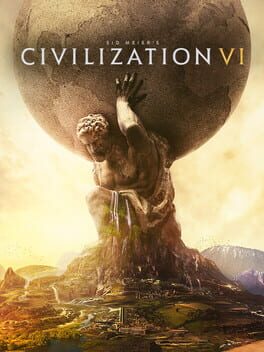
Video game
2016
Fantasy
Historical
Simulation
Strategy
Tactical
4X
Sid Meier's Civilization VI
- 2K Games Publisher
- Aspyr Media Publisher
- Firaxis Games Developer
Guide a civilization through the centuries by developing cities, science, culture, diplomacy, religion and military power.
Details
- Type
- Video game
- Release
- 2016-10-20
- Genres
- Fantasy, Historical, Simulation, Strategy, Tactical, 4X
- Platforms
- PlayStation 4, Xbox One, Nintendo Switch, PC, Mac, Linux, Mobile
- Engine
- Firaxis LORE
- Game modes
- Single player, Multiplayer
Synopsis
Sid Meier's Civilization VI

Trailer
Watch the trailer
Overview
Presentation
Sid Meier's Civilization VI is a turn-based 4X strategy game in which the player leads a civilization from its earliest settlements to the most advanced periods of history. Exploration, territorial expansion, resource exploitation and relations with other powers form the foundations of each game.
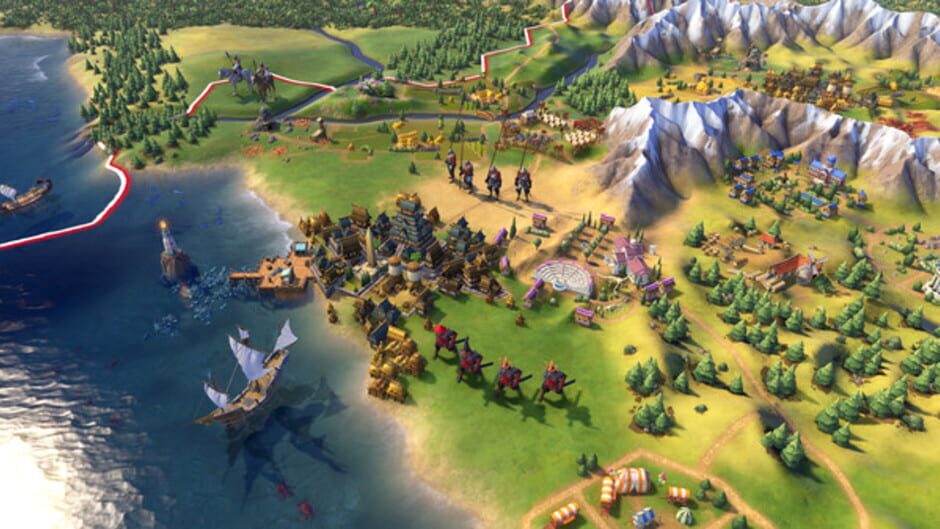
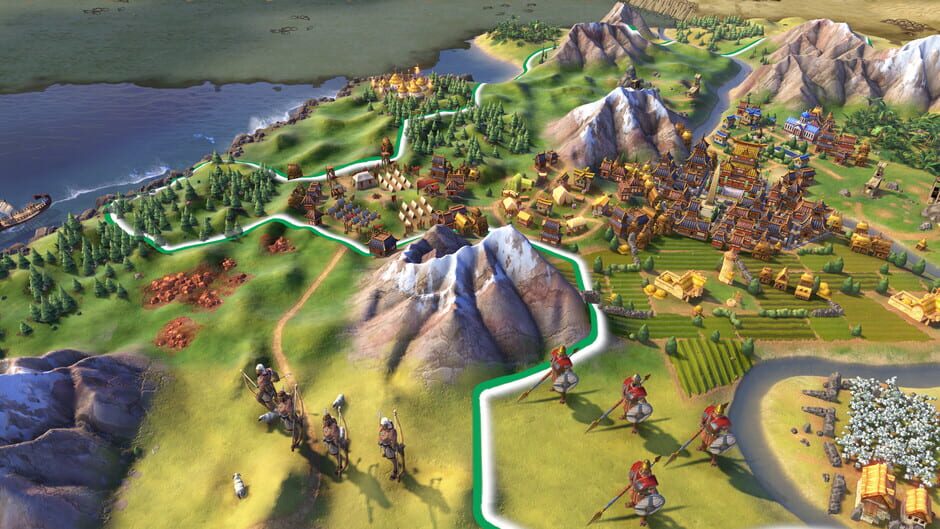
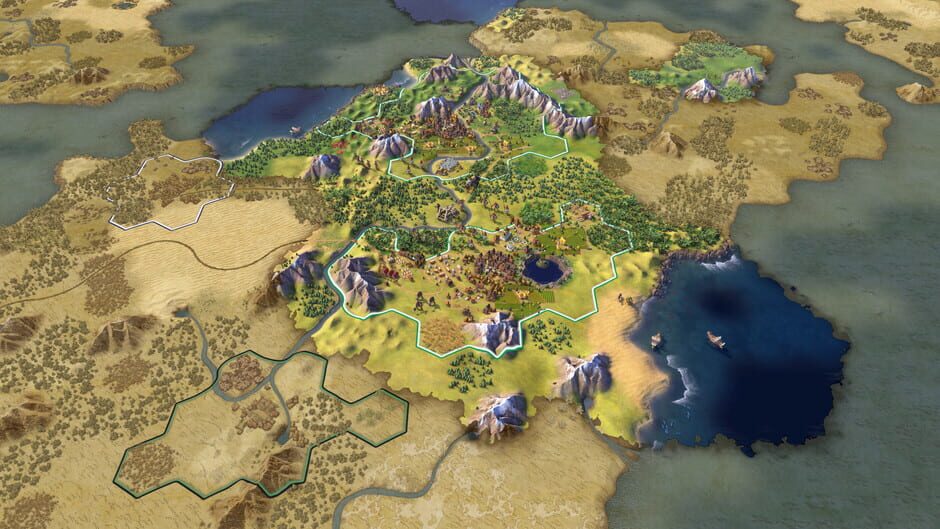
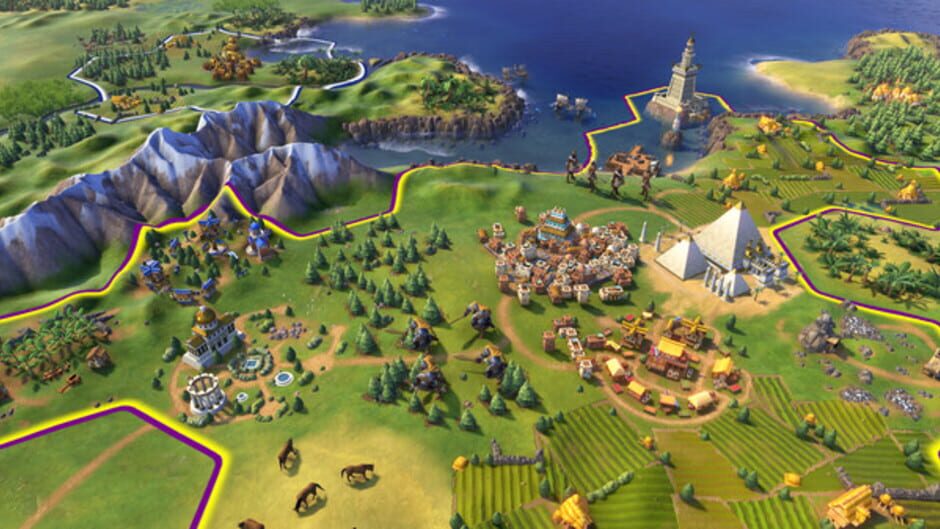
One of its main changes concerns cities, which are no longer concentrated on a single tile. They gradually spread across the surrounding territory through specialized districts dedicated to areas such as science, culture, production, trade or religion.
The placement of these districts therefore becomes an important strategic choice. Terrain, resources and neighboring features can affect their efficiency, forcing players to think about a city's layout long before its development is complete.
Research is divided between a technology tree focused largely on scientific and military advances and a civics tree tied to culture and institutions. Eurekas and Inspirations can speed up their progress when certain actions are completed directly in the world.
The political system is built around different governments with policy slots. Players can install and later replace economic, military, diplomatic or wildcard policies in order to adapt their empire to current priorities.
Diplomacy also evolves over time. Trade relations, alliances, negotiations and rivalries shape interactions with other civilizations, while city-states provide bonuses and can become valuable partners through the envoy system.
Religion forms a complete development system of its own. A civilization can found a faith, select different beliefs and send missionaries or apostles to spread it. Civilization VI therefore introduces a full Religious Victory among its victory conditions.
Military conflicts retain the principle of one main unit per tile, while certain units can be combined or supported by other formations. Terrain, positioning and technological progress therefore play an important role during battles.
Finally, Great People reward civilizations that invest heavily in specific fields. Scientists, artists, engineers, merchants or generals can provide unique abilities and reinforce an existing strategy.
Key points
- A turn-based 4X strategy game.
- A civilization guided from the earliest eras to the modern age.
- Cities that expand directly across the map.
- Specialized districts whose placement affects their efficiency.
- Two parallel progression systems: technologies and civics.
- Eurekas and Inspirations speed up certain research.
- Adaptable governments and policy cards.
- Evolving diplomacy with civilizations and city-states.
- A complete religion system with its own victory condition.
- Great People providing different advantages.
- Several victory paths, including scientific, cultural, military and religious.
Conclusion
Sid Meier's Civilization VI develops the series' traditional formula by placing greater importance on how cities physically occupy the territory.
Districts, terrain bonuses and active research systems encourage players to build an empire according to its environment rather than develop every city according to the same model.
Science, culture, diplomacy, religion and warfare remain closely connected, giving players several ways to develop the same civilization throughout the entire game until one of the available victory conditions is achieved.
Good to know
Sid Meier's Civilization VI was developed by Firaxis Games and published by 2K.
The Windows version was released on October 21, 2016. The game was later adapted for other platforms, including macOS, Linux, iOS, Nintendo Switch, PlayStation 4 and Xbox One.
The Nintendo Switch version was released on November 16, 2018, while the PlayStation 4 and Xbox One versions followed in November 2019.
Two major expansions significantly expand its systems: Rise and Fall notably introduces loyalty, governors and Golden or Dark Ages, while Gathering Storm adds natural disasters, climate change and new diplomatic mechanics.
Additional content was also released through individual packs, the New Frontier Pass and the Leader Pass. The Civilization VI Anthology edition brings together the base game, both major expansions and most of the additional content.
Unlike Civilization VII, the player does not change civilizations when moving from one historical period to another: the same civilization and leader remain in place throughout the entire game.
The game can be played solo and also offers various multiplayer modes depending on the platform.
This entry focuses on the core systems of Civilization VI, without separately detailing every civilization, leader, scenario or additional content release.