Presentation
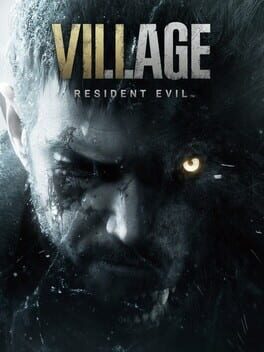
Resident Evil Village directly continues Ethan Winters’ story while significantly changing the balance established by Resident Evil 7. The first-person perspective remains central, but Capcom increases the number of enemies, greatly expands the arsenal and builds more frequent combat encounters. Horror remains essential, but it now shares more space with action and exploration.
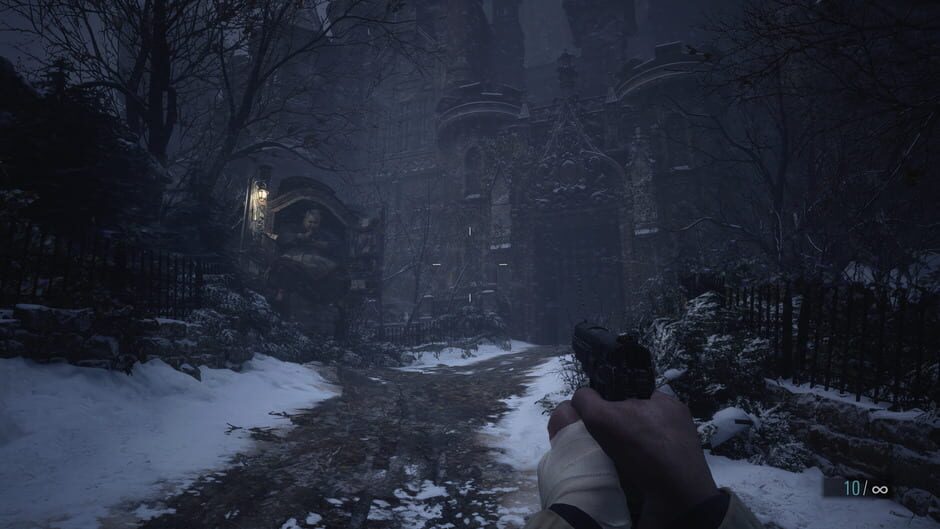
The village acts as the hub of this structure. Ethan returns to it several times after obtaining new keys, tools or information, gradually opening houses, passages and areas that were previously inaccessible. This gives the setting a particular coherence: a path crossed under threat during the opening hours may later become an exploration area filled with treasures, resources and secrets.
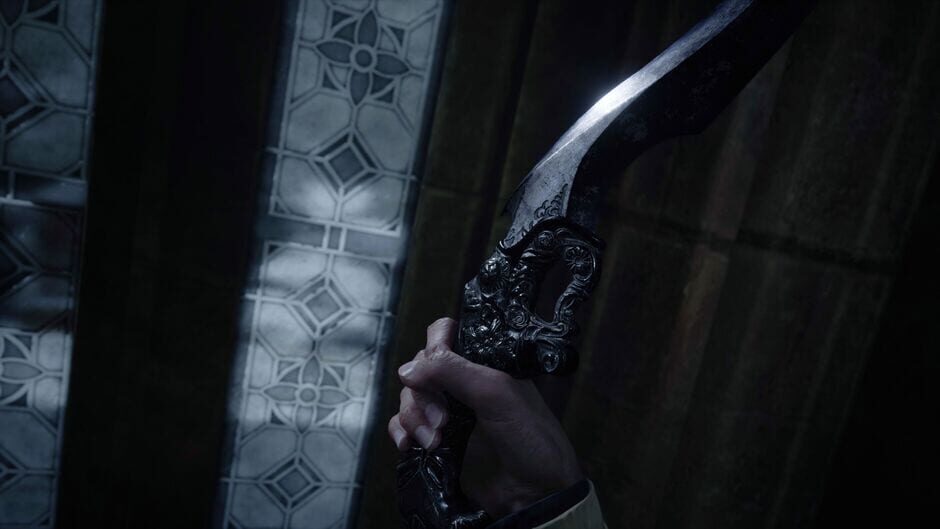
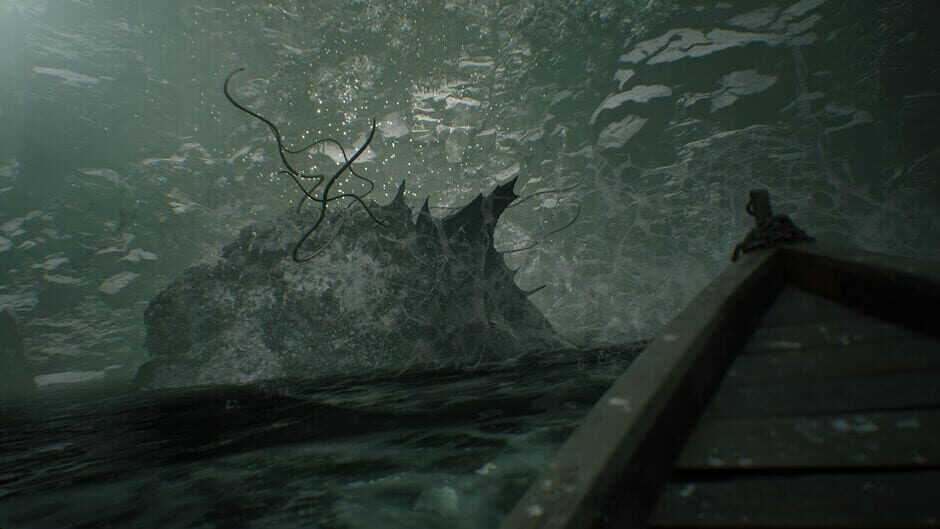
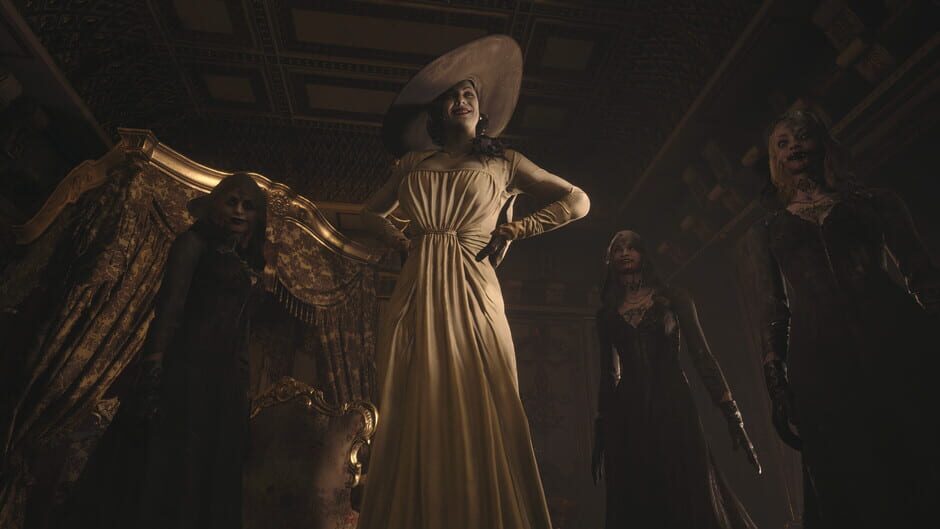
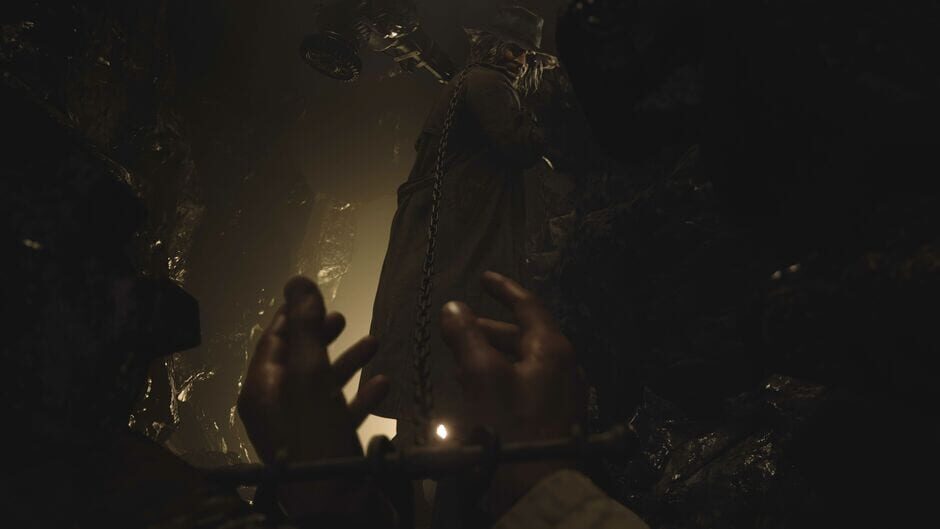
The four lords allow the game to change tone regularly. Castle Dimitrescu develops a gothic atmosphere built around richly decorated rooms, hidden passages and pursuit. House Beneviento focuses on much more psychological horror and deliberately strips Ethan of much of his usual power. Moreau’s territory centers on a gigantic creature and aquatic environments, while Heisenberg’s factory gradually pushes the game back toward action with a much greater concentration of mechanical and biological enemies.
This variety is one of Village’s defining qualities. The different areas do more than change the scenery; they regularly alter the rhythm and expectations of the player. The game can move from methodical exploration to an almost combat-free horror sequence, then into sustained fights against multiple enemies.
Lycans are the most common enemies in the early areas. More mobile than the Molded from Resident Evil 7, they can surround Ethan, climb structures and attack in groups. Other creatures appear according to each lord’s territory, giving every region its own bestiary and slightly changing how combat must be approached.
Ethan has access to a much larger arsenal than in the previous game. Pistols, shotguns, sniper rifles, grenade launchers, magnums, mines and explosives allow different situations to be handled in different ways. Blocking also returns, while some upgrades improve Ethan’s ability to push enemies away after taking a hit.
The Duke plays a central role in progression. This traveling merchant sells weapons, ammunition, recipes and upgrades, buys treasures and allows several weapon characteristics to be improved. Resources found during exploration can also be used to craft ammunition, healing items, mines and other equipment directly from the inventory.
Hunting complements this economy. Certain animals can be killed for meat, which the Duke uses to prepare meals that provide permanent upgrades to Ethan. Exploring optional areas therefore does more than generate money: some detours directly increase his health, movement while guarding or overall resilience.
The inventory returns to a briefcase-style organization reminiscent of Resident Evil 4. Weapons and certain items occupy several spaces, forcing the player to organize the available room while purchasing larger cases over time. Key items used for puzzles are managed separately, however, preventing progression from being blocked by a full inventory.
Puzzles appear throughout the castle, village and several optional areas, although they are generally more accessible than in some older entries. Exploration focuses more on finding keys, combinable objects, mechanisms and hidden treasures. Several miniature labyrinths and valuable items also offer rewards that can be sold to the Duke.
This equipment-based progression strongly recalls Resident Evil 4. A weapon can be kept for much of the adventure, upgraded repeatedly and eventually sold to fund a more powerful replacement. Searching for resources and treasures therefore directly supports Ethan’s increasing combat capability.
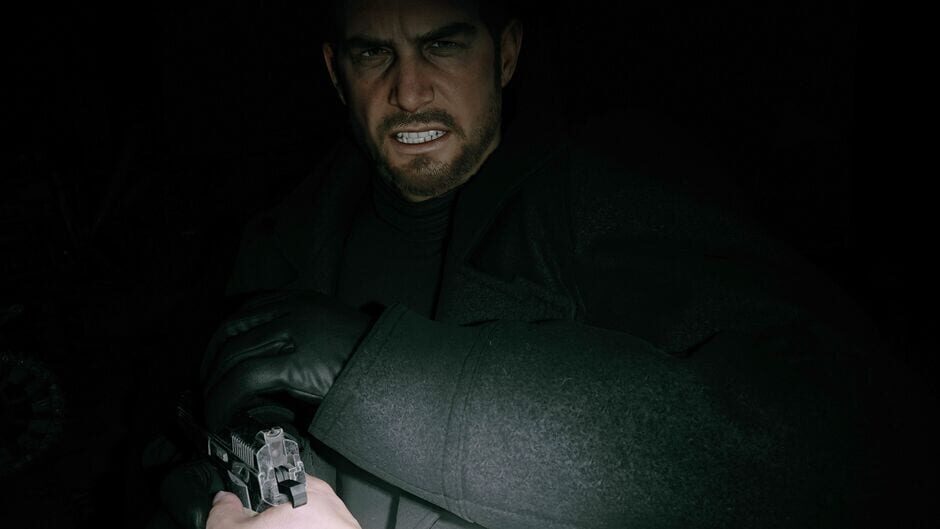
The story nevertheless remains closely connected to Resident Evil 7. Ethan is still motivated primarily by his family, while Chris occupies a deliberately ambiguous position for much of the game. The revelations surrounding the Mold retrospectively explain several events from Louisiana and bring Ethan’s journey to a conclusion.
The game also connects its story to the origins of the series through Miranda’s research and her past relationship with Oswell E. Spencer. This does not make the events of the village the direct origin of Umbrella, but it shows that some of the ideas that later influenced Spencer existed long before the company was created.
After the campaign, The Mercenaries offers a more directly score-focused experience. The player moves through several areas while eliminating enemies quickly, earning money, buying equipment between stages and selecting abilities to improve combat efficiency.
What to remember
- A direct sequel to Resident Evil 7 biohazard that continues the story of Ethan Winters and his family.
- A European village acting as a central hub, surrounded by several territories with their own atmosphere and antagonist.
- Mother Miranda and her four lords: Alcina Dimitrescu, Donna Beneviento, Salvatore Moreau and Karl Heisenberg.
- A first-person formula that preserves the horror of Resident Evil 7 while significantly increasing action and combat variety.
- The Duke as a merchant used to buy, sell and upgrade weapons and equipment.
- Progression built around exploration, treasures, crafting, hunting and permanent character upgrades.
- A story that expands on Ethan’s nature, the Mold and several older connections to the history of Umbrella.
- The Mercenaries as a separate mode focused on combat, scoring and equipment optimization.
Conclusion
Resident Evil Village keeps the perspective and protagonist of Resident Evil 7 without trying to reproduce its confined structure. The village, castle and domains of the four lords give the adventure a broader scale, while the expanded arsenal, merchant and upgrade systems make Ethan increasingly capable of confronting threats directly.
That rise in power does not eliminate horror. Instead, it allows the game to change its form repeatedly. Castle Dimitrescu uses pursuit and exploration, House Beneviento suddenly removes much of the player’s power, while Heisenberg’s factory fully embraces more sustained action. This variety can make the experience less homogeneous than Resident Evil 7, but it also gives the game a particularly rich identity.
The return of a merchant, attaché-case inventory, treasures and upgradeable weapons clearly brings progression closer to Resident Evil 4. Exploration therefore gains an almost permanent reward: a hidden room may contain resources, treasure or an upgrade capable of making the next encounter easier.
Ethan’s story provides emotional continuity to this mixture. The search for Rose gives a simple motivation for crossing the different territories, while the final revelations explain his almost absurd ability to survive mutilation since the previous game. His journey ultimately ends through his determination to protect his family rather than through any importance within the series’ historical organizations.
Resident Evil Village ultimately succeeds in combining two major directions of the franchise. It preserves part of the immersive horror reintroduced by Resident Evil 7 while recovering the pace, merchant, equipment progression and more generous action associated with Resident Evil 4. That combination explains both its constant shifts in tone and its distinctive place within the modern era of the series.
Good to know
- Resident Evil Village was developed and published by Capcom.
- The game was released on May 7, 2021, for PlayStation 4, PlayStation 5, Xbox One, Xbox Series X|S and PC.
- It is a direct sequel to Resident Evil 7 biohazard and retains Ethan Winters as its main protagonist.
- Capcom officially classifies the game as survival horror despite its stronger emphasis on action.
- Resident Evil Village Gold Edition, released on October 28, 2022, includes the main game and the Winters’ Expansion.
- The Winters’ Expansion adds third-person mode for the campaign, the Shadows of Rose scenario and The Mercenaries Additional Orders.
- Shadows of Rose takes place sixteen years after the main story and follows Rosemary Winters.