

Synopsis
Following an altercation that changes his life, a high school student is placed on probation and sent to Tokyo for a school year. Taken in at Café Leblanc by Sojiro Sakura, he enrolls at Shujin Academy while already carrying a difficult reputation.
Soon after arriving, he discovers with Ryuji Sakamoto a parallel world where the distorted desires of certain people take the form of vast Palaces. There, the young man awakens the power of his Persona and soon adopts the identity of Joker.
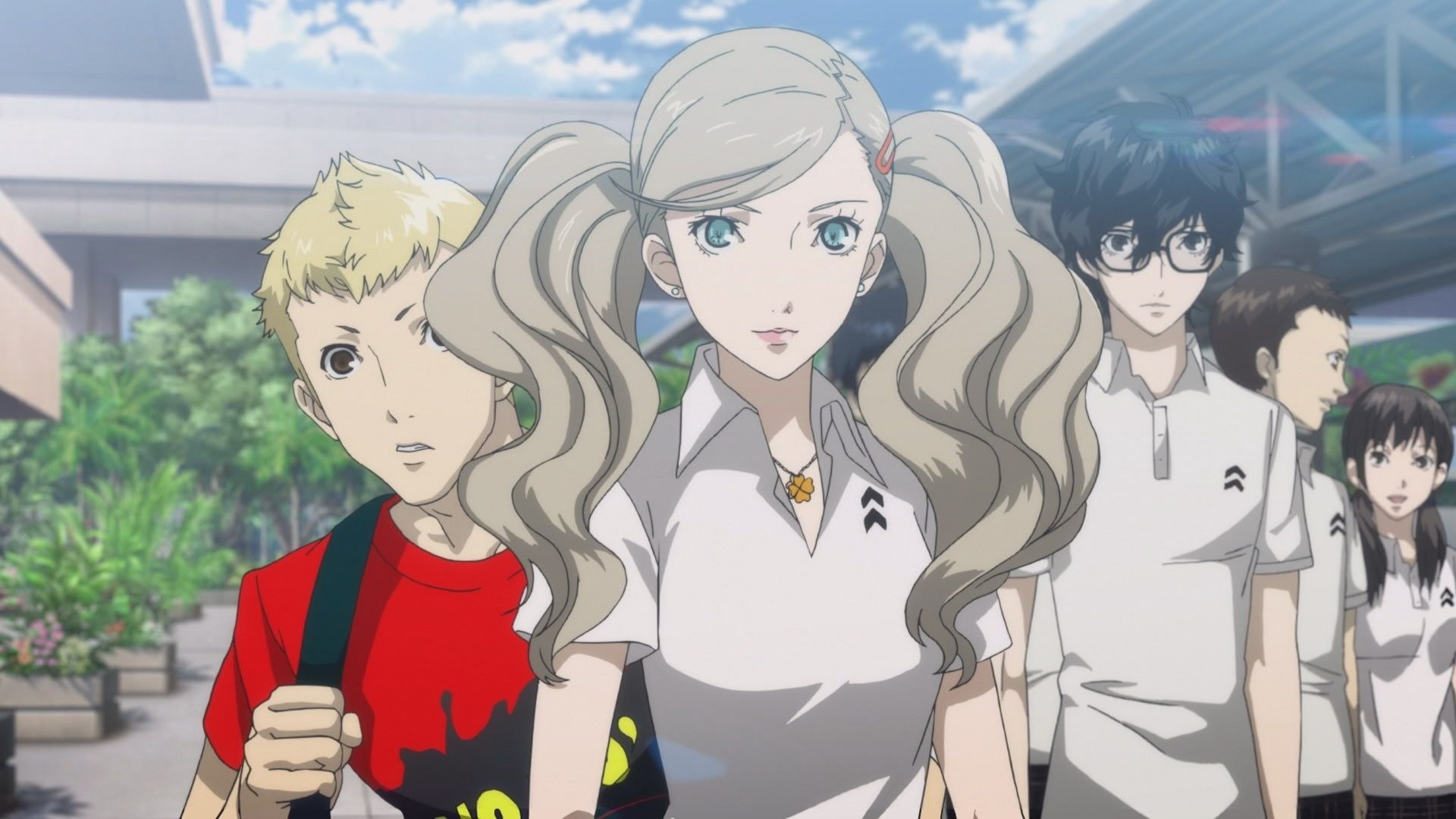
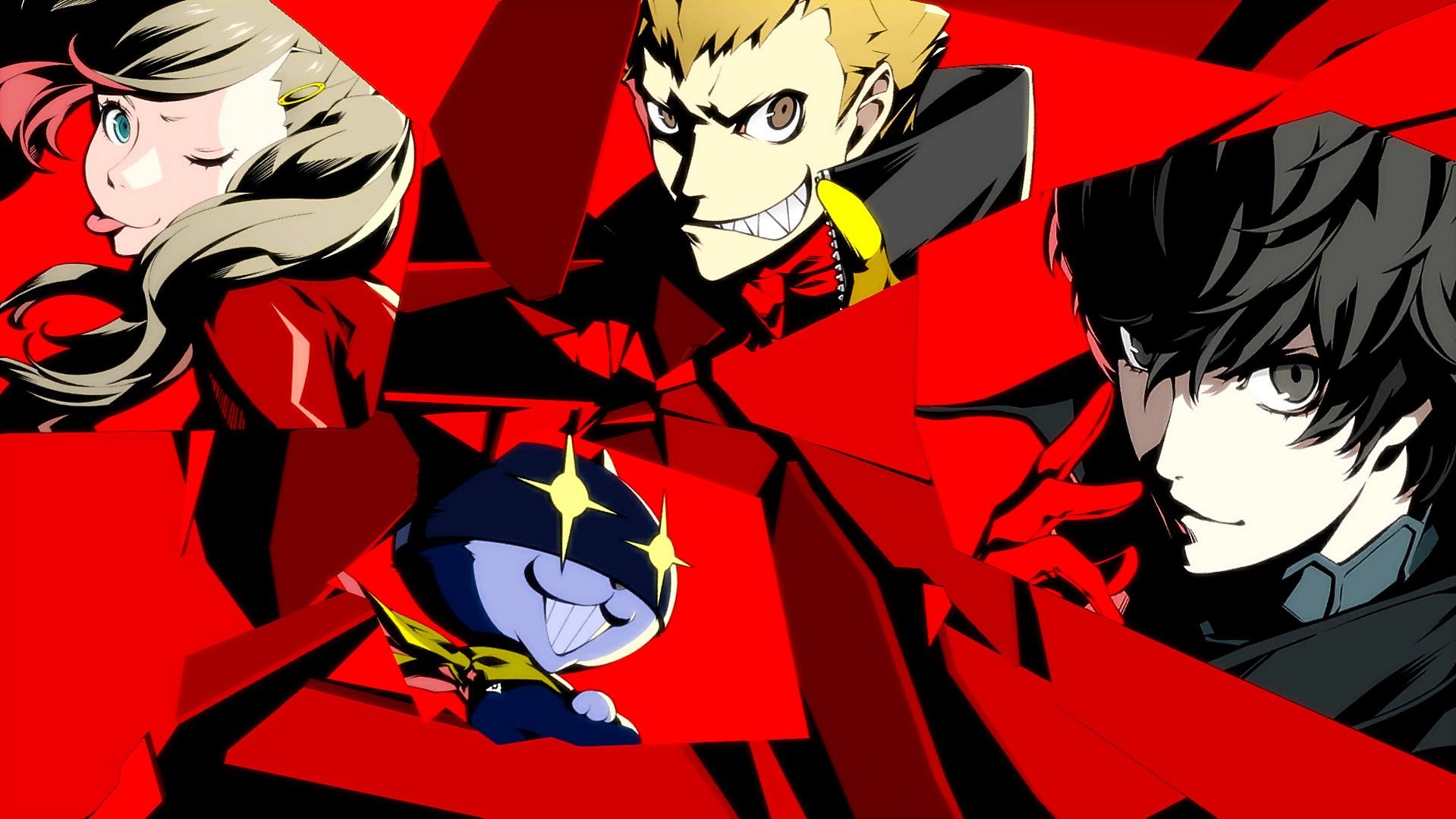
Together with Ryuji, Ann Takamaki, Morgana and other allies met throughout the year, he forms the Phantom Thieves of Hearts. Their method is to infiltrate Palaces, reach the treasure symbolizing their owner’s corrupted desires and trigger a change of heart.
Their first targets make the group’s mission seem straightforward. But as the Phantom Thieves become more popular, the stakes grow more complicated and the boundary between justice, influence and manipulation becomes far less comfortable.
Persona 5 Royal therefore tells the story of a year spent trying to change society while learning that even the most sincere intentions never remove the need to ask who gets to decide what should be changed.
Overview
A year divided into choices
Persona 5 Royal builds much of its rhythm around the calendar. The protagonist attends classes, takes exams, works, spends time with friends, improves his social stats and explores Tokyo while preparing the Phantom Thieves’ operations.
Time therefore becomes a resource. An evening spent studying cannot also be used to meet a friend. An outing may strengthen a relationship, improve a statistic or unlock a new activity.
This limitation gives weight to even the most ordinary decisions. The player is not only choosing how to develop the team in combat; they are gradually deciding what the protagonist’s life will look like.
Confidants connect everyday life to the RPG
Social relationships are organized around Confidants. Spending time with certain characters deepens their stories while unlocking abilities useful in combat, exploration or everyday life.
The system therefore avoids completely separating personal storytelling from mechanical progression. A friendship, family relationship or professional encounter can have very concrete effects on the possibilities available to the player.
These side stories also expand Tokyo beyond the main group. Teachers, doctors, journalists, gamers and politicians become individual paths the protagonist can choose to follow.
Turn-based combat that refuses to feel slow
Battles revolve around elemental weaknesses, Personas and the ability to gain additional actions by correctly exploiting enemy vulnerabilities.
Joker can use several Personas and fuse them to create new combinations of skills. The other party members have more clearly defined roles, encouraging the player to build the team around the enemies being faced.
Persona 5 gives considerable energy to what is otherwise a very traditional structure. Fast transitions, short animations, menus integrated into the art direction and coordinated attacks make battles feel particularly fluid.
Royal strengthens this further through several adjustments, including Showtime attacks and improvements to Baton Pass.
Palaces and Mementos
The main antagonists each possess their own Palaces, themed dungeons shaped by their distorted desires. Their architecture directly reflects how these characters perceive the world and the people around them.
These areas combine combat, light stealth, exploration and puzzles. Royal reworks several routes and notably adds the grappling hook, opening access to new paths.
Alongside these story-driven dungeons is Mementos, a vast space connected to the collective unconscious. Its more repetitive structure hosts many side requests and provides another way to strengthen the team and gather resources.
What Royal actually adds
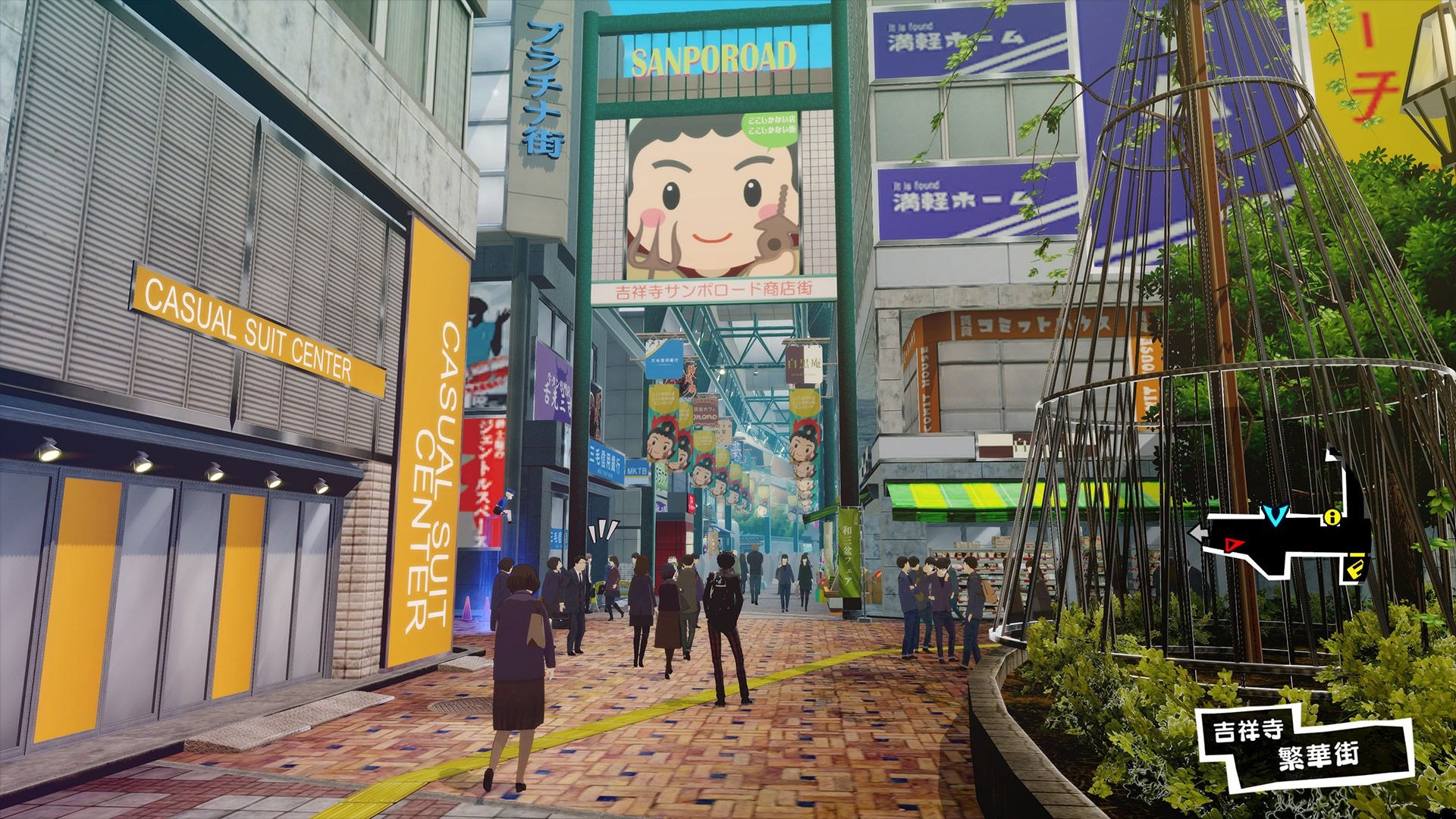
Persona 5 Royal is not simply a technical re-release. This version introduces Kasumi Yoshizawa, school counselor Takuto Maruki, new Confidants, new activities, the Kichijoji district, the Thieves Den and various gameplay adjustments.
Most importantly, it adds a new narrative chapter that extends the school year beyond the structure of the original Persona 5.
These additions do not replace the existing campaign. They are gradually integrated into the adventure, allowing Royal to preserve the original story while changing its final section and expanding several of its themes.
Key takeaways
- Persona 5 Royal follows the double life of a Japanese high school student who becomes Joker, leader of the Phantom Thieves of Hearts.
- Progression follows a calendar, and the way each day is used affects relationships, social stats and mission preparation.
- Confidants connect storytelling and progression, with their personal stories unlocking numerous additional abilities.
- Combat uses a fast turn-based system centered on weaknesses, Personas and coordinated actions.
- Joker can use and fuse multiple Personas, providing considerable freedom when building his abilities.
- Palaces represent the distorted desires of the main targets and serve as major story-driven dungeons.
- Mementos complements the Palaces with a freer and repeatable structure, used in particular for many side requests.
- Royal substantially expands Persona 5 with Kasumi Yoshizawa, Takuto Maruki, Kichijoji, new mechanics and an additional narrative chapter.
- The art direction turns menus and interface elements into an integral part of the game’s visual identity.
- The game is entirely single-player.
PANACHES review
An RPG where time really matters
Persona 5 Royal’s best idea may be making time a mechanic as important as combat.
A day has value because it cannot simply be replayed immediately. Meeting a Confidant, working, studying or exploring Mementos means temporarily giving up something else.
That constraint turns a very long adventure into a succession of small decisions. The player ends up doing less than simply optimizing a character: they are building an entire year.
Style does not hide the systems; it makes them readable
Persona 5 Royal has a spectacular visual identity, but its interface is not merely decorative. Menus, transitions and animations make a statistics-heavy RPG surprisingly quick to navigate.
The same logic appears in combat. Exploiting a weakness, passing the action to an ally and then triggering a group attack gives turn-based battles an energy rarely associated with the genre.
That elegance does not remove every slowdown. Some narrative sequences repeat their intentions too often, and Mementos remains less carefully designed than the best Palaces.
Royal finds its value in what it adds at the end
The new characters and activities improve the overall experience, but Royal’s real value appears in its additional chapter.
Without abandoning Persona 5’s themes of rebellion and freedom, this section pushes the game toward a more uncomfortable question: is a world without suffering still desirable if someone else decides for us what our happiness should be?
That extension gives Royal a genuine reason to exist beyond simply adding more content.
Persona 5 Royal remains extremely long and requires the player to accept its school-year rhythm, its many conversations and its constant alternation between everyday life and the supernatural. Once that structure clicks, however, those two halves stop competing with each other: the Palaces give meaning to everyday life, while everyday relationships provide a reason to return and fight inside the Palaces.
Good to know
Original release of Persona 5 Royal
- Persona 5 Royal was released in Japan on October 31, 2019 for PlayStation 4 under the Japanese title ペルソナ5 ザ・ロイヤル.
- The game was developed by Atlus.
- It is a substantially expanded version of Persona 5, not an independent sequel.
- The Western version was released for PlayStation 4 on March 31, 2020.
- It notably includes Japanese and English voice acting along with text support in several languages, including French.
Royal’s main additions
- Royal adds new characters and Confidants, including Kasumi Yoshizawa and Takuto Maruki.
- A new late-game chapter extends the school calendar and develops a narrative section absent from Persona 5.
- The Kichijoji district introduces new activities and social locations.
- Several Palaces were modified, and the protagonist gains a grappling hook that provides access to new routes.
- Combat receives several improvements, including Showtime attacks and adjustments to Baton Pass.
- The Thieves Den serves as a dedicated space for rewards, artwork, music and other content unlocked during the game.
- Royal also reworks several aspects of Mementos, combat and everyday life.
2022 multiplatform release
- Persona 5 Royal was released on October 21, 2022 for PlayStation 5, Xbox Series X|S, Xbox One, Nintendo Switch and Windows, with a Steam release accompanying this edition.
- This re-release significantly expanded the game’s availability beyond the PlayStation ecosystem.
- The 2022 versions include a large amount of additional content that had previously been distributed separately.
- The original PS4 edition remains separate from the native PlayStation 5 version.
- Every version of Persona 5 Royal remains a single-player experience.
Persona 5 and Persona 5 Royal
- Persona 5 is the original work on which Royal is built.
- Royal retains most of its story, characters and systems while adding new scenes, relationships, locations, features and a major extension to the final part of the story.
- For this reason, PANACHES CULTURE references Persona 5 Royal as a distinct work, corresponding specifically to this expanded version.
- Persona 5 Royal’s campaign is complete, so the entry uses
statut_parution: completed.