Overview
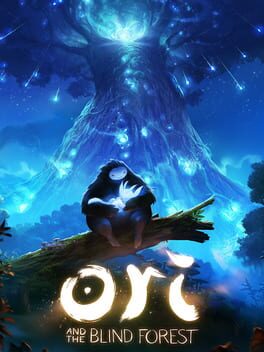
Developed by Moon Studios and published by Microsoft Studios, Ori and the Blind Forest is a video game released on March 11, 2015 for Xbox One, Nintendo Switch and PC. The genres associated with this entry are action, adventure, fantasy, thriller, platforming and puzzle, in an exclusively single-player experience.
The adventure takes place in the forest of Nibel and follows Ori, a small spirit creature facing the decline of the surrounding environment. The journey with Sein gradually takes the player through different regions of the forest in order to restore the elements required for its balance.
The game uses a two-dimensional structure centered on platforming and exploration. Nibel’s areas are interconnected and gradually become more accessible as Ori acquires new abilities. Passages encountered earlier can therefore be reached or crossed after developing new movement options.
Mobility is one of the main foundations of the gameplay. Ori gradually develops abilities that notably make it possible to jump more effectively, climb walls and cross spaces that were previously inaccessible. These skills do not simply allow progress: they gradually change the way the environments can be navigated.
Among these abilities, Bash plays a particularly important role. Ori can use an enemy or projectile as a point of support to launch in one direction while sending the target in the opposite direction. The mechanic is used for traversal, combat and the resolution of certain sections where projectiles must be redirected toward a mechanism or obstacle.
This connection between movement and puzzle-solving appears throughout several areas. Environments introduce their own constraints and require the player to combine Ori’s abilities, sometimes in sequences that rely more heavily on precision and rhythm than on direct confrontation. Certain sections notably play with verticality or changes in the way Ori must move.
Enemies also contribute to this logic. They represent a threat, but can sometimes become elements of movement or puzzle-solving, particularly through Bash. A hostile projectile can therefore be transformed into a way to reach a platform or activate an element of the environment.
Progression also includes an ability tree powered by points earned throughout the adventure. Upgrades strengthen different aspects of Ori, whether related to survival, offensive capabilities or certain tools that make exploration easier.
Ori and the Blind Forest also stands out through its Soul Link save system. By spending energy, the player can create a personal save point in many locations rather than relying only on fixed checkpoints. This resource therefore needs to be used carefully, particularly before more demanding platforming sections.
Spirit Wells complement this system by serving as places where Ori can save progress and restore health and energy. They therefore act as important landmarks throughout the exploration of Nibel.
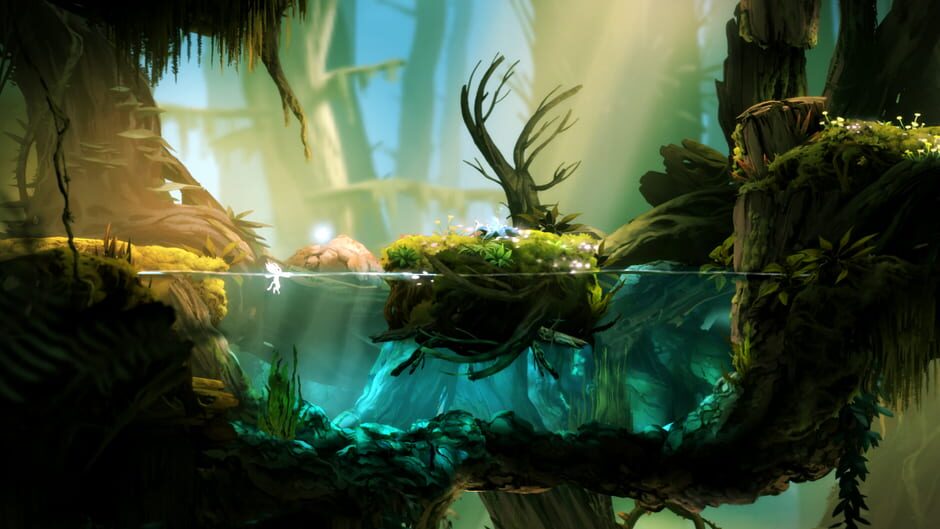
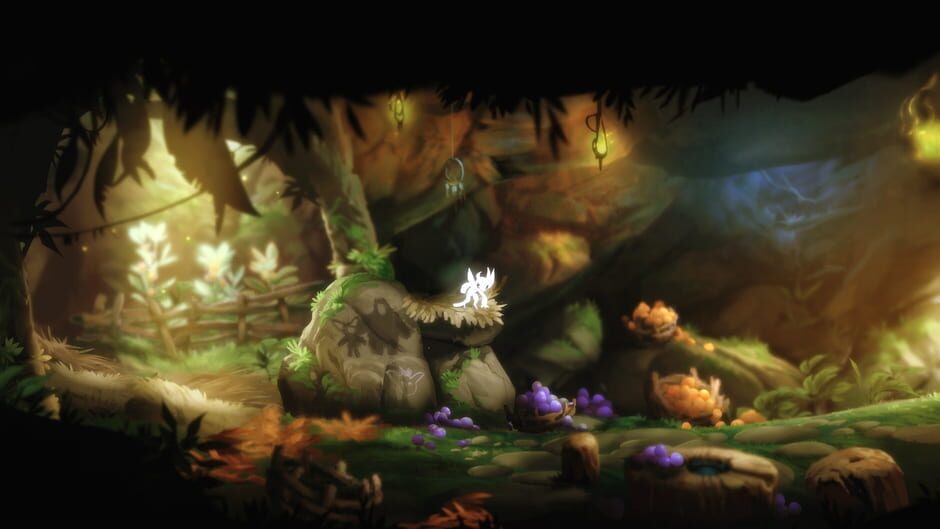
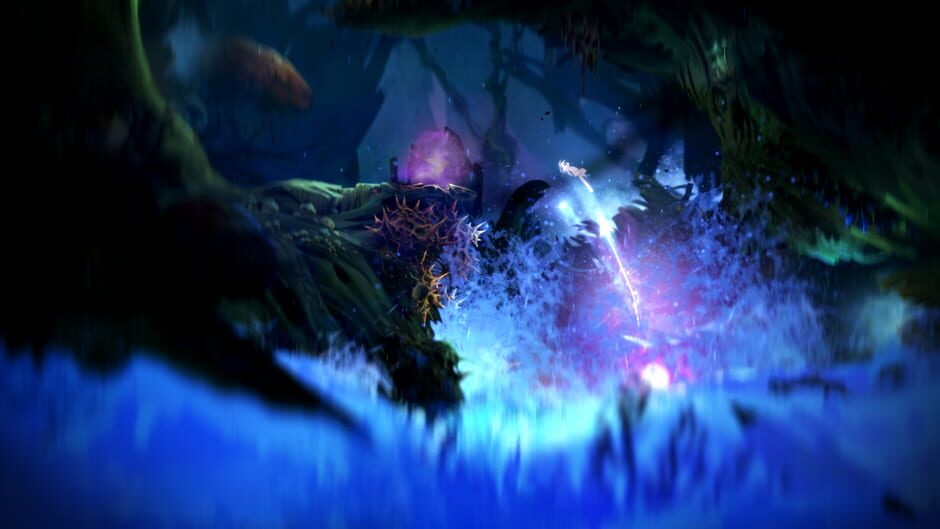
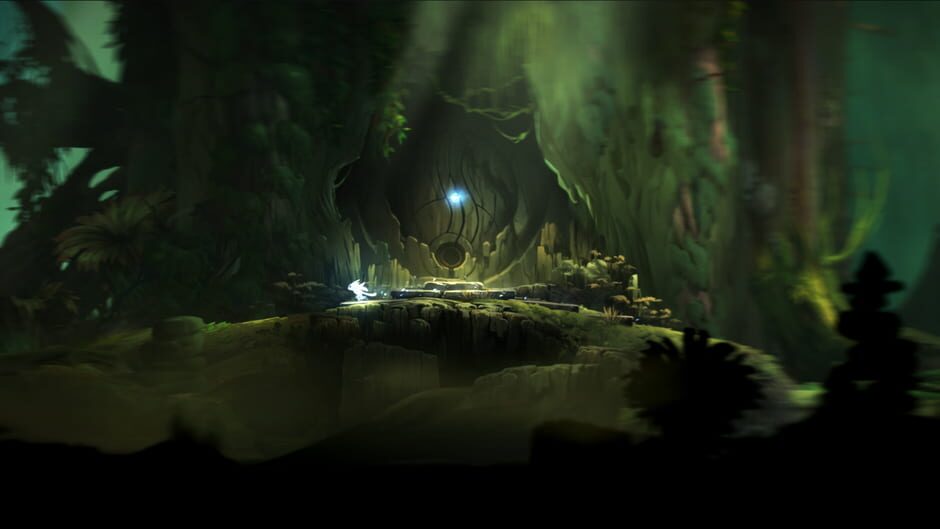
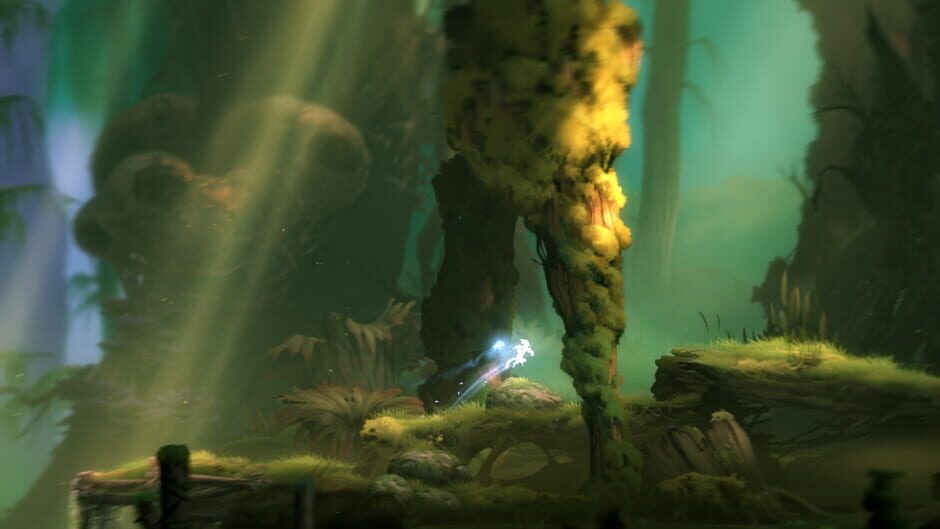
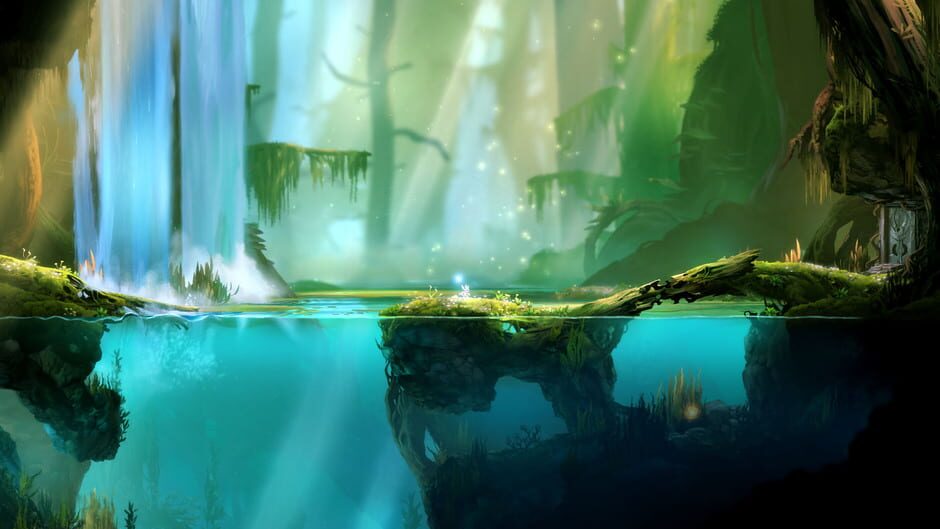
The art direction relies on painted environments and highly detailed animation, with multiple visual layers giving depth to the scenery despite the game’s 2D structure. Each region has its own atmosphere, ranging from glowing vegetation and caves to ruins and areas gradually affected or restored by the condition of the forest.
The music supports this approach with an orchestral soundtrack closely connected to the staging and shifts in atmosphere. The game therefore ties its story to its visual and audio environment rather than strongly separating narrative and exploration.
Ori and the Blind Forest uses the Unity engine. Its overall structure is built around progression in which acquiring new abilities gradually expands the available movement options and transforms the way the player travels through the different regions of Nibel.
Key takeaways
- Ori is a spirit creature who sets out to restore the balance of the forest of Nibel with Sein’s help.
- The game combines 2D platforming, exploration and puzzle-solving within an environment made up of interconnected areas.
- New abilities make it possible to return to previously visited regions and access new passages.
- Bash allows enemies and projectiles to be used as points of support while redirecting them.
- The Soul Link system allows the player to create personal save points by consuming energy.
- Painted environments, animation and orchestral music directly contribute to the game’s visual and narrative identity.
Conclusion
Ori and the Blind Forest builds its progression around the exploration of Nibel and the evolution of Ori’s abilities. Each new skill is not simply an upgrade to the character: it opens new movement possibilities and changes the way previously visited environments can be understood.
Platforming plays a central role, with sequences that gradually demand greater precision and the combined use of different abilities. Bash particularly illustrates this design by bringing mobility, combat and puzzle-solving together within a single mechanic.
The Soul Link system adds another dimension to this progression by giving the player some control over save points, while Spirit Wells structure moments of recovery during exploration.
Ori and the Blind Forest therefore combines platforming, exploration, progression and puzzle-solving with visual and musical staging closely tied to Ori’s journey and the gradual restoration of the forest of Nibel.
Good to know
- Ori and the Blind Forest was released on March 11, 2015.
- The game was developed by Moon Studios and published by Microsoft Studios.
- It is available on Xbox One, Nintendo Switch and PC.
- The genres listed in this entry are action, adventure, fantasy, thriller, platforming and puzzle.
- It features a Single player mode only.
- The game uses the Unity engine.
- A Definitive Edition later expanded the experience with new areas, new abilities and additional ways to revisit Nibel.