A traveler awakens alone on an unknown planet with damaged equipment and only the vastness of space ahead. After repairing their gear and starship, they can leave this first world and begin exploring a galaxy filled with systems, planets, lifeforms and alien civilizations. Mysterious signals and different discoveries gradually draw them into a quest connected to the nature of the universe and the center of the galaxy. No single route is imposed, however: exploring, trading, surviving, fighting or simply continuing the journey are all possible ways to forge a personal path among the stars.
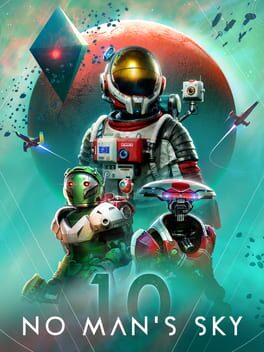
Video game
2016
Action
Adventure
Science fiction
FPS
Simulation
Survival
Open world
Sandbox
Arcade
Indie
No Man's Sky
- 505 Games Publisher
- Hello Games Developer
- Hello Games Publisher
- Sony Interactive Entertainment Publisher
Repair your ship, leave an unknown planet and discover what lies beyond the next horizon.
Details
- Type
- Video game
- Release
- 2016-08-09
- Genres
- Action, Adventure, Science fiction, FPS, Simulation, Survival, Open world, Sandbox, Arcade, Indie
- Platforms
- PlayStation 5, PlayStation 4, Xbox Series, Xbox One, PC, Mac, Nintendo Switch 2, Virtual reality
- Engine
- Custom built engine
- Game modes
- Single player, Multiplayer, Co-operative
Synopsis
No Man's Sky
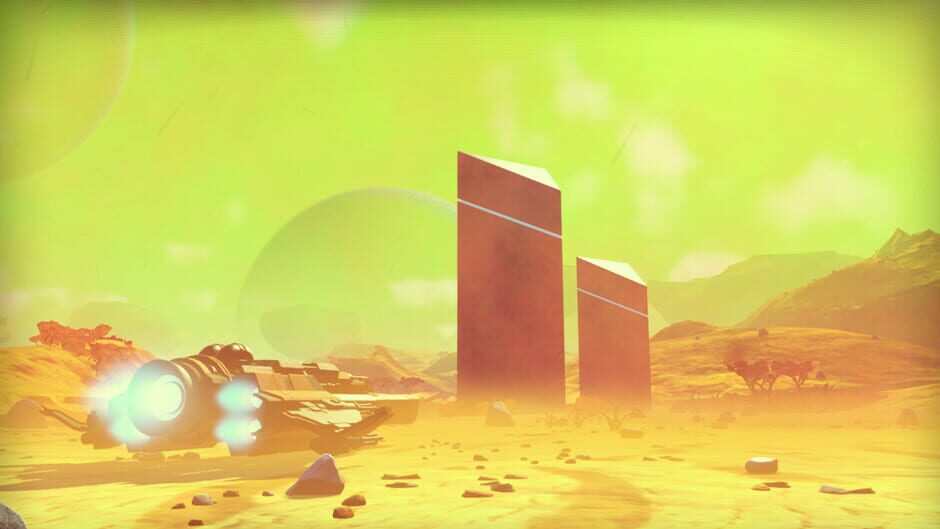


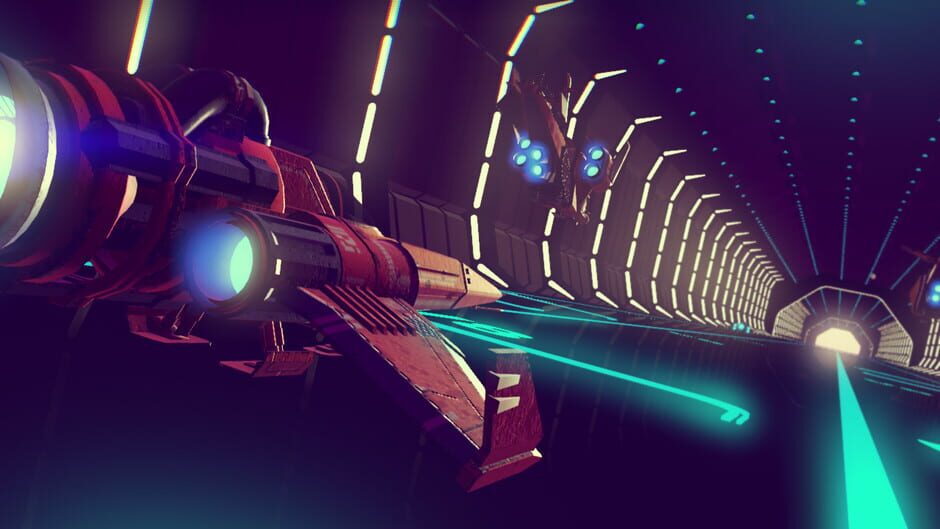
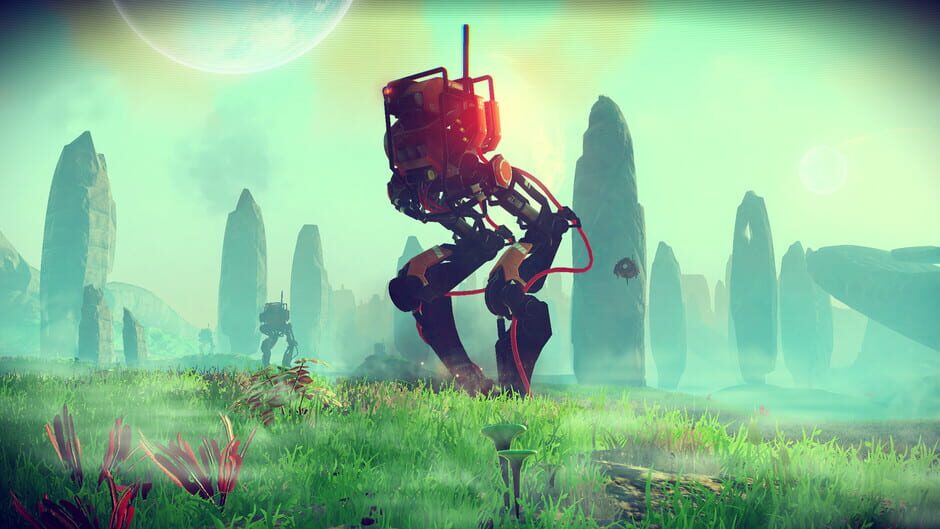
Trailer
Watch the trailer
Overview
Presentation
No Man's Sky is a science-fiction exploration and survival game built around a vast procedurally generated universe. The player begins isolated on an unknown planet and must repair their equipment before being able to take off. From that point onward, progression becomes largely open: every star system can lead to new planets, resources, creatures, civilizations or discoveries.
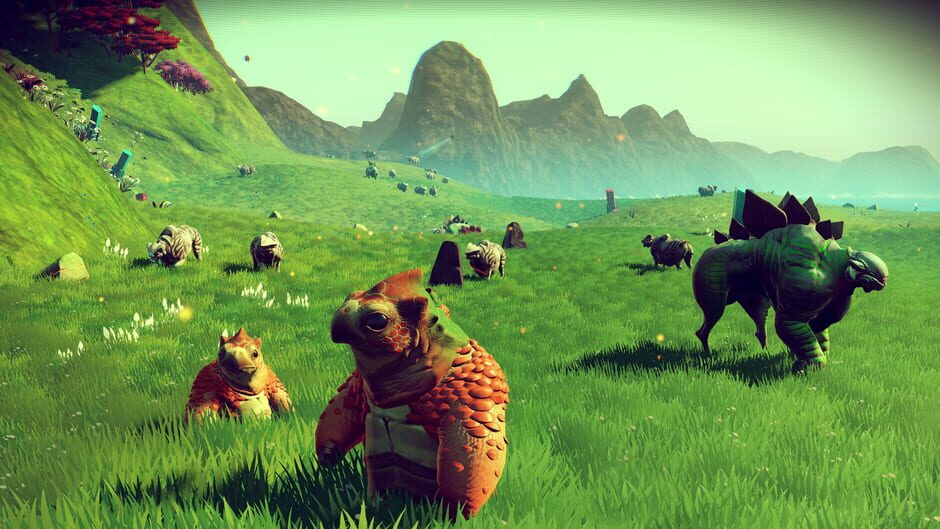
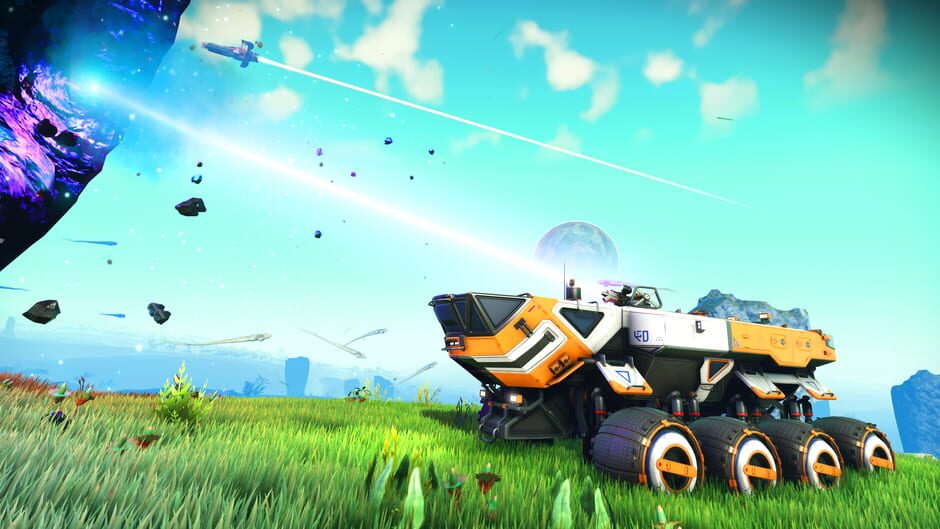
One of its fundamental principles is the continuity of travel between planetary surfaces and space. Players can leave the surface of a planet aboard their starship, pass through its atmosphere, enter space and head toward another world without exploration being organized around a traditional sequence of levels. Planets feature their own terrain, weather conditions, resources, fauna and flora, with environments ranging from welcoming worlds to regions exposed to extreme temperatures, radiation or toxic atmospheres.
Survival is directly tied to this exploration. The exosuit protects the traveler from environmental hazards, but some of its reserves must be recharged regularly. Resources gathered from planetary surfaces are used to maintain essential systems, produce materials, craft items or repair and improve equipment. Exploring farther often requires preparing enough supplies to withstand the conditions ahead.
The multi-tool combines several essential functions. It can be used to analyze the environment, extract resources and defend against threats when necessary. Scanning animals, plants and minerals contributes to the discovery of visited worlds and gradually records the elements encountered throughout the journey.
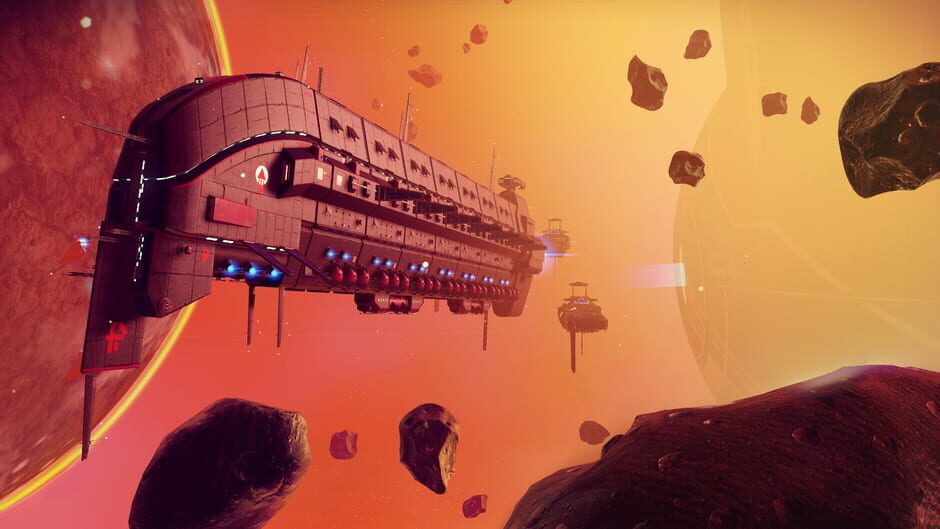
The starship is the other central tool of exploration. It allows travel between planets, stations and star systems, but it can also be upgraded. Combat capabilities, defenses, range and travel options evolve through installed technologies. Players can also acquire different ships with their own characteristics and gradually build a collection suited to several roles.
The economy is based on gathering, crafting and trade. Resources and items can have different values depending on the system, while space stations and other facilities provide places to buy, sell or exchange goods. A traveler can therefore focus partly on commerce, search for specific resources or take advantage of economic differences between regions of the galaxy.
Space is not empty. Trading vessels travel between systems, pirates can attack and several alien civilizations have their own languages and cultures. Repeated interactions gradually make it possible to understand more of their vocabulary and communicate more effectively with their representatives. Exploration therefore involves more than discovering landscapes: it also reveals different traces of history and intelligent life.
Progression relies heavily on equipment upgrades. The exosuit, multi-tool and starships can receive new technologies that expand their capabilities. Better protection allows harsher environments to be explored, while new modules can improve mining, movement or combat. This progression gradually opens destinations and activities that are less accessible during the first hours.
Base building, added after the original release and greatly expanded over time, now allows players to settle on explored planets. A simple shelter can grow into a more complex installation with production activities and specialized equipment. Freighters can also serve as mobile bases and support part of this development directly in space.
Across its many updates, the experience has also developed a much stronger multiplayer dimension. Travelers can explore, build, trade or complete certain missions together, while the Space Anomaly notably serves as a meeting point and gateway to shared activities.
Despite these many systems, No Man's Sky retains a highly open structure. Players can follow narrative threads related to the mysteries of the universe or leave them aside for long periods to chart systems, search for a particular world, build a base, develop a fleet or simply continue traveling. Progression is shaped as much by personal objectives as by the storyline offered by the game.
Key points
- A vast science-fiction universe generated procedurally.
- Continuous travel between planetary surfaces, atmosphere and space.
- Planets with different environments, resources, creatures and hazards.
- A survival component based on managing exosuit protection and resources.
- A multi-tool used for scanning, gathering and combat.
- Starships that can be acquired, equipped and upgraded.
- Progression built around technologies for the exosuit, multi-tool and starships.
- An economy allowing players to gather, craft, buy, sell and trade across different systems.
- Several alien civilizations whose languages can gradually be learned.
- Combat both on planetary surfaces and in space.
- The ability to build planetary bases and develop freighters as mobile bases.
- An experience playable in single-player or multiplayer.
- A narrative that coexists with extensive freedom of exploration and personal objectives.
Conclusion
No Man's Sky builds its experience around a simple idea: being able to look at a planet from space, descend to its surface, explore it and then leave again for another star. Around this continuity are built survival, resource gathering, technological development, trade, combat and equipment progression.
Procedural generation gives travel a central role. Discoveries do not rely on a sequence of predefined levels, but on continuous movement through systems whose environments and encounters vary. The story can guide this progression, but it never prevents the player from turning the journey into open-ended exploration.
The many additions released after launch gradually expanded this foundation with much deeper construction, cooperative play and development systems. The current game therefore retains the exploratory principle of 2016 while integrating it into a far larger experience.
Good to know
No Man's Sky was developed and published by Hello Games. It was originally released in 2016 for PlayStation 4 and Windows.
The game is built around very large-scale procedural generation: star systems, planets, terrain, creatures and various environmental elements are assembled through algorithmic rules rather than being individually handcrafted.
The version released in 2016 was considerably more limited than the game is today. Features that later became important, including base building, were introduced and expanded through subsequent updates.
Hello Games continued to expand the game for many years through major updates affecting environments, exploration, construction, starships, multiplayer and various activities.
The title was gradually brought to other platforms, including Xbox One, PlayStation 5, Xbox Series X|S, Nintendo Switch, Mac and more recent compatible hardware generations. It also supports virtual reality on certain platforms.
The current game includes multiplayer and cross-platform play, while the Space Anomaly notably allows travelers to meet other players and access shared activities.
This entry presents the lasting foundations of No Man's Sky together with the main dimensions that define its current experience, without artificially attributing every feature added during its evolution to the original 2016 release.