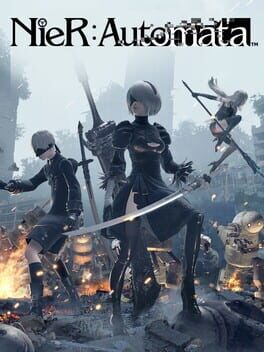
In the distant future, invaders from another world have deployed autonomous weapons known as machine lifeforms across Earth, forcing humanity to take refuge on the Moon. In an attempt to reclaim the planet, humans send the androids of the YoRHa unit into battle. Combat android 2B is deployed alongside 9S, a scanner model specializing in reconnaissance and hacking. Their mission takes them through the ruins of an abandoned Earth, where machines and androids continue a seemingly endless war. But as they confront their enemies and begin to understand their behavior, the certainties surrounding the conflict, the machines and their own mission gradually begin to collapse.
Video game
2017
Action
Drama
Science fiction
Fantasy
RPG
Hack and slash
Open world
NieR: Automata
- PlatinumGames Developer
- Square Enix Publisher
- Square Enix Business Division 6 Developer
In the ruins of Earth, androids and machines clash in a war whose certainties slowly fall apart.
Details
- Type
- Video game
- Release
- 2017-02-23
- Genres
- Action, Drama, Science fiction, Fantasy, RPG, Hack and slash, Open world
- Platforms
- PlayStation 4, Xbox One, PC
- Engine
- Proprietry in house engine
- Game modes
- Single player
Synopsis
NieR: Automata
Trailer
Watch the trailer
Overview
Presentation
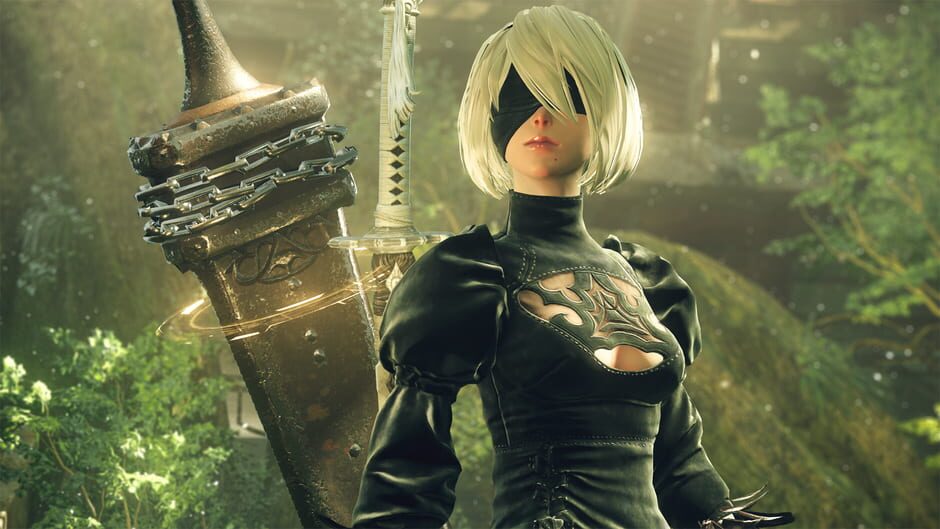
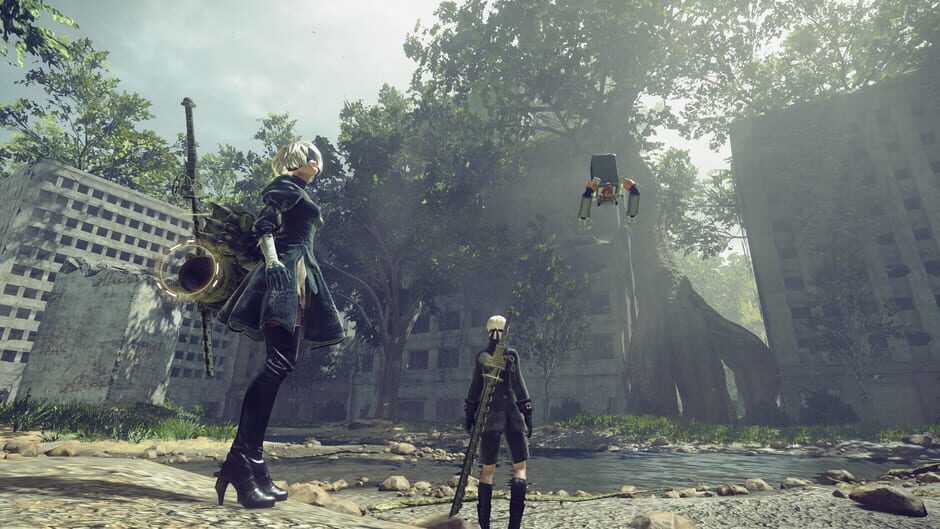
NieR: Automata is an action RPG developed by PlatinumGames that combines fast-paced combat, exploration, character progression and narrative within a post-apocalyptic Earth abandoned by humanity. The player primarily follows the YoRHa androids sent to fight the machine lifeforms occupying the planet, beginning with 2B and her partner 9S.
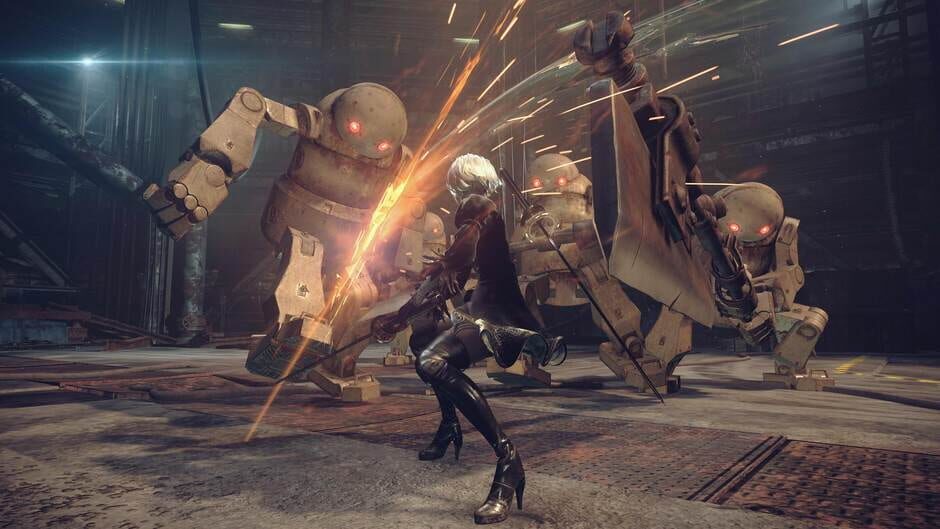
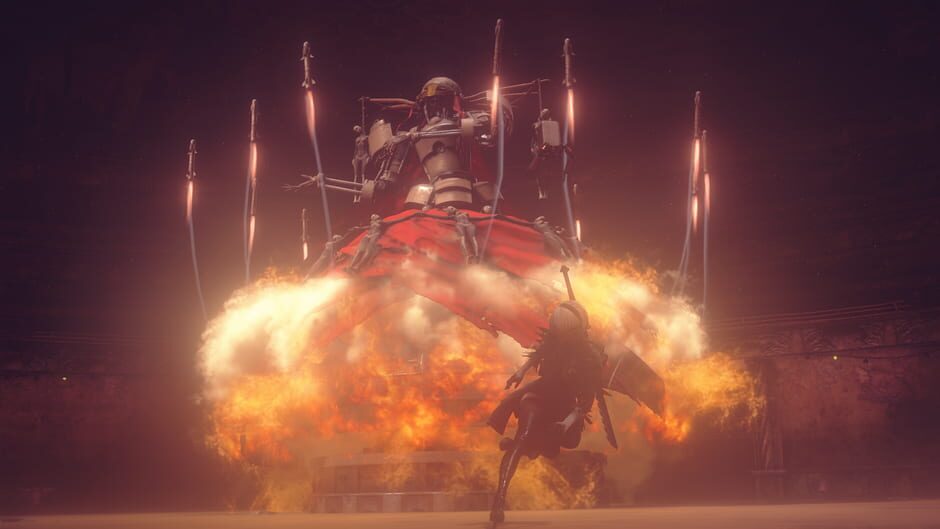
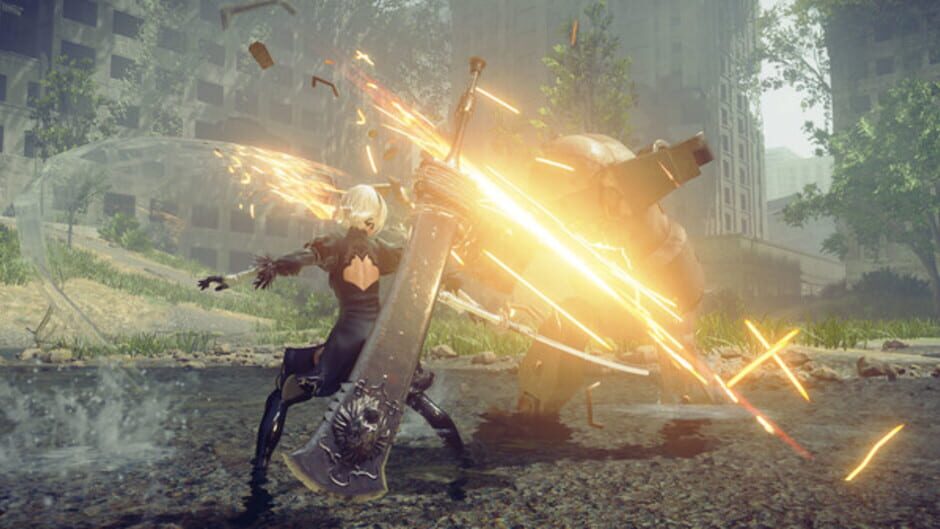
The combat system is built around highly mobile encounters. Light and heavy attacks can be assigned to different weapons, while dodging allows the player to evade incoming attacks quickly and immediately counterattack. Multiple weapon sets can be prepared and switched during combat, making it possible to adapt combinations to different enemies and situations.
The androids are accompanied by Pods, small support units capable of performing ranged attacks while the character fights at close range. They can also be equipped with different Pod Programs, adding offensive or utility abilities. Their role goes beyond simple automatic fire: they contribute directly to combat options and can also assist the character during certain movements or interactions.
Customization notably relies on plug-in chips installed in the android's system. These modules can improve damage, resistance and mobility, or provide various interface and support functions. Each chip occupies a certain amount of memory, which means the player has to build configurations rather than activate every enhancement at once. This makes it possible to favor an offensive, defensive or more balanced setup depending on the situation.
Gameplay mechanics also change depending on the controlled character. 9S, in particular, has hacking abilities that allow him to interact with certain machines and systems. These sequences generally take the form of abstract shooting sections and provide an alternative way to approach combat or exploration.
The game regularly changes its presentation without interrupting the action. A three-dimensional exploration sequence can shift into a side-scrolling view, a top-down perspective or sections resembling a shoot 'em up. The controls and core principles remain consistent enough for these changes in perspective to feel integrated into the experience rather than functioning as completely separate modes.
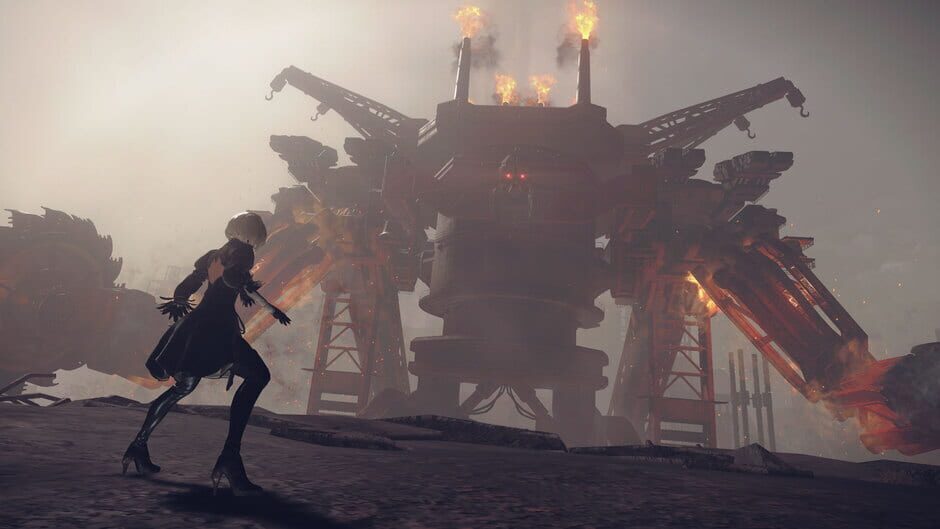
Exploration takes place across several large interconnected areas: city ruins, desert, forest and industrial facilities form a world that can be traversed freely as the story progresses. Side quests complement the main scenario and often reveal more about the androids, machines and communities encountered. Access points scattered throughout the world are used for quick saving, checking messages and facilitating travel once certain areas have been discovered.
Progression incorporates several RPG elements. Characters gain levels, acquire new weapons and can improve their equipment. Weapons are not distinguished only by their statistics: they belong to different categories and can change the rhythm and reach of attacks. Their improvement therefore complements the customization offered by chips and Pods.
NieR: Automata also builds an essential part of its story around several successive playthroughs. Restarting after an initial ending does not simply mean replaying the exact same adventure: new perspectives, mechanics and narrative sections gradually add to events already seen. This structure makes progression through the story a core component of the game and requires going beyond a first ending to discover the full narrative.
Key points
- An action RPG combining fast combat, exploration and character progression.
- Light and heavy attacks, several weapon categories and mid-combat equipment switching.
- Pods provide ranged attacks and different support programs.
- Plug-in chips allow the android's abilities to be customized within a limited amount of memory.
- 9S's hacking introduces specific gameplay sequences and possibilities.
- The game naturally shifts between 3D exploration, side-scrolling, top-down views and shooting sections.
- A world made up of large interconnected regions with main quests and side missions.
- Progression based on levels, weapons, upgrades and ability customization.
- A narrative structured around multiple routes and perspectives, some of which directly continue the story rather than simply repeating it.
Conclusion
NieR: Automata combines PlatinumGames' action expertise with an RPG structure in which weapons, Pods and chips allow the characters' abilities to be shaped over time. Frequent changes in perspective and genre give both combat and exploration a shifting form without breaking the overall unity of the experience.
This mechanical variety directly supports the way the story is constructed. The narrative does not reveal everything in a single playthrough: it changes perspective, revisits certain events and then continues the story in ways that gradually alter the player's understanding of the conflict. Gameplay and narrative therefore evolve together around the androids, the machines and the questions raised by their war.
Good to know
NieR: Automata was developed by PlatinumGames and published by Square Enix. It was originally released in 2017 on PlayStation 4 and Windows.
The game was later adapted for Xbox One in 2018, then for Nintendo Switch in 2022 through different editions that also included additional content.
The game was directed by Yoko Taro, with music by Keiichi Okabe and MONACA, and character design by Akihiko Yoshida.
NieR: Automata belongs to the NieR universe, itself connected to the Drakengard series. It can nevertheless be played without having completed the previous works, even if certain elements and references gain more meaning within the broader context of the series.
Several editions were released after the original version, including the Become as Gods Edition, Game of the YoRHa Edition and The End of YoRHa Edition. This entry covers the main work, NieR: Automata, rather than any specific edition.