Presentation
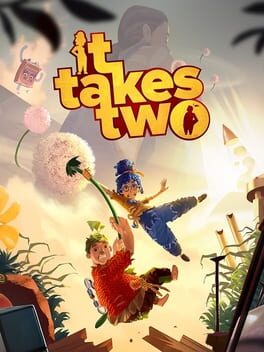
It Takes Two is built around a principle Hazelight places at the center of the entire adventure: two players are required. Cody and May remain present simultaneously and almost always have different abilities. Split-screen is maintained both locally and online, allowing each player to see what their partner is doing even when they are elsewhere in the level.
This asymmetry does not take the form of two permanent roles. The game regularly changes the tools given to each character. In the workshop, for example, Cody can use nails while May wields a hammer; elsewhere, one character applies a substance while the other can detonate it. Other chapters introduce magnetism, time manipulation, plant-based powers or abilities connected to music.
Each mechanic is developed enough to carry part of the game, then often gives way before becoming routine. Hazelight prefers to multiply ideas rather than build the entire campaign around a small number of systems that are gradually upgraded.
This structure creates a wide variety of genres. Platforming provides the common foundation, with double jumps, dashes, swinging and fast movement, but the adventure regularly borrows from action games, puzzles, shooters, racing, boss battles and many different types of mini-games. Some sequences also change perspective and temporarily alter the way the characters are controlled.
Cooperation remains the link between all these variations. A puzzle may require one player to move a platform while the other crosses it, a boss fight may divide preparation and attack between Cody and May, while other passages simply require both players to perform actions at the same time. Communication between the players therefore becomes a natural part of progression.
The game avoids turning this cooperation into a series of abstract exercises. Abilities are usually connected to the environment and the narrative situation. Cody and May’s domestic problems take on exaggerated forms: neglected objects become hostile, the garden tree hides a conflict between squirrels and wasps, while the world built around Rose’s toys becomes an enormous adventure playground.
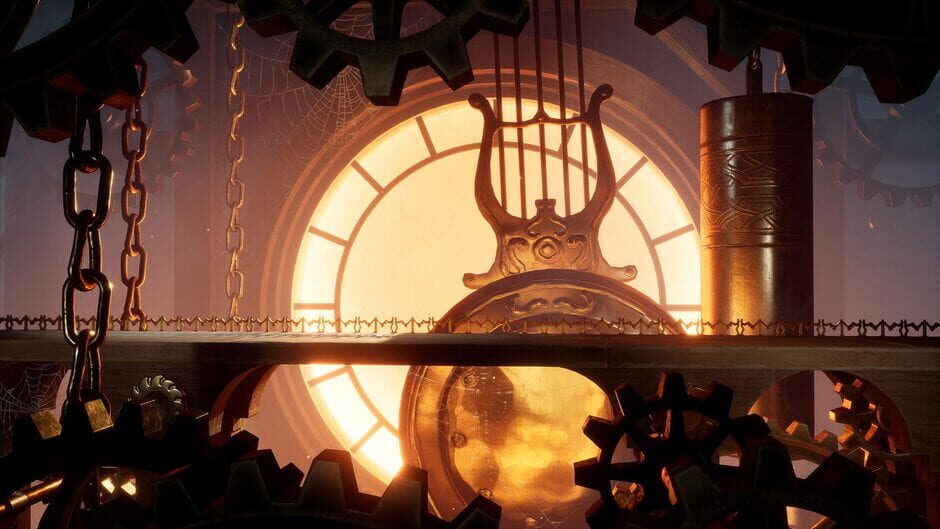
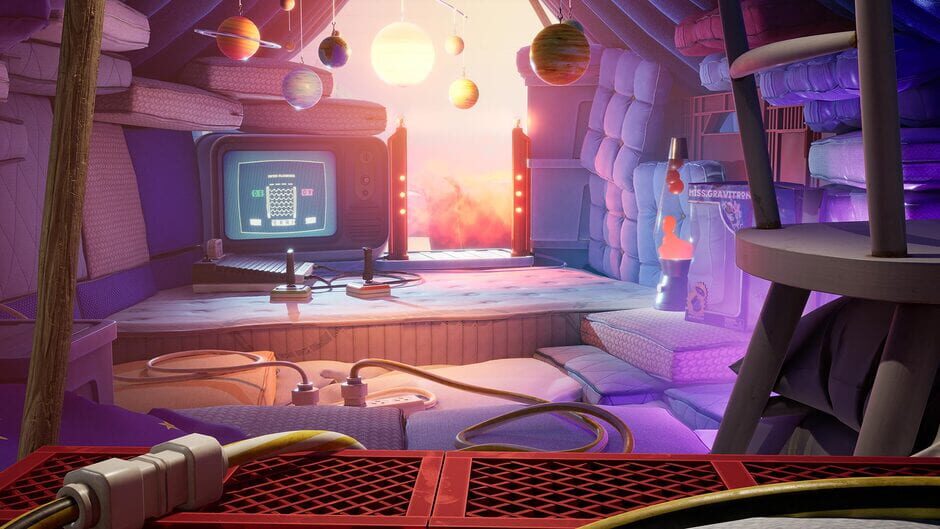
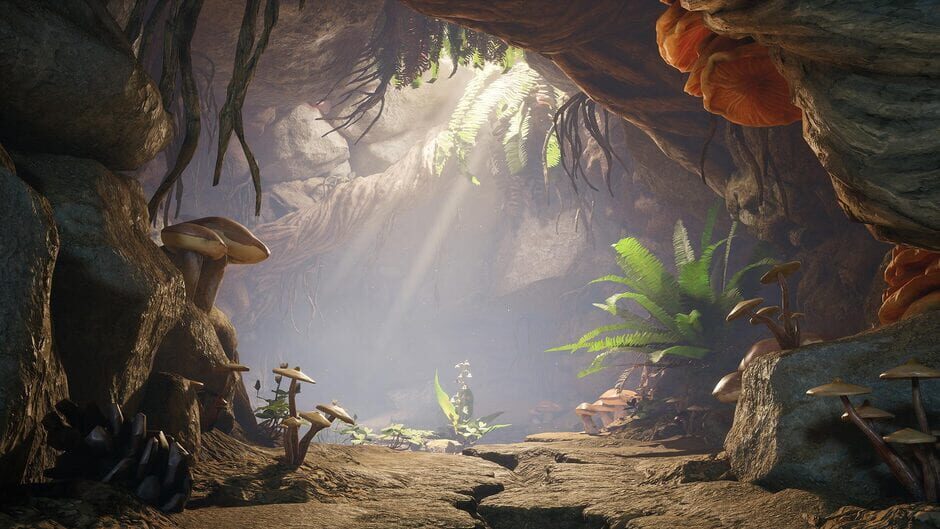
The world follows the same logic of constant change. A workshop filled with tools is followed by the enormous interior of a tree, then Rose’s bedroom transformed into a toy kingdom. Other sections move through a fantastical clock, a snowy environment, an overgrown garden and locations built around music.
These spaces also leave plenty of room for optional interactions. Toys, machines, attractions and objects can often be used without serving the main progression. Players can briefly leave the critical path to try an activity, trigger an animation or simply play with the environment.
Mini-games develop this lighter side further. Scattered throughout the adventure, they temporarily turn Cody and May into opponents in small competitions. Mandatory cooperation gives way to a few minutes of rivalry before the pair resumes their shared journey.
Dr. Hakim provides the connection between these chapters. Deliberately intrusive, he regularly interrupts Cody and May to confront them with his theories about love, attraction or communication. His exaggerated personality allows the story to explore the couple’s difficulties with humor rather than maintaining a constantly dramatic tone.
That lightness does not prevent some sections from being uncomfortable. Cody and May can behave selfishly, attempt to manipulate Rose’s emotions or make returning to human form their absolute priority. The game therefore does not present their relationship as a simple misunderstanding that a magical adventure will automatically solve.
Their differences also exist beyond the marital conflict. May is an engineer who has abandoned her passion for singing, while Cody, a stay-at-home father, struggles with the failure of his gardening project. Several worlds use these elements to give each of them a space in which to reconnect with something they had left behind.
The relationship between narrative and mechanics is one of the most consistent ideas in the experience. When Cody and May need to rediscover their attraction, the game literally gives them complementary magnetic powers. When the story focuses on reviving a forgotten passion, the environment and abilities change to embody that idea rather than leaving it only in dialogue.
The Friend’s Pass extends this cooperative design by allowing the owner of the game to invite someone online who does not own the full version. The campaign therefore remains designed for two players from beginning to end without necessarily requiring two purchases for compatible online play.
What to remember
- An adventure designed exclusively for two players, playable in local or online co-op.
- Cody and May, a couple preparing to divorce, are transformed into dolls made by their daughter Rose.
- Dr. Hakim, the embodiment of the Book of Love, forces them through a series of trials intended to work on their relationship.
- Each player regularly receives different abilities that must be combined to progress.
- Mechanics constantly change and mix platforming, puzzles, action, shooting, racing, boss fights and many short-lived variations.
- The environments transform everyday family life into fantastical worlds, from the workshop and garden tree to Rose’s toys and a snow globe.
- Numerous optional mini-games allow the two partners to compete against one another temporarily.
- Friend’s Pass allows the owner of the game to invite a second player online without that person necessarily owning the full game.
Conclusion
It Takes Two uses cooperation as a construction principle rather than simply as a game mode. Cody and May can almost never solve a situation alone, but the way they must work together changes constantly. This variety forces both players to regularly relearn how their abilities interact.
Hazelight also takes the risk of abandoning good ideas quickly. A mechanic that could sustain an entire game may only last for part of a chapter before being replaced. This generosity gives the adventure its distinctive rhythm and prevents cooperation from becoming the repetition of the same kind of puzzle throughout the campaign.
The connection with the story gives this accumulation greater coherence. Powers, environments and obstacles regularly refer to things Cody and May have neglected in their relationship or personal lives. Their home is no longer simply where the story takes place: it becomes an enormous representation of their problems, memories and responsibilities.
The treatment of the relationship remains deliberately light and sometimes highly exaggerated. Dr. Hakim resembles an uncontrollable master of ceremonies more than a genuine couples counselor, and some reactions from Cody and May are pushed into absurdity. Beneath the comedy, however, the game keeps a simple idea in view: working together does not automatically mean understanding one another, and the couple gradually moves from forced cooperation toward something more willing.
This constant connection between what the characters experience and what the players must do gives It Takes Two its real identity. The adventure can move from platforming to combat, racing or puzzles without losing its center because two people must always understand how to move forward together. The title is therefore not only a reference to its two protagonists: it precisely describes the rule around which the entire game is built.
Good to know
- It Takes Two was developed by Hazelight Studios and published by Electronic Arts under the EA Originals label.
- The game was released on March 26, 2021, for PlayStation 4, PlayStation 5, Xbox One, Xbox Series X|S and PC.
- The campaign is exclusively cooperative and can be played by two players locally or online.
- Cody and May are the two playable characters; their daughter Rose and Dr. Hakim play central roles in the story.
- Friend’s Pass allows the owner of the game to invite a friend to play through the full adventure online without purchasing a second copy, subject to platform conditions.
- A Nintendo Switch version was released on November 4, 2022, and retains the Friend’s Pass system.
- It Takes Two continues Hazelight’s cooperative approach after A Way Out, while introducing far more genres and mechanics within a single adventure.