Overview
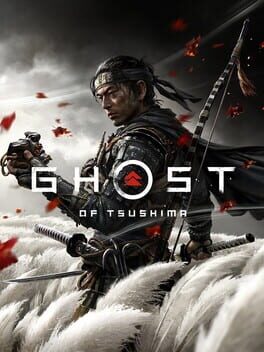
Developed by Sucker Punch Productions and published by Sony Interactive Entertainment, Ghost of Tsushima is a video game released on July 17, 2020. The platforms listed in this entry are PlayStation 5 and PlayStation 4. The associated genres are action, adventure, drama, historical, RPG, hack-and-slash, stealth and open-world. The specified game mode is Single player.
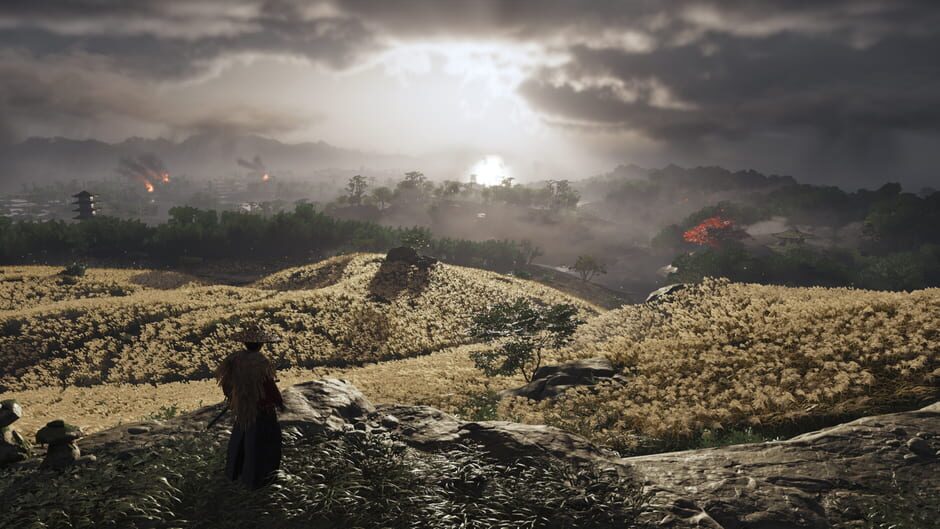
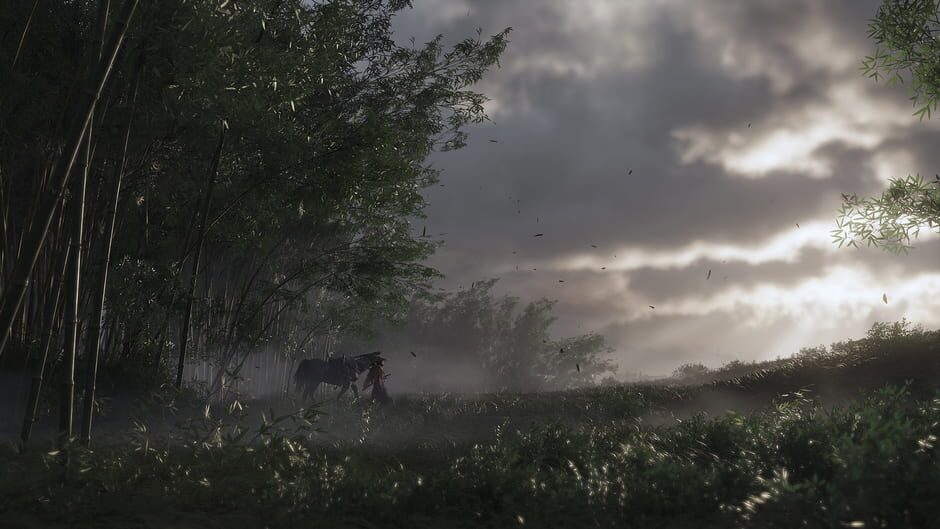
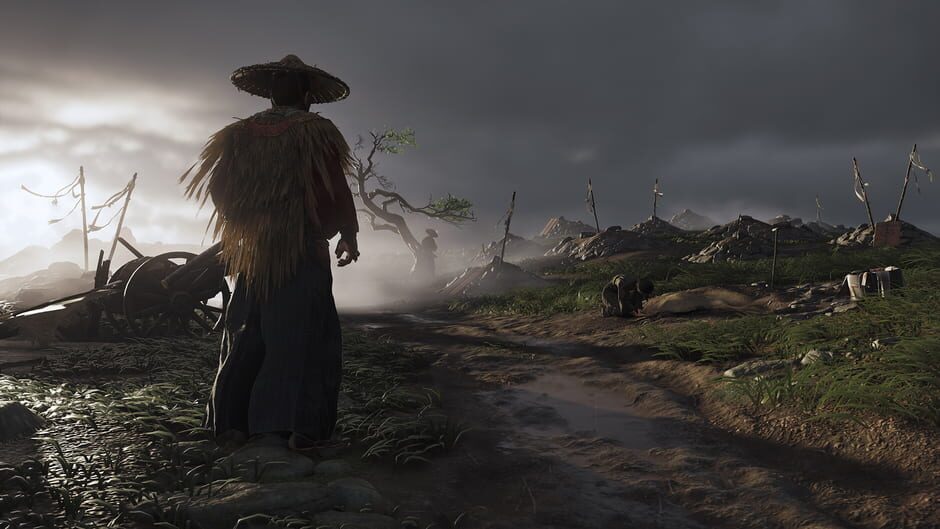
The game takes the form of a third-person open-world action-adventure set on the island of Tsushima during the Mongol invasion of 1274. The player controls Jin Sakai and explores vast regions including villages, shrines, forests, fields, coastlines, mountains, fortifications and occupied camps.
Exploration is designed to reduce reliance on permanent on-screen indicators. The Guiding Wind can be summoned to point toward a selected objective, whether a tale, village, point of interest or certain items to discover.
The landscape itself provides other clues. Smoke plumes, golden birds and foxes can lead to locations, activities or secrets, while observing buildings, cliffs and paths helps reveal different exploration possibilities.
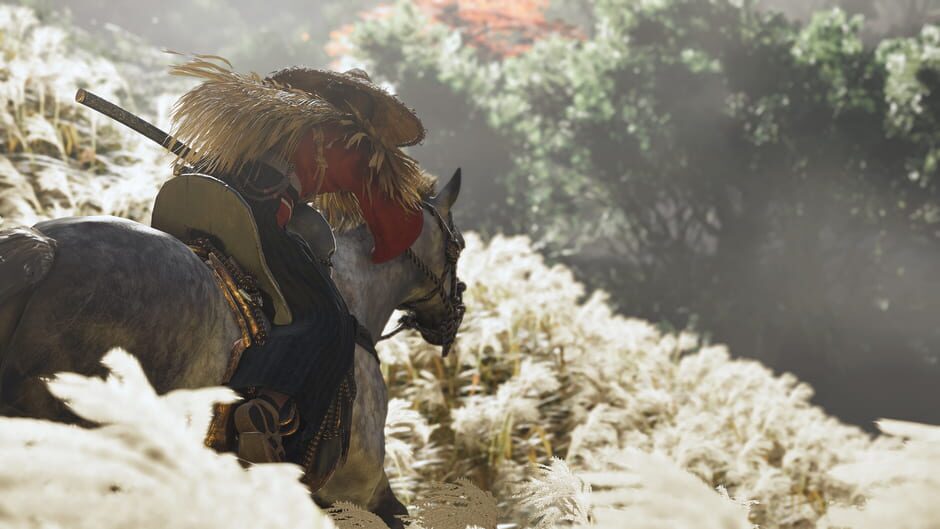
Jin can travel across Tsushima on foot or horseback, climb certain surfaces and use fast travel to return to previously discovered areas. This movement supports an open structure in which main objectives coexist with numerous tales and secondary points of interest.
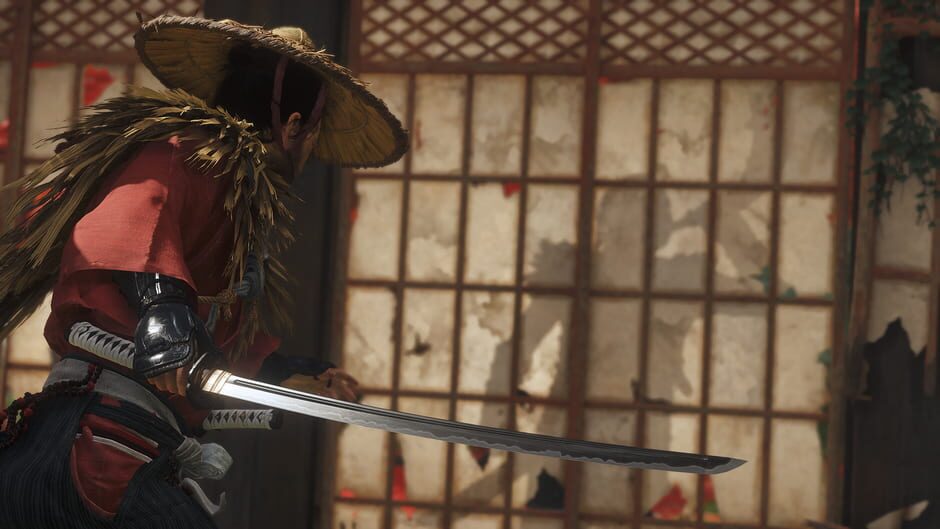
Direct combat is primarily based on the katana. Jin can attack, block, dodge and parry, with a system that rewards precise timing: a well-timed parry creates an opportunity for a counterattack, while certain upgrades further develop this mechanic.
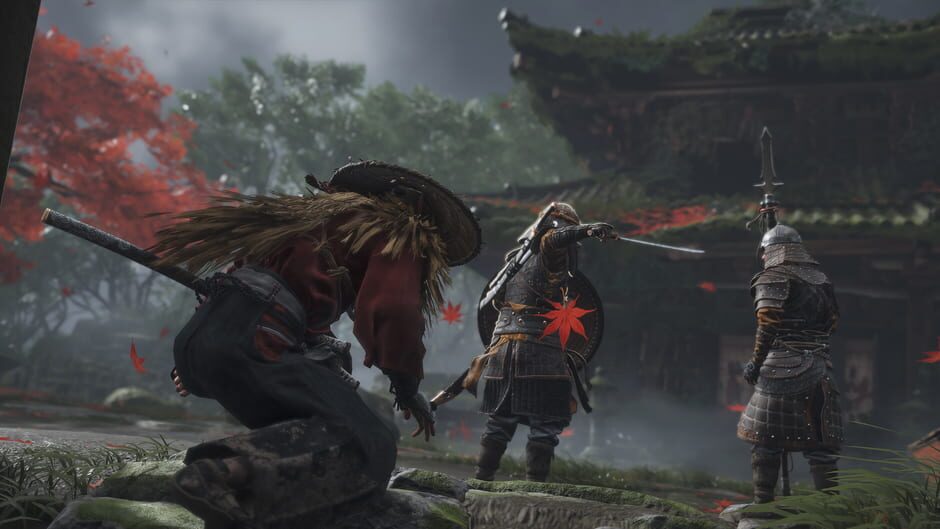
Enemies use different equipment and behaviors. To face them, Jin learns several combat stances designed to respond more effectively to particular enemy types, notably fighters armed with swords, shields or spears.
These stances can be unlocked by fighting or observing Mongol leaders. The player can then switch between them during combat to adapt heavy attacks and improve the ability to break an opponent’s guard.
Another central resource is Resolve. It can be used to heal or trigger certain powerful techniques, regularly forcing the player to choose between preserving this resource for survival or spending it on an offensive action.
The way of the Ghost adds less conventional methods to Jin’s samurai techniques. He can notably use kunai, smoke bombs and other tools, eliminate enemies discreetly and exploit the environment to reduce their numbers before engaging in direct combat.
The bow complements this arsenal by allowing ranged attacks. The game therefore allows sword fighting, ranged combat and stealth to coexist without imposing a karma system that strictly separates a samurai approach from a Ghost approach.
Certain encounters can also begin with a standoff, during which Jin directly challenges his opponents and must wait for the right moment to draw his blade. This mechanic places timing and observation at the forefront before the group battle even begins.
Progression relies on several complementary systems. Developing Jin’s Legend notably grants technique points used to unlock new abilities, while materials gathered throughout the world can be used to upgrade weapons and armor.
The different armor sets have their own statistics and advantages. They can be upgraded and customized with dyes, while charms add further effects that modify certain attributes or abilities.
Exploration directly contributes to this progression. Bamboo Strikes can permanently increase Resolve, hot springs gradually improve maximum health, and shrines notably provide charms.
Fox dens lead to Inari Shrines, while other shrines require climbing routes before their rewards can be reached. The open world therefore connects part of the character’s development directly to the discovery of specific locations.
Ghost of Tsushima also includes a Kurosawa Mode, which transforms the visual and audio presentation with a black-and-white image, a stronger emphasis on wind and various adjustments designed to evoke samurai cinema.
The wind also plays a role beyond navigation. Grass, trees, clothing, smoke and particles react to its direction, helping make environmental movement readable while guiding the player toward a destination.
Ghost of Tsushima therefore builds its open world around two parallel forms of development: that of the fighter, who expands stances, techniques, equipment and tools, and that of his approach to warfare, which progressively combines samurai traditions with the methods of the Ghost.
Key takeaways
- Ghost of Tsushima is a third-person open-world action-adventure set on the island of Tsushima during the Mongol invasion of 1274.
- The Guiding Wind replaces part of traditional navigation by indicating objective directions directly through the environment.
- Katana combat relies on attacks, dodges, blocks, parries and different stances adapted to enemy types.
- Resolve can be used to recover health or activate certain powerful techniques.
- The way of the Ghost introduces stealth, kunai, smoke bombs and other tools alongside samurai combat and archery.
- Armor, charms, techniques and weapon upgrades make it possible to develop and customize Jin’s abilities.
- Exploring Tsushima directly contributes to progression through shrines, hot springs, Bamboo Strikes, foxes and other points of interest.
Conclusion
Ghost of Tsushima structures its open world around navigation that is largely integrated into the landscape, with the Guiding Wind, wildlife and visual clues directing exploration without relying solely on the interface.
Combat combines mastery of the katana, specialized stances, parries, Resolve and ranged weapons, while Ghost tools add stealth-based or indirect approaches.
Progression connects techniques, armor, charms and equipment upgrades with activities spread throughout the world, giving detours to shrines, hot springs and other locations a direct role in character development.
The game therefore combines exploration, direct combat and stealth within a structure where the evolution of Jin’s abilities gradually accompanies his transition from samurai traditions to the methods of the Ghost.
Good to know
- Ghost of Tsushima was released on July 17, 2020.
- The game was developed by Sucker Punch Productions and published by Sony Interactive Entertainment.
- The platforms listed in this entry are PlayStation 5 and PlayStation 4.
- The associated genres are action, adventure, drama, historical, RPG, hack-and-slash, stealth and open-world.
- The specified game mode is Single player.
- The Guiding Wind directly serves as a navigation system across the island.
- Combat combines katana, stances, parries, bow, stealth and Ghost tools.
- Several exploration activities make it possible to permanently increase certain abilities or obtain charms and upgrades.