Presentation
Developed by Black Isle Studios and published by Interplay, Fallout 2 was released for Windows in 1998. Feargus Urquhart and Eric DeMilt are credited as producers, while Feargus Urquhart and Matthew J. Norton served as Lead Designers. Chris Avellone, Colin McComb, John Deiley, David Hendee, Zeb Cooke and Jason Suinn are also among the designers on a project that retains the systems of the first Fallout while considerably expanding its world.
The story begins in 2241, roughly eighty years after the Vault Dweller's journey. Their descendant, known as the Chosen One, now belongs to the tribal community of Arroyo and must locate a G.E.C.K. to save the village from a drought directly threatening its survival.
Character creation retains the SPECIAL system, based on Strength, Perception, Endurance, Charisma, Intelligence, Agility and Luck. These attributes influence derived statistics, dialogue, certain interactions and access to different abilities, creating significantly different characters depending on the choices made at the beginning.
Players also select skills covering weapons, close combat, medicine, repair, science, lockpicking, speech, barter and other fields. Experience later provides points for gradually improving these abilities. Traits selected during character creation further modify the character, generally combining an advantage with a drawback.
Perks add another layer to this progression. They become available at regular intervals when certain requirements are met and can modify combat abilities, social interactions, movement and other aspects of the character. Building the Chosen One therefore means combining attributes, skills, Traits, Perks and equipment rather than following a fixed class.
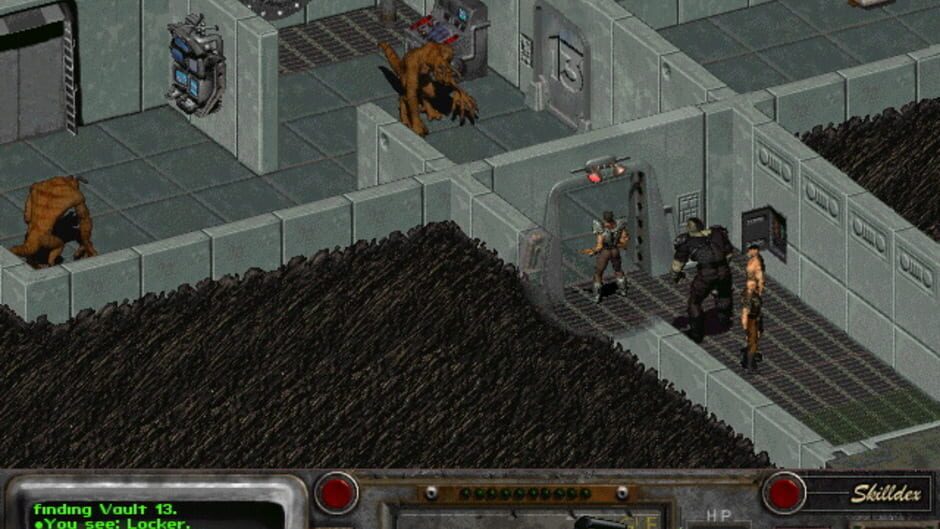
Combat retains the turn-based system of the first game. Every character has a limited number of Action Points used for movement, attacks, reloading and other actions. Certain attacks can specifically target body parts, with different costs and probabilities depending on skill, distance and the weapon being used.
The arsenal ranges from improvised and melee weapons to pistols, rifles, heavy weapons and energy technology. Ammunition, range, damage and character attributes directly affect their effectiveness. This variety supports close-combat specialists, marksmen, heavy weapon users or characters capable of avoiding some confrontations through social abilities.
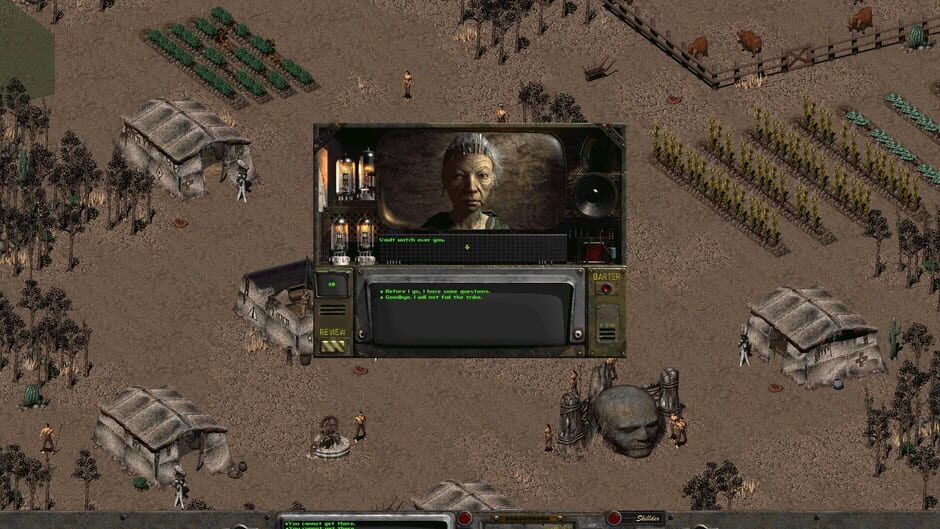
Fallout 2 places considerable emphasis on dialogue and alternative solutions. High Speech, Intelligence, Charisma or certain reputations can open options unavailable to characters focused primarily on combat. Some quests offer several possible outcomes, and their consequences can permanently affect the people or communities involved.
The Karma and reputation systems deepen this reactivity. Karma broadly reflects the character's actions, while different towns can develop their own opinions of the Chosen One. Positive or negative reputation affects how certain people react, commercial relationships and sometimes access to additional opportunities.
Companions also become more significant. Several characters can join the Chosen One depending on attributes and decisions, and Fallout 2 allows certain aspects of their combat behavior and equipment to be configured. Party composition therefore influences both fights and situations encountered throughout the journey.
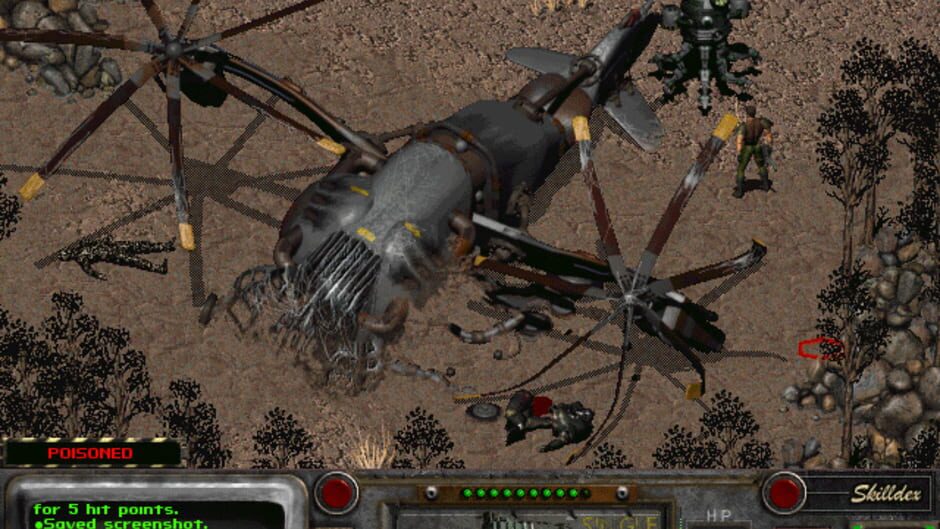
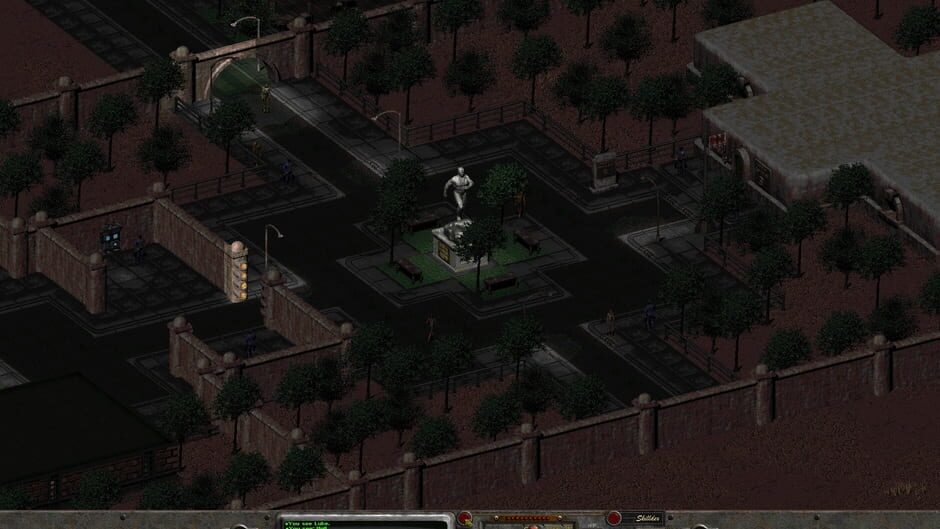
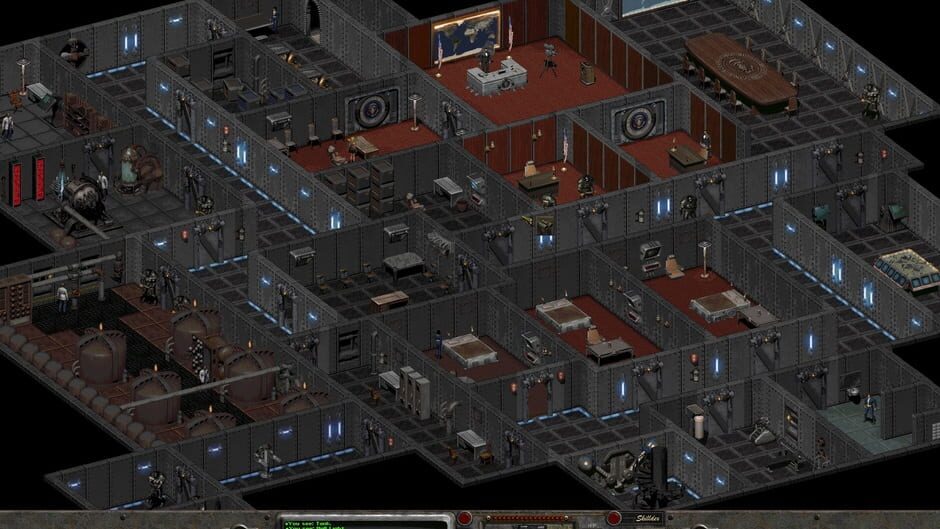
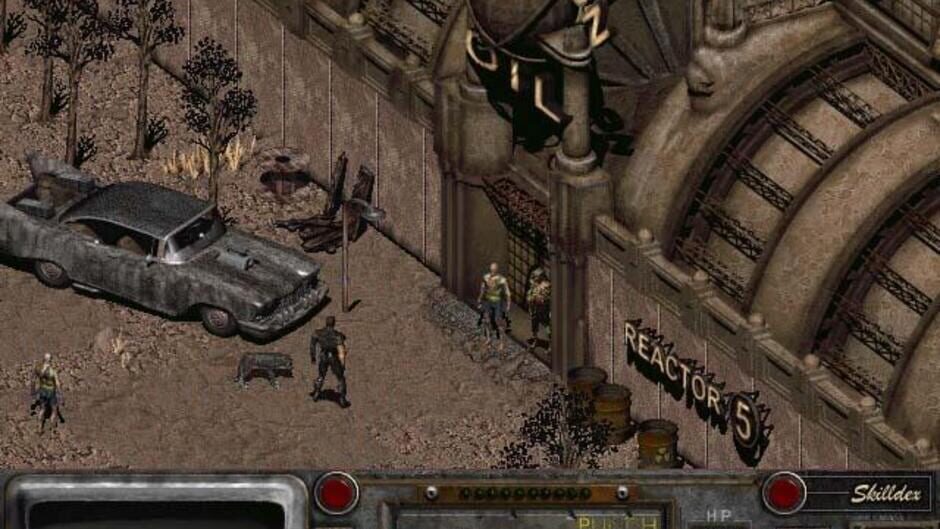
The world is considerably larger than in the first Fallout. Arroyo, Klamath, the Den, Modoc, Vault City, Gecko, New Reno, Redding, the NCR and San Francisco have their own communities, economies and conflicts. Traveling across the world map can trigger random encounters, and players remain largely free to determine the order in which many regions are explored.
Exploration can later be accelerated through the Chrysalis Highwayman, a car that the Chosen One can restore. It provides much faster movement across the world map and additional storage space while requiring energy to operate. Its introduction reinforces the greater scale of the journey and is one of the most visible additions compared with the first game.
Fallout 2 also expands the series' satire of American society, consumerism, politics, crime and popular culture. This humor exists alongside subjects involving slavery, drugs, social inequality and the consequences of nuclear war, allowing the world to constantly shift between absurd situations and significantly darker material.
What to remember
- A story set roughly eighty years after Fallout, with the Chosen One, descendant of the Vault Dweller, searching for a G.E.C.K. to save Arroyo.
- The return of the SPECIAL system, combined with skills, Traits and Perks allowing very different characters to be built freely.
- Turn-based combat based on Action Points, with numerous weapon categories and the ability to perform targeted attacks.
- A considerably larger world containing communities such as Vault City, New Reno, the NCR and San Francisco, each with its own problems and factions.
- Karma, reputation, dialogue and quest-choice systems that directly affect how inhabitants react and the consequences of the journey.
- More controllable companions and the introduction of the Highwayman, a vehicle allowing faster travel across the world map.
Conclusion
Fallout 2 retains much of its predecessor's interface and basic mechanics but dramatically changes the scale of the adventure. The search for the G.E.C.K. provides a starting point for a journey where individual towns have their own concerns and where players can spend considerable time resolving problems unrelated to the initial mission.
The SPECIAL system remains central to this freedom. An intelligent and diplomatic character does not receive the same solutions as a weapons specialist or skilled lockpicker, and many situations allow several abilities to be exploited. Character creation therefore changes the content available rather than merely altering combat efficiency.
Karma and reputation reinforce this principle by giving the world a memory of the player's actions. Decisions made within a community can alter how it views the Chosen One, while certain special reputations can follow the character throughout the game. The world gradually becomes a reflection of the chosen path.
The size of the map contributes to the same evolution. Long distances, random encounters and the Highwayman give greater weight to travel between very different communities. Fallout 2 therefore presents a post-apocalyptic society that is no longer composed only of isolated survivors: towns, economies, criminal families and new political powers are beginning to rebuild the American West.
By expanding the role-playing systems of the first game without abandoning its turn-based combat, Fallout 2 becomes a much larger and more reactive version of the original formula. Its greatest strength lies in the number of situations capable of responding differently to the attributes, reputation and decisions of the character created by the player.
Good to know
- Fallout 2 was developed by Black Isle Studios and published by Interplay.
- Feargus Urquhart and Eric DeMilt are credited as Producers, while Feargus Urquhart and Matthew J. Norton served as Lead Designers.
- The game was released for Windows on September 30, 1998; a Macintosh port followed several years later.
- The story begins in 2241, roughly eighty years after the first Fallout, and follows the Chosen One, a direct descendant of the Vault Dweller.
- The SPECIAL system is credited in Fallout 2 to Timothy Cain, Jesse Heinig, Christopher Taylor and Feargus Urquhart.
- Fallout 2 introduces the Chrysalis Highwayman, a vehicle used to travel more quickly across the world map and carry additional equipment.
- Modern digital releases, including the version distributed through GOG, continue to maintain compatibility with recent Windows systems while preserving the original game.
```