Presentation
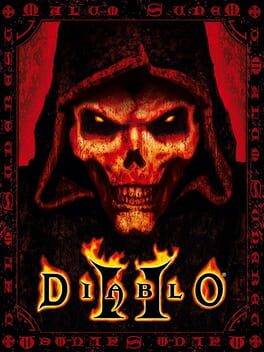
Developed by Blizzard North and published by Blizzard Entertainment, Diablo II was released in 2000 for Windows and later Macintosh. Game design is credited to Blizzard North, with David Brevik, Erich Schaefer and Max Schaefer serving as Project and Design Leads, Michael Morhaime as Executive Producer and Matthew Householder and Bill Roper as Senior Producers. The game takes the formula established by Diablo and considerably expands almost every one of its systems.
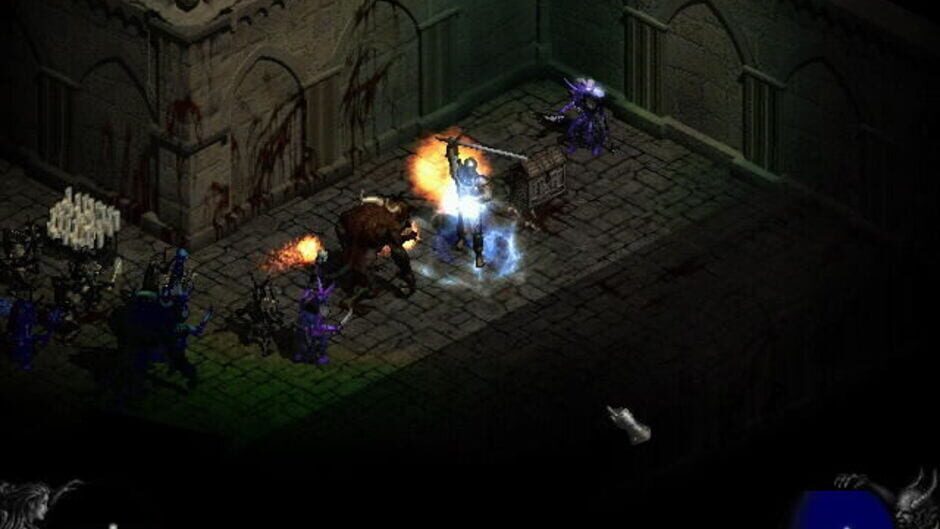
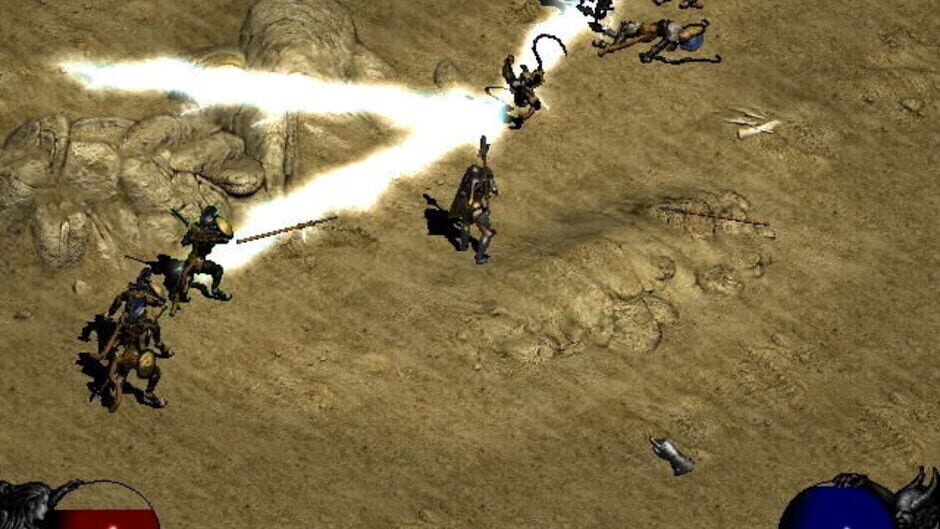
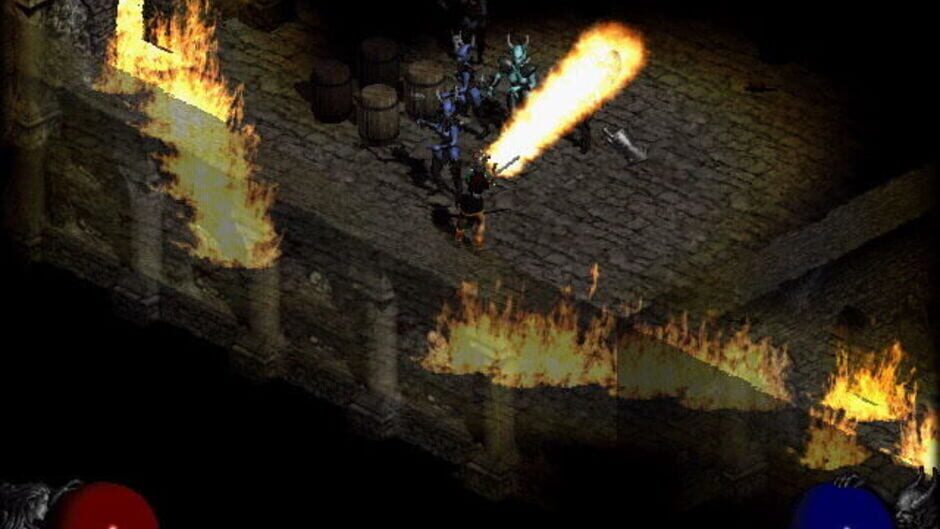
The increase in scale is immediately visible. Where the first installment concentrated most of its adventure beneath Tristram Cathedral, Diablo II organizes its campaign into four successive acts. Players cross large outdoor regions, towns serving as bases, optional dungeons and underground areas that retain the randomized generation associated with the series.
The adventure begins at the Rogue Encampment before moving to Lut Gholein, the jungles of Kurast and eventually the Pandemonium Fortress. Each act has its own architecture, climate, bestiary and quests. This structure gives Sanctuary a much greater geographic scale without abandoning the exploration, combat and equipment loop of the original game.
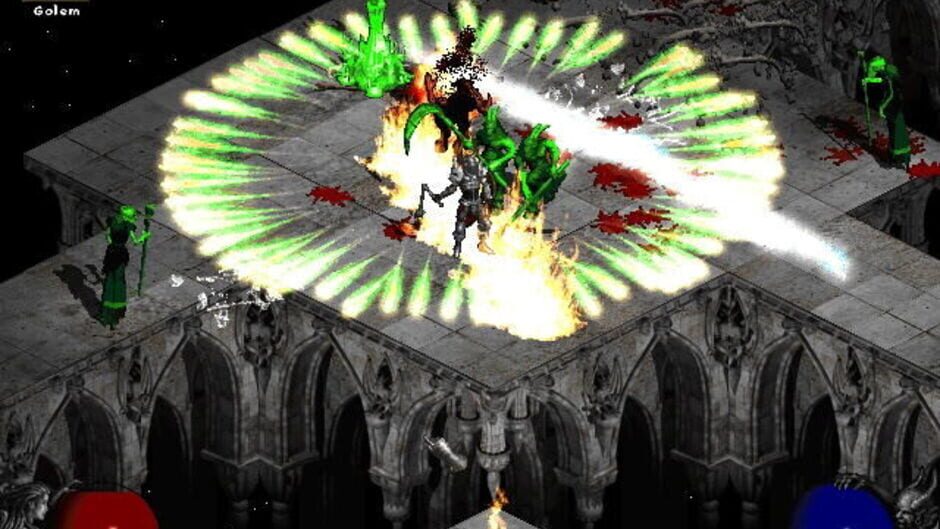
Diablo II also replaces Diablo's three archetypes with five entirely new classes: Amazon, Necromancer, Barbarian, Paladin and Sorceress. Each has its own visual identity and, more importantly, exclusive skills that much more strongly define how a character can be developed.
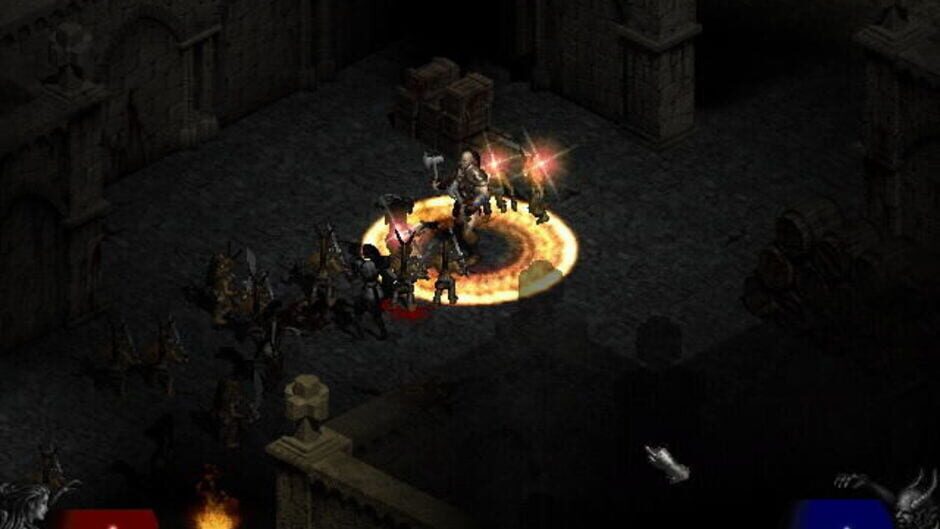
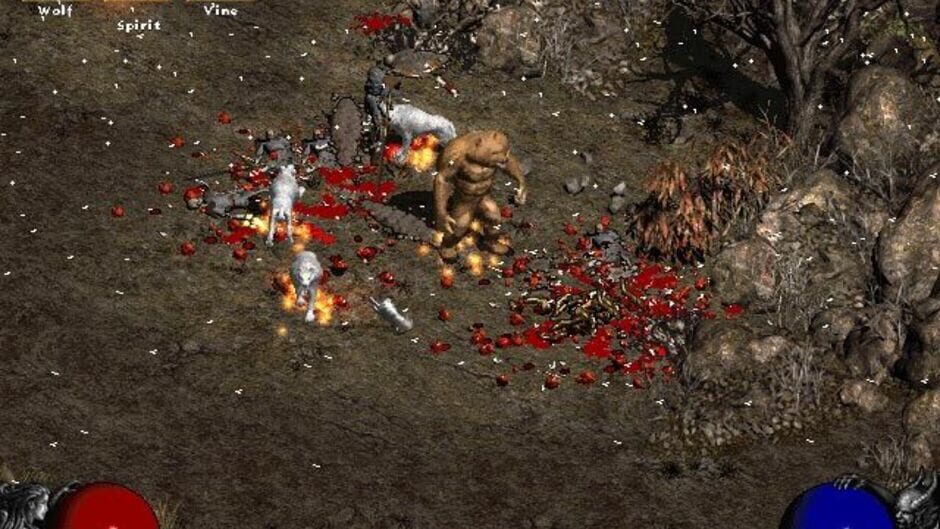
Every class possesses three skill trees. The Amazon can specialize in bows, javelins and spears, the Necromancer can summon creatures or use curses and bone magic, while the Barbarian develops weapon techniques, combat abilities and war cries. The Paladin notably uses auras capable of affecting allies or enemies, while the Sorceress relies on different schools of elemental magic.
Each level provides points for improving attributes and skills. This specialization gives progression considerably more importance than in the first game: two characters belonging to the same class can develop very different abilities depending on the branches emphasized.
Randomized loot remains central to the experience but becomes considerably more varied. Weapons, armor, jewelry and other equipment can appear in different qualities and with different properties, while certain items belong to sets or possess particularly rare effects. Socketed equipment that can hold gems also introduces another way of modifying particular pieces.
The environments retain a significant degree of procedural generation. Outdoor regions have a recognizable overall structure, but their routes, dungeon entrances, monster groups and many other elements change between games. Underground areas use the same principle to preserve uncertainty even after several characters.
Waypoints allow rapid travel between major regions that have already been discovered, while town portals provide temporary access back to the settlement of the current act. Together, these systems make a much larger adventure possible without requiring long journeys to be repeated after every return to town.
Character management nevertheless retains several constraints. Running consumes stamina, potions occupy inventory space, storage remains limited and death can require players to return and recover their character's body and equipment. The rhythm therefore continues to alternate between rapid progression and careful preparation.
Diablo II also places major emphasis on multiplayer. Battle.net allows players to create persistent characters, explore the campaign together, exchange equipment or fight one another. Up to eight characters can share the same game, and complementary class abilities naturally make cooperation more significant.
The game finally preserves the dark atmosphere of the first installment while greatly expanding the mythology of Sanctuary. The Dark Wanderer's journey, notably told through cinematics centered on Marius, provides continuity across the campaign, while Matt Uelmen's music accompanies a much wider variety of regions than the underground environments of Tristram alone.
What to remember
- A four-act campaign replacing the single descent beneath Tristram with a journey across several major regions of Sanctuary.
- Five new classes, Amazon, Necromancer, Barbarian, Paladin and Sorceress, each possessing three distinct skill trees.
- Much deeper specialization through attribute and skill points, allowing several different builds within the same class.
- An expanded randomized loot system, with different equipment qualities, special items and gear capable of holding gems.
- Partially randomized outdoor regions and dungeons combined with waypoints and town portals to make traversal easier.
- Multiplayer supporting up to eight players, notably through Battle.net, where cooperation, equipment trading and complementary classes become major parts of the experience.
Conclusion
Diablo II preserves the fundamental loop of its predecessor but moves it into a much larger adventure. Exploration is no longer limited to descending floor after floor: towns, plains, deserts, jungles and infernal regions create the feeling of pursuing a threat that is actually moving across Sanctuary.
The five classes are the other major transformation. Their skill trees give character development much greater importance and allow precise specializations to be constructed. Searching for equipment therefore becomes more than a way to increase raw power: loot directly complements decisions made through the skill system.
Randomized loot and environments reinforce this replayability. A new map, rare item or different progression choice can change a playthrough enough to encourage the creation of another character. This relationship between customization and randomness becomes one of the game's primary long-term motivations.
Battle.net extends the structure even further by allowing players to complete the campaign together, trade items and compare different character builds. Group-oriented abilities, particularly Paladin auras and various summoning or control skills, give multiplayer a role far beyond being a simple addition to the solo campaign.
By expanding the world, classes, skills, equipment and multiplayer without abandoning the immediate effectiveness of real-time combat, Diablo II turns the original game's formula into a genuine model for the action RPG. Much of the series' lasting identity and its influence on the genre is built through this combination.
Good to know
- Diablo II was developed by Blizzard North and published by Blizzard Entertainment.
- David Brevik, Erich Schaefer and Max Schaefer are credited as Project and Design Leads; Michael Morhaime as Executive Producer and Matthew Householder and Bill Roper as Senior Producers.
- The game was released for Windows in June 2000, with a Macintosh version following the same year.
- The original Diablo II contains four acts and five playable classes; the Druid, Assassin and fifth act are not part of the base game.
- The expansion Diablo II: Lord of Destruction was released in 2001 and notably adds Act V, the Druid, the Assassin and additional equipment systems.
- Diablo II multiplayer supports up to eight players in the same game, notably through Battle.net.
- Diablo II: Resurrected, released on September 23, 2021, remasters Diablo II and Lord of Destruction with new graphics while preserving the fundamental gameplay systems of the original.
```