Presentation
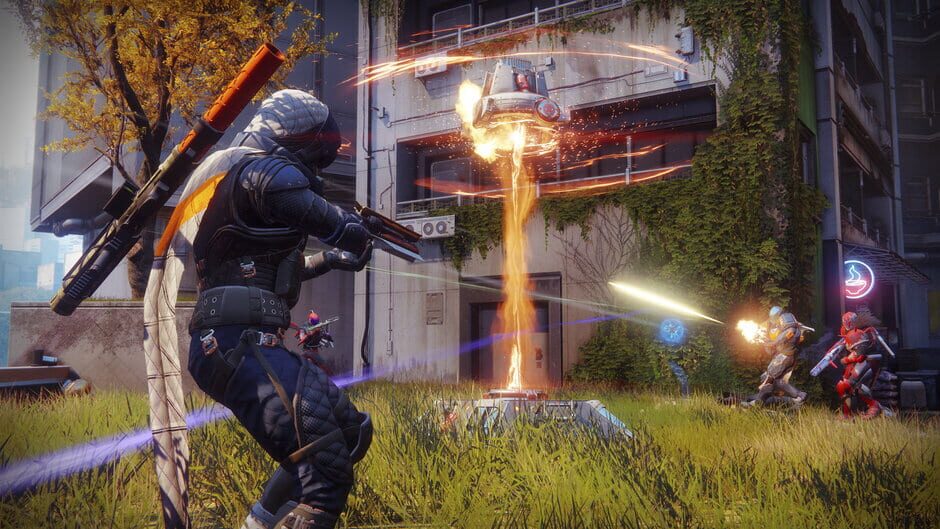
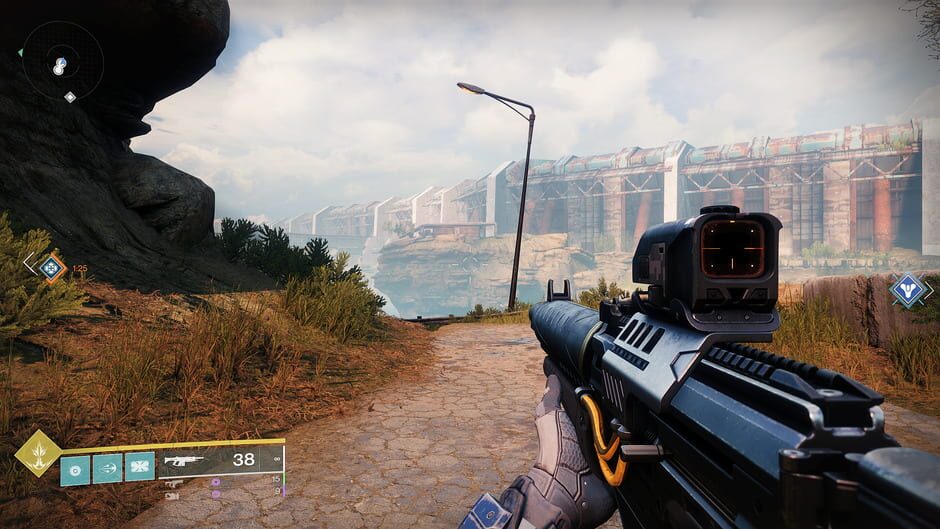
Destiny 2 is built first and foremost around an extremely immediate sensation: shooting. Auto rifles, hand cannons, sniper rifles, rocket launchers and far more unusual weapons each have a recognizable feel. Bungie combines this gunplay with powers capable of temporarily transforming encounters, creating a balance between traditional FPS precision and supernatural spectacle.
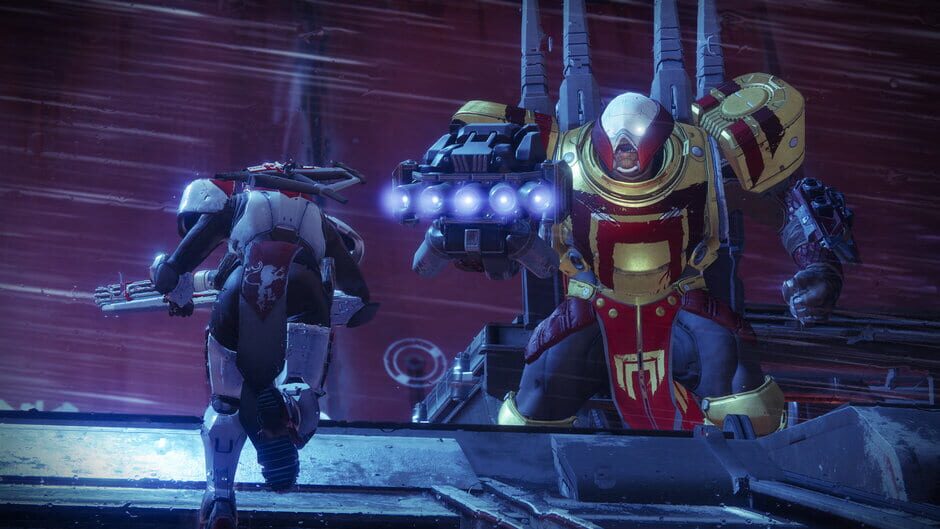
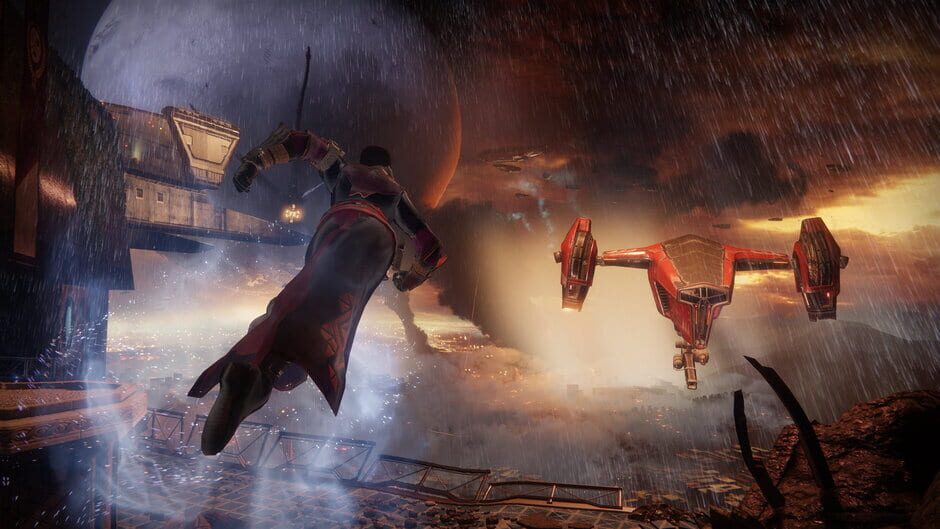
The three classes provide an initial direction for this playstyle. The Titan naturally favors resilience and direct confrontation, the Hunter mobility and agility, while the Warlock manipulates powers with a stronger emphasis on abilities. These identities are only a starting point, however. Subclasses, equipment, stats, mods and special effects allow players to create far more specialized builds.
The search for synergy becomes increasingly important as difficulty rises. A weapon is not interesting simply because it deals more damage: certain perks can complement an ability, accelerate a combat loop or significantly transform a strategy. Exotic weapons and armor push this logic even further with unique properties around which an entire playstyle can be built.
The world is organized around many activities with different scales and purposes. Some can be played alone, while others are designed for cooperative fireteams. Strikes offer structured missions built around successive battles and a final encounter, dungeons require greater coordination and understanding of mechanics, while raids represent the peak of this collective philosophy.
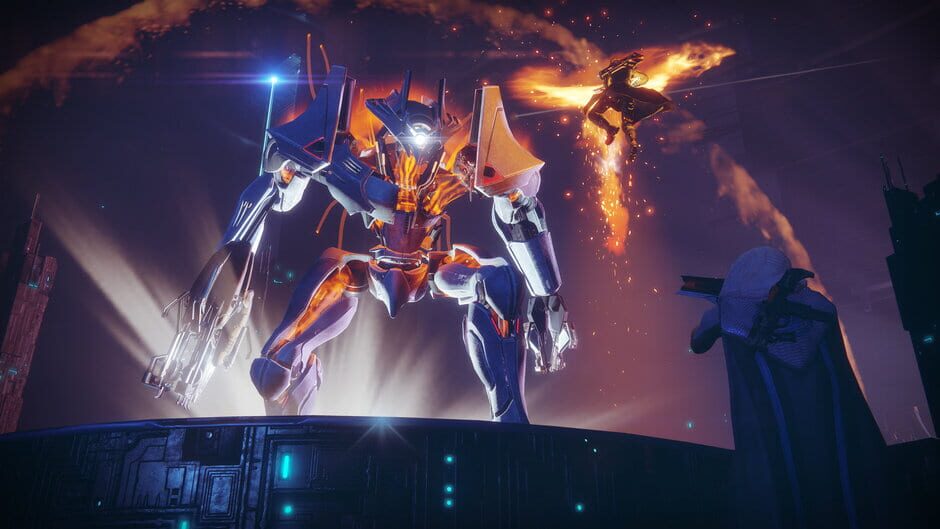
In a raid, knowing how to shoot is no longer enough. Players must understand rules specific to each encounter, communicate quickly, divide responsibilities and perform several actions in a precise order. A perfectly equipped team can fail if it does not understand the mechanic, while a coordinated fireteam gradually turns an apparently incomprehensible battle into a mastered choreography. This evolution between immediate action and collective problem-solving is one of the strongest signatures of Destiny 2.
The game also has a significant competitive dimension through the Crucible, where powers and weapons developed in the PvE universe are turned against other Guardians. This coexistence between cooperation, competition, progression and collection contributes to its hybrid nature.
But Destiny 2 stands out above all through its construction as a persistent world. It is not simply a succession of levels completed and then left behind. Locations, characters and activities form a universe designed to be revisited over a long period, where obtaining a particular weapon, perfecting a build or finally completing a difficult activity can become an objective as important as following the story.
What to remember
- An online science-fiction FPS combining gunplay, supernatural powers, RPG progression and loot hunting.
- Three main classes — Titan, Hunter and Warlock — that can be specialized through subclasses and equipment.
- A vast arsenal whose Exotic weapons and armor can significantly transform a playstyle.
- An experience alternating between solo activities, cooperation, competitive content and high-level challenges.
- Raids that make communication, coordination and understanding mechanics as important as combat.
- A persistent universe whose story and activities have developed over several years.
Conclusion
The success of Destiny 2 lies in the way several very different pleasures eventually come together. Shooting provides immediate satisfaction, discovering a new weapon fuels progression, perfecting a build adds a more thoughtful dimension, and collective activities then require players to put that mastery at the service of a team.
This structure also has its difficulties. The accumulation of years of stories, systems and terminology can make entering the universe intimidating. Understanding why a character matters or how certain mechanics fit together requires more investment than in an FPS built around a closed campaign.
But this density comes directly from what Destiny 2 aims to be: not simply an adventure to finish, but a world to return to. A weapon obtained after dozens of attempts, a build finally balanced or a raid completed with a team can create memories that come not only from the story, but from experiences shared between players.
That is where its formula becomes most convincing. Beneath its immense mythology of Light, Darkness and ancient civilizations lies a very simple idea: gradually becoming better, better equipped and better coordinated until a challenge that once seemed inaccessible finally becomes possible.
Good to know
- Destiny 2 is developed by Bungie.
- The game was originally released on September 6, 2017.
- The three playable classes are Titan, Hunter and Warlock.
- Bungie currently presents Destiny 2 as a science-fiction action MMO FPS.
- The game became free to access with the arrival of Destiny 2: New Light in 2019, while part of its content remains tied to expansions.
- Raids are among the game’s most iconic high-level activities and are designed around complex mechanics requiring strong coordination between players.