Presentation
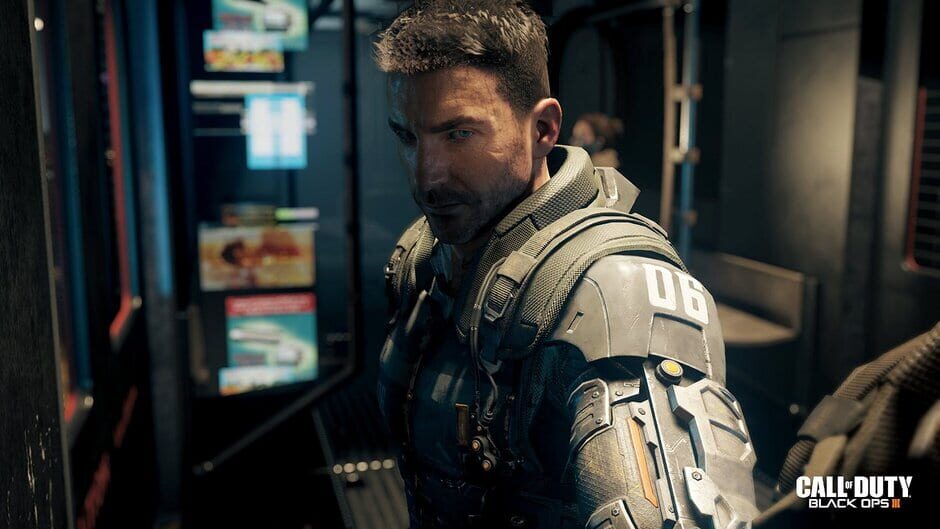
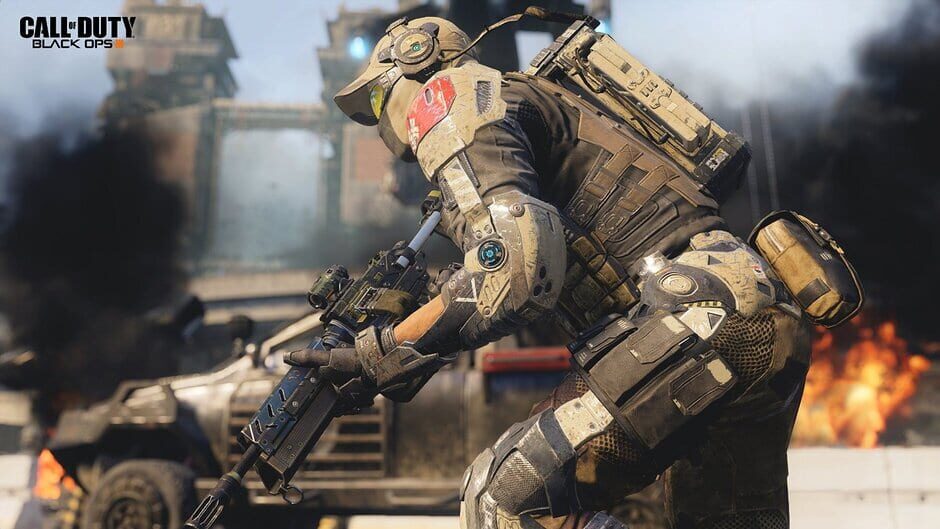
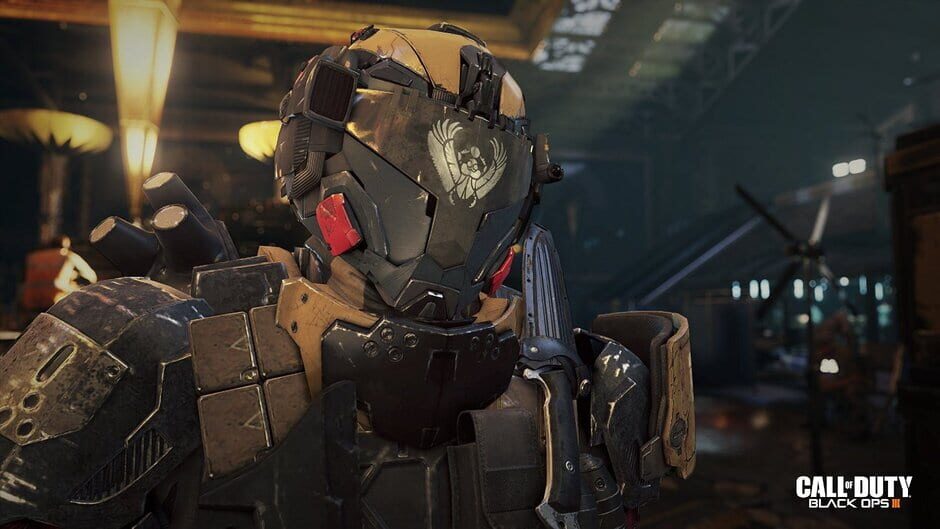
Call of Duty: Black Ops III extends the universe of Black Ops II by jumping roughly forty years into the future. Treyarch imagines a 2065 in which robotics, cybernetic implants and neural networks have become standard components of warfare. The series keeps its interest in covert operations and manipulation, but places them in a world where technology can act directly on soldiers’ bodies and minds.
The Direct Neural Interface is central to this development. The DNI allows augmented soldiers to access information quickly, communicate and interact with different systems. In the campaign, this technology also becomes an important narrative element because the constant connection between human and machine gradually makes the characters’ perception of their own experiences less reliable.
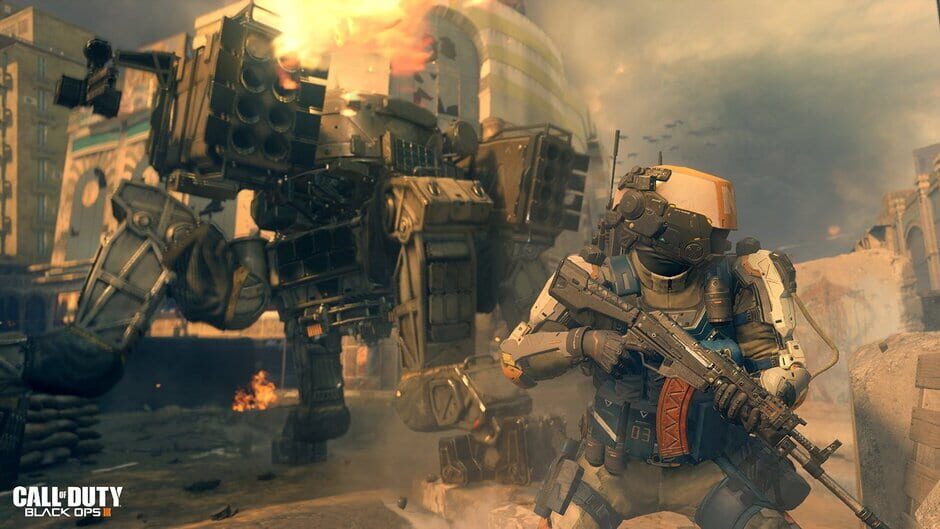
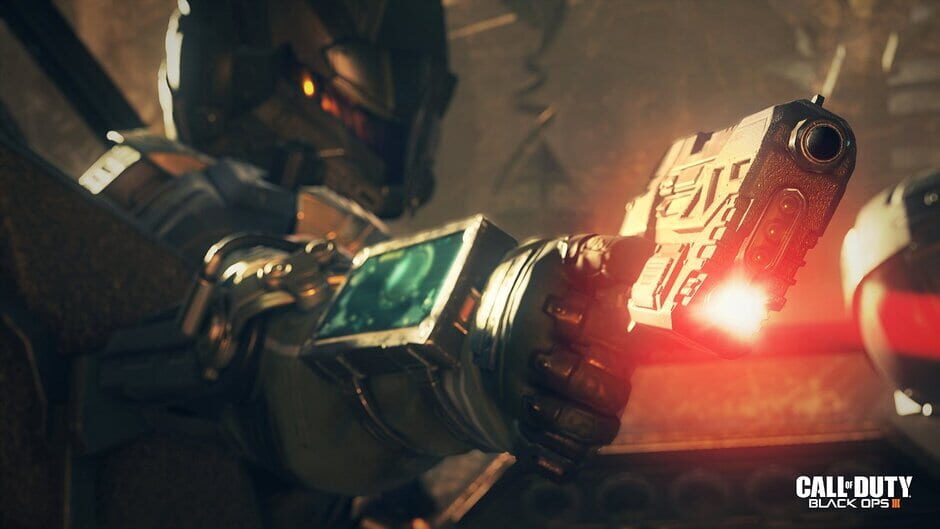
The player can also use cybernetic abilities during combat. These upgrades make it possible to interact with certain robotic enemies, disrupt opponents or perform specialized offensive actions. They complement conventional weapons and provide several ways to approach particular situations.
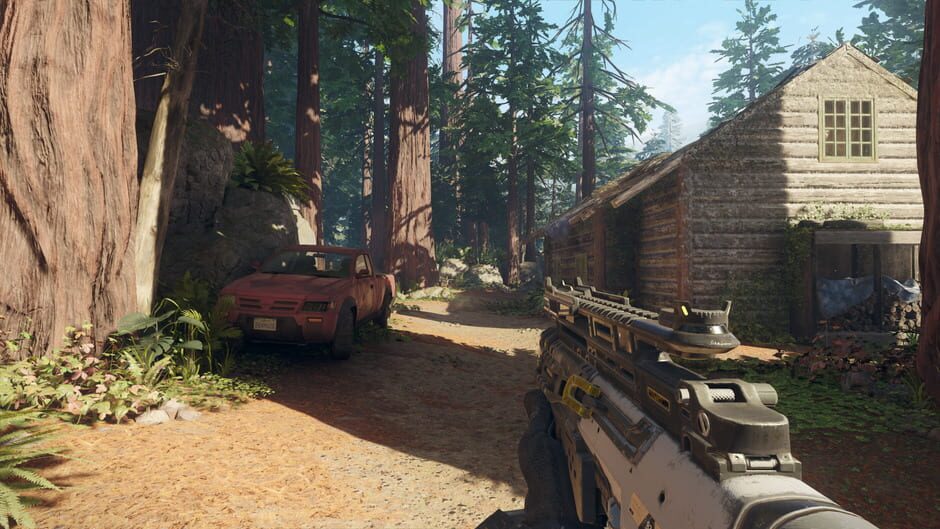
The campaign develops character progression more extensively as well. Weapons, equipment and abilities can be customized between missions, while a dedicated hub allows the player to prepare their loadout. Levels include several areas that are more open than those found in the most strictly linear campaigns in the series, occasionally allowing greater freedom in how enemies are engaged.
This structure is directly tied to co-op. On PlayStation 4, Xbox One and PC, the entire campaign was designed to be played solo or online with up to four players. The presence of several soldiers helps explain the larger combat spaces and high number of human or robotic enemies, while giving individual progression an unusual importance for a Call of Duty campaign.
The mechanical ambition is matched by a deliberately complex story. The narrative uses neural technology to explore memory, identity and the difficulty of distinguishing lived experience from transmitted or reconstructed information. The arrival of Corvus pushes this idea much further and gives the final sections of the campaign an abstract quality that contrasts with the more direct structure of many previous entries.
This construction is both one of the game’s distinctive features and one of its limitations. The themes of artificial intelligence and consciousness give the campaign a singular identity, but their treatment relies on dense storytelling, information that can be difficult to follow and several twists that demand more attention than the series’ usual military spectacle.
Multiplayer is much easier to read immediately. Treyarch develops a continuous movement system built around thrust-assisted jumps, slides, wall-running, fast mantling and swimming. Maps are designed to accommodate these movements while preserving the confrontation lanes associated with Black Ops multiplayer.
This mobility significantly changes the pace of combat. Players can quickly change elevation, use wall routes or extend their movement across certain areas. The system is nevertheless designed so that aiming and shooting remain possible through much of this movement, preventing traversal and combat from becoming completely separate.
Specialists are the other major multiplayer addition. Nine characters are available at launch, each with a distinct identity and, more importantly, a unique special weapon or ability. Ruin can use Gravity Spikes, Seraph has the Annihilator and Prophet can wield the Tempest. Choosing a Specialist therefore adds a temporary ability to the traditional custom-class structure.
Progression remains organized around overall level, weapons and customization. Gunsmith allows players to configure weapons with different attachments, while Weapon Paint Shop offers extensive visual customization on the main platforms. The game therefore retains the series’ class-creation system while adding several additional layers of specialization.
Zombies is another particularly important part of Black Ops III. Shadows of Evil places four characters in Morg City, a fictional metropolis inspired by the 1940s and film noir. The map combines survival against the undead, exploration, rituals, transformations and numerous puzzles in a structure far more complex than the earliest Zombies maps.
For the first time, Zombies includes a full experience-based progression system. GobbleGums also add temporary effects capable of altering a match, while the expansions continue the story through several new maps. Zombies Chronicles, released later, extends the package again with eight remastered classic maps from World at War, Black Ops and Black Ops II.
The amount of content ultimately gives Black Ops III a distinctive identity within the series. A co-op campaign, highly mobile multiplayer, Zombies, Nightmares and Free Run offer several experiences built around the same technologies and movement systems but with very different pacing and objectives.
What to remember
- An entry set in 2065, roughly forty years after the events of Call of Duty: Black Ops II.
- A campaign centered on augmented soldiers, the Direct Neural Interface and the consequences of technologies capable of directly linking the human brain to computer networks.
- A campaign playable solo or online with up to four players on PlayStation 4, Xbox One and PC.
- Cybernetic abilities and customization of weapons, equipment and skills integrated into campaign progression.
- Multiplayer built around advanced movement including thrust jumps, slides, wall-running, swimming and rapid mantling.
- The introduction of Specialists, each associated with a special weapon or ability that complements custom classes.
- A particularly developed Zombies mode beginning with Shadows of Evil and later expanded through additional content and Zombies Chronicles.
Conclusion
Call of Duty: Black Ops III is one of the entries in which Treyarch pushes the futuristic direction introduced by Black Ops II the furthest. Cybernetic augmentation directly influences the campaign, while advanced movement transforms multiplayer and requires maps built around much greater verticality.
The campaign is also distinguished by its narrative ambition. Questions of memory, identity and technological control extend the themes of manipulation long associated with Black Ops, but their treatment becomes considerably more abstract. This density gives the story an unusual personality for the series while also making certain stages difficult to understand without revisiting information scattered throughout the missions.
Multiplayer finds a more immediate balance between the fundamentals of Call of Duty and its new mechanics. Specialists add temporary abilities without replacing custom classes, while the movement system opens maps vertically and accelerates repositioning. This direction gives the game a very recognizable pace among the futuristic entries of this period.
Zombies, meanwhile, contains enough systems, maps and progression to function almost as a parallel experience. Shadows of Evil, the expansions continuing the Aether storyline and later Zombies Chronicles made Black Ops III one of the richest entries in the series in this area.
The result is a Call of Duty packed with content and systems. Not all of its ambitions are equally clear, particularly in a campaign whose complexity can obscure its stakes, but its willingness to experiment with co-op, mobility, specialized characters and Zombies gives Black Ops III a very distinct place within the series.
Good to know
- Call of Duty: Black Ops III was developed primarily by Treyarch and published by Activision.
- The game was released on November 6, 2015.
- The main version is available on PlayStation 4, Xbox One and PC; PlayStation 3 and Xbox 360 versions were also released.
- The campaign takes place in 2065, around forty years after Black Ops II, against the backdrop of a new Cold War and widespread cybernetic technology.
- On PlayStation 4, Xbox One and PC, the campaign was designed to support online co-op for up to four players.
- The PlayStation 3 and Xbox 360 versions, developed with Beenox and Mercenary Technology, do not include the campaign and focus on multiplayer and Zombies.
- The Zombies Chronicles expansion adds eight remastered classic Zombies maps from World at War, Black Ops and Black Ops II.