Presentation
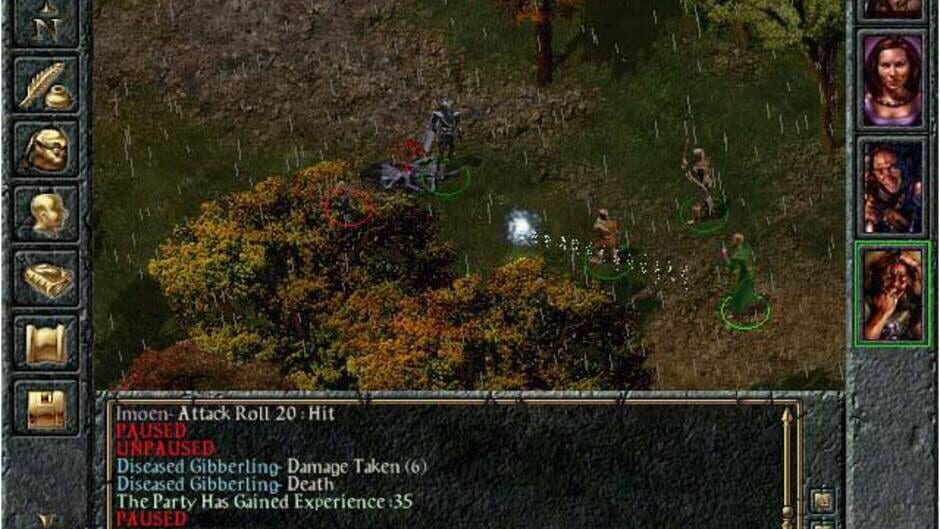
Baldur’s Gate translates the Forgotten Realms setting and Advanced Dungeons & Dragons rules into a role-playing game centered on exploration, party building and tactical combat. The player creates a character by choosing elements such as race, class, attributes, alignment and proficiencies before leaving Candlekeep.
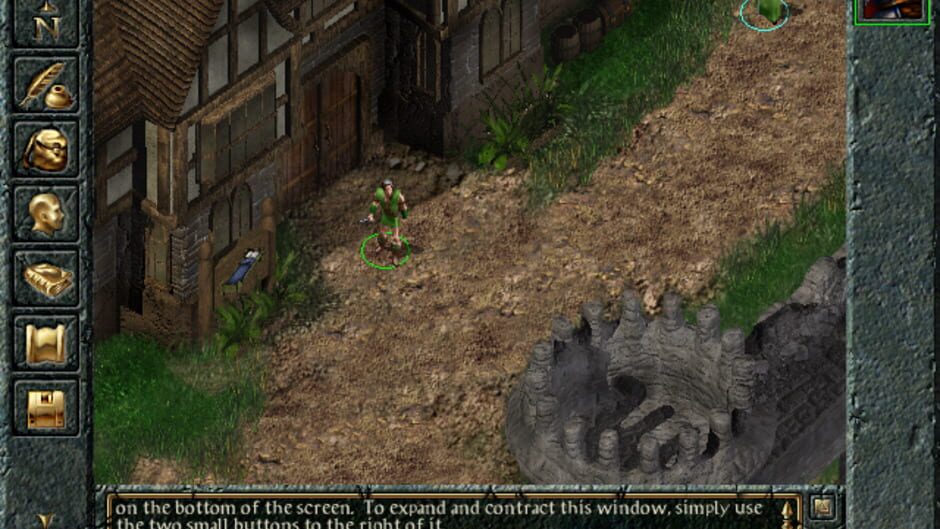
The adventure takes place primarily along the Sword Coast. Forests, villages, ruins, mines and wilderness areas can be explored with considerable freedom, while the city of Baldur’s Gate itself only becomes accessible after a significant part of the journey. This progression gives the game a strong sense of travel before opening its main urban environment.
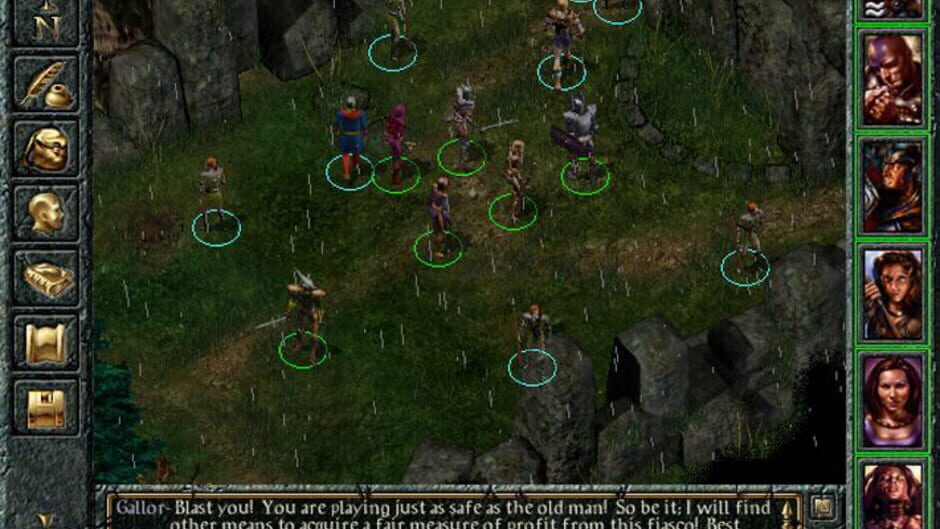
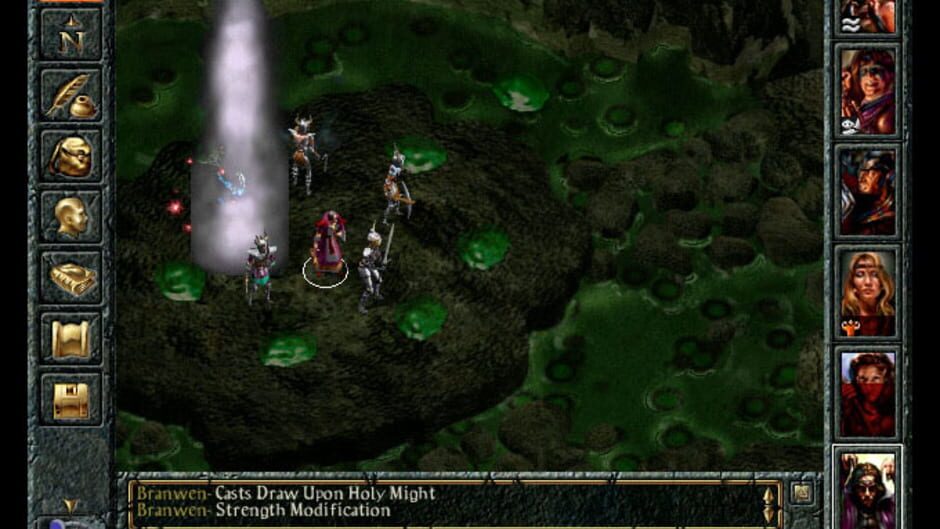
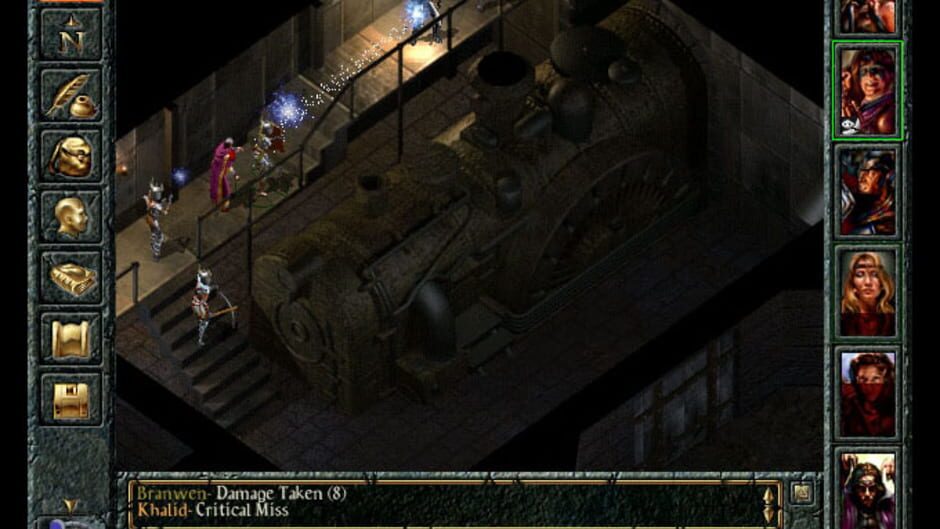
The party can contain up to six characters. Imoen, Jaheira, Khalid, Minsc, Dynaheir, Viconia and many other companions have their own classes, personalities and alignments. Some may clash with one another or leave depending on the party’s composition and the player’s decisions.
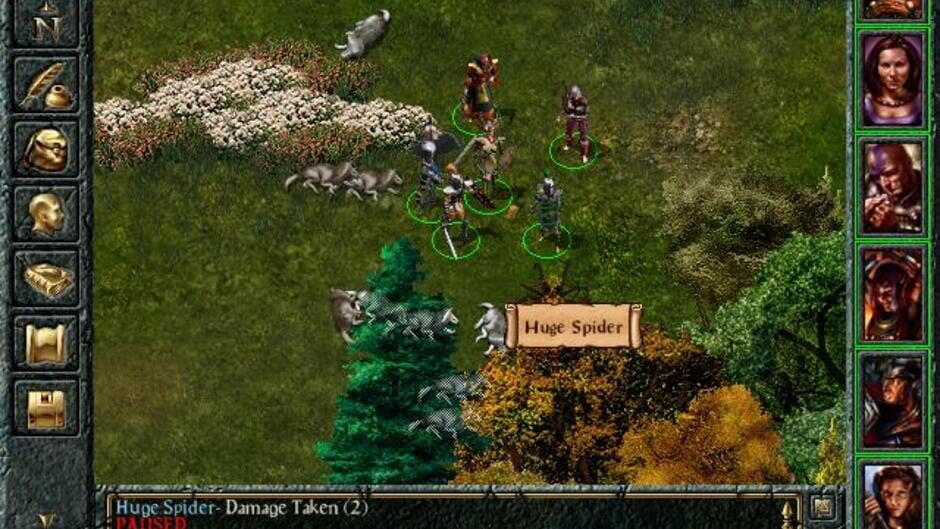
Combat takes place in real time with pause. The player can stop the action to issue orders, select spells, change targets or reposition characters before allowing the battle to continue. This system keeps the speed of real-time combat while preserving an important role for tactical planning.
The rules are based on the second edition of AD&D, with classes, saving throws, Armor Class, THAC0, memorized spells and level progression. They can initially appear complex, but they give warriors, thieves, priests, mages and multiclass characters very different functions.
Magic quickly becomes essential. Spellcasters must prepare their abilities in advance and manage limited resources between periods of rest. Protection, control, summoning, healing and offensive magic can often solve encounters through more than simply dealing additional damage.
Side quests form an important part of exploration. Some deal with small local problems, while others develop companions, factions or the history of the region. The game regularly rewards curiosity by placing encounters, items and interesting locations away from the main route.
The story gradually connects the political crisis of the Sword Coast to the protagonist’s identity. Sarevok is therefore more than an enemy attempting to seize control of Baldur’s Gate: his connection to Bhaal places the player character at the center of a legacy they previously knew nothing about.
This combination of open-ended travel, a customizable party and a personal storyline gave Baldur’s Gate a lasting influence on Western RPGs. Its Infinity Engine was later used for Baldur’s Gate II, Icewind Dale and Planescape: Torment, while BioWare continued to develop the importance of companions and dialogue choices in later games.
What to remember
- The protagonist leaves Candlekeep after the murder of their mentor Gorion.
- The story begins with an iron shortage threatening to cause war between Baldur’s Gate and Amn.
- Sarevok manipulates the crisis to serve his political ambitions and his heritage connected to Bhaal.
- The player freely creates a character using rules inspired by second-edition AD&D.
- The party can contain up to six adventurers with different classes and personalities.
- Combat uses a real-time-with-pause system that allows tactical orders to be issued.
- The Sword Coast contains numerous open areas, side quests and optional companions.
- The game establishes the Bhaalspawn storyline that continues in Baldur’s Gate II.
Conclusion
Baldur’s Gate turns a tabletop role-playing campaign into a computer adventure without reducing the experience to a sequence of battles. Much of its identity comes from travel, unexpected encounters and the freedom to build a party capable of handling different situations.
Real-time-with-pause combat is one of its most important contributions. It makes AD&D rules compatible with faster encounters while preserving the ability to think about spells, positioning and the priorities of every party member.
The game remains clearly marked by its era, particularly in its interface and several systems inherited directly from tabletop role-playing. That complexity nevertheless contributes to the richness of progression and the variety of possible characters.
By combining exploration, companions, tactics and a personal storyline, Baldur’s Gate established a formula that would have a lasting influence on BioWare and a large part of the Western RPG genre.
Good to know
- Baldur’s Gate was developed by BioWare and published by Interplay Entertainment.
- The original game was released for Windows in December 1998 in North America, followed by releases in several other regions in 1999.
- It takes place in the Dungeons & Dragons Forgotten Realms setting, primarily along the Sword Coast.
- The game uses BioWare’s Infinity Engine.
- Its rules are primarily adapted from the second edition of Advanced Dungeons & Dragons.
- The Tales of the Sword Coast expansion, released in 1999, adds several new locations and adventures, including Durlag’s Tower.
- Baldur’s Gate: Enhanced Edition, developed by Beamdog and released in 2012, modernizes the interface and notably adds new characters and content.
- The protagonist’s story continues directly in Baldur’s Gate II: Shadows of Amn.