Presentation
Baldur's Gate 3 broadly adapts the rules of the fifth edition of Dungeons & Dragons: classes, characteristics, spells, dice rolls, skills, and turn-based combat structure the whole experience. But its true strength comes less from the quantity of rules than from the way they interact.
A situation rarely has a single solution. A door can be picked, destroyed, or bypassed. A guard can be persuaded, deceived, avoided, or fought. A spell designed for a specific situation can suddenly find a completely different use because the environment, the position of the characters, or a strange idea from the player allows it.
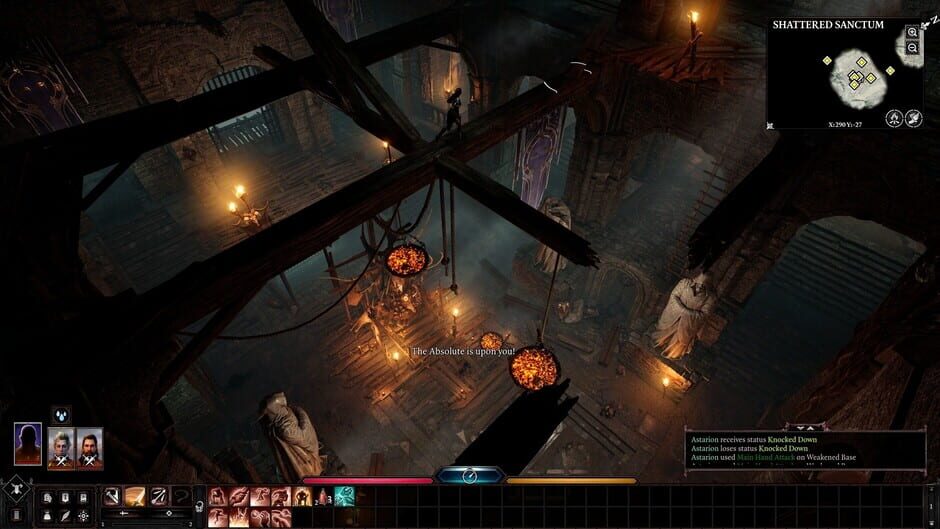
Combat rests on the same philosophy. Verticality, surfaces, light, precipices, and objects present in the scenery can profoundly change an encounter. A good position or an inventive use of the environment is sometimes worth more than a more powerful attack.
Dialogues give comparable importance to the character's characteristics. Class, race, skills, or particular knowledge can unlock different answers, while dice rolls prevent even an excellent idea from guaranteeing its result.
Failure then becomes part of the story rather than a mere punishment. A failed roll can close off a possibility, trigger a confrontation, or lead to a situation the player would never have discovered otherwise.
The companions reinforce this sense of continuity. Their convictions, relationships, and personal stories evolve according to the decisions made during the adventure. They do not necessarily finish the journey with the same certainties, or even alongside the same group.
Baldur's Gate 3 thus rediscovers something fundamental in the tabletop role-playing game: the pleasure does not only come from choosing between several planned answers, but from wondering whether an unlikely idea can actually work.
Key Takeaways
- Baldur's Gate 3 broadly adapts the rules of Dungeons & Dragons 5e, with classes, spells, skills, dice rolls, and turn-based combat.
- Situations often accept several solutions, thanks to dialogue, exploration, magic, stealth, or the environment.
- Failure can move the story forward differently, rather than systematically leading to a retry.
- Companions occupy an essential place, with relationships and trajectories capable of evolving strongly depending on the choices.
- Combat rewards observation and experimentation, notably thanks to verticality and interactions between systems.
- The campaign can be played alone or with others, which brings the experience even closer to a group role-playing game.
Conclusion
The real feat of Baldur's Gate 3 is not simply to offer many choices. It is to succeed often enough in giving the impression that the game had anticipated the one the player just invented.
This illusion rests on the way the systems communicate. An object thought to be decorative can unlock a passage. A spell used outside its obvious context can resolve a situation. An apparently important character can disappear and force the story to continue without them.
Not everything is obviously possible and the scenario has its rails. But they become hard to distinguish because Larian builds enough paths around them for each playthrough to produce its own collection of accidents.
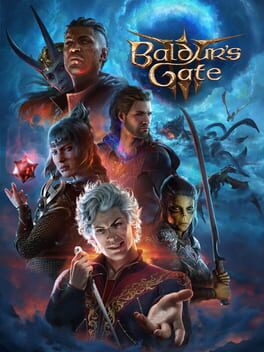
The companions give a more human dimension to this reactivity. Shadowheart, Lae'zel, Astarion, Gale, Wyll, or Karlach are not just fantasy party archetypes. Their convictions can evolve, strengthen, or break depending on what they live through and how the player intervenes.
Turn-based combat directly participates in this freedom. It leaves time to look at a room, move someone, exploit a height, or improvise with an object that had no apparent reason to become central. Some battles then look more like experiments than power tests.
This abundance necessarily has a cost. The interface must contain a considerable number of spells, objects, and rules. The inventory can become laborious, certain interactions require knowledge that the game does not always explain perfectly, and the density of the final act can be as exhilarating as it is exhausting.
But these imperfections almost naturally belong to the project: building a game that accepts so many unexpected things also means accepting a certain form of disorder.
Baldur's Gate 3 above all understands that an interesting choice is not necessarily one that produces the desired result. It is the one whose consequences make you want to keep playing rather than immediately reload the save.
That is probably what brings it closest to a real game master: not preventing players from doing something absurd, but finding an interesting way to answer them when they do.
Good to Know
- Baldur's Gate 3 is developed and published by Larian Studios.
- The game draws heavily on the universe and rules of Dungeons & Dragons 5e.
- An early access period began in 2020 before the full release in 2023.
- The final version is available notably on PC, PlayStation 5, Xbox Series X|S, and Mac.
- The campaign can be played solo or in co-op up to four players.
- Baldur's Gate 3 won Game of the Year at The Game Awards 2023 as well as several major awards at the BAFTA Games Awards 2024.