Presentation
Baldur’s Gate II: Shadows of Amn directly continues the story of the first game while moving the adventure to Amn and its capital, Athkatla. The protagonist can be imported from Baldur’s Gate or recreated, beginning at a higher level with considerably more developed abilities.
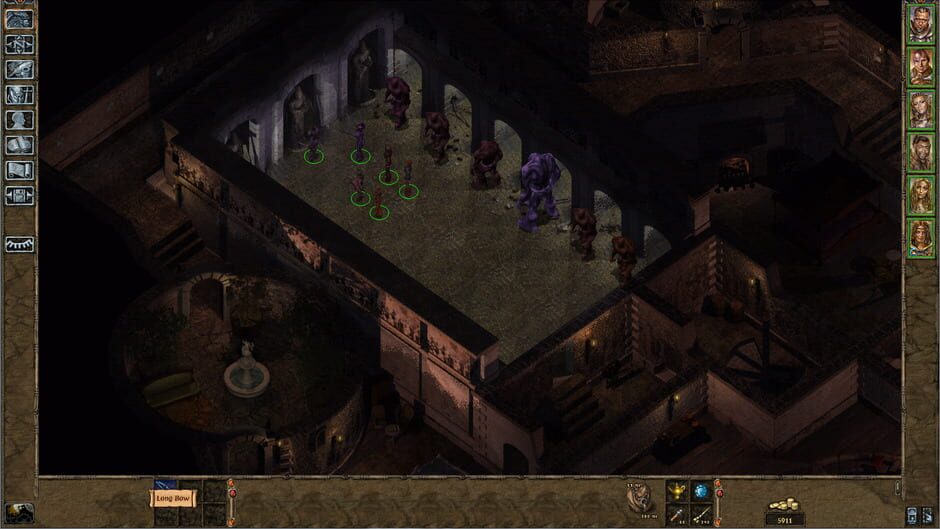
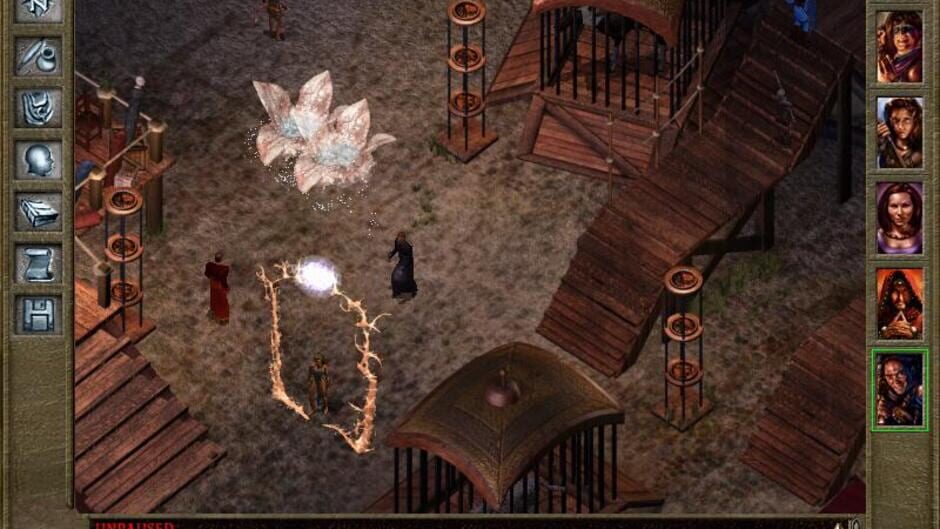
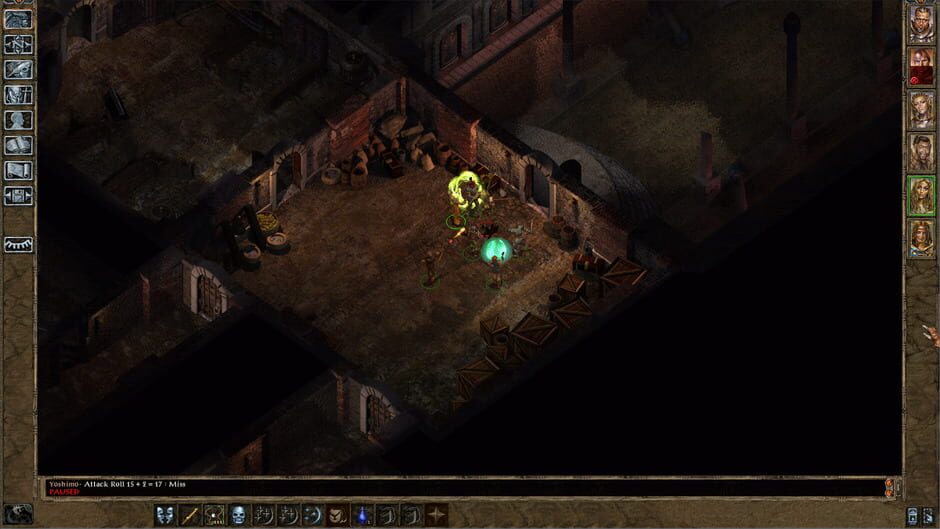
The system still relies on second-edition AD&D rules and real-time-with-pause combat. The player controls up to six characters, pauses the action to issue orders and uses spells, abilities and positioning to handle encounters considerably more complex than those of the first game.
This progression allows the different classes to access much more of their potential. Mages gain a greatly expanded magical arsenal, priests obtain more powerful spells and warriors further develop their specializations. Battles against mages, vampires, dragons and other creatures regularly require an understanding of their protections and weaknesses.
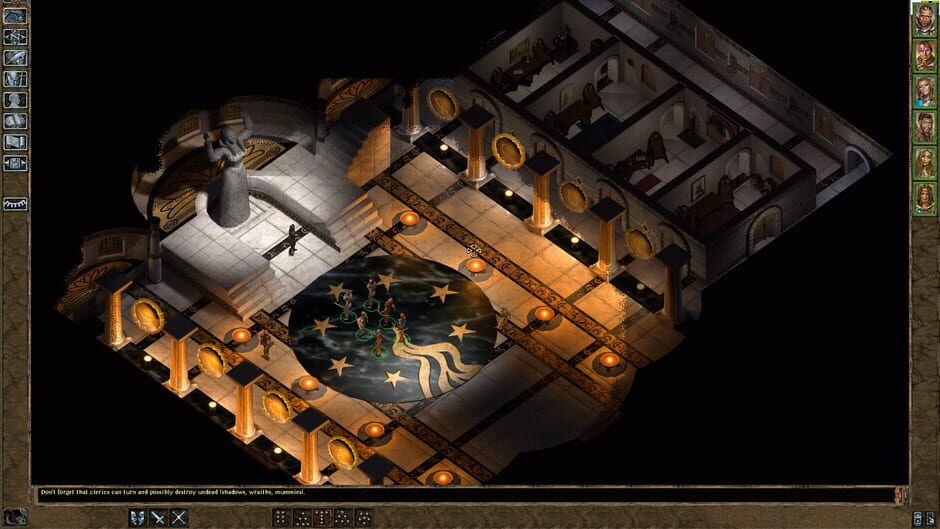
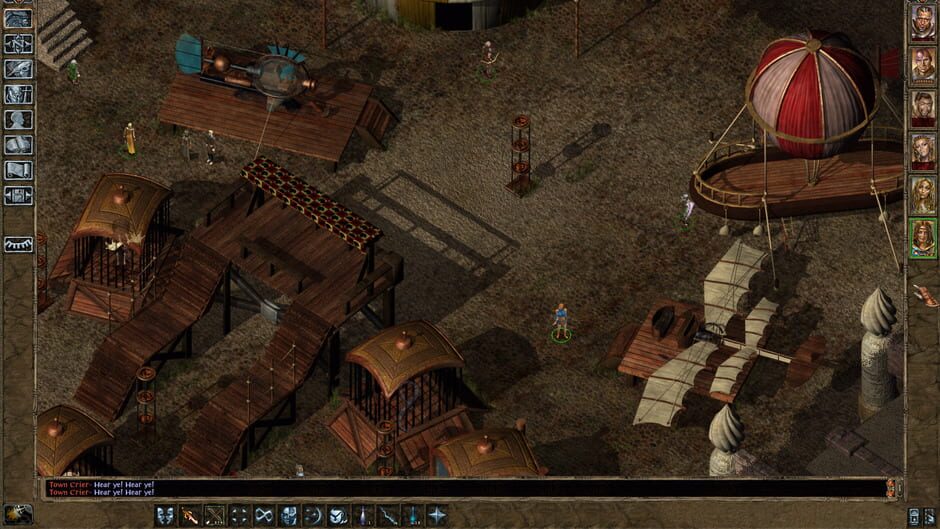
Athkatla acts as the main center of the adventure. Its districts contain numerous side stories, factions, shops and characters, while the campaign also leads to locations such as the Umar Hills, Trademeet, Spellhold, the Underdark and Suldanessellar.
Companions become much more important. Minsc, Jaheira, Imoen and Viconia return alongside new characters such as Aerie, Anomen, Keldorn, Mazzy or Edwin depending on the player’s choices. They talk to one another, react to decisions and can develop personal stories that continue through a large part of the adventure.
Certain relationships can also become romantic, strengthening the companions’ place within the narrative. Their quests therefore do more than complete the party: they develop their beliefs, conflicts and evolution throughout the journey.
Side quests are particularly extensive and can form long independent storylines. Certain classes can also obtain a stronghold or special responsibility, such as a keep for a fighter or a planar sphere for a mage, with several related events.
Irenicus finally gives the conflict a more personal dimension. His interest in Bhaal’s essence directly connects the wider stakes to the protagonist’s identity, while his own history with the elves of Suldanessellar explores the consequences of a pursuit of power that has already destroyed part of his humanity.
What to remember
- The story directly continues the journey of the Child of Bhaal after the first Baldur’s Gate.
- Jon Irenicus captures the protagonist in order to exploit the power connected to their divine heritage.
- Athkatla and Amn replace the Sword Coast as the main settings of the adventure.
- The party can still contain up to six characters.
- Combat retains real-time with pause and rules inspired by second-edition AD&D.
- Companions receive more dialogue, personal quests and possible relationships.
- Side quests and class strongholds play an important role in progression.
- The ending leads directly into Baldur’s Gate II: Throne of Bhaal.
Conclusion
Baldur’s Gate II: Shadows of Amn develops the first game’s formula around more experienced characters, more complex combat and considerably deeper quests. Higher-level progression gives magic and the different classes much greater depth in particular.
The other major evolution concerns the companions. Their conversations, conflicts, personal stories and relationships give the party a much stronger presence within the adventure and anticipate a direction BioWare would develop extensively in its later RPGs.
Athkatla also contributes to this density through a large number of quests capable of drawing the player away from the main objective for long periods without feeling like simple secondary activities.
By connecting this freedom of adventure to the personal conflict with Irenicus and Bhaal’s legacy, Shadows of Amn expands the foundations of the first game and forms the heart of the original saga before its conclusion in Throne of Bhaal.
Good to know
- Baldur’s Gate II: Shadows of Amn was developed by BioWare and published by Interplay Entertainment.
- The original game was released for PC in September 2000.
- It uses the Infinity Engine and primarily adapts the rules of second-edition Advanced Dungeons & Dragons.
- The adventure takes place mainly in Amn, with Athkatla serving as its principal urban center.
- A character from the first Baldur’s Gate can be imported to continue the adventure.
- The party can contain up to six characters.
- The Throne of Bhaal expansion, released in 2001, continues and concludes the story of the Child of Bhaal.
- Baldur’s Gate II: Enhanced Edition, released in 2013, combines Shadows of Amn, Throne of Bhaal and several pieces of new content.