A disturbance in time and space disrupts the Avatar universe and brings together characters from eras that should never normally cross paths. Aang is drawn into this altered reality where allies, enemies and other Avatars sometimes occupy roles different from the ones he knows. To restore the timeline and understand the origin of the disruption, he must face fighters from several generations of the Avatar universe.
Video game
2026
Action
Fantasy
Fighting
Avatar Legends: The Fighting Game
- Gameplay Group International Developer
- PM Studios Publisher
Aang, Korra and fighters from several generations clash in a 2D fighting game built around elemental mastery, Flux and support characters.
Details
- Type
- Video game
- Release
- 2026-07-23
- Genres
- Action, Fantasy, Fighting
- Platforms
- PlayStation 5, Xbox Series, Nintendo Switch, PC, Nintendo Switch 2
- Game modes
- Single player, Multiplayer
Synopsis
Avatar Legends: The Fighting Game
Trailer
Watch the trailer
Overview
Presentation
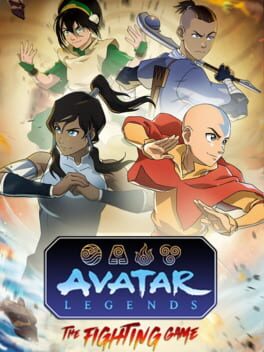
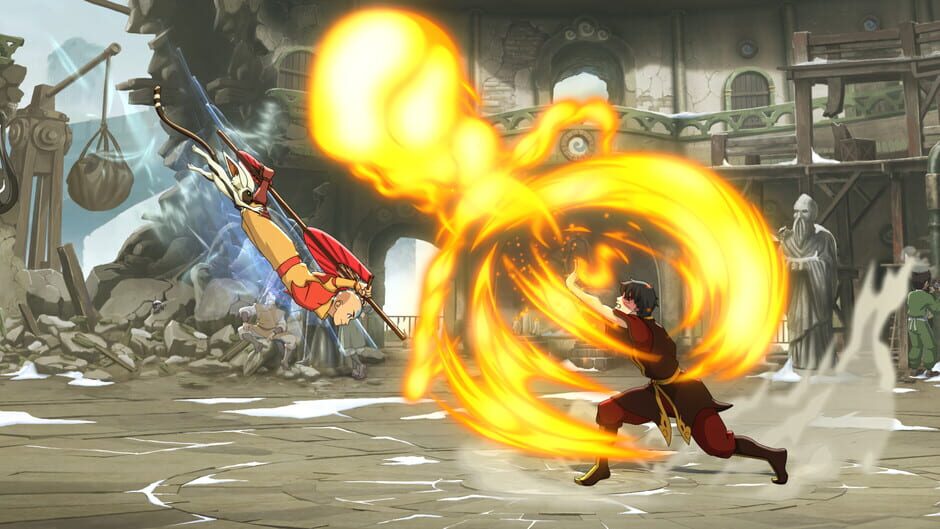
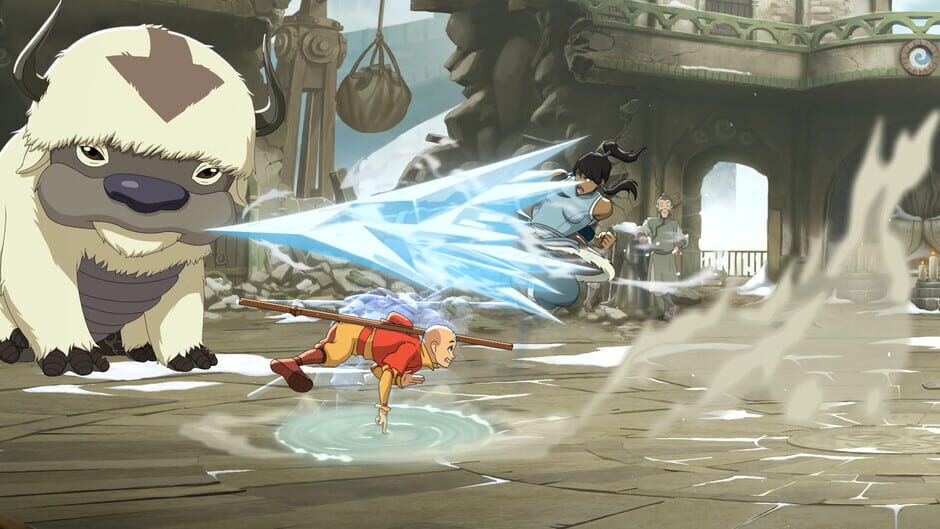
Avatar Legends: The Fighting Game is a 2D one-on-one fighting game bringing together characters from Avatar: The Last Airbender, The Legend of Korra and the wider Avatar universe.
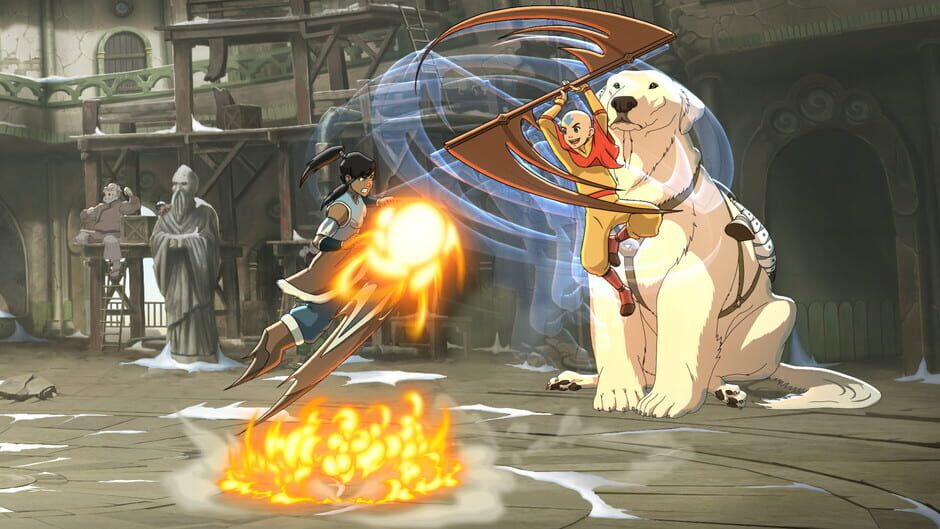
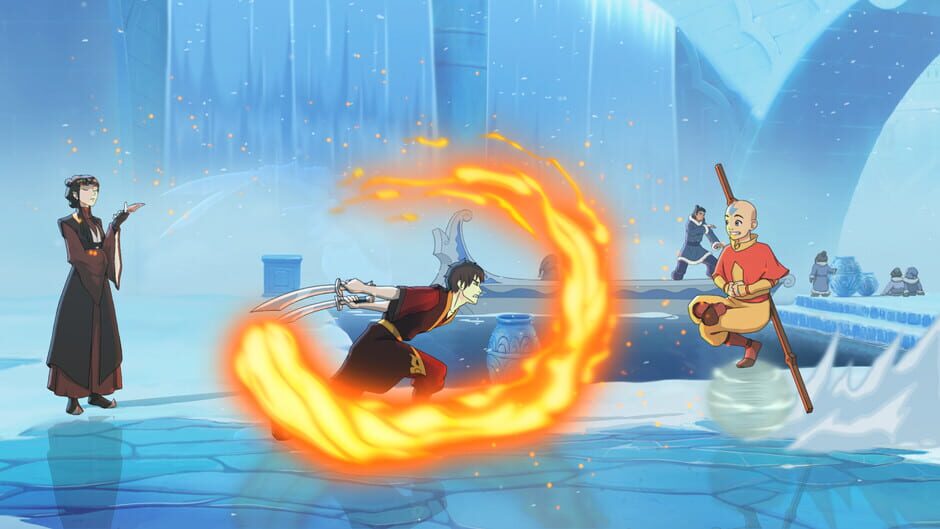
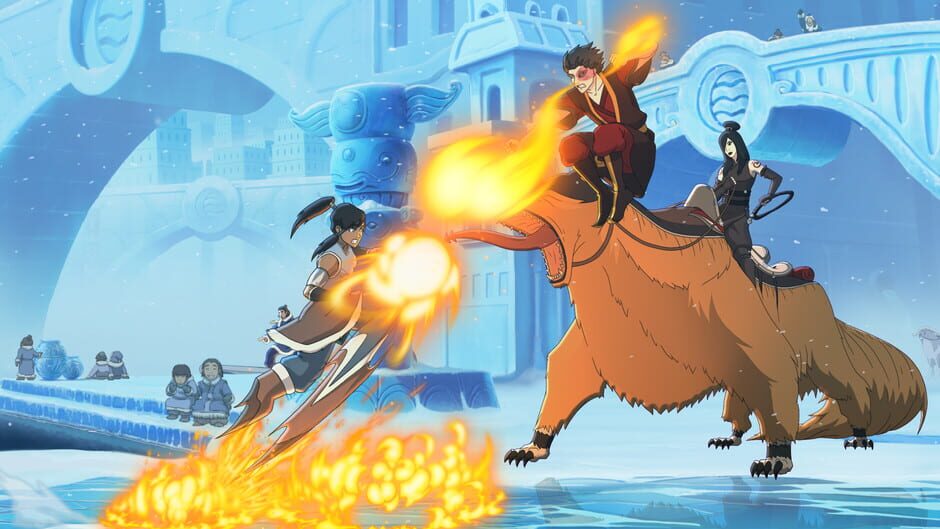
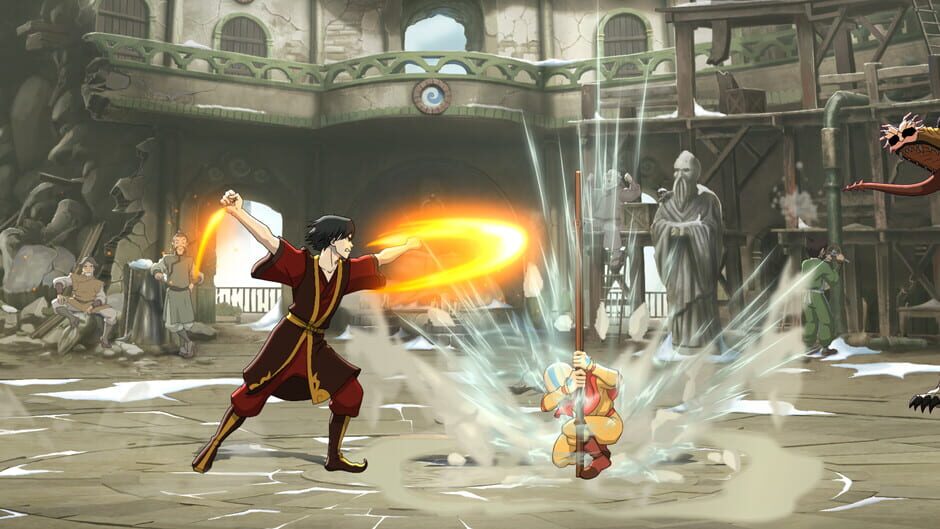
Its presentation relies on hand-drawn 2D animation, designed to preserve the look of the animated series while adapting the different forms of elemental bending to the structure of a dedicated fighting game.
Each fighter has a distinct style inspired by their abilities. Air, water, earth and fire bending, along with the martial techniques of characters without elemental powers, determine their range, mobility and approach to controlling space.
Movement notably revolves around Flux. This resource allows fast movement, evasive maneuvers and different repositioning options used to create openings or maintain pressure on an opponent.
Energy points build up during combat and can be used to strengthen certain special techniques or unleash powerful Super Arts.
Each fighter can also be paired with a support character. Several supports are available, and their abilities can complement the main fighter's style, create new openings or alter certain combo routes.
The game therefore does not use a fully interchangeable team-fighting system: only one main fighter remains under the player's direct control, while the support character intervenes periodically.
The launch roster includes 12 playable characters drawn from different periods of the Avatar universe. This structure notably allows characters associated with Aang, Korra and earlier generations to appear in the same battles.
The Story Mode features an original narrative built around a disruption of time and space. Several eras and realities begin to overlap, creating encounters that would normally be impossible within the franchise's usual chronology.
Alongside it, Arcade Mode offers an individual route for each fighter. Training and Combo Trials allow players to study the combat mechanics, while online play includes ranked matches, casual matches and lobbies.
Key points
- A 2D one-on-one fighting game set in the Avatar universe.
- Fully hand-drawn animation.
- Characters from Avatar: The Last Airbender, The Legend of Korra and the wider universe.
- 12 playable fighters at launch.
- Styles built around different forms of elemental bending and martial arts.
- Flux powers fast movement, evasive actions and repositioning.
- Energy points can strengthen certain techniques.
- Super Arts serve as major special attacks.
- Each fighter can be paired with a support character.
- A Story Mode featuring an original narrative involving time and space.
- Individual Arcade routes for different fighters.
- Training, Combo Trials, local versus and online multiplayer.
- Rollback netcode designed for online competition.
- Cross-play connects compatible platforms.
Conclusion
Avatar Legends: The Fighting Game adapts the different forms of bending from the Avatar universe into a true 2D fighting-game structure.
Flux places particular emphasis on mobility, while energy points and support characters expand offensive possibilities and combo routes without turning matches into fully interchangeable team battles.
The Story Mode also uses the coexistence of several generations to bring Aang, Korra and other figures from the franchise together within a single narrative, outside the usual limits of its chronology.
Good to know
Avatar Legends: The Fighting Game is developed by Gameplay Group International, in collaboration with Paramount, Avatar Studios and Nickelodeon Animation Studios.
The game is published by PM Studios, with Paramount Games handling digital publishing.
It was released on July 23, 2026 for PlayStation 5, Nintendo Switch and PC via Steam.
The Xbox Series X|S version launched on September 3, 2026, following a platform-specific delay.
A dedicated Nintendo Switch 2 version is also planned for 2026. The Nintendo Switch version can already run on Switch 2 through backward compatibility.
The game supports single-player, local versus for two players and online multiplayer.
The initial roster includes 12 fighters, with additional characters planned as part of post-launch content.
The Story Mode tells an original story considered canon, with its narrative developed in collaboration with Michael Dante DiMartino and Tim Hedrick, longtime contributors to the Avatar universe.
The game uses proprietary rollback netcode and supports cross-play between compatible platforms.
In addition to Story Mode, it includes Arcade, Training, Combo Trials, versus, ranked and casual matches, lobbies, Spectator Mode, replays and an art gallery.
This entry focuses on the base game, the Flux system, energy points, support characters and the main modes of Avatar Legends: The Fighting Game, without detailing the entire roster or seasonal roadmap individually.